












.jpg)
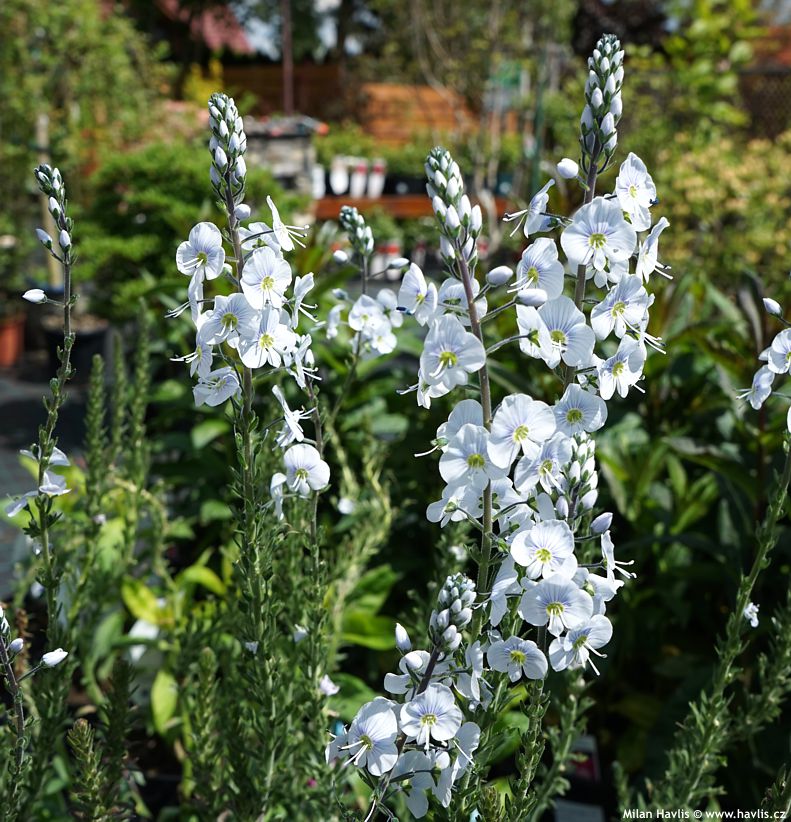
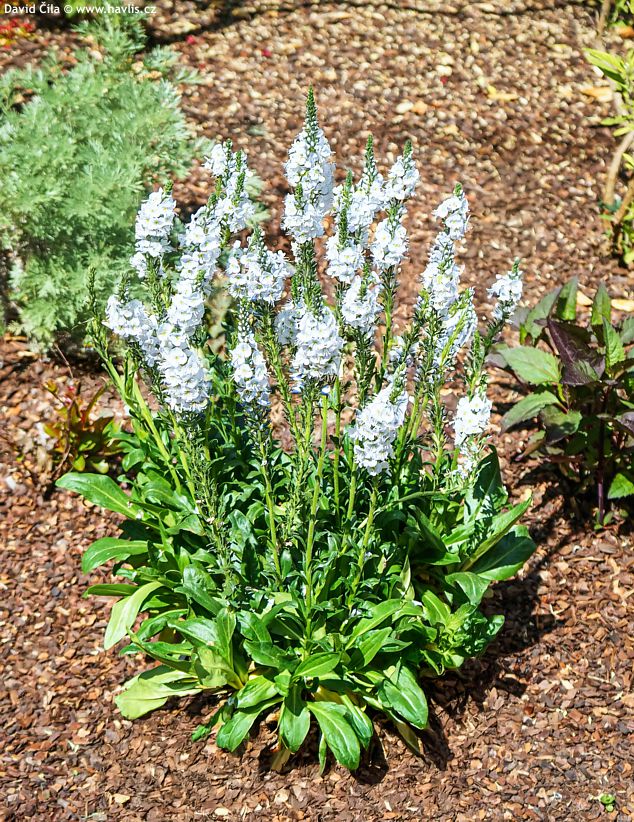
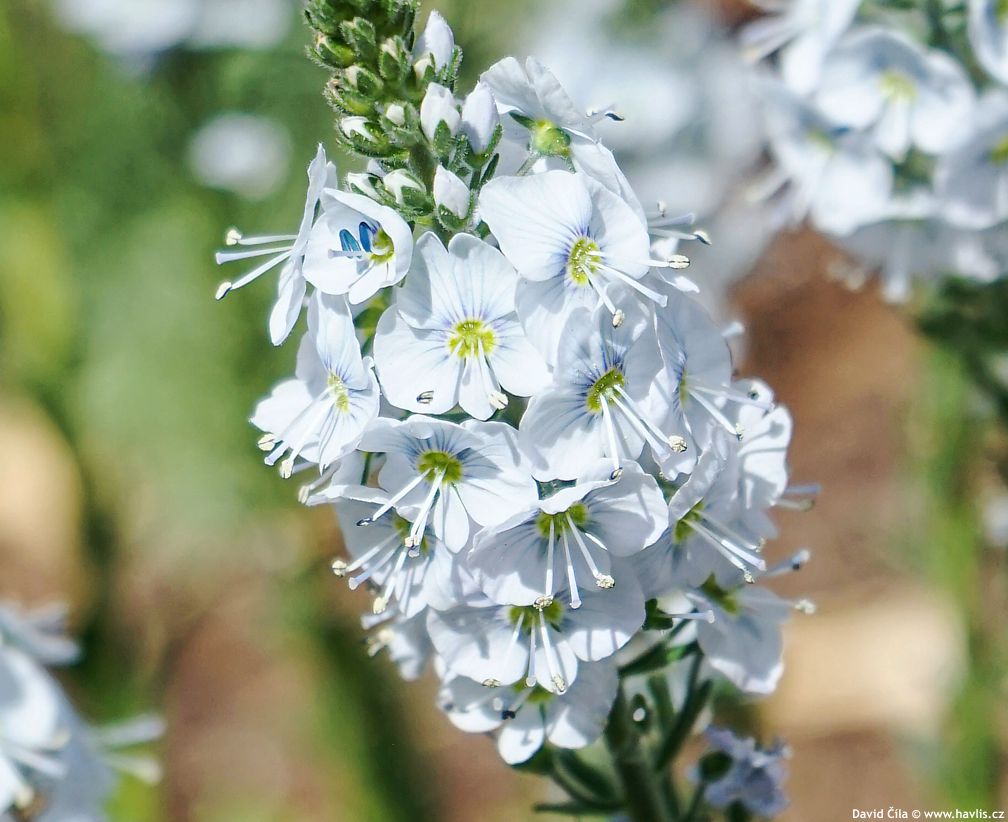
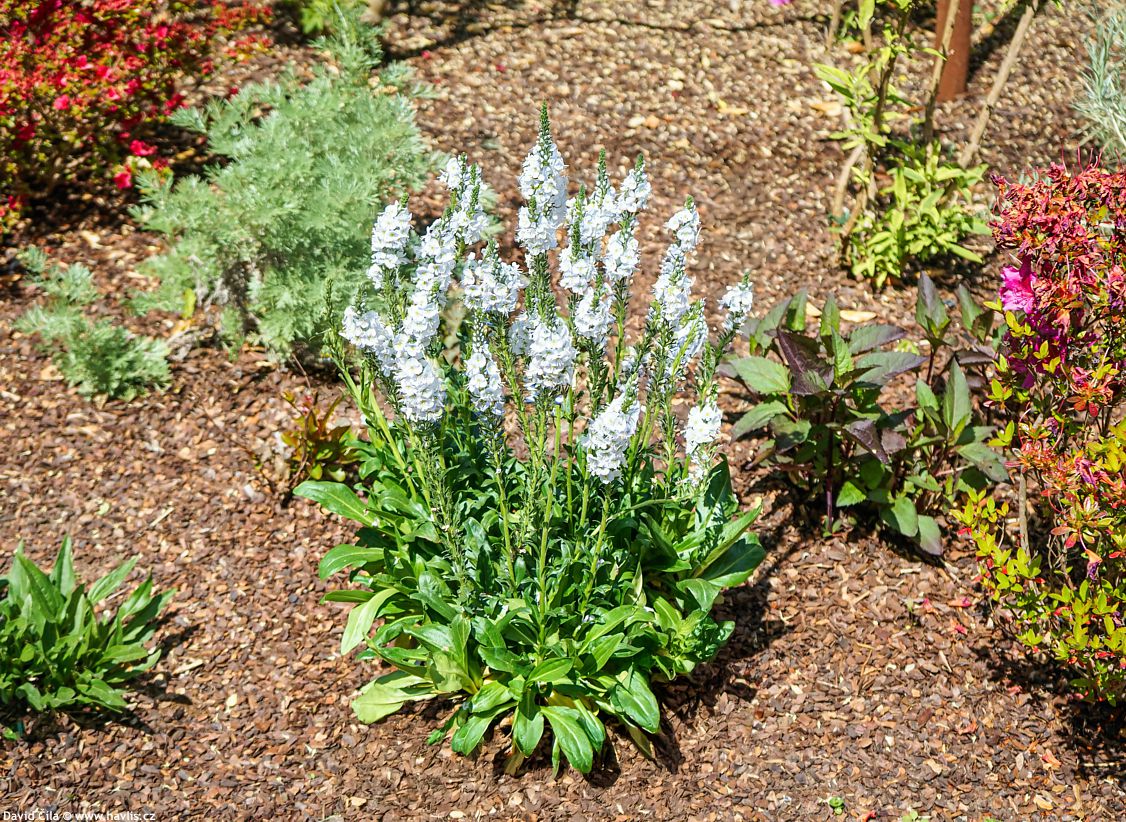
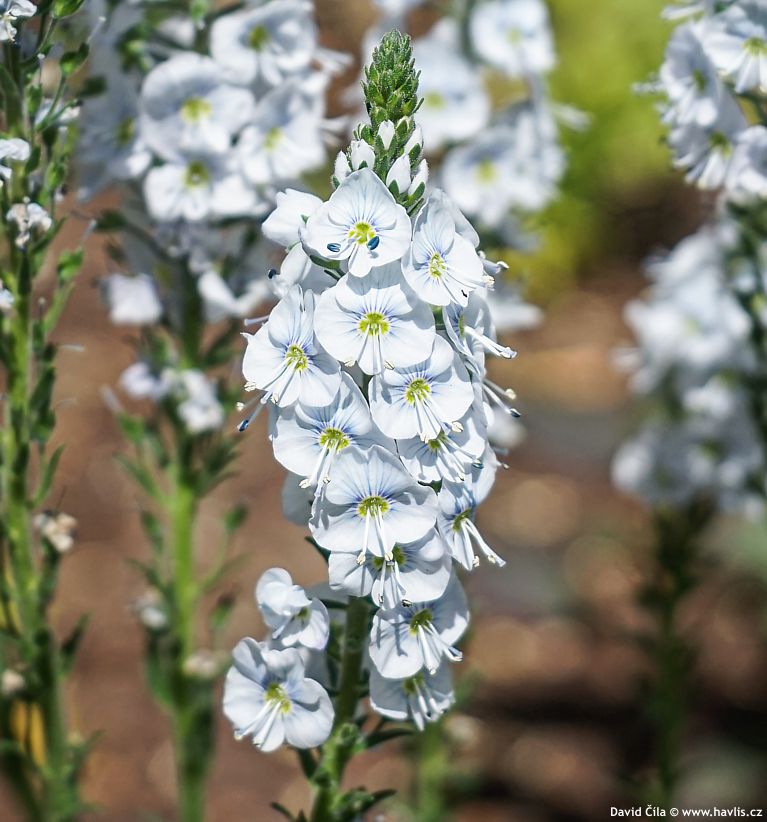
Veronica gentianoides 'TISSINGTON WHITE' gentian speedwell

 Symbivit Tric (arbuscular)
 Symbivit (arbuscular)
Veronica
The genus Veronica belongs among the most numerous and the most diverse groups of flowering plants of the temperate zone. It includes several hundred species distributed almost worldwide, from alpine meadows and forest understories to dry steppes and coastal rocks. It was described in the 18th century by Carl Linnaeus, who adopted an already established name linked to the legend of Saint Veronica. The legend says that she offered Christ a piece of cloth during his arduous journey to Golgotha, with which he wiped sweat and blood off his face. His image was said to have miraculously imprinted itself on the fabric, the so‑called vera icon, or “true image”. This idea of a faithful, unembellished imprint of reality was symbolically transferred in pre‑modern botany to speedwells, whose small, clearly drawn flowers were perceived as honest and needing no adornment.
Gentian speedwell (Veronica gentianoides) is an old Caucasian species that found its way into European gardens at a time when botanists and travellers were returning from the Orient with pockets full of seeds and exciting stories. Its specific name means gentian‑like and refers to the resemblance of its basal leaf rosettes to Gentians that share the same mountain habitats. In the wild it grows in the mountains of Turkey, Iran and the Caucasus up to around 3600 m, as well as in moist meadows, open woodlands and rocky slopes. The species was described at the turn of the 18th and 19th centuries by the Danish‑Norwegian botanist Martin Vahl (1749–1804), but it found its true home only later in European gardens, especially during the era of ‘alpines fever’ and naturalistic planting. It thrives in temperate climates, tolerates full sun as well as light shade, and settles happily into rock gardens, the edges of perennial borders and even small urban gardens. Thanks to its simplicity and gentle character, it became a natural part of English cottage gardens overflowing with perennials of all kinds and sizes, and we are delighted that it is finding its admirers in Central Europe as well.
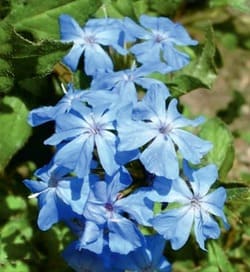
Tissington White is one of the most striking white forms of gentian speedwell. Early in spring it produces neat, nicely arranged and well‑behaved basal rosettes of fresh green leaves — well‑behaved meaning not like Bart Simpson — which remain evergreen in mild winters. They form a firm, quiet base for the flowering stems that rise in late May and June to around 40 cm, carrying long, airy spikes of almost pure white flowers with fine, barely visible violet‑blue veining. If you love traditional cottage‑garden perennials without showy colours — and you appreciate a sense of order and tidiness — this little plant will win you over.
Apart from its introduction year, 1991, the origin of the cultivar is unfortunately not documented. Its name, however, refers to the village of Tissington in Derbyshire, England, known for its traditional gardens, old stone walls and the annual “well dressing” festival, during which local springs are decorated with floral mosaics. It is therefore likely that the cultivar arose as a garden selection in this area or was first distributed by a local nursery. The style of the name and the character of the plant fit perfectly — gentle, light, with an English ease and understated elegance that suits both country gardens and modern urban plantings.
Gentian speedwell is among the most reliable and easy‑to‑grow spring perennials of the temperate zone. It thrives in full sun or light shade, in well‑drained, moderately moist soil that does not dry out completely in summer. It responds gratefully to a spring mulch of compost, and after flowering it appreciates the removal of spent stems, which helps it maintain a tidy leaf rosette until winter. In mild winters the rosette may partially overwinter, but even after complete dieback it sprouts again without hesitation. The species is fully hardy to around –40 °C (USDA zone 3), making it perfectly suited to even the harsher parts of Central Europe.
Last update 02-05-2022; 28-12-2025

Goods are shipped all over Europe. For Russia and U.K. and for further details please read about SHIPPING OPTIONS HERE.
Are you interested in a serious discount for orders NOV-FEB? Check your options here.
THE PRICES INCLUDE VAT of 15%. For quick conversion you can use 1 CZK = approx. 0.04 EUR
- STANDARD QUALITY - Plants of this group are 1st class quality with number of branches and overall density adequate to their size and age, considering they were container grown.
- DE LUXE QUALITY - This label guarantees a luxurious quality of manually selected plants that, compared to their height and age, are exceptionally dense and beautiful.
- EXTRA - These plants are usually mature and bigger specimens with exceptional overall appearance.
- STANDARD (as described in the plant form) means a tree with a trunk of 190-210 cm and a crown at the top, unless specified differently. The commercial size for trees is their girth measured in the height of 1m from ground.
- HOBBY - These plants are of the same quality as our standard-quality plants but younger and therefore cheaper.
- SHRUB - a woody plant with branches growing bushy from the ground level.
- HALF-STANDARD or MINI-STANDARD - a small tree with shorter trunk, its size is usually specified.
- FEATHERED - These are trees with branches growing already from the base of the trunk and up along the stem.
- GRASSES and PERENNIALS - Sizes given usually read the diameter of the pot or the clump, as specified.
