Cryptomeria japonica 'LITTLE DIAMOND' Japanese cedar

 Symbivit Tric (arbuscular)
 Symbivit (arbuscular)
Cryptomeria
Cryptomeria is a genus of conifers in the cypress family with only a single living representative today, yet its story reaches far beyond the forests of modern Japan. Fossils show that its ancient relatives were already growing in the Early Cretaceous and that during the Tertiary they covered large areas of Eurasia and North America, forming humid, warm forests with high air moisture. The genus was described by the Scottish botanist David Don (1799–1841), who separated it from the then broad group of taxodia and gave it the form in which we know it today. Its only species, Cryptomeria japonica, comes from Japan, where it forms mountain forests on the islands of Honshu, Shikoku and Kyushu. In the wild the species reaches impressive dimensions, up to around sixty metres in height, and its reddish brown bark peels in long strips, earning it comparisons with the sequoias, although it has finer needles and smaller cones.
The Japanese cedar entered European science thanks to the Swedish naturalist Carl Peter Thunberg (1743–1828), who described it at the end of the eighteenth century during his stay in what was then a closed Japan. While Don established the boundaries of the genus, Thunberg captured the species itself as he saw it in the Japanese landscape, forests wrapped in mist through which gentle shades of green flicker as light breaks and scatters across the branches, giving the stands an almost sacred appearance. It is no wonder that cryptomeria, known as sugi 杉 in Japan, gained such a strong place in local culture. The Japanese valued it not only for its wood, which is light, durable and pleasantly scented, but also for its calm, upright silhouette. They planted it around shrines as protection from wind and rain, and the famous avenues, for example at Nikko, still show how deep their relationship with the tree was. In everyday life it served as material for houses, baths and boats, but also as a monumental tree that reminds a person that he stands before something older and more enduring than himself.
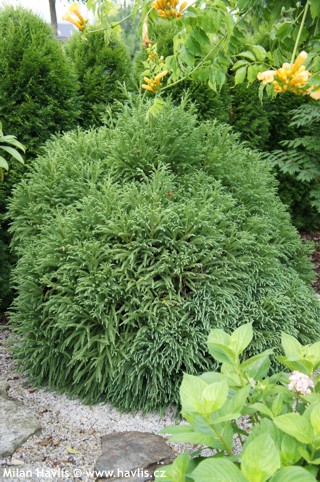
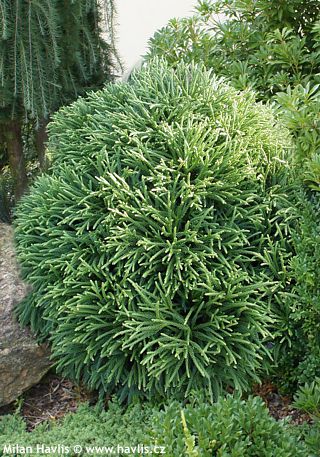
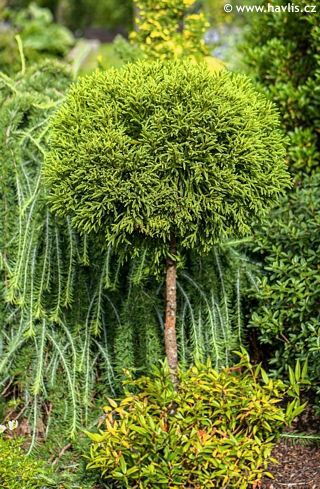
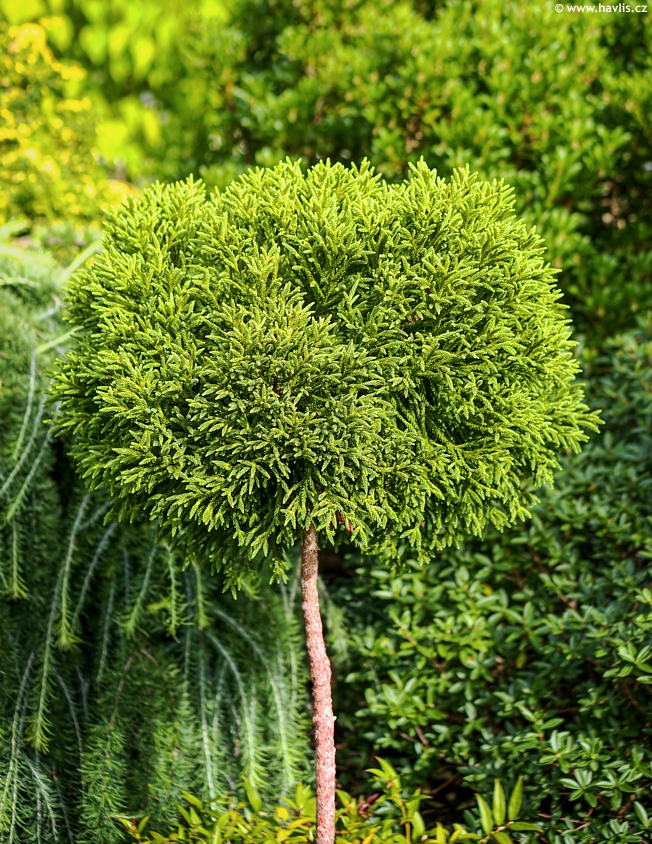
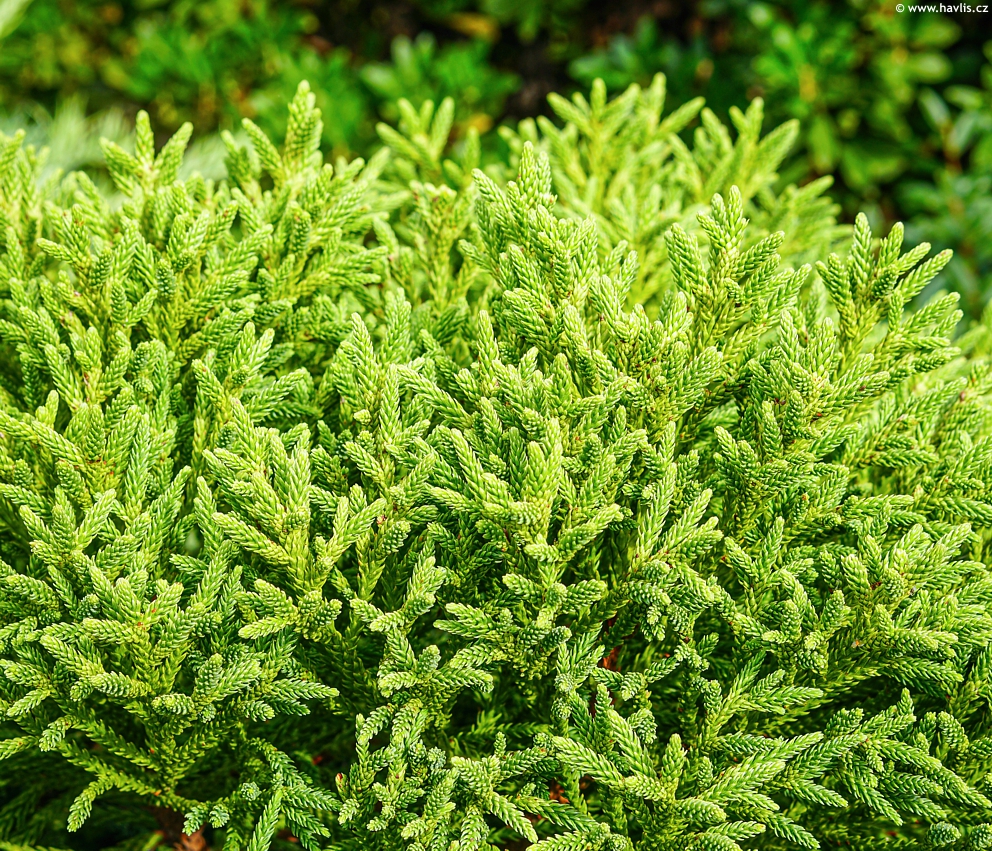
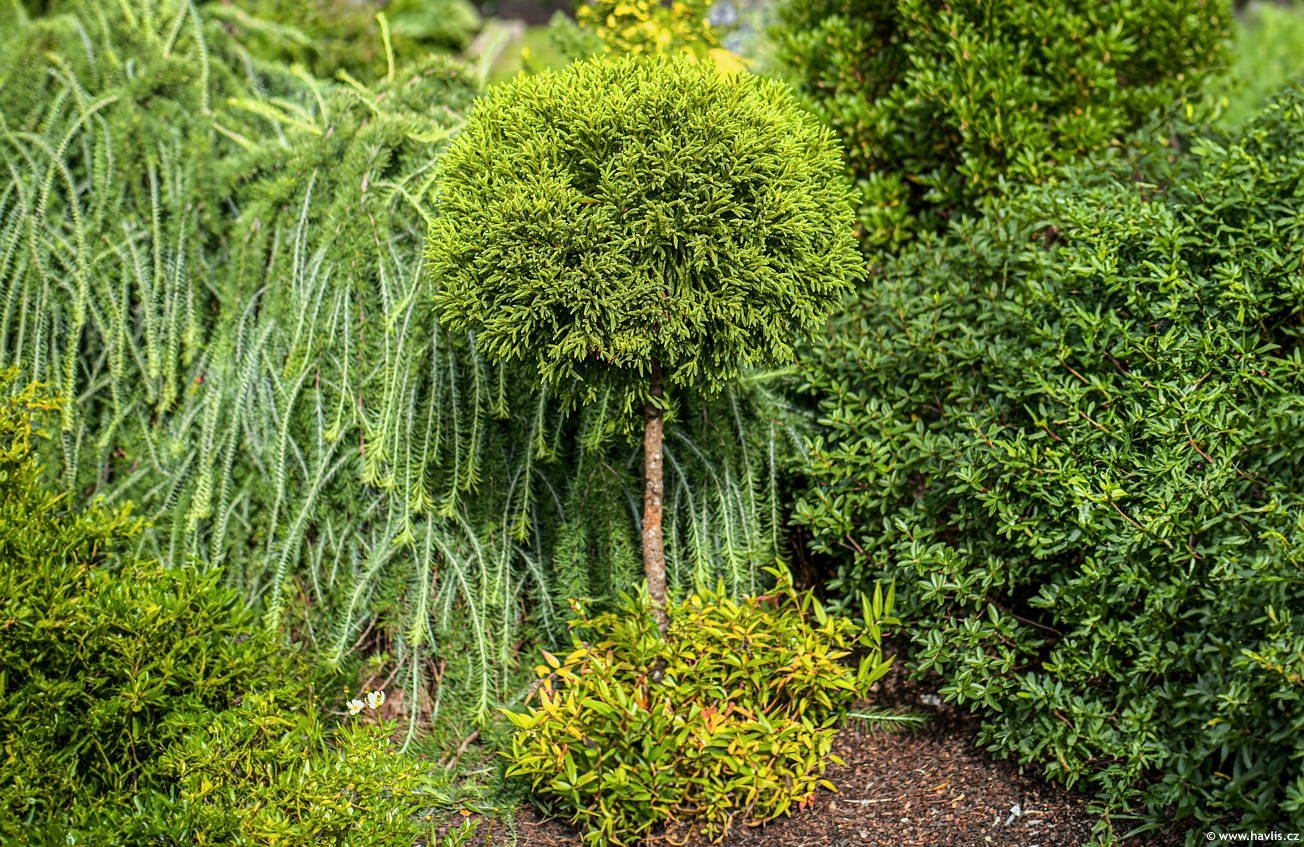
Following the success Little Champion variety, Little Diamond is another dwarf Japanese cedar variety with a spherical habit. It originated in the Netherlands in 1990, and its beauty inspired the growers to train it into a gorgeous little tree with a single trunk. Since Little Diamond grows slowly, it naturally produces a beautiful, compact, and dense canopy with evergreen, tiny, scale-like needles that are rather soft which makes you want to touch them every time you walk past. Their colour is bright green spring through autumn, only in winter it can turn bronze in some locations (depending on the conditions).
As a standard tree, it is important to remember that the canopy always grows faster than the trunk, which is not able to support its weight by itself. That's why we strongly insist on providing a strong support for the first 3-5 years. Use the same staking set as you would for standard high-standard alley trees. Place the pen just below the canopy so that its weight can be evenly distributed. This eliminates the risk of it being broken by a strong wind or after heavy rain. Nevertheless, we recommend removing wet and heavy snow from the crown in winter.
Little Diamond cryptomeria grows slowly into a globose shape. The Japanese cryptomeria belongs among woody plants that require a sheltered site with plenty of moisture in both soil and air. It thrives best in slightly acidic, humus rich soil that does not dry out yet does not remain waterlogged for long periods. Young plants appreciate shelter from wind and partial shade, as strong sun can scorch their delicate needles in the first years. Once established they tolerate full sun and ordinary winter conditions, but long periods of drought weaken them, especially in winter. To maintain a dense habit, occasional deep watering and a mulch of needles or bark that stabilises moisture are beneficial. Pruning is usually unnecessary, as cryptomeria shapes itself and does not respond well to cuts into older wood. In colder regions it is advisable to protect young plants from winter winds, which can cause moisture loss and subsequent browning of the needles. Hardiness is proven to minus 25 °C and it is assumed that it can withstand around minus 27 °C in winter shade (USDA zone 5b).
Last update 04-08-2023; 21-03-2026
The Japanese cryptomeria belongs among woody plants that require a sheltered site with plenty of moisture in both soil and air. It thrives best in slightly acidic, humus rich soil that does not dry out yet does not remain waterlogged for long periods. Young plants appreciate shelter from wind and partial shade, as strong sun can scorch their delicate needles in the first years. Once established they tolerate full sun and ordinary winter conditions, but long periods of drought weaken them, especially in winter. To maintain a dense habit, occasional deep watering and a mulch of needles or bark that stabilises moisture are beneficial. Pruning is usually unnecessary, as cryptomeria shapes itself and does not respond well to cuts into older wood. In colder regions it is advisable to protect young plants from winter winds, which can cause moisture loss and subsequent browning of the needles. Hardiness is proven to minus 25 °C and it is assumed that it can withstand around minus 27 °C in winter shade (USDA zone 5b).