.jpg)
Acanthus mollis bear's breeches


 Symbivit Tric (arbuscular)
 Symbivit (arbuscular)
Acanthus
Acanthus is a genus of approximately 25–30 species in the family Acanthaceae, formally described by Carl Linnaeus (1707–1778) in Species Plantarum in 1753. Its species occur naturally from the Mediterranean Basin through parts of Africa to Asia and northern Australia, with the greatest diversity concentrated around the Mediterranean and in tropical Asia. Fossil evidence suggests that members of this group were already prominent herbaceous plants of warm regions in deep geological time. Across the genus, robust basal rosettes of leaves and striking inflorescences are characteristic, giving the plants an architectural presence rather than the delicacy of a typical cut flower. Early botanists were quick to notice their unusual structure and ability to dominate space, which made acanthus an easily recognizable genus even to non‑specialists.
The first time I encountered Acanthus mollis in person was a memorable experience. Around 2008, while visiting plant nurseries in the United Kingdom in search of exotic‑looking species capable of performing in temperate climates, I was stopped at the entrance by an unassuming yet perfectly composed planting. Even in late winter, the bed was filled with remarkably glossy, deeply cut leaves that showed no signs of fatigue or damage, as if they had just emerged from a sculptor’s studio. It became clear to me then that Acanthus mollis is not merely a Mediterranean curiosity, but a plant of considerable vitality with the capacity to function well beyond its native range.
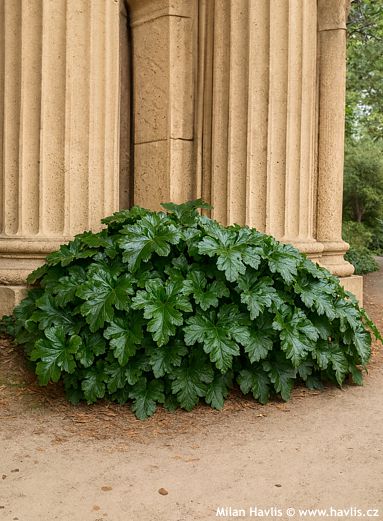
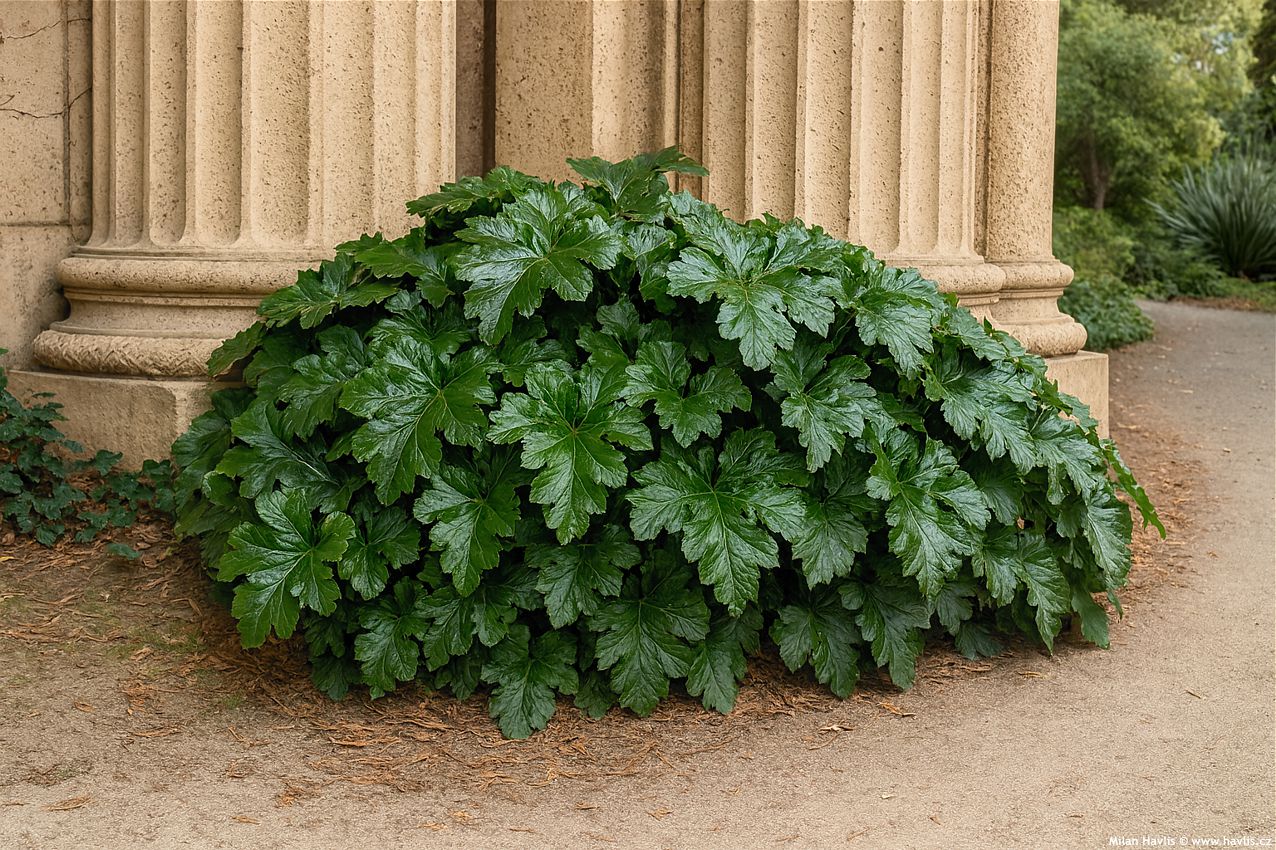
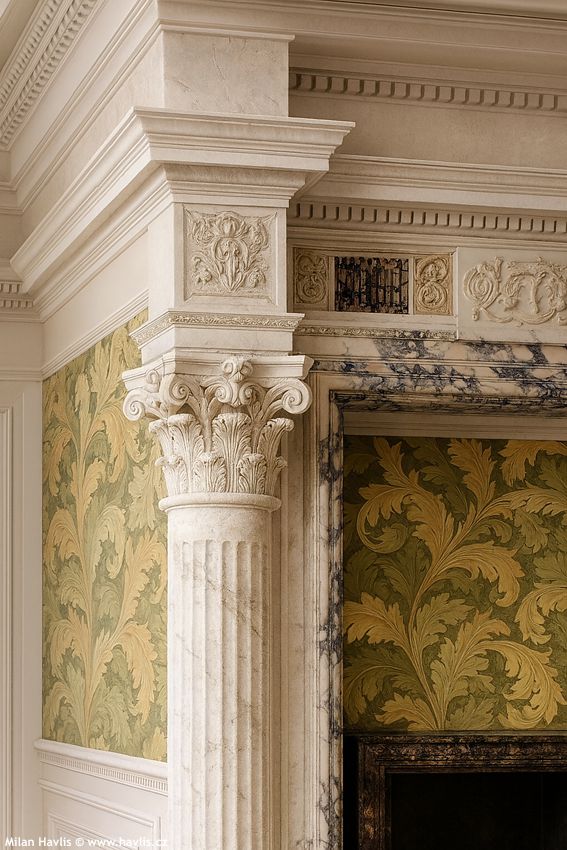
Acanthus mollis is also the botanical source of the iconic acanthus leaf motif familiar from classical temples, Renaissance palaces, and historic domestic architecture, where its form appears repeatedly on column capitals, cornices, and ornamental details. The relationship between the living plant and its stylized architectural representation has been examined in detail, for example by Minissale, Magro, and Raimondo (2019). The species is native to the western and central Mediterranean, where it grows on rocky slopes, in scrub, and on disturbed sites near human settlements. Although first described by Linnaeus in 1753, its behaviour outside the native range was studied more closely in the nineteenth century by botanists such as Charles Cardale Babington (1808–1895), who documented its successful establishment in British gardens and parks.
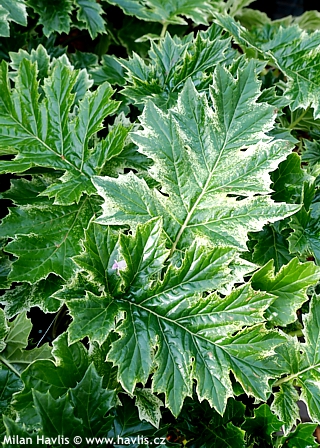
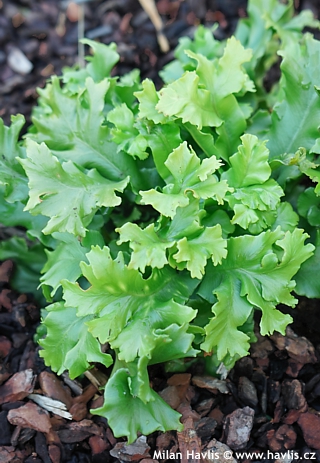
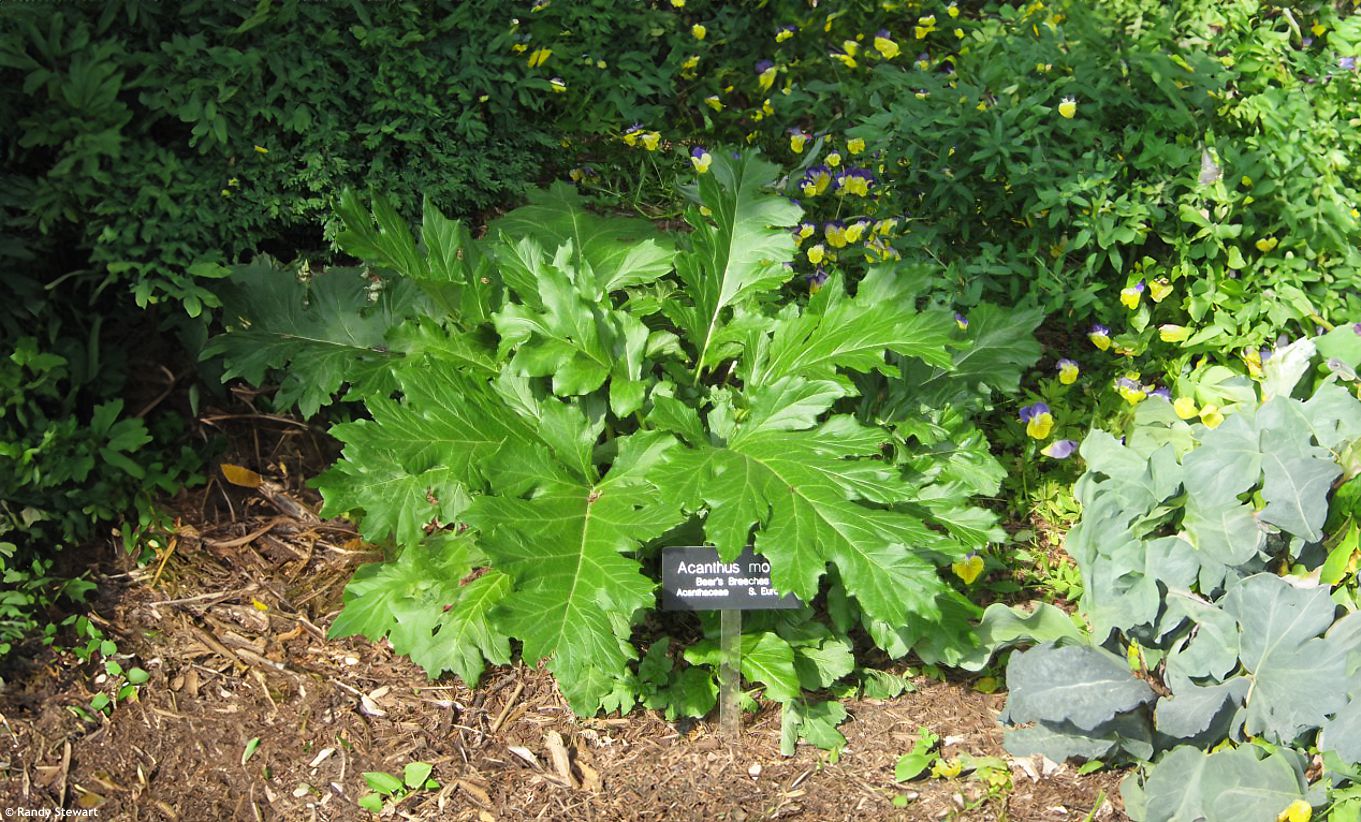
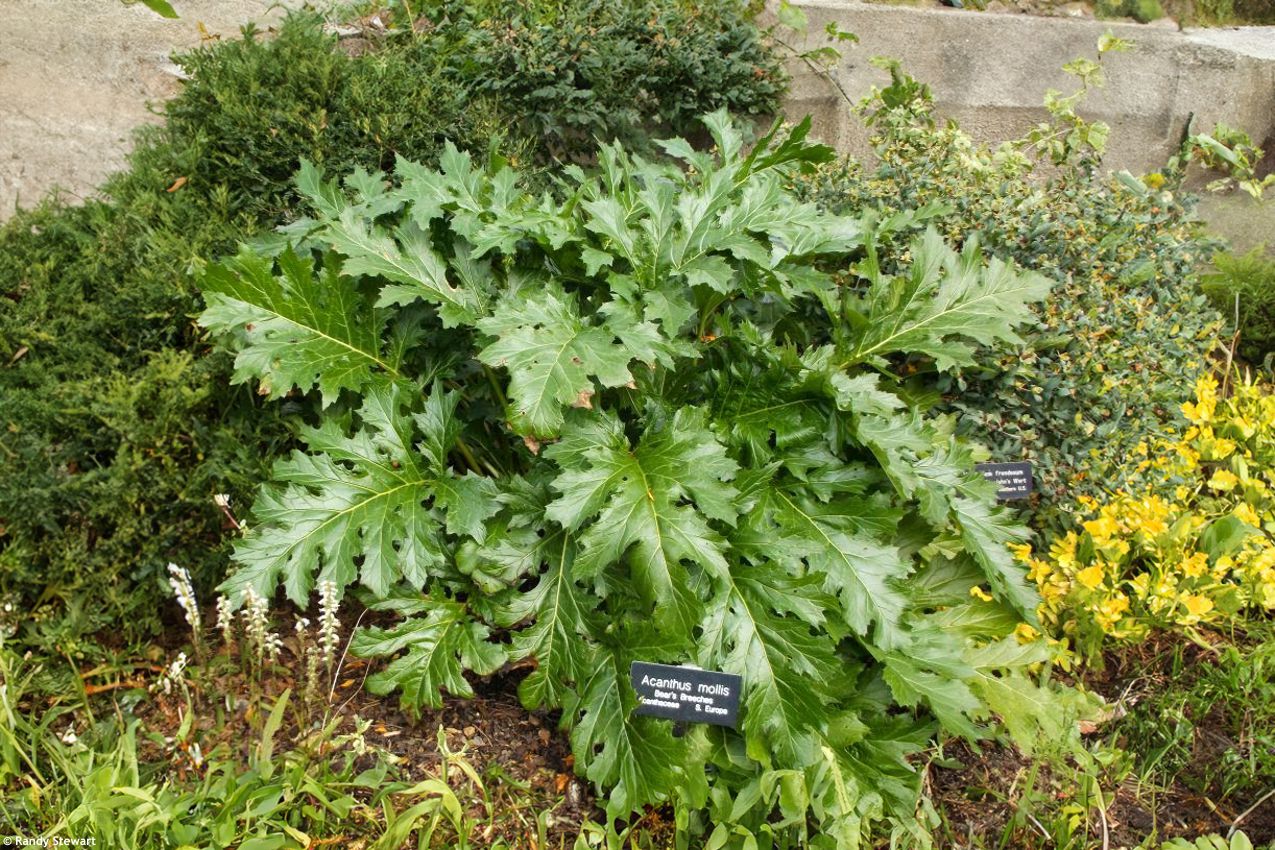
Acanthus mollis, commonly called bear’s breeches, draws attention with its foliage long before it comes into flower. The massive basal rosette spreads outward, creating the impression of a green sculpture resting on the ground. The leaves are large, typically 30–60 cm long, deeply lobed, with soft, unarmed margins and a pronounced venation that gives them a strongly sculptural relief. Their surface is dark green and glossy, sometimes lighter in young leaves, with subtle contrasts between veins and blade enhancing the texture. Unlike A. spinosus, it lacks spines and appears softer and more relaxed, with leaves often arching gently outward rather than standing rigidly upright.
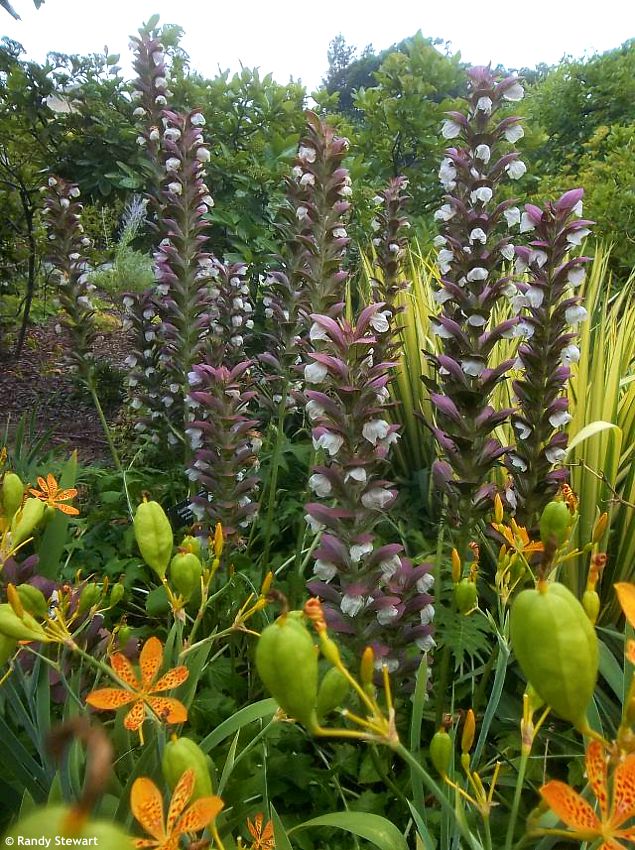
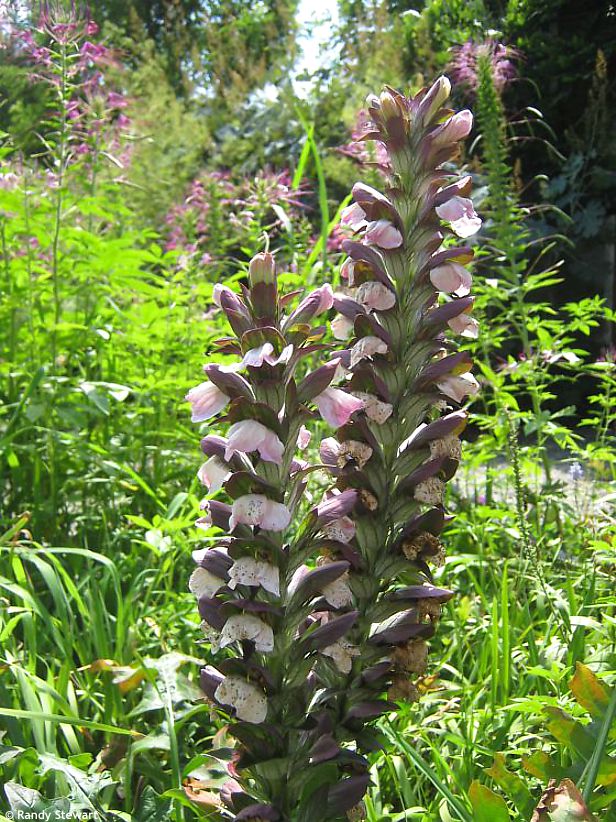
Flowering stems usually emerge from the centre of the rosette from late June into July, reaching about one meter in height, and sometimes more in mature plants. They carry dense, spike‑like inflorescences with conspicuous bracts in shades of purple to wine red, between which open white to creamy flowers with a faint pink tint. After flowering, the plant remains attractive primarily for its foliage, which retains structure and colour well into autumn and, in mild winters, often persists through the colder months. In regions corresponding to USDA Zone 6 – such as much of Central and Eastern Europe – Acanthus mollis is best regarded as a bold foliage plant, with flowering occurring only sporadically. In warmer areas matching USDA Zone 7, including sheltered sites in Western Europe, the Mediterranean, the Pacific Northwest, or parts of the mid‑Atlantic United States, reliable flowering can be expected in sunny to lightly shaded, protected locations.
Because its large, fleshy leaves evoke the atmosphere of a rainforest, I like to combine acanthus with evergreen shrubs that reinforce this impression. Species chosen for contrast in colour and texture, such as small‑leaved variegated buckthorn, compact, spineless hollies, or palmate-leaved choisyas work well alongside plants that echo the same bold, leafy character, including Portuguese laurel ‘Tico’, cinnamon-leaved viburnums, or southern magnolia in suitable climates. In the herbaceous understorey, ferns, Artemisia, Senecio, or Erysimum provide softer textures that knit the composition together.
Last update 06-02-2008; 11-02-2016; 02-02-2026
In cultivation, acanthus should be treated as a perennial that dislikes persistent or winter waterlogging. It performs best in well‑drained, humus‑rich, fertile soil and benefits from a generous winter mulch. Mulch protects the root system from freezing and from fluctuations in soil moisture; in spring, part of it should be removed carefully, leaving enough cover to maintain even moisture as growth resumes. Once established, the plant tolerates periods of drought reasonably well, but regular watering during the first two years and in prolonged summer heat supports stronger flowering stems and more vigorous growth. Moderate feeding with compost or a balanced fertilizer from spring to midsummer promotes large, healthy leaves; excessive late‑season nitrogen should be avoided, as it produces soft, vulnerable tissue. In terms of cold tolerance, Acanthus mollis has proven hardy in well‑drained, mulched, and sheltered sites down to approximately −17 °C (USDA zone 7) and surviving down to about -20 °C if heavily mulched for winter. On the other hand, plants in exposed or wet positions as well as plants in pots may suffer winter damage unless moved indoors before frosts.