Arbutus unedo 'COMPACTA' hardy strawberry tree


 Rhodovit (arbutoid type)
Arbutus
The strawberry tree is a Mediterranean woody plant that you may easily miss passing by local rocks and plains, because there it is just as naturalized, ubiquitous, and often oddly shaped as, for example, the common elder is in Central European countryside. Somewhat surprisingly, the genus Arbutus belongs to the heath family (Ericaceae) and includes several species of evergreen shrubs and small trees distributed throughout the Mediterranean region along its entire perimeter, European, African, and Near Eastern, as well as in adjacent parts of western Europe. It belongs among ancient woody plants that were already growing here around 20 million years ago, at a time when the local climate and the character of Mediterranean vegetation were only beginning to take on their present form. Under the typically harsh conditions of the maquis, strawberry trees survived cooling periods, recurring droughts, fires, and other repeated disturbances of the landscape. It is therefore no surprise that this combination of evergreen elegance, long-term drought tolerance, and the ability to regenerate after stress has rapidly brought the strawberry tree to the forefront of growers’ interest at the beginning of the new millennium. It is a prime candidate for the changing climate of today’s Central Europe, where rainfall and soil moisture are declining.
The common strawberry tree (Arbutus unedo) is the most widespread representative of the genus and is abundant in Mediterranean landscapes. It naturally forms the lower and middle layers of woodland. It was first scientifically described by Carl Linnaeus in 1753 in his work Species Plantarum. The species name unedo originates from the Latin phrase unum edo: “I eat only one” traditionally attributed to Pliny the Elder (23–79 AD, Roman Italy). This refers to fruits, which are edible and sometimes quite sweet, but rather bland in flavour. This brief remark, whether meant seriously or with irony, reminds us that the strawberry tree was observed and named long before the emergence of modern botany. For centuries it remained a symbol of southern regions, where its adaptability to summer drought and its striking appearance made it popular in gardens and urban greenery, while more northerly areas were long considered beyond its reach. That has now changed.
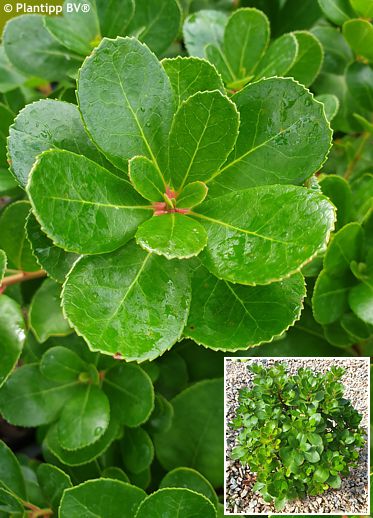
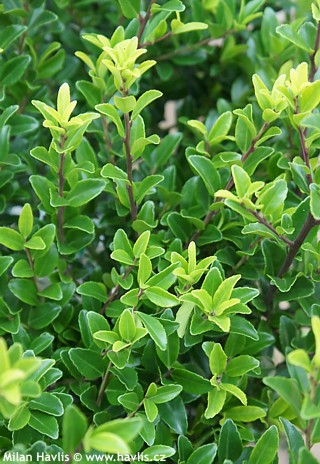
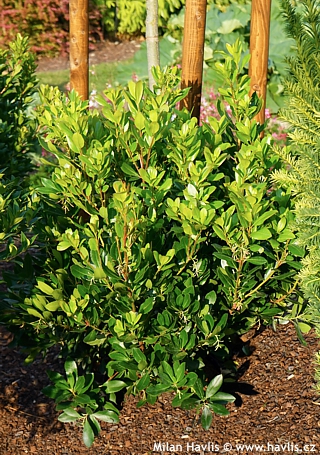
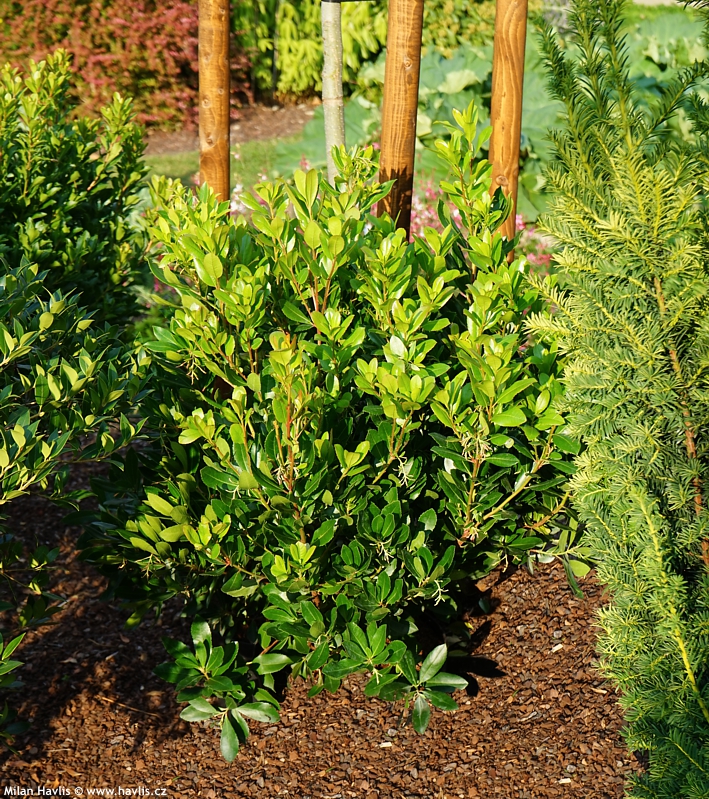
Compacta is a strawberry tree selection found many years ago as a seedling of the species. It boasts a neat and well-behaved habit, dense branching, and improved hardiness. Its evergreen leaves are narrowly obovate, 5-7 cm long, finely serrated at margins, they emerge bronze red and remain soft green for a long time before they mature to deep green. Always very glossy and erect.
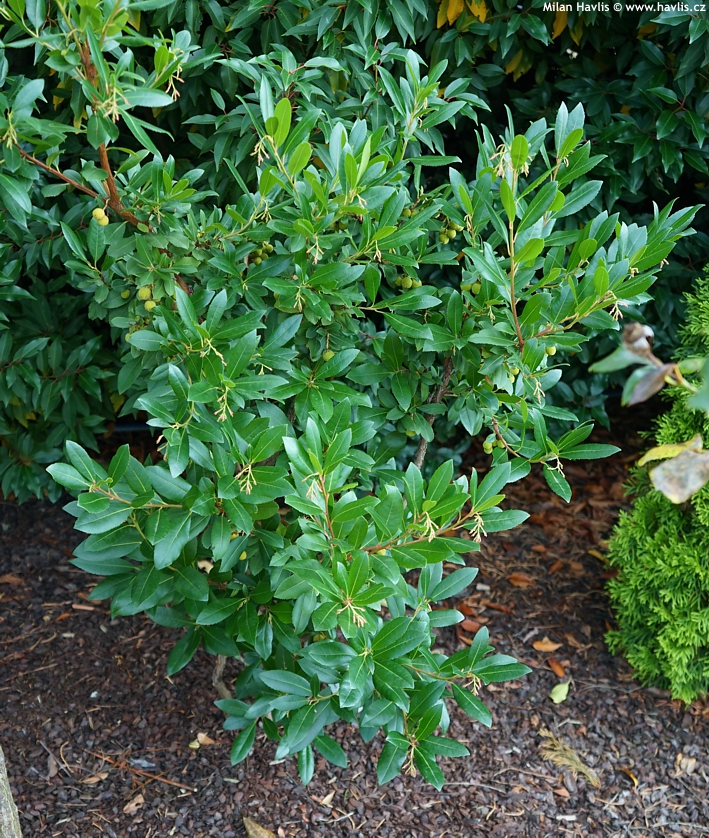
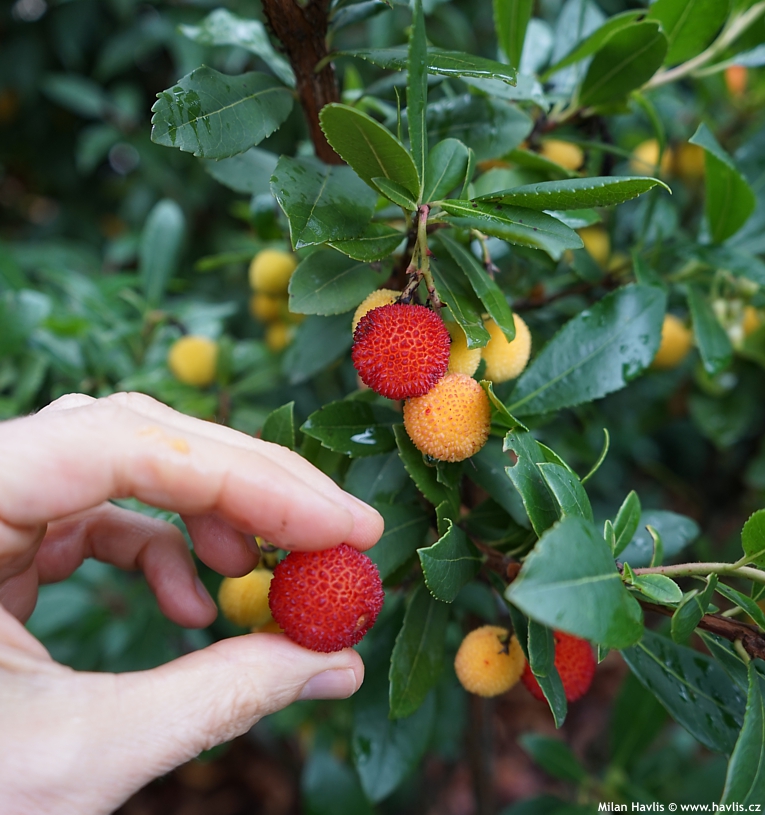
Arbutus belongs to heather family (Ericaceae) which is easy to tell looking at its flowers. They are urn-shaped, red and white, composed in pendent racemes, and show up from autumn until late spring, and sporadically throughout summer, too. Meanwhile mature small, spherical, and edible fruit which is bright red when mature hence the tree name. It contains as much as 20% of sugar but the taste is rather dull so it is mostly used in preserves and liquors.
Strawberry tree is one of the key features of so-called macchia vegetation found in dry and hot, rocky slopes of South Europe. Its plants cope extremely well with long-lasting drought and are usually unattacked by wild animals. Compacta remains smaller and compact, yet you can enhance its branching in spring after all frosts. I saw beautiful specimen plants trained into small multistemmed trees which reveal the beautiful red-brown bark. Select 3-5 main branches as a strong framework, remove all laterals until the top and clip its canopy into a mushroom head every summer. Thus you can achieve a beautiful Mediterranean-style jewel.
Last update 13-09-2020
Grow it in extremely well-drained, humus rich soil in full sun or only light shade. Slightly acidic soil enhances the depth of green colour in leaves but is not essential. Just avoid compacted or water-logged ground where the roots may rot. It will need even moisture after transplanting but once established stay away from watering. It is pest and disease free, and so far hardy to USDA zone 6 – short spells of -23°C. Choose older plants for growing in zone 6 and provide good mulch for winter.

.jpg)