










Betula pendula (syn. Betula alba) 'KARACA' European white birch

 Ectovit (ectomycorrhizal)
Betula
The species of European white birch is a large tree growing over 20m tall in maturity. Its most significant feature is white bark, pealing off in thin layers. Its leaves are said to emerge only after the danger of all frosts. Its specific epithet pendula refers to weeping habit which is not entirely true. This birch has upright growth, only the ends of the branches are arching. There are plenty of varieties available in trade now varying in size, habit or leaf shape or colour.
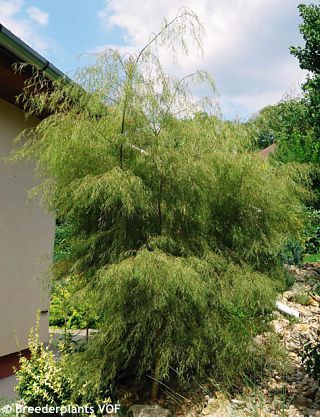
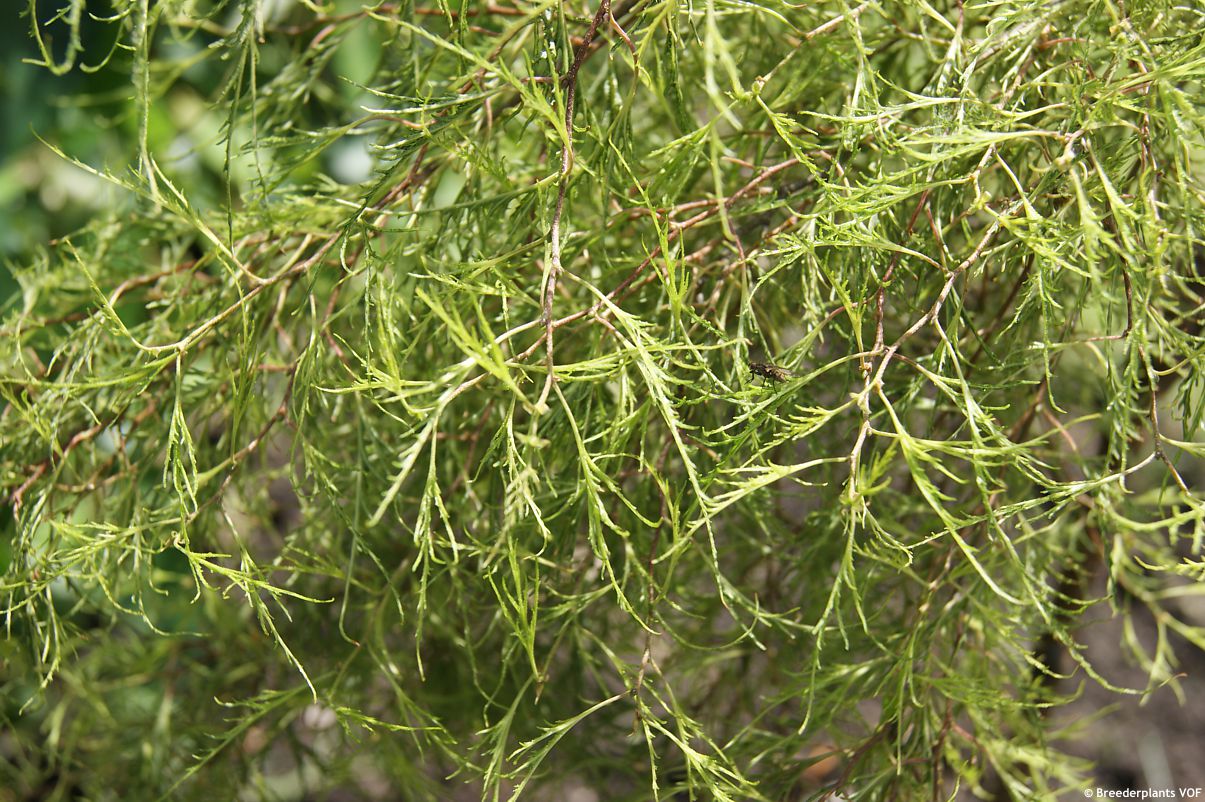
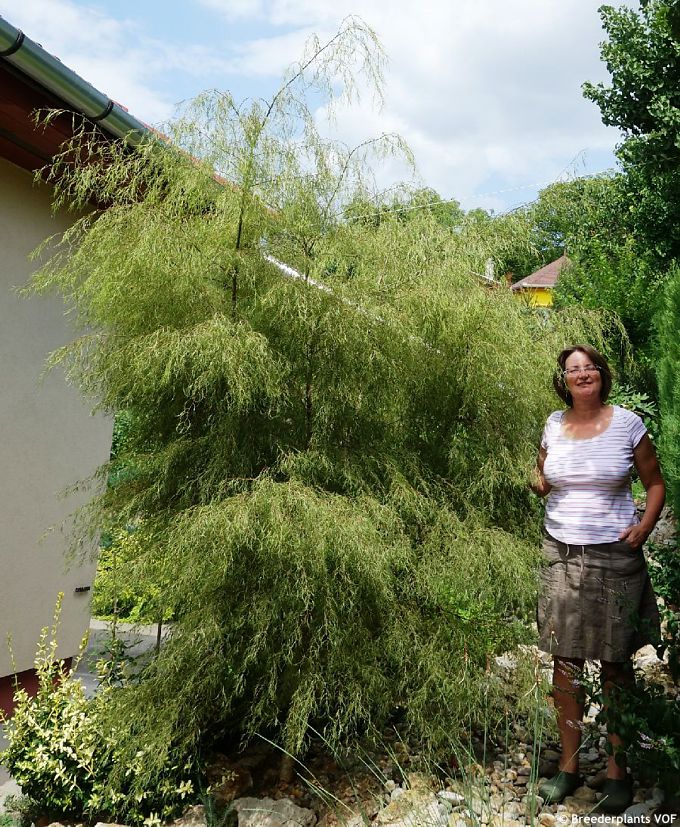
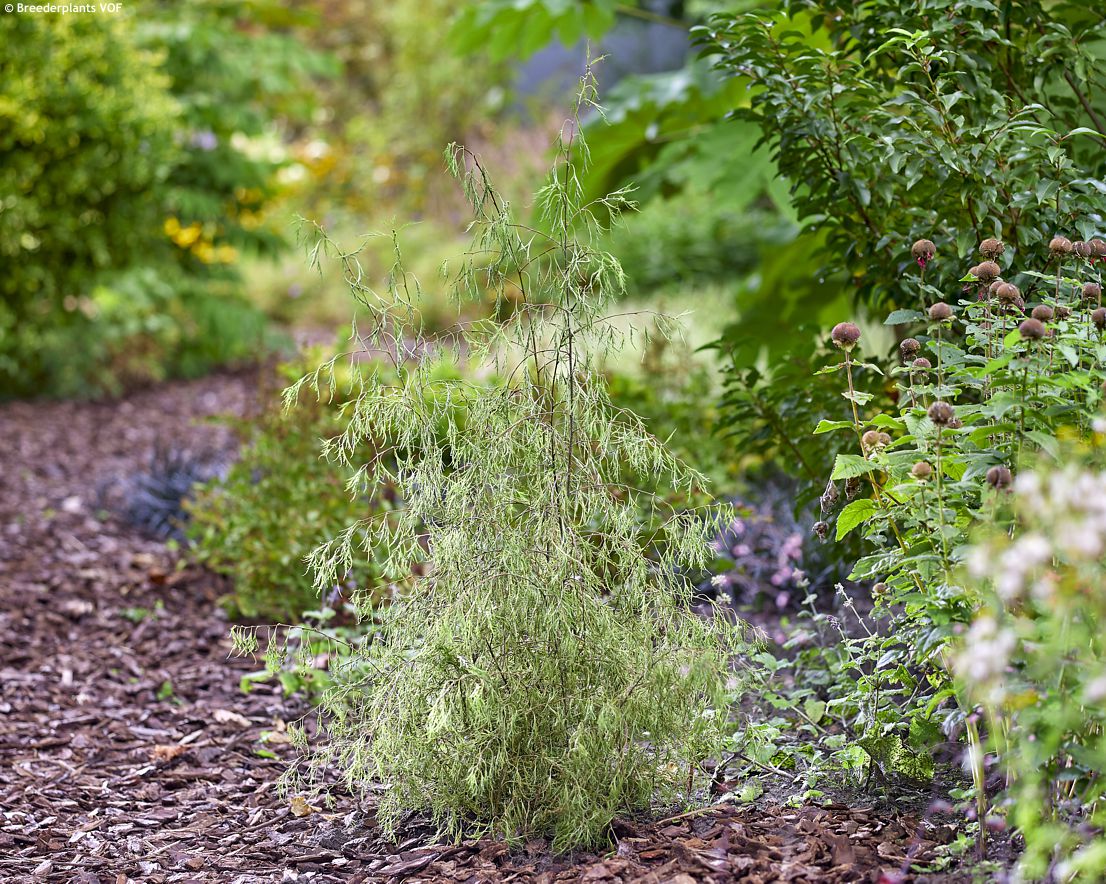
Karaca is a Hungarian variety of white birch, a natural mutation discovered by Dr. László Orlóci. European patent No. 16702 was granted in 2006. It is a slow-growing variety with extremely delicate foliage. The leaves are deciduous, bright green, deeply incised like a lace. The branching is dense and makes an angle of about 70° with the terminal, but thanks to the arching ends of the branches the plant gains a graceful pendent appearance of a fine veil.
You can use it anywhere you like to soften the existing landscape because it will look beautiful in almost any garden style: prairie, Japanese, cottage, modern, urban etc. It can be pruned and trimmed in any way, ideally in late winter.
Last update 07-03-2023
Silver birch behaves like a surface‑foraging tree: its roots spread wide and shallow through the upper soil layers, quickly taking advantage of spring and summer moisture yet suffering just as quickly when that layer dries out. Most of the active roots sit within roughly half a metre of depth, occasionally a little deeper, which explains why the tree thrives in light, acidic to neutral, well‑drained soils and can even anchor itself in fractured rock where cool, damp crevices hold water longer than the surface. In temperate gardens it copes with short dry spells, but repeated summer drought weakens it, leading to early leaf drop and greater susceptibility to pests and diseases, so young and mid‑aged trees benefit from regular deep watering and a mulch layer that stabilises soil temperature and moisture. Because the root zone is sensitive to disturbance, any underplanting is best done soon after planting the birch itself, and later the soil should not be dug or compacted. Its cold tolerance is excellent, commonly down to about –45 °C, so it requires no winter protection in temperate climates.