

































Frangula alnus (syn. Rhamnus frangula) 'ASPLENIIFOLIA' fernleaf buckthorn, cutleaf buckthorn

 Symbivit Tric (arbuscular)
 Symbivit (arbuscular)
Frangula
The genus Frangula belongs to the buckthorn family and includes several species distributed mainly across Europe and western Asia, with smaller representations in eastern Asia and North America. Its naming, however, went through a minor upheaval in the eighteenth century. Carl Linnaeus (1707–1778), regarded as the father of modern botany, described alder buckthorn in 1753 under the name Rhamnus frangula, as at that time even thornless species were included within the genus Rhamnus. It was only later that the English botanist Philip Miller (1691–1771), long‑serving head gardener of the Chelsea Physic Garden and almost a generation older than Linnaeus, recognised that buckthorns of this type were fundamentally different. Unlike the more warmth‑loving Rhamnus species, Frangulas lack thorns, have entire leaves and their fruits ripen gradually. Miller therefore separated them as the distinct genus Frangula, grouping together the so‑called true buckthorns with soft leaves that are typical in our region. Fossil evidence supports this distinction, showing that buckthorns were already common components of the European landscape during the Tertiary period, occupying mainly moist habitats along river floodplains, springs, woodland edges and open alluvial forests, environments they continue to favour today.
Alder buckthorn is among the most widespread species of the genus and has been known at least since 1753, when it first appeared in Species Plantarum. It occurs naturally across almost the whole of Europe, extending into western Asia and North Africa, and for centuries has lived near human settlement, often where soils are damp and the landscape slightly untidy. At first glance it may resemble common alders or chokeberries, but it offers no edible fruit, perhaps one reason why it long remained outside the focus of ornamental horticulture. Instead, it was valued for a range of practical uses. Its wood has a reddish‑orange heartwood and was considered one of the finest raw materials for producing high‑quality charcoal, including that used for gunpowder. Its almost poisonous bark has long been processed pharmaceutically into effective laxatives, and the fruits were used as a source of dye. Only from the nineteenth century onwards are there records of naturally occurring mutations, twigs bearing thinner, finely divided leaves that appeared unexpectedly elegant. These were selected and gradually developed into several cultivars that remain successful to this day. Combined with their low cultivation demands and resistance to many external influences, alder buckthorns have become valued trees for parks and private gardens, while in the wider landscape they remain unobtrusive yet persistent shrubs of woodland margins, wetlands and alluvial forests, providing shelter and food for a wide range of wildlife.
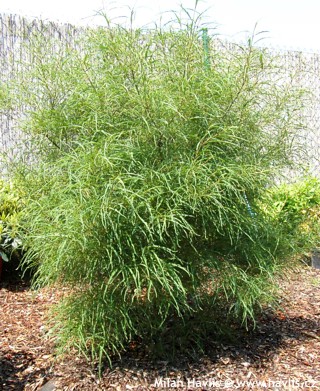
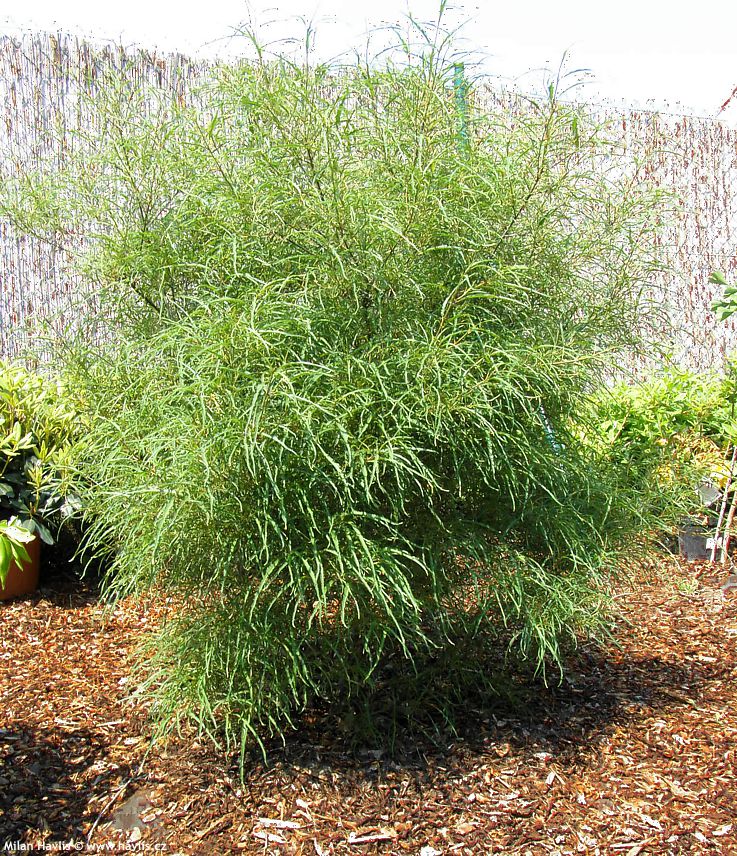
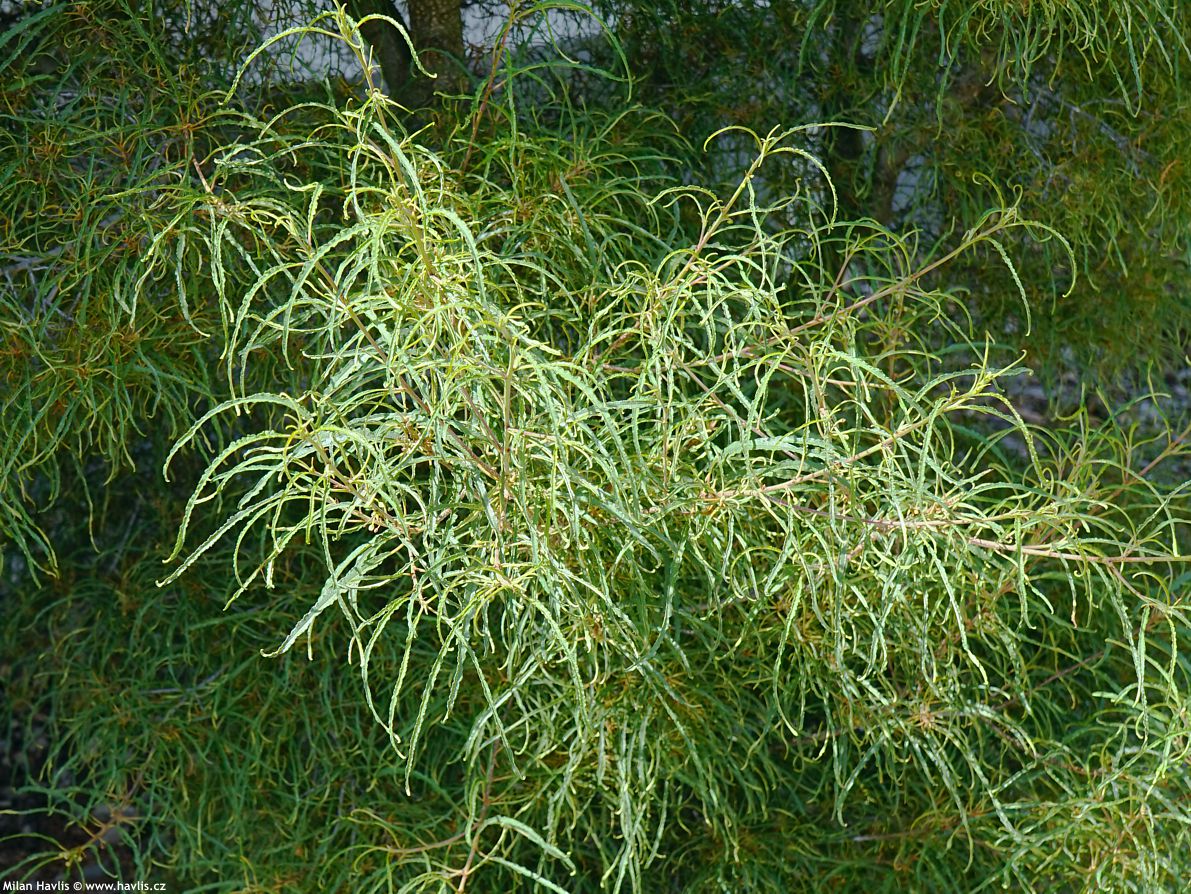
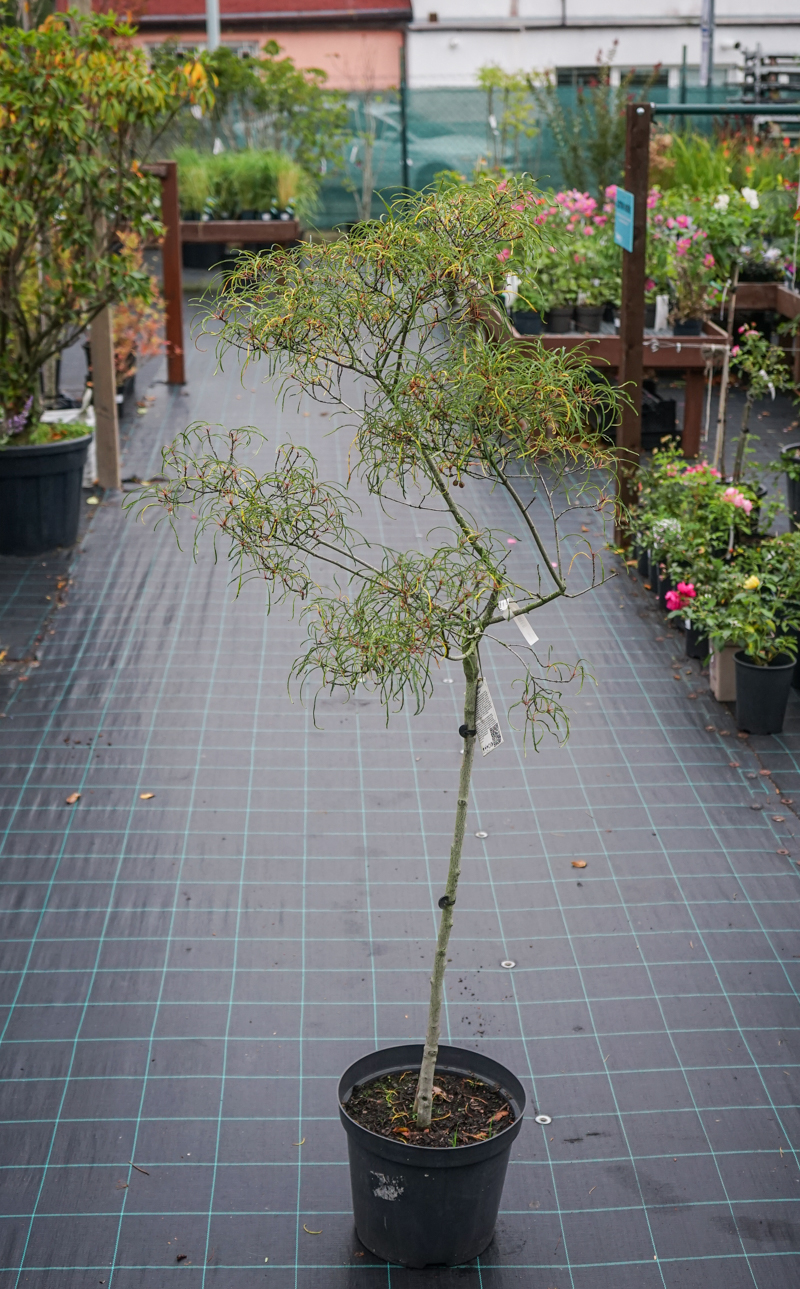
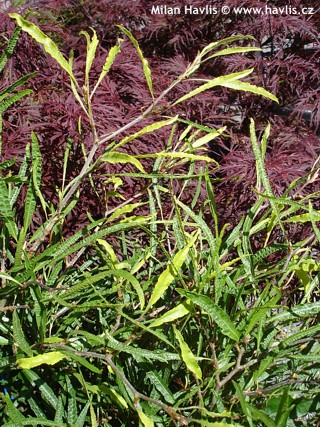
I once heard a joke: What is a yawn? A silent scream. It feels uncannily apt when encountering Aspleniifolia alnus buckthorn for the first time. Your jaw drops, you want to shout “what on earth?”, yet you remain standing there in quiet admiration, murmuring “wow”. If you know the ordinary wild form of alder buckthorn, you will never place these two in the same family. ‘Aspleniifolia’ offers instead extraordinarily fine leaves, narrow and long like green shavings, often six to twelve centimetres in length, yet so slender that they resemble down rather than foliage. Thanks to them, the shrub appears airy and playful, balanced precisely between dishevelment and refinement, allowing it to stand confidently alongside such aristocrats as Japanese maples or evergreen magnolias. The leaves are deciduous, deep green and slightly glossy, though their extreme narrowness makes this easy to overlook. I often get the feeling that I want to stroke them whenever I pass by, or to stuff them into a pillow in place of down and take an afternoon nap on them like on a heap of summer hay.
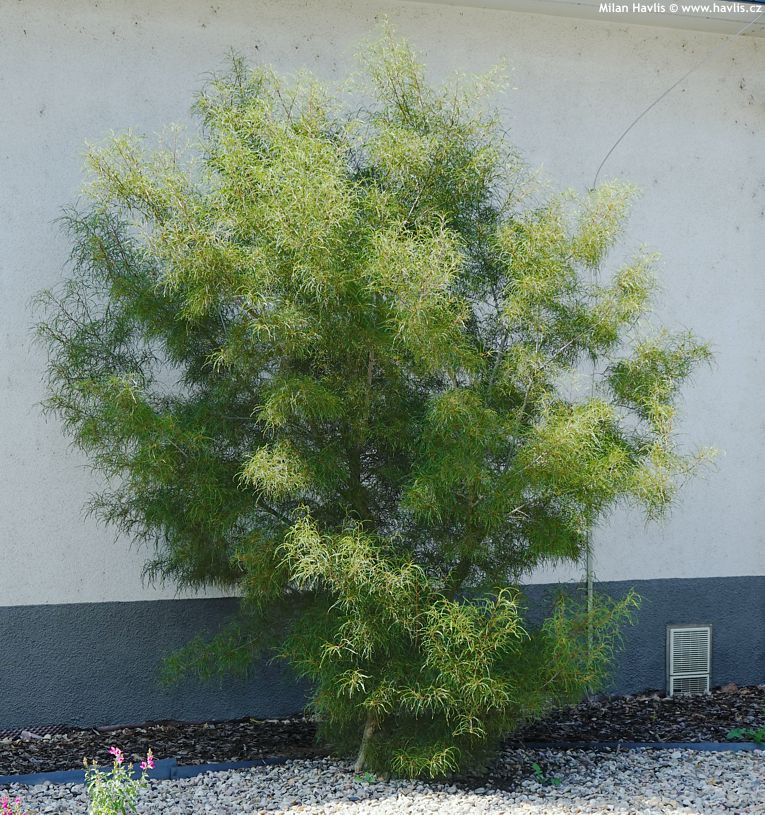
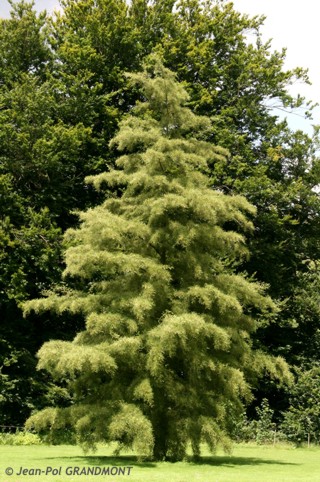
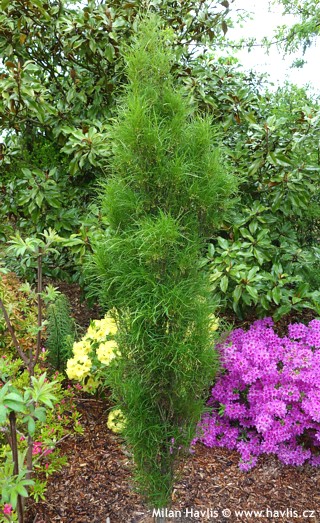
Flowering in ‘Aspleniifolia’ is discreet and easily missed, as are the tiny, sporadically produced fruits, which have no ornamental value and remain little more than a botanical footnote. What truly matters is the growth habit. The shrub grows calmly at a moderate pace, producing fine, flexible shoots that naturally spread outward to form a soft, irregular outline without sharp edges. Branching is dense but never heavy, so even mature plants retain a light, translucent appearance. Left untouched, it develops into a broad, multi‑stemmed shrub with gently ascending trunks carrying a delicate, tousled crown. It tolerates pruning extremely well, allowing this structure to be emphasised, whether by training it as an elegant multi‑stem or gradually raising it into a low‑stemmed tree with a clean trunk and a light canopy. Even when shaped, ‘Aspleniifolia’ retains a natural expression and never appears forcibly manipulated, making it a plant whose form emerges through cooperation rather than control.
Last update 29-12-2010; 13-01-2012; 23-02-2026
Alder buckthorn is a reliable and undemanding woody plant that performs best in moist, humus‑rich, slightly acidic soils, yet adapts readily to less than ideal conditions. Although it naturally inhabits woodland edges, alluvial forests, riverbanks and wetlands and therefore tolerates short‑term waterlogging, practical experience confirms what older encyclopaedias already noted: once established, it is remarkably tolerant of drought. It grows equally well in sun or partial shade, though in full sun it is consistently more attractive and better furnished with foliage. It is largely unaffected by serious pests or diseases and ranks among long‑lived woody plants that behave calmly and predictably in both gardens and the wider landscape. Fully hardy to at least −34 °C, sometimes even -37 °C, it can even be grown year‑round in sufficiently large outdoor containers.
Goods are shipped all over Europe. For Russia and U.K. and for further details please read about SHIPPING OPTIONS HERE.
Are you interested in a serious discount for orders NOV-FEB? Check your options here.
THE PRICES INCLUDE VAT of 15%. For quick conversion you can use 1 CZK = approx. 0.04 EUR
- STANDARD QUALITY - Plants of this group are 1st class quality with number of branches and overall density adequate to their size and age, considering they were container grown.
- DE LUXE QUALITY - This label guarantees a luxurious quality of manually selected plants that, compared to their height and age, are exceptionally dense and beautiful.
- EXTRA - These plants are usually mature and bigger specimens with exceptional overall appearance.
- STANDARD (as described in the plant form) means a tree with a trunk of 190-210 cm and a crown at the top, unless specified differently. The commercial size for trees is their girth measured in the height of 1m from ground.
- HOBBY - These plants are of the same quality as our standard-quality plants but younger and therefore cheaper.
- SHRUB - a woody plant with branches growing bushy from the ground level.
- HALF-STANDARD or MINI-STANDARD - a small tree with shorter trunk, its size is usually specified.
- FEATHERED - These are trees with branches growing already from the base of the trunk and up along the stem.
- GRASSES and PERENNIALS - Sizes given usually read the diameter of the pot or the clump, as specified.
