










.jpg)
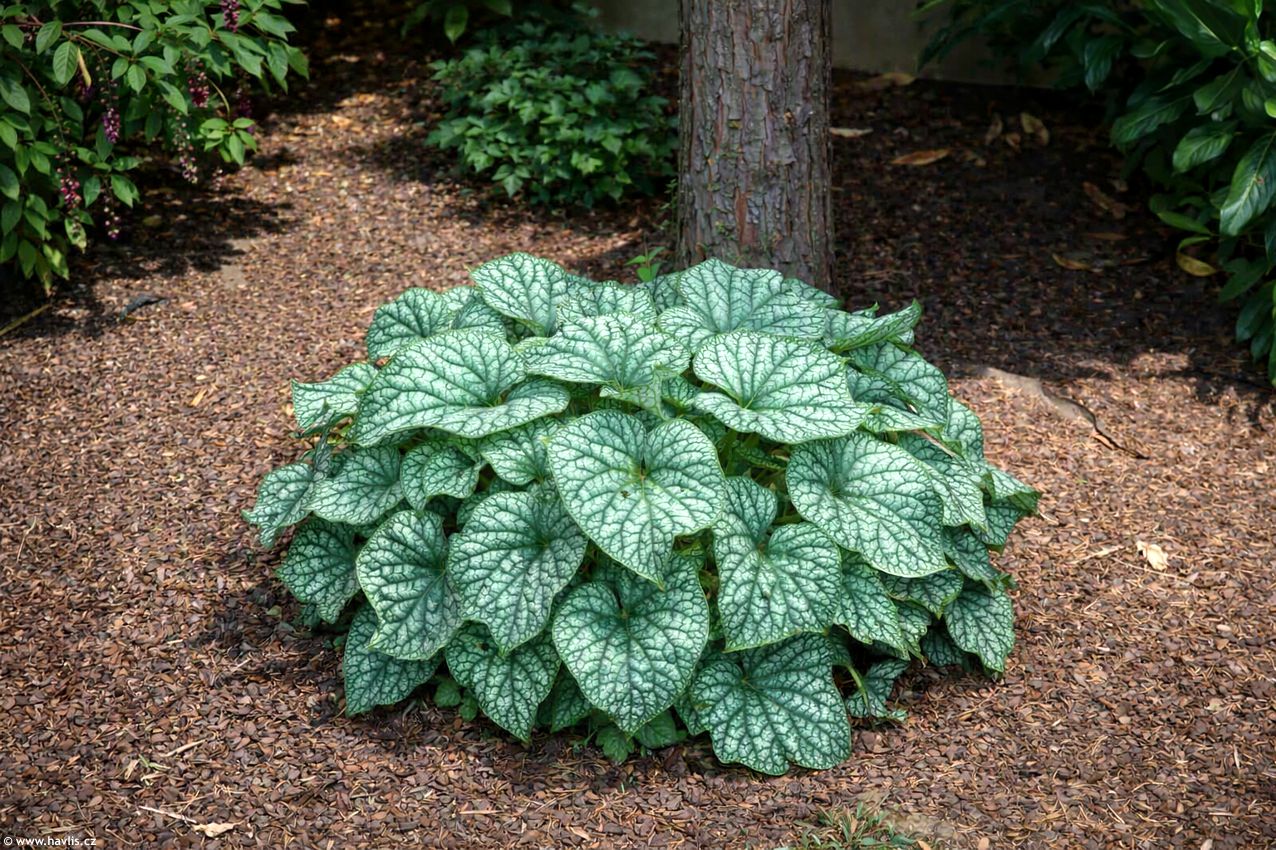
Brunnera macrophylla 'ALEXANDER'S GREAT' brunnera, Siberian bugloss

 Symbivit Tric (arbuscular)
 Symbivit (arbuscular)
Brunnera
The genus Brunnera belongs to the borage family and comprises only three species that occur naturally in the Caucasus, northern Turkey, northern Iran and marginally in eastern Europe. For a long time, botanists confused it with the genera Anchusa and Myosotis, as its delicate spring flowers resemble forget‑me‑nots and the leaves of some species are similar in shape to other members of the borage family. It was not until the 19th century that the genus was firmly established through the work of the Swiss botanist Samuel Brunner (1790–1844), after whom it is named. Brunneras are characteristic for their ability to thrive in cool, moist woodlands, forming clumps of foliage that later became the foundation of modern ornamental cultivars. Fossil records of the genus are not known, but historical herbarium collections show that the plants were gathered during early expeditions to the Caucasus, where they became a favoured subject of botanical travellers. Today, the genus is valued for its longevity, resilience, striking foliage and abundant flowering.
Brunnera macrophylla, Siberian bugloss, originates from the woodlands of the Caucasus, where it appears after the spring thaw as one of the first green signs of the year. It began to be cultivated in Europe in the 19th century as a hardier alternative to the forget‑me‑not, since its flowers share the same gentle blue but the plant tolerates cold and moisture far better. In gardens it has earned a reputation as a dependable perennial that returns year after year without fuss, yet with the quiet assurance typical of plants perfectly adapted to their environment. It is sought after for its early spring bloom, low maintenance and ability to create calm, shaded corners that feel almost woodland‑like. In Russia and Georgia, it was traditionally planted near homes as a plant that “opens the season” and brings the first colour after a long winter. In modern horticulture it has become the basis of many cultivars, as its leaves offer ample room for breeding work with silver patterns, size and shape.
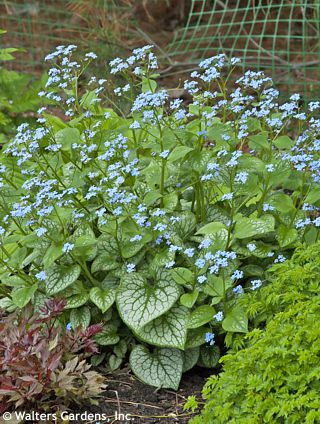
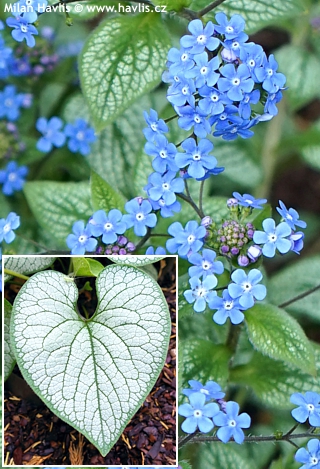
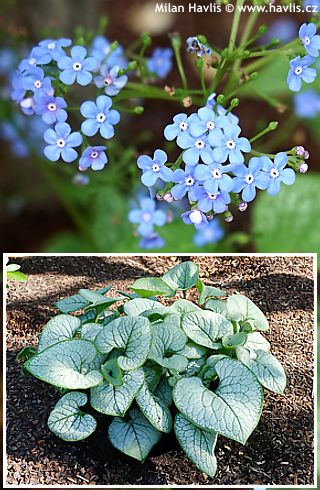
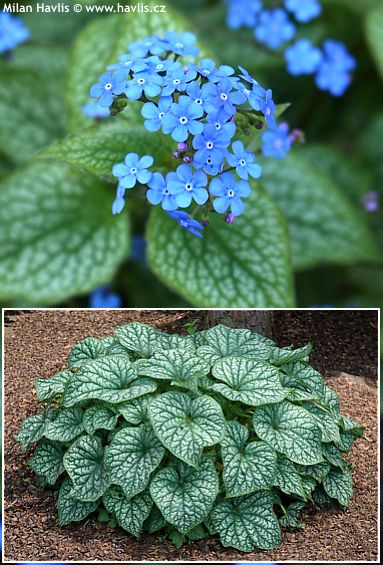
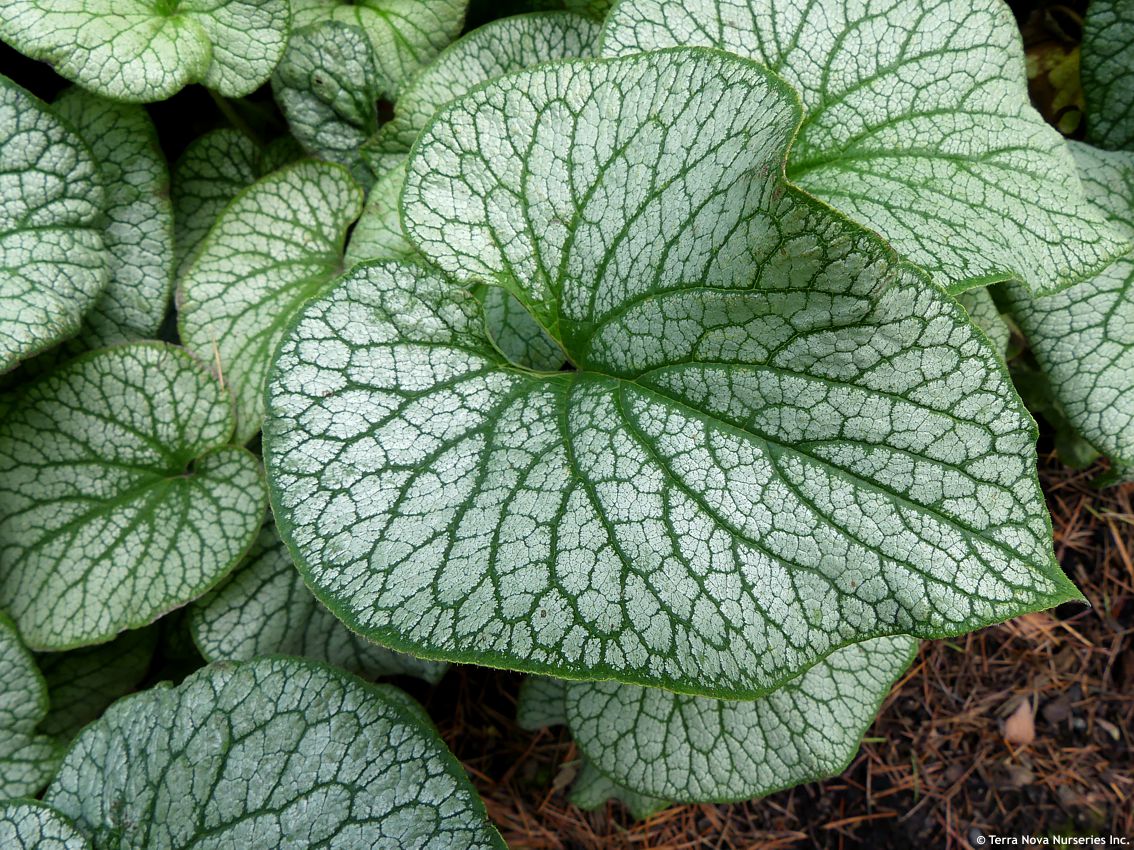
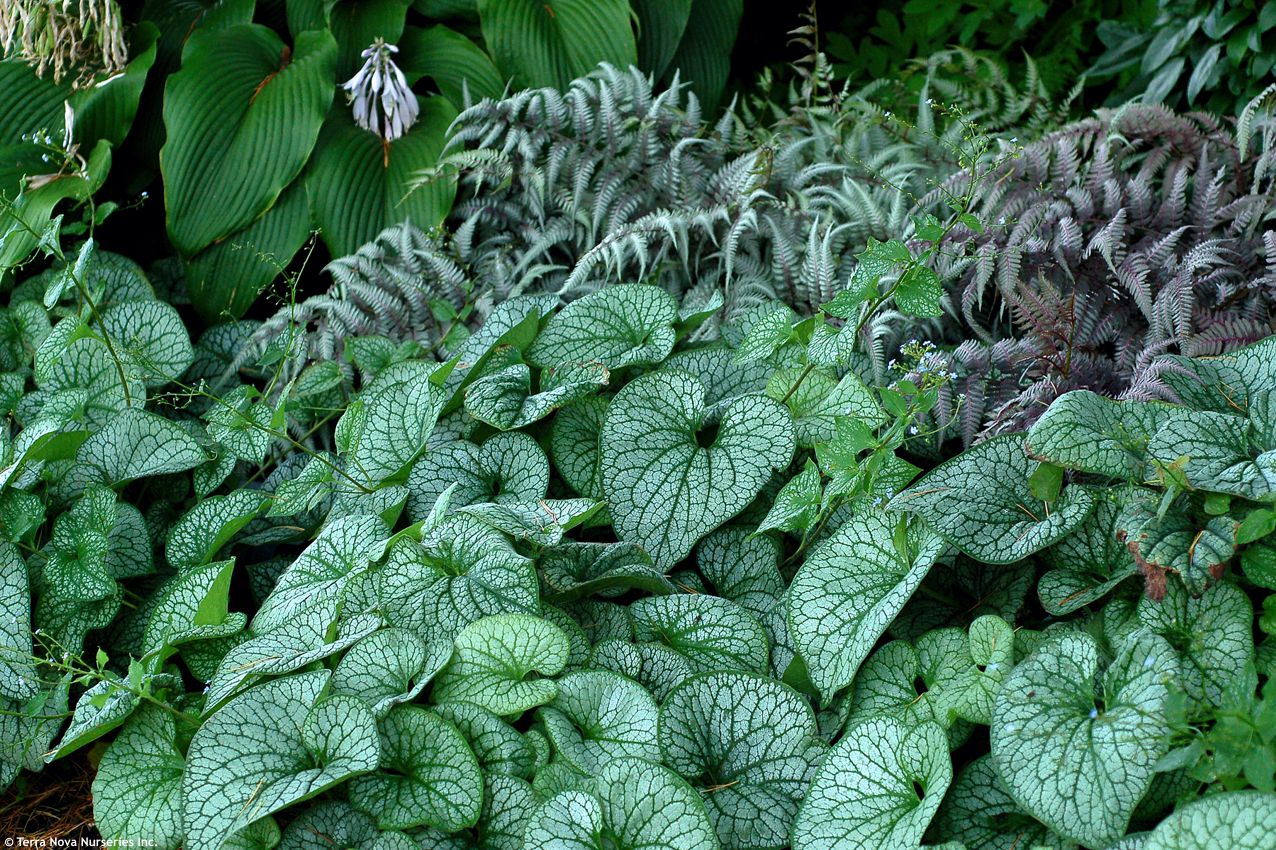
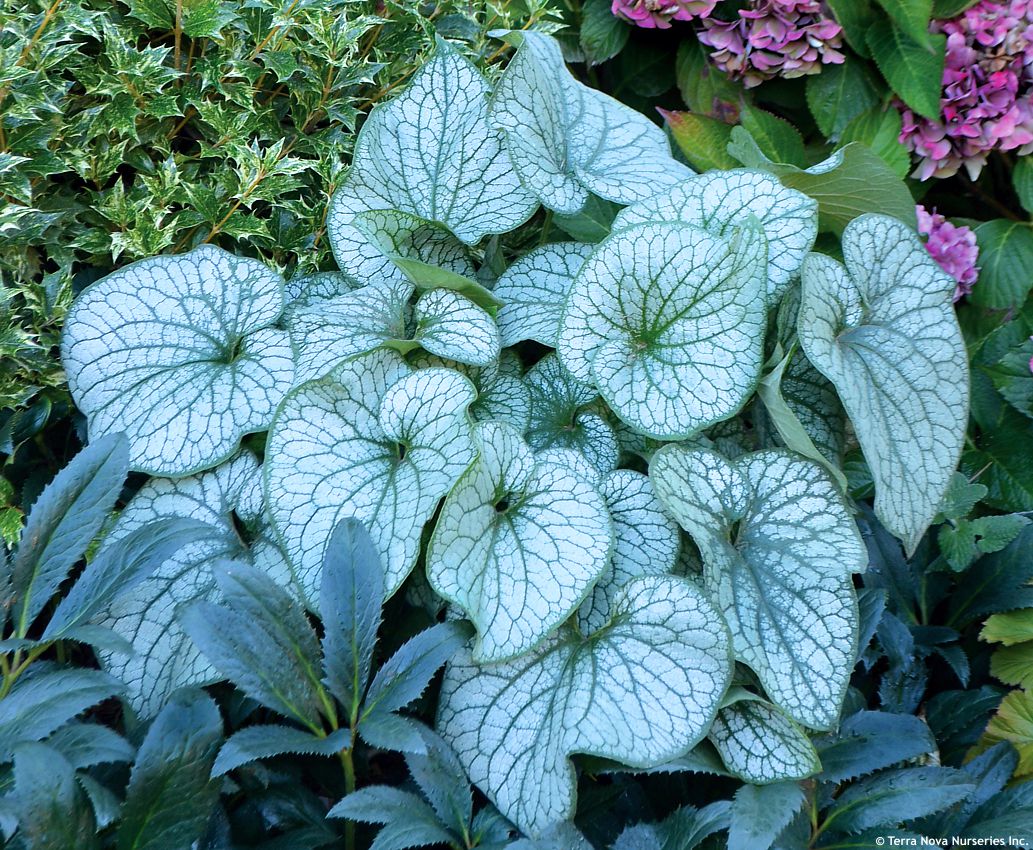
The charm of this bugloss lies in the neat interplay of its origin, its name and its appearance. Naming a large‑leaved perennial discovered in Belarus after Alexander the Great is a stroke of botanical humour – or rather a stroke of botanical largeness. Alexander’s Great is undeniably a mammoth among the older cultivars, even though some of the newer introductions are beginning to catch up. Its leaves resemble silver shields – huge, heart‑shaped, firm and covered with a dense white‑silver veil that still allows the rather prominent dark green veins to show through. The effect is much more solid and uniform than in ‘Jack Frost’, where the veining creates a fine lacework; and compared with ‘Sea Heart’ or ‘Silver Heart’, Alexander’s Great has a stronger, more contrasting pattern. It behaves almost like a hosta disguised as bugloss, and within the familiar group of brunneras it is probably the most expansive, dominant and visually bold.
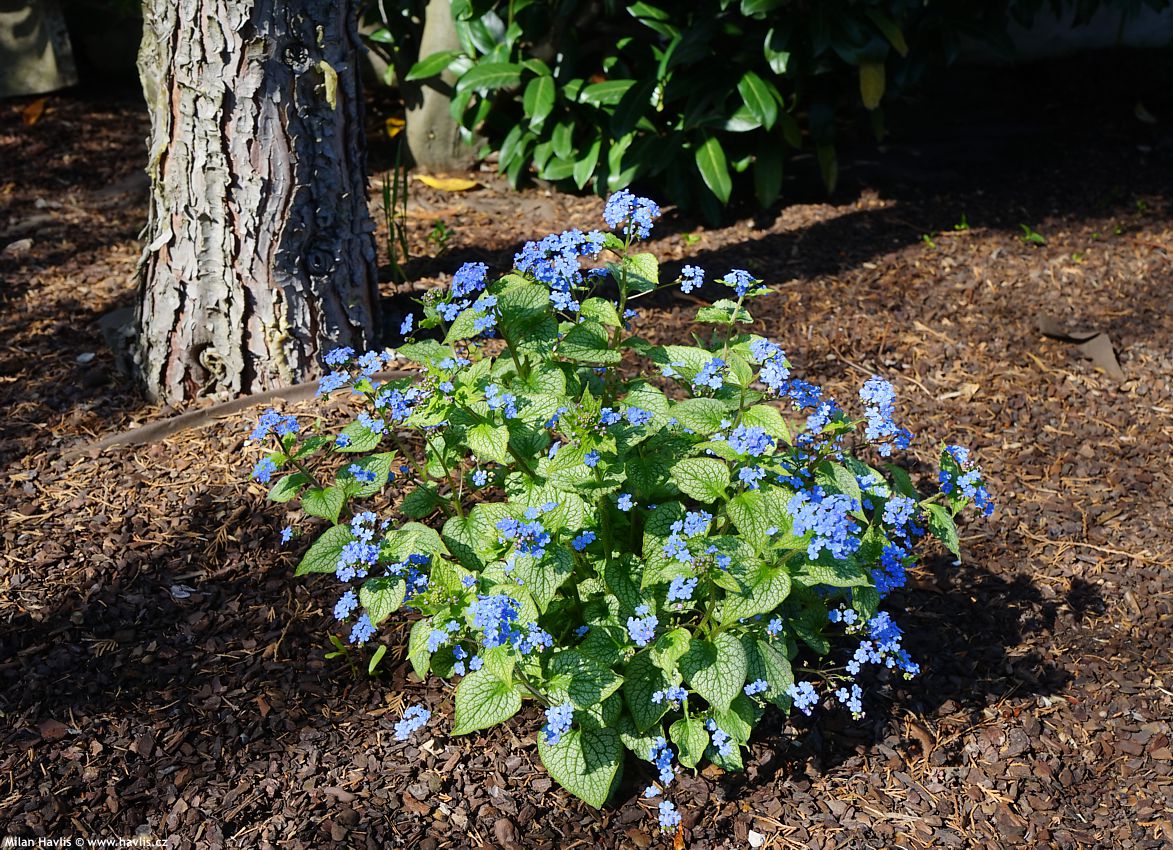
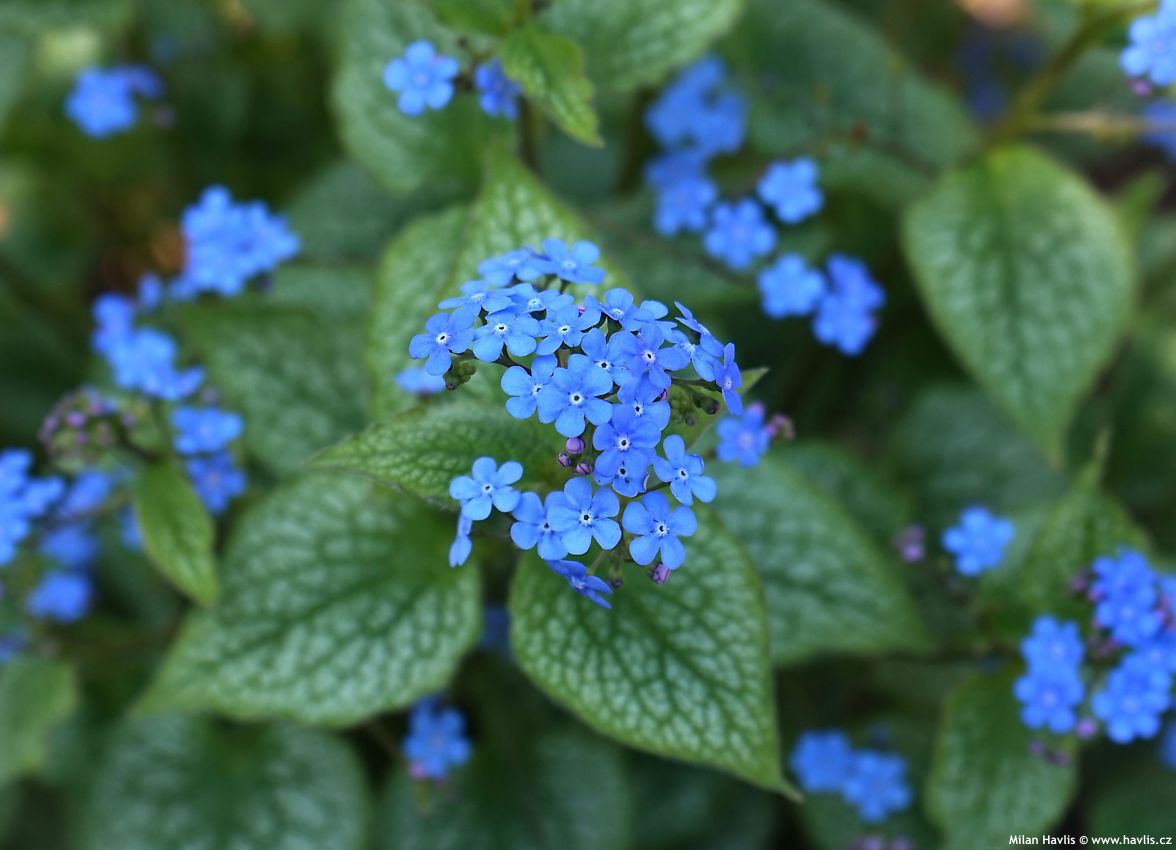
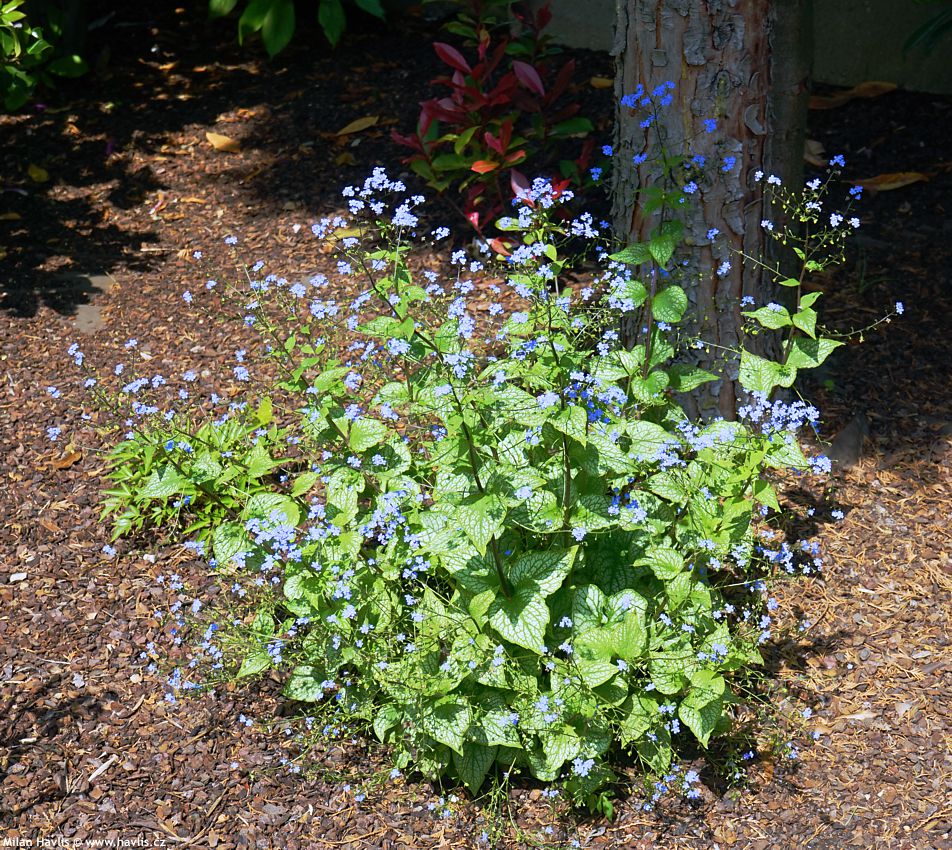
The flowers are just as important a feature as the foliage. They appear in early spring (April) on slender stems reaching about 30–40 cm, topped with delicate terminal panicles of sky‑blue blooms intense enough to make the heart flutter. Flowering lasts a long time, often six to eight weeks, and once the display is over it is best to remove the spent stems so that the drying remnants do not spoil the clump. The habit is low but broad, typically around 15 to 20 cm tall and 35 to 40 cm wide, and it increases slowly, as brunneras generally add new leaves and clumps only very gradually.
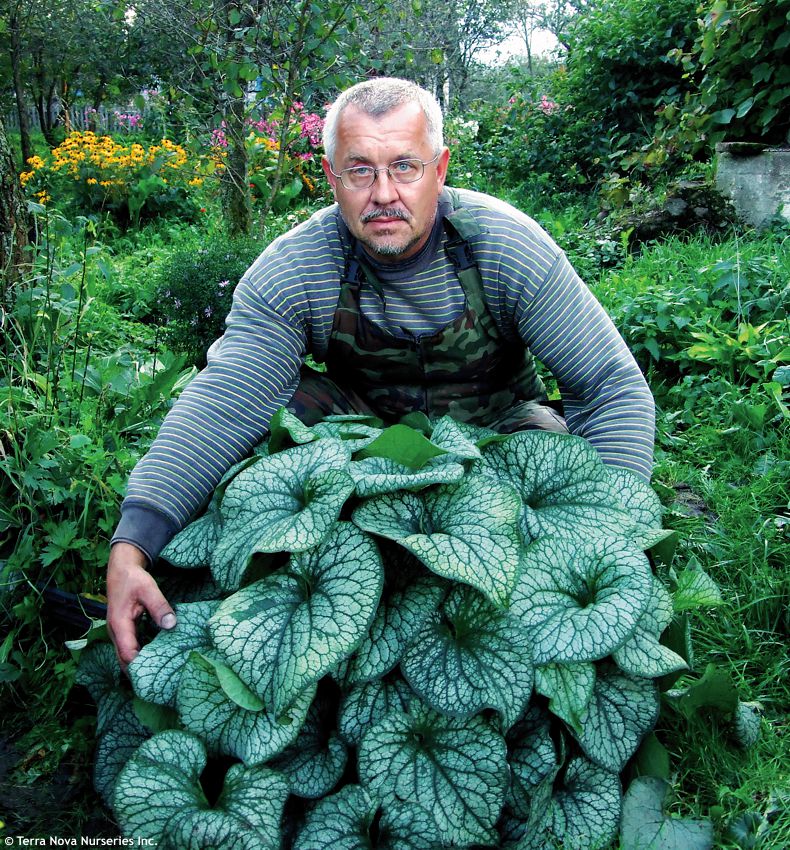
Alexander Zuikevich discovered the plant in a private garden near Minsk in Belarus, which makes the reference to Alexander the Great all the more amusing. It was a chance seedling of unknown parentage that was later brought to Canby, Oregon, where it was stabilised and propagated. And that is no coincidence, because Canby is home to one of the most renowned breeding stations, Terra Nova Nurseries – my personal favourite – which quite literally states: “After viewing the photo from Belarus of Alexander holding his arms around this big Brunnera, we were sold!” They set out to help him stabilise it, multiply it and introduce it to the world. Patent no. PP25789 was granted in 2015. The plant went on to receive the “Too Good to Wait Performer” award at the 2015 Colorado State University trials, the “Top Performer” title for the 2016 season, and the “Top Performer Perennial 2016” award from the same university.
Last update 30-08-2026
Brunnera macrophylla is a perennial that performs reliably in the garden as long as it receives what it get in the wild: cool partial shade, moist humus‑rich soil and a sheltered position away from strong winds. It thrives best beneath deciduous trees or on the north side of buildings, where the light is diffused and the soil does not dry out, yet it is true that it tolerates occasional drought better than, for example, hostas. The species and most cultivars dislike full sun, although some newer selections cope well even in open exposure. During prolonged summer droughts its broad leaves may show sunscorch, so watering needs to be monitored in hot seasons. The soil should be slightly acidic to neutral, rich in organic matter and kept evenly moist. One light application of compost or a gentle organic fertiliser in spring is sufficient; heavy doses of mineral fertilisers do not suit it. Pruning is not required, though removing spent flower stems after flowering and cutting away damaged leaves at the end of summer helps keep the plant tidy. It manages only short‑term cultivation in containers, as it needs stable moisture and a cooler root zone. Its frost hardiness is high, commonly withstanding winters down to −40 °C (USDA zone 3), and it is not poisonous. The leaves are coarse and can cause cuts, so gloves are recommended when handling the plant.