Chilopsis linearis 'BURGUNDY' desert willow

 Symbivit Tric (arbuscular)
 Symbivit (arbuscular)
Chilopsis
Desert willow is a taxon from south-eastern USA and Mexico where it thrives under hot sun and with limited water supply. Its name refers to foliage whose resemblance to willow leaves is remarkable. It belongs to the same family as catalpa (Indian bean tree) – Bignoniaceae – and in 1970’s it was used for intergeneric hybridization with catalpa resulting in chitalpa.
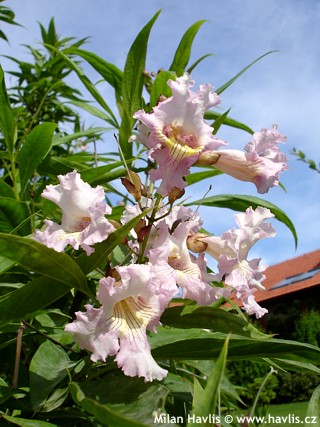
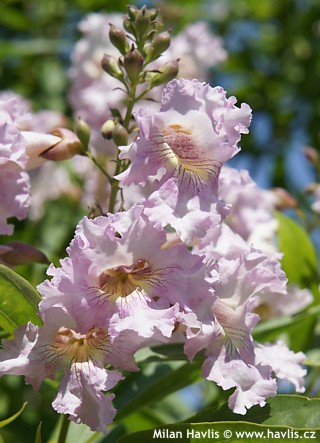
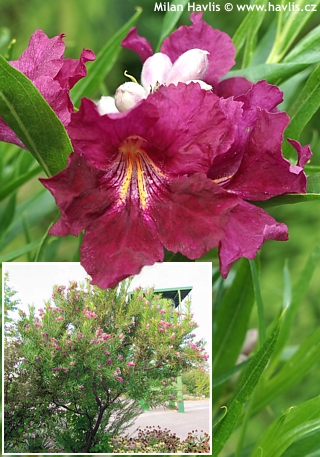
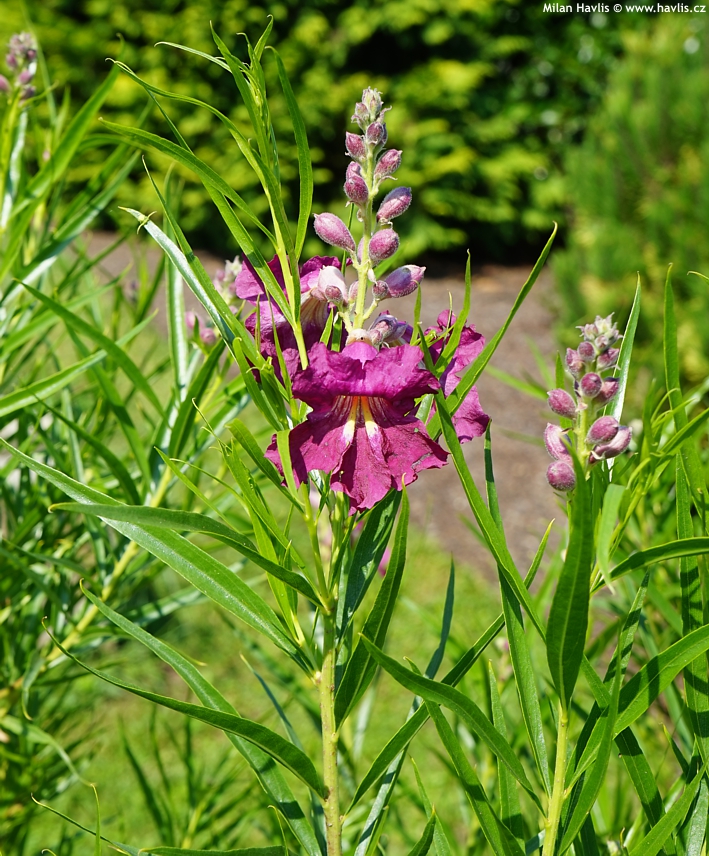
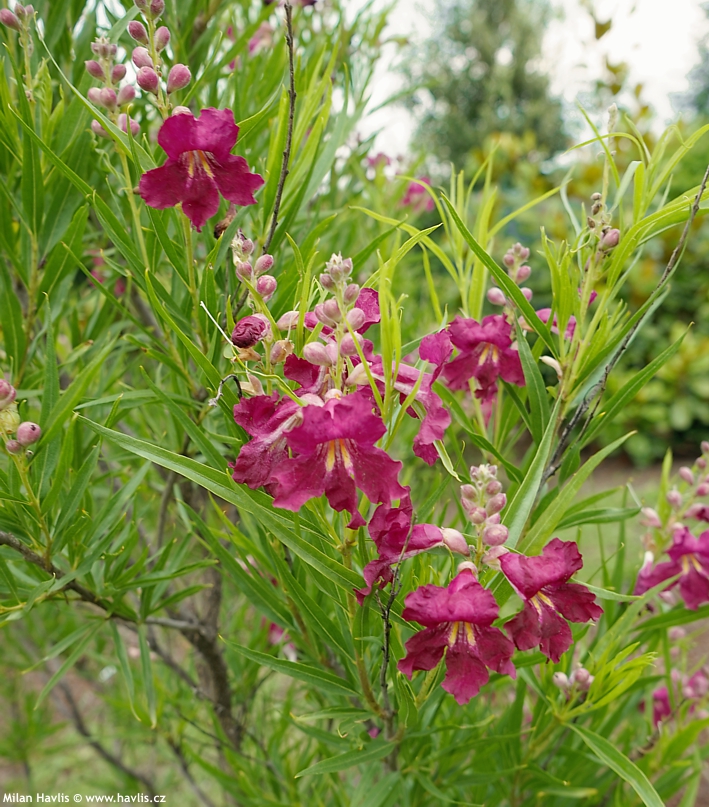
Burgundy is a beautiful variety of desert willow of untraceable origin, possibly a selection of Rio Salado with slightly paler flowers. Burgundy desert willow makes deep maroon, velvety flowers with white and yellow stripes in the throat. They are slightly fragrant and formed in narrow, terminal, upright racemes and each raceme holds up to 16 flower buds but their number decreases during the growing season. As the racemes appear at the tips of new growths and those are formed continuously from late spring till late summer, flowering time is considerably extended and lasts from June until September.
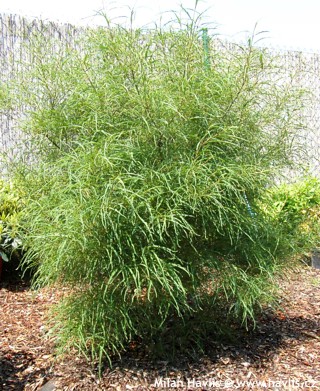
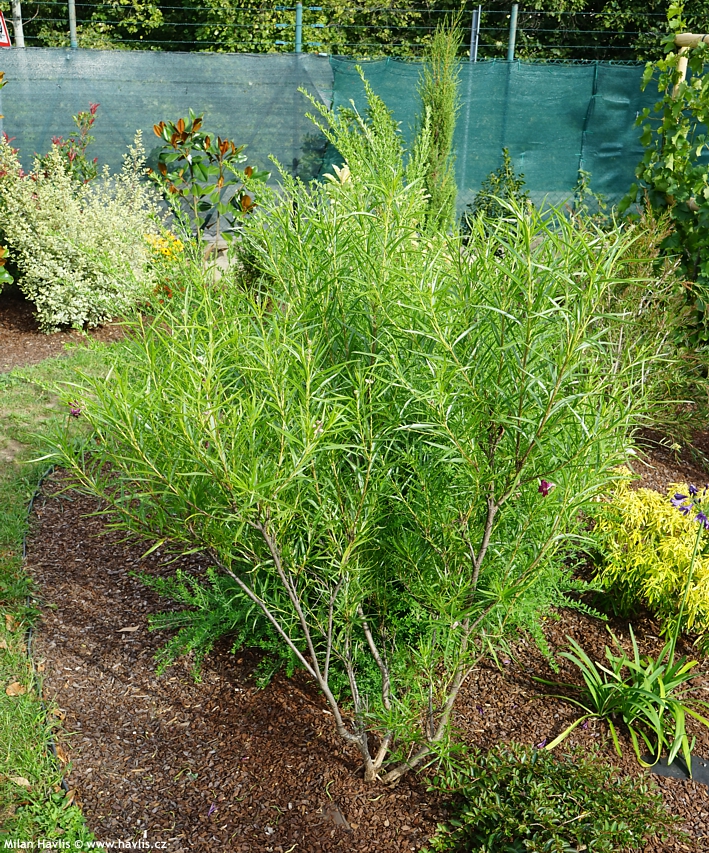
Deciduous leaves are commonly 10-14 cm long, exceptionally up to 25 cm long, fresh green, and very narrow – only a few millimetres wide. They do not suffer from powdery mildew like catalpa’s leaves. Owing to such fine foliage the plant brings an exotic feeling and lightness to any landscape.
Chilopsis is not a fast grower. It can make 20-30 cm per year and can easily be pruned in early spring after all frosts. It emerges late like many shrubs and trees flowering in summer but soon catches up all its friends nearby. Young plants are rather slender and become broader with age. Mature plants can possibly reach the same width as height.
Last update 07-10-2021
It needs direct sunlight and a hot summer for abundant flowering and is exceptionally drought tolerant once established. Its soil must be well-drained to prevent the roots from rotting. Chilopsis used to be rated a tender plant until late 20th century when it underwent multiple trials in the USA that proved it hardy down to USDA zone 6 (-23 °C). We have grown it for a few years only, and so far it has withstood -20 °C without any injury whatsoever.