Cupressus sempervirens 'GARDA' Mediterranean cypress, Tuscan cypress, pencil pine

 Symbivit Tric (arbuscular)
 Symbivit (arbuscular)
Cupressus
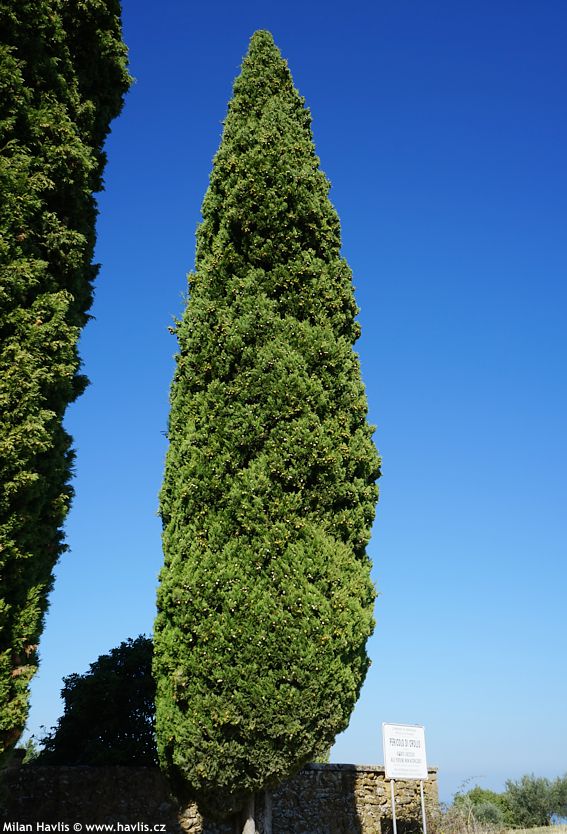
The entire genus Cupressus is like an ancient witness to Earth’s history. It belongs to the cypress family and includes about 25 species distributed from North America across the Mediterranean to Asia. Fossil evidence proves its existence since the Tertiary period, tens of millions of years before humans appeared. The first botanical descriptions of cypresses date back to antiquity, but the genus was formally named by Carl Linnaeus in the 18th century. The popular Mediterranean cypress (Cupressus sempervirens) is an evergreen tree mainly spread in the eastern Mediterranean, though its exact origin remains elusive even to modern botany. It is an exceptionally long-lived species – the oldest recorded specimen in Iran, known as Sarv-e-Abarkooh, is estimated to be around 4,000 years old. In its natural form, this evergreen conifer has an ovate crown shape, however, with the rise of ornamental horticulture, narrower columnar forms were selected, becoming iconic features of certain landscapes. Hence the alternative name Tuscan cypress, since no view of the Tuscan countryside seems complete without its slender silhouettes. Its wood is durable and fragrant, historically used for shipbuilding and fine furniture.
Yet the Mediterranean cypress grows throughout the entire landscape surrounding the Mediterranean Sea. In Middle Eastern countries, it has long been a tree of gardens and sacred spaces. In Persia, it became a symbol of immortality and nobility – its slender silhouette graces Persian miniatures, carpets, and ceramics. In traditional Iranian gardens, listed as UNESCO heritage, cypresses form the central axis of compositions meant to evoke paradise. In Islamic art, it appears as a sign of eternal life because it never sheds its foliage. Likewise, in ancient Greece and Rome, it was associated with funerary rites, which is why it appears in old necropolises. Its image runs through history – from Persian poets praising it as the “tree of freedom” to European painters. In Renaissance landscapes, it frames Tuscan horizons, and in Van Gogh’s works, it becomes a dramatic symbol of life and death. The cypress is not just decoration but a cultural phenomenon linking East and West in a green line that has lasted thousands of years.
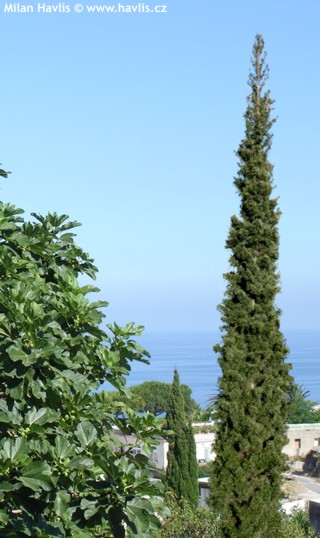
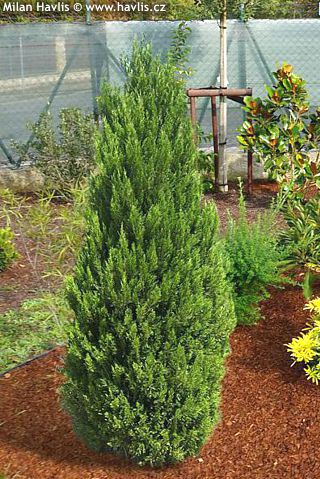
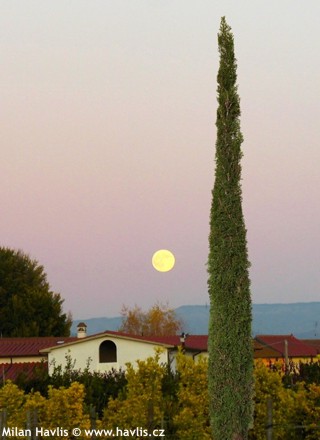
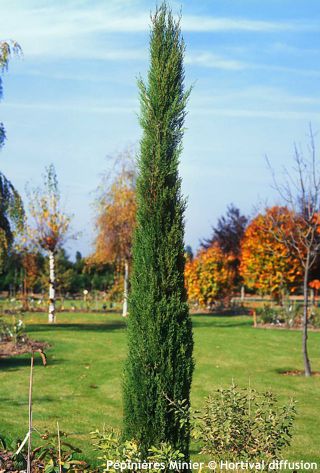
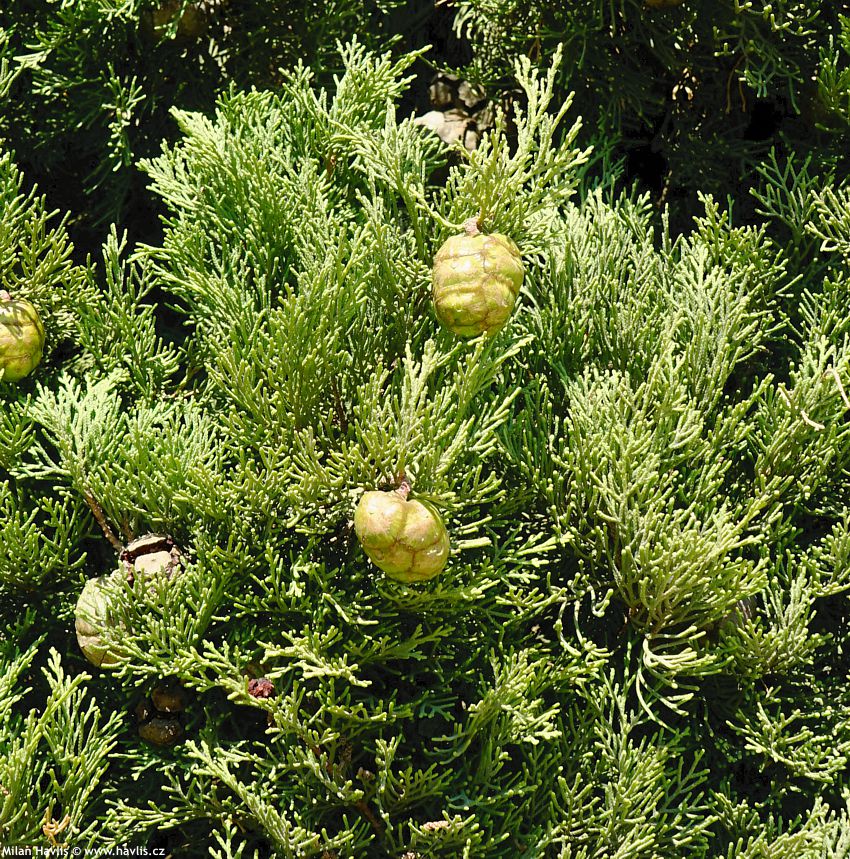
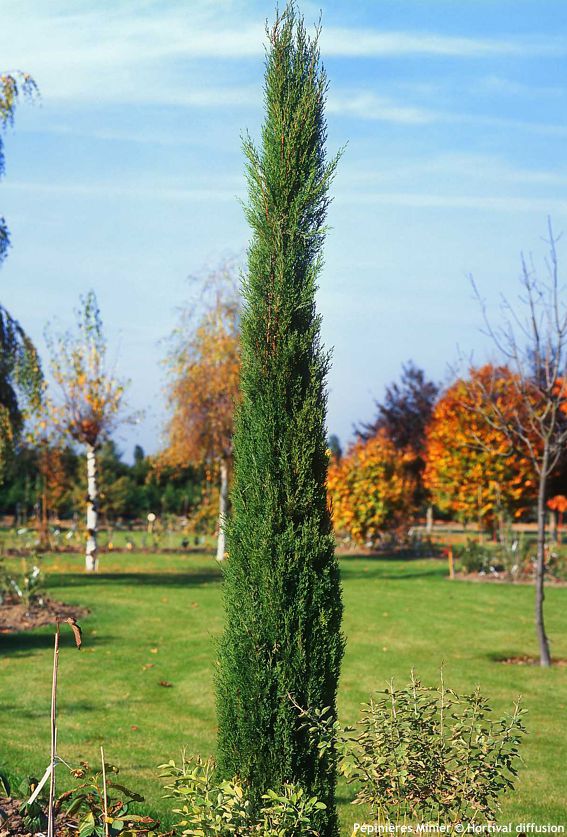
Garda is a selected form of Tuscan cypress found in the Italian Lake Garda region. It naturally forms slender, evergreen columns, whose dense branches are covered with dark green, scale-like needles that do not lose their colour even in winter. The branches are shorter, firmly attached to the trunk, and do not suffer from breaking under the weight of heavy snow. The tree produces small quantity 3-4 cm long female cones, which have a specific fragrance and do not exhaust the plant.
Thanks to its particularly slender form, the Garda cypress is used especially for Mediterranean landscape style to evoke the typical atmosphere of a sunny landscape and looks great either planted in sets of three or in a combination of tree different plants of opposite forms: vertical/slender + horizontal/flat + round.
In Europe, the evergreen cypress is naturally found in the so-called maquis (macchia) - a Mediterranean hardwood shrubland or woodland, where it is considered non-native, but easily adapted due to its requirements. Maquis consists of mostly evergreen plants which cover dry to heat-parched plains and mainly rocks with a minimum of good-quality soil and a limited supply of moisture. It can create deep roots between stones, where it searches for nutrients and some underground water, and it can absorb a lot of atmospheric moisture (especially at night and in the morning) thanks to its large leaf area. If we provide similar conditions in our gardens the plants will be satisfied.
Last update 28-02-2023
The Mediterranean cypress occurs naturally in Europe and the Middle East within the Mediterranean sclerophyllous forest, most often in its shrub formations known as maquis (macchia), where it is considered non-native but easily adapted thanks to its ecological tolerance. These communities consist mainly of evergreen shrubs and scattered trees on dry, sun-scorched slopes and rocky outcrops with minimal soil and limited water supply. The cypress develops deep roots among stones to seek nutrients and groundwater and can absorb atmospheric moisture (especially at night and early morning) thanks to its large leaf surface. If we recreate similar conditions in temperate climates, it will thrive