












.jpg)
Delosperma cooperi 'John Proffitt' TABLE MOUNTAIN Cooper's ice plant

 Symbivit Tric (arbuscular)
 Symbivit (arbuscular)
Delosperma
Delosperma is a genus of low-growing, perennial succulent plants in the family Aizoaceae, native mainly to the mountainous and semi‑desert regions of southern Africa, where it inhabits rocky slopes, crevices, and places where water disappears before it has a chance to soak in. The genus was described in the early 20th century by the British botanist Nicholas Edward Brown (1849–1934), who noticed the tiny, glistening cells on the surface of the leaves—features that gave the plants their name, derived from the Greek delos ("conspicuous") and sperma ("seed"). Delospermas are characterized by their fleshy, evergreen leaves capable of storing water for long periods, and by their strictly mat‑forming, creeping habit, which allows them to create dense, low carpets. During flowering, these inconspicuous cushions transform into a blaze of daisy‑like blooms that open only in full sun and rank among the most rewarding ornaments of dry, heat‑exposed sites.
The species Delosperma cooperi, botanically described in 1927 by the South African botanist Louisa Bolus, originates from mountainous regions of southern Africa, including present‑day South Africa, Lesotho, and the former Orange Free State. The species epithet cooperi was given in honor of Thomas Cooper (1815–1913), a British gardener and plant collector who worked in southern Africa during the 19th century and whose collections played an important role in the study of the local flora. The plant occurs mainly in areas with predominantly summer rainfall, on open, sunny sites with stony, fast‑draining soils. In its natural habitat, it forms freely branching, sprawling succulent subshrubs that can reach approximately 20 cm in height. The flowers are showy, deep purple in color, with delicate pale pink to white stamens and prominent yellow anthers. The species is considered half‑hardy and, in garden cultivation, requires a very well‑drained, sunny position, where it is protected above all from excessive winter moisture.
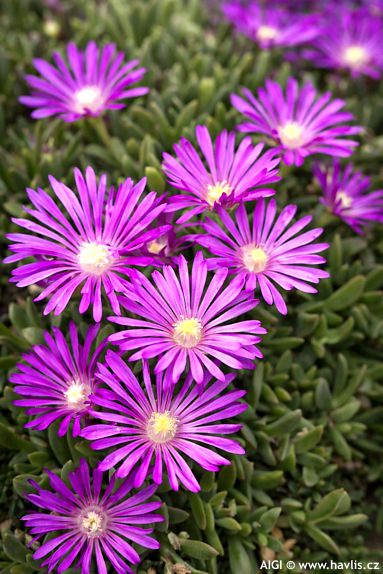
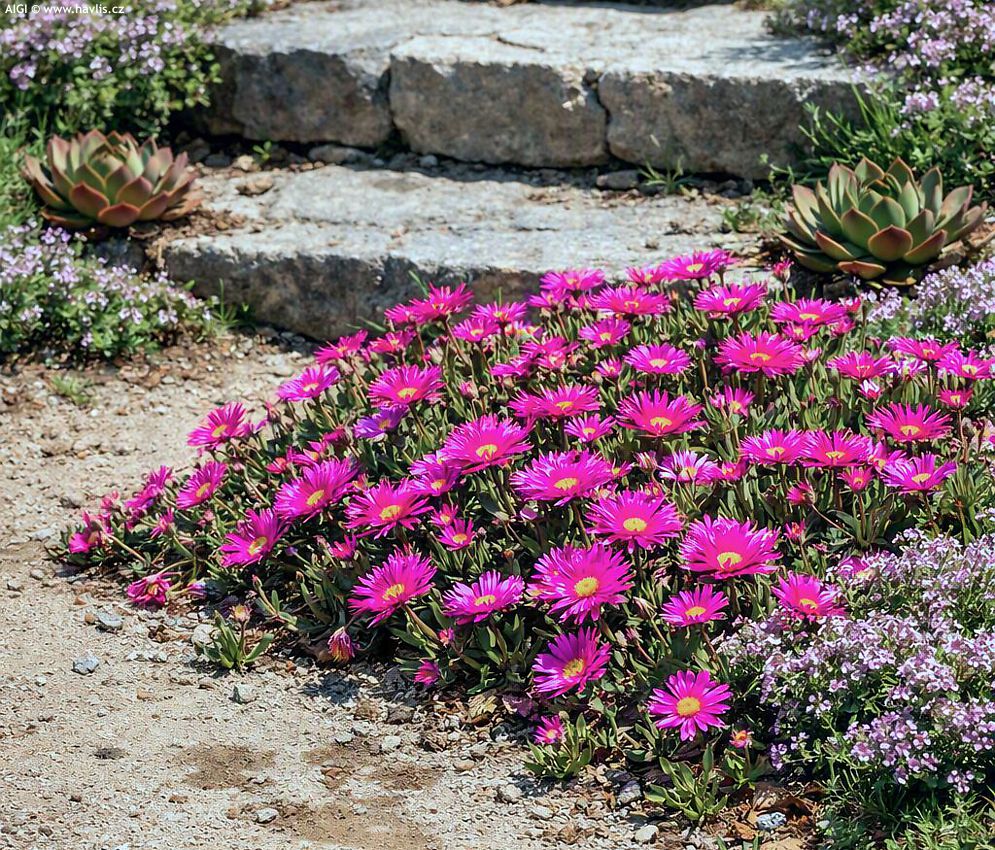
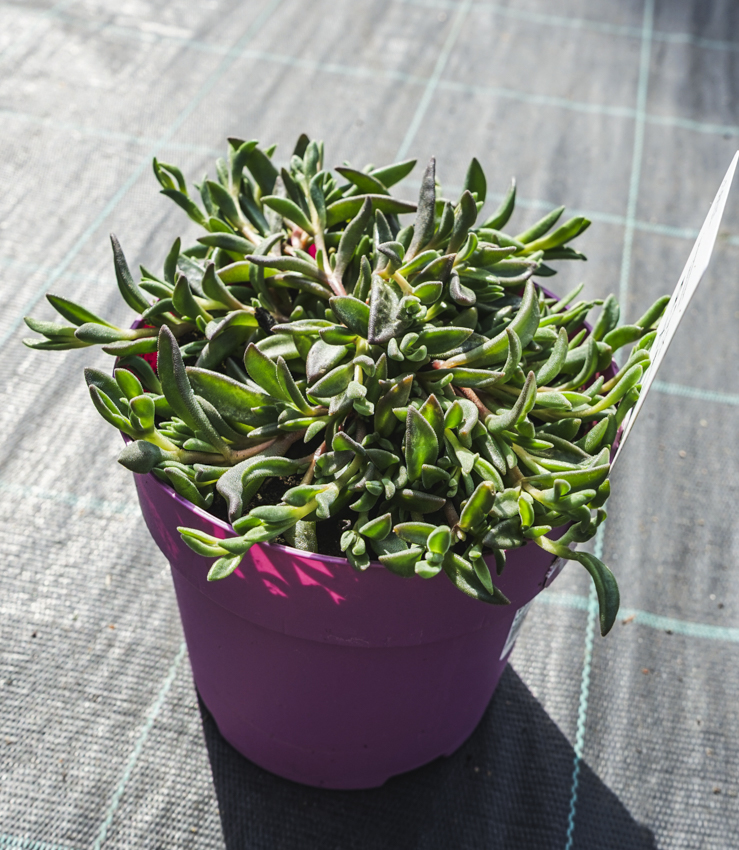
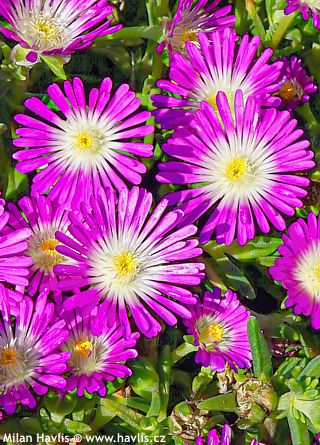
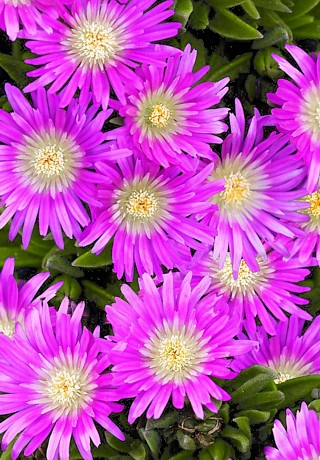
‘John Proffitt’ TABLE MOUNTAIN belongs to the Cooper’s ice plant group and, in this case, boasts a mass of bright purple flowers with a pale-yellow centre that glow like tiny glass lenses in full sun. The plant forms low, firm mats about 10 to 12 cm high and 45 to 60 cm wide, capable of extending by 20 to 25 cm in a single season. The leaves are grey‑green, fleshy and filled with a characteristic gel‑like substance which, when punctured, produces tiny sparkling droplets – the very feature that gave ice plants their English name. The flowers, 3.5 to 5 cm across, appear from late May and continue in abundant bloom until mid or late July, after which the plant produces occasional flowers into autumn, a markedly longer season than that of the original species, D. cooperi.
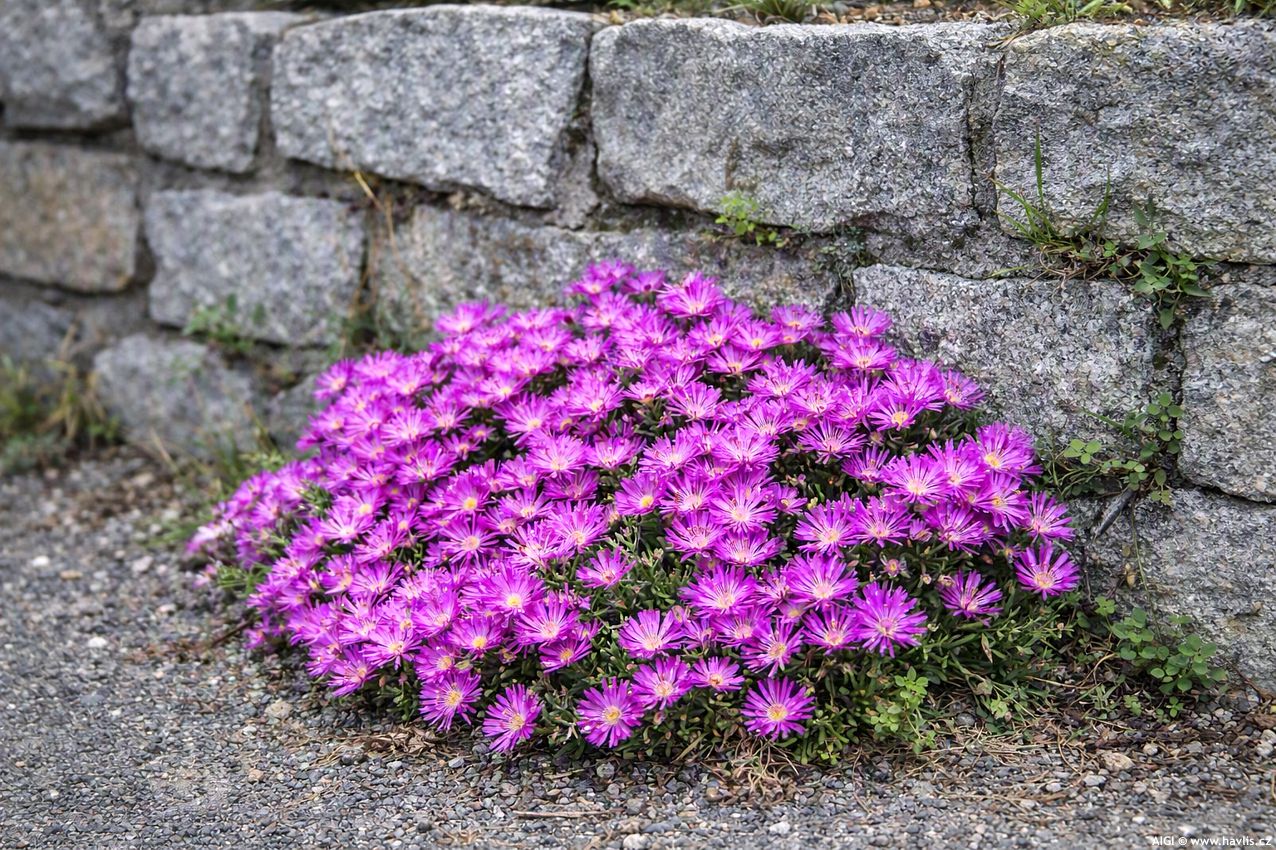
‘John Proffitt’ TABLE MOUNTAIN is an excellent choice for a long season of colour with minimal maintenance. It performs best in rock gardens, gravel plantings, among stones or in the crevices of dry walls, where its trailing growth quickly forms a continuous, low carpet up to 60 cm wide. Its vivid flower colour combines well with perennials of similar requirements but different structure – such as sempervivums, sedums, lewisias or low fescues, which add contrast in both colour and texture. To extend the flowering season, low pinks or creeping thymes can be added to fill the brief pauses when the ice plant rests. Thanks to its tolerance of heat, drought and wind, it is an excellent choice for xeric plantings and exposed sites where other perennials fail to thrive.
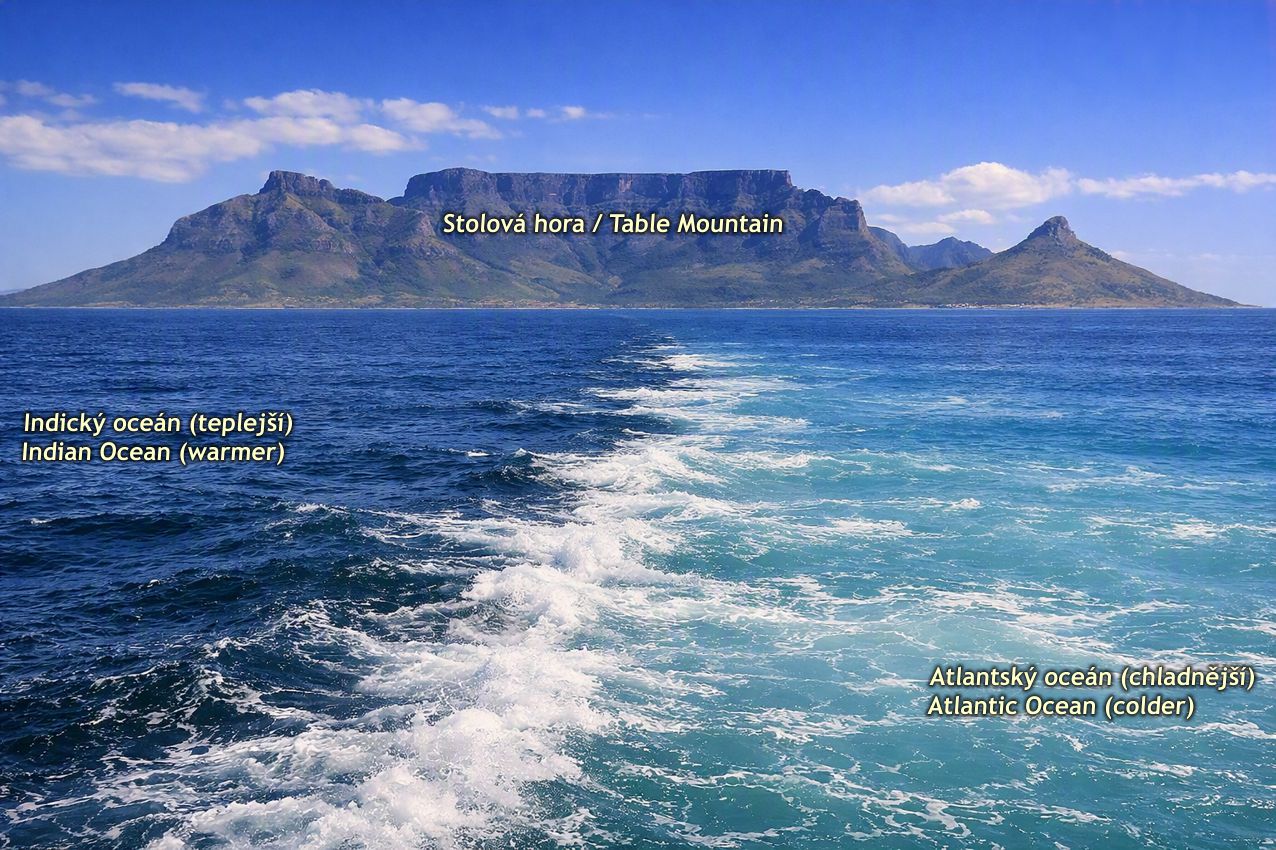
The cultivar was developed through a collaborative project between Denver Botanic Gardens and Colorado State University, aiming to produce a markedly cold‑hardy form capable of withstanding the extreme temperature fluctuations of high‑altitude Colorado. It entered the market in 2002, and the original cultivar name ‘John Proffitt’ honours a former director of Denver Botanic Gardens. The later commercial name TABLE MOUNTAIN refers to the Table Mountain of Cape Town, a smaller yet iconic landmark of South Africa with its almost perfectly level summit plateau. By the way, did you know that beneath Table Mountain meet 2 oceans? The Atlantic and the Indian Oceans create a fascinating view because of their different temperatures, salinity and currents, their waters often maintain a surprisingly sharp boundary that can even be seen in the colour. This ice plant doesn’t give a damn though. What matters is that compared with the original species, it has a more compact habit, a longer flowering period, greater tolerance of winter moisture and a more stable performance in temperate climates far from the Table Mountain itself. As a member of the Plant Select® programme, it ranks among the most reliable hardy ice plants available, with a proven cold tolerance of –28 to –30 °C (USDA zone 5) when good drainage is ensured.
Last update 15-02-2026
Cooper’s ice plant requires full sun and very well‑drained soil; the drier and more mineral‑poor the site, the better it maintains compact growth and abundant flowering. Watering should be limited and short‑term, mainly after planting or during prolonged drought; persistent waterlogging is the most common cause of failure, particularly in winter. The soil should be neutral to slightly alkaline, with a high proportion of gravel or stone to ensure rapid drainage. Fertilization is not necessary, though in containers a very weak application of mineral fertilizer with a predominance of potassium and phosphorus during the growing season may be beneficial; nitrogen‑rich fertilizers should be avoided. In dry conditions, the plant commonly tolerates frost down to at least -18 °C, but with protection from winter moisture being far more important than protection from cold it can take down to -23 °C (USDA zone 6). In containers, it is advisable to provide shelter primarily from rain and snow, for example by placing the pot under a roof overhang. The plant is evergreen, non‑toxic, and long‑lived when grown in suitable conditions, making it well suited to low‑maintenance gardens.
.jpg)
Goods are shipped all over Europe. For Russia and U.K. and for further details please read about SHIPPING OPTIONS HERE.
Are you interested in a serious discount for orders NOV-FEB? Check your options here.
THE PRICES INCLUDE VAT of 15%. For quick conversion you can use 1 CZK = approx. 0.04 EUR
- STANDARD QUALITY - Plants of this group are 1st class quality with number of branches and overall density adequate to their size and age, considering they were container grown.
- DE LUXE QUALITY - This label guarantees a luxurious quality of manually selected plants that, compared to their height and age, are exceptionally dense and beautiful.
- EXTRA - These plants are usually mature and bigger specimens with exceptional overall appearance.
- STANDARD (as described in the plant form) means a tree with a trunk of 190-210 cm and a crown at the top, unless specified differently. The commercial size for trees is their girth measured in the height of 1m from ground.
- HOBBY - These plants are of the same quality as our standard-quality plants but younger and therefore cheaper.
- SHRUB - a woody plant with branches growing bushy from the ground level.
- HALF-STANDARD or MINI-STANDARD - a small tree with shorter trunk, its size is usually specified.
- FEATHERED - These are trees with branches growing already from the base of the trunk and up along the stem.
- GRASSES and PERENNIALS - Sizes given usually read the diameter of the pot or the clump, as specified.
