

































Eupatorium rugosum (Ageratina altissima) 'CHOCOLATE' white snakeroot, Joe Pye weed

Eupatorium
The genus Eupatorium, Joe Pye weed, belongs among the largest groups within the Asteraceae family and historically includes dozens of species ranging from North America to the tropical regions of South America. Today it is one of those groups that have been extensively rearranged and renamed following modern molecular analyses. In the herbaria of old universities, you will find many sheets labelled Eupatorium that now bear different names – most commonly Eutrochium, Ageratina, Chromolaena or Conoclinium – because the original genus proved to be an artificial assemblage based more on the similar appearance of the inflorescences than on true relatedness. The first botanical descriptions date back to the 18th century, when Carl Linnaeus (1707–1778) united various North American “bonesets” and “snakeroots” under one genus. It was only in the 1970s and 1980s that American botanists – especially Harold Robinson (1932–2020) – began transferring part of the species into new genera, chiefly Ageratina and Eutrochium, which better reflect their evolutionary history. The division of the original Eupatorium also follows leaf arrangement: species with alternate leaves were moved to Ageratina, while those with opposite leaves were placed in Eutrochium. Scientific taxonomy now uses these new names as standard, but horticultural practice still favours the traditional name Eupatorium, deeply rooted in literature, older catalogues and the everyday knowledge of gardeners. The common name Joe Pye weed has its roots in early American folklore. According to 19th‑century accounts, Joe Pye was a Native American healer from New England who used the plant to treat fevers and “camp diseases” among settlers. His reputation spread through frontier communities, and the plant he relied on gradually became known by his name. Although historical details are fragmentary and often embellished, the association between the healer and the plant became firmly established in rural tradition.
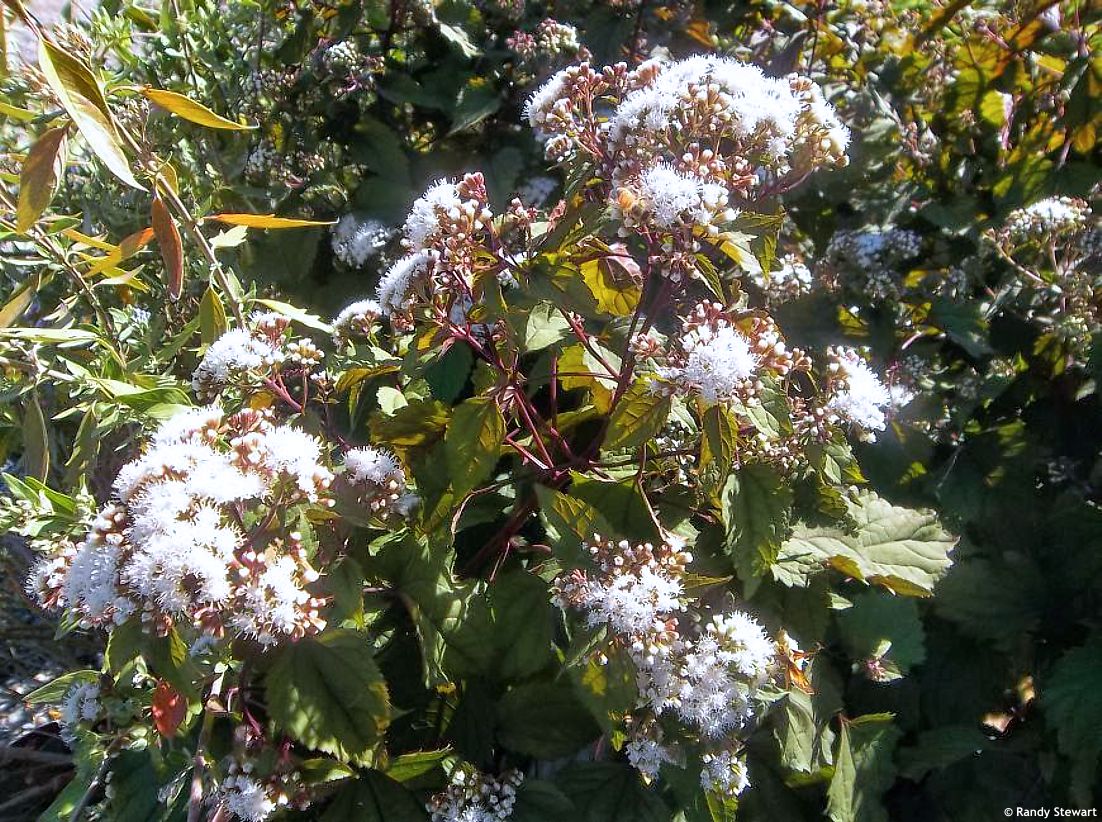
Eupatorium rugosum, now more accurately known as Ageratina altissima, appears so naturally in the North American landscape that 19th‑century settlers considered it an innocuous part of woodland edges. Only later did it become clear that it stood behind one of the darkest chapters of rural America – “milk sickness”, a disease caused by the toxic tremetol accumulating in the milk of cows grazing stands of white snakeroot. Contemporary records mention mysterious deaths, families moving further west to escape an unknown threat, and the slow but persistent search for the cause. The species was described by Carl Peter Thunberg (1743–1828), but real understanding of its impact on people arose in the field – among farmers, doctors and women who gathered herbs and passed on their knowledge. Around the time its role in the disease became evident, it also began to appear in botanical gardens as an interesting species with delicate late‑summer flowers and a natural charm.
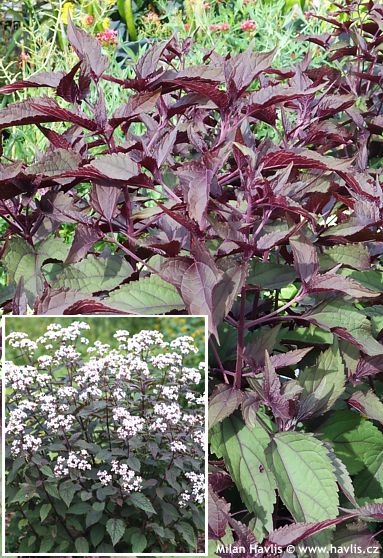
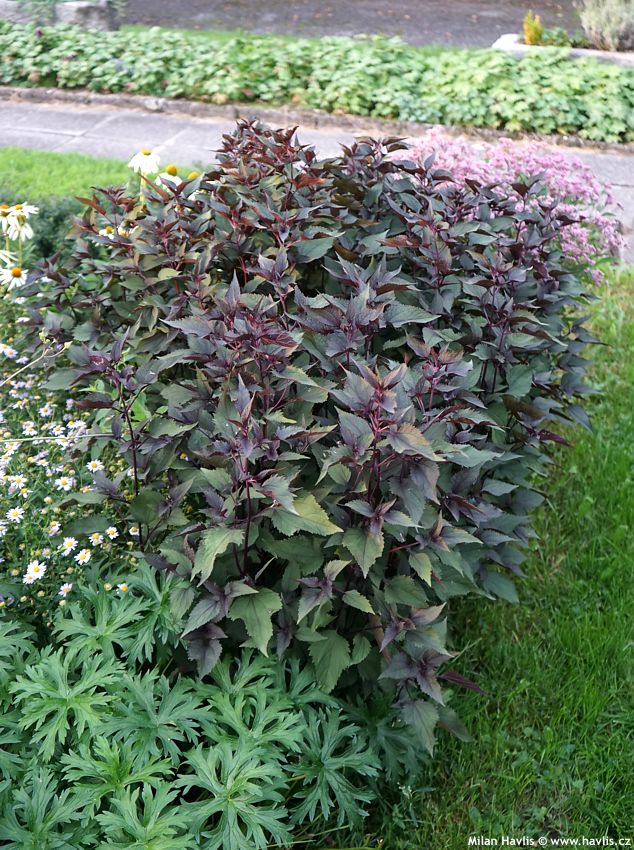
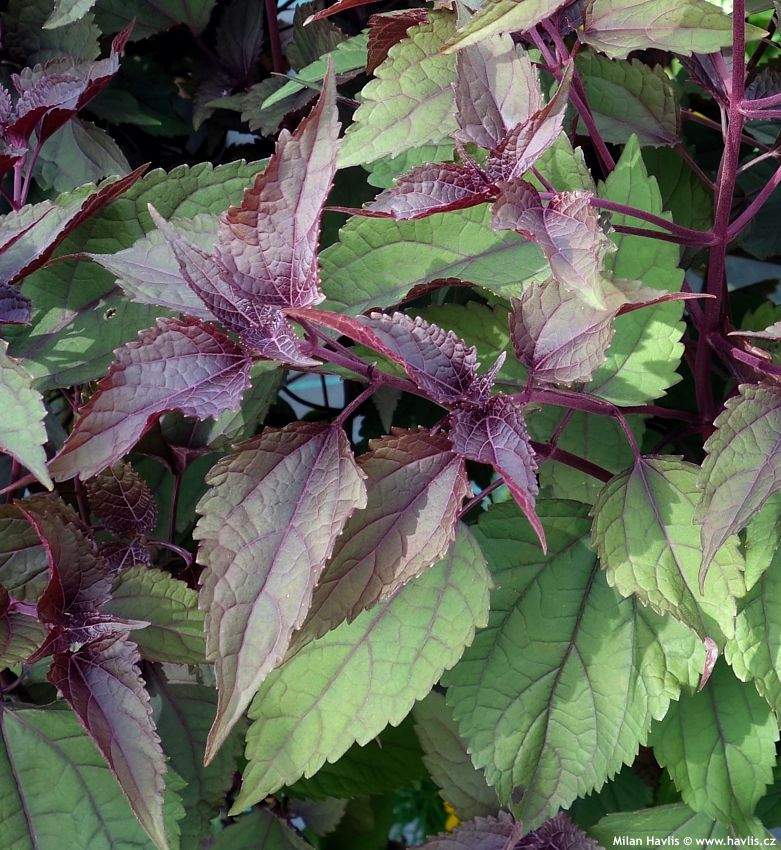
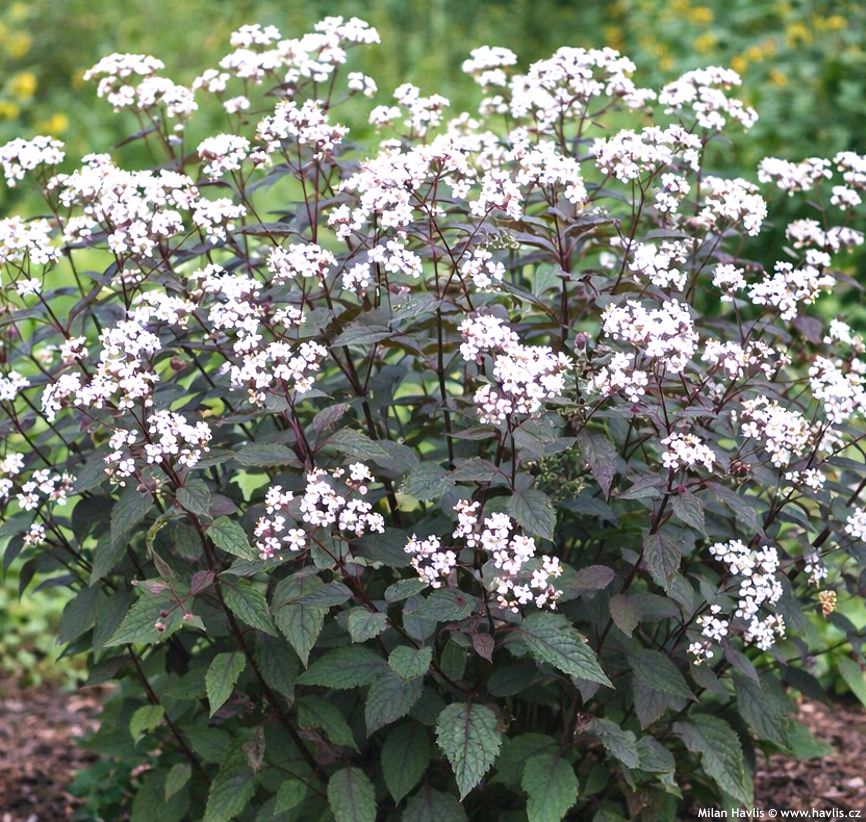
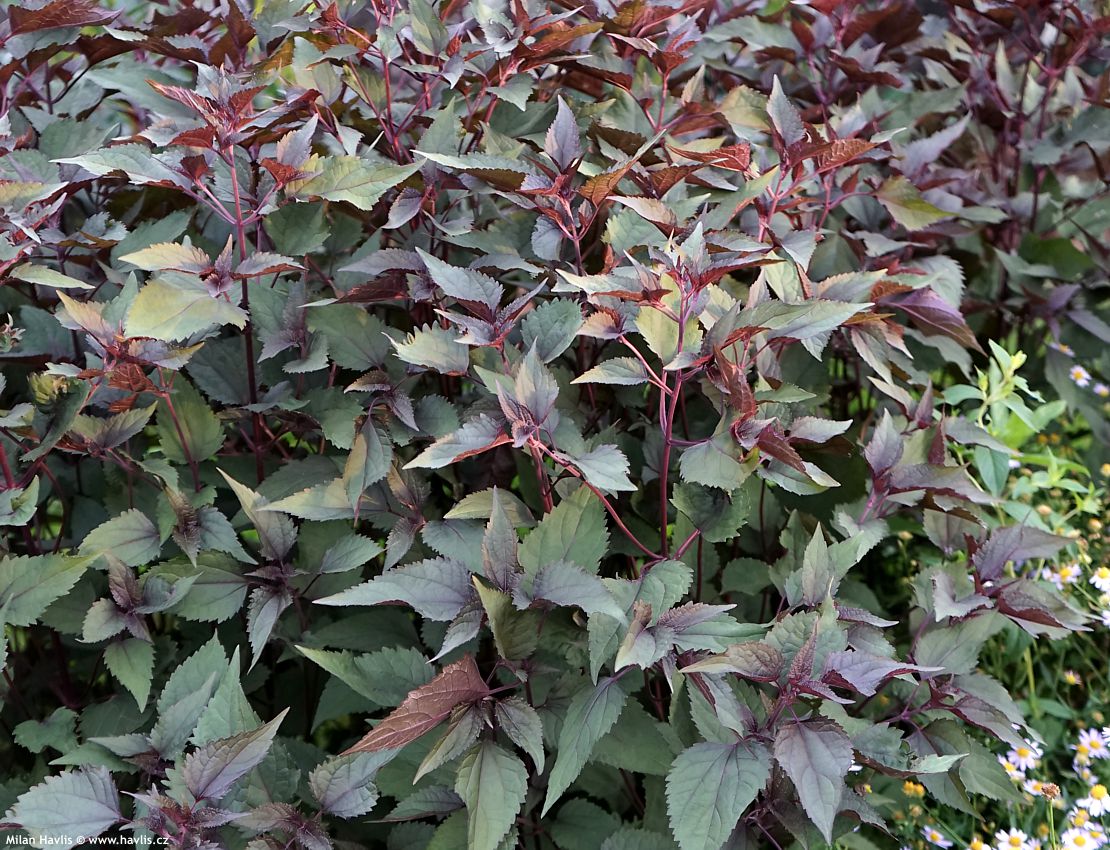
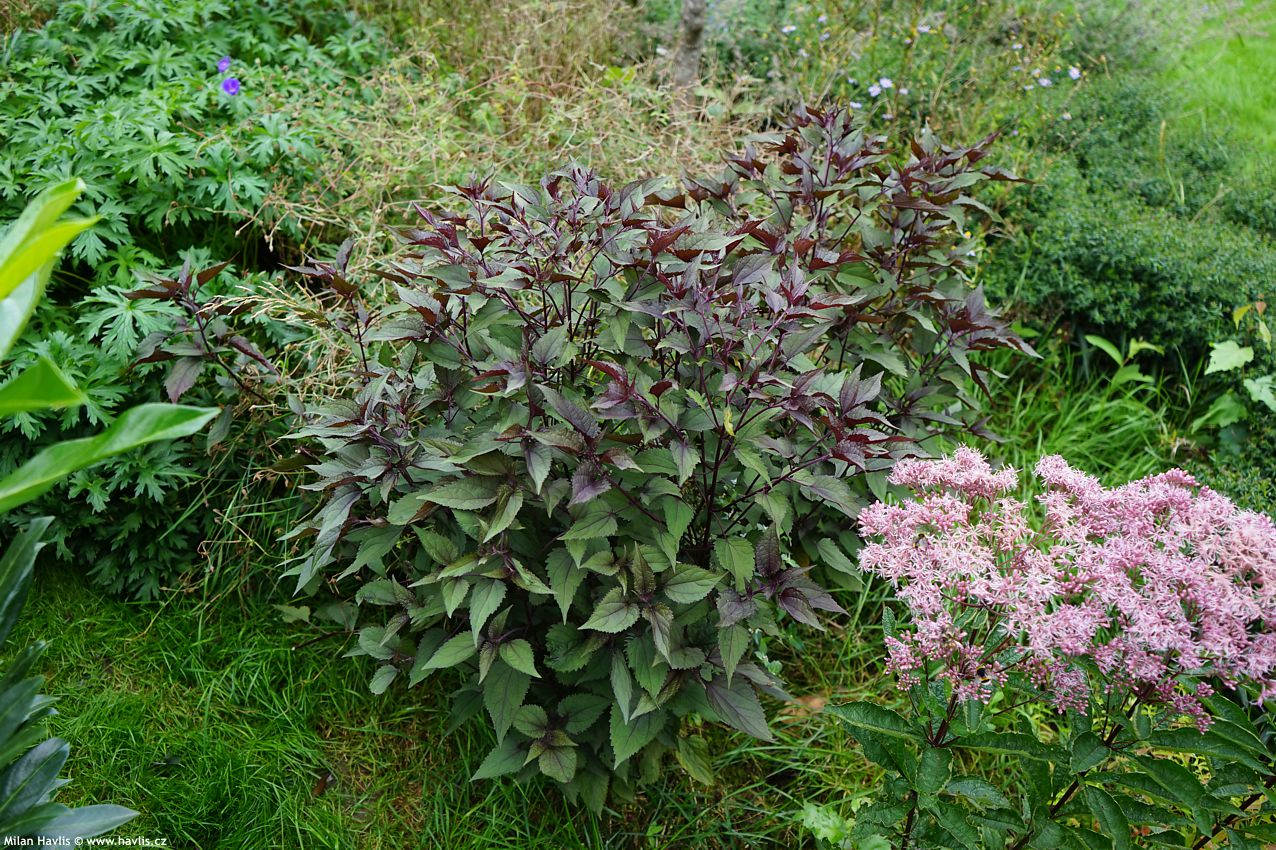
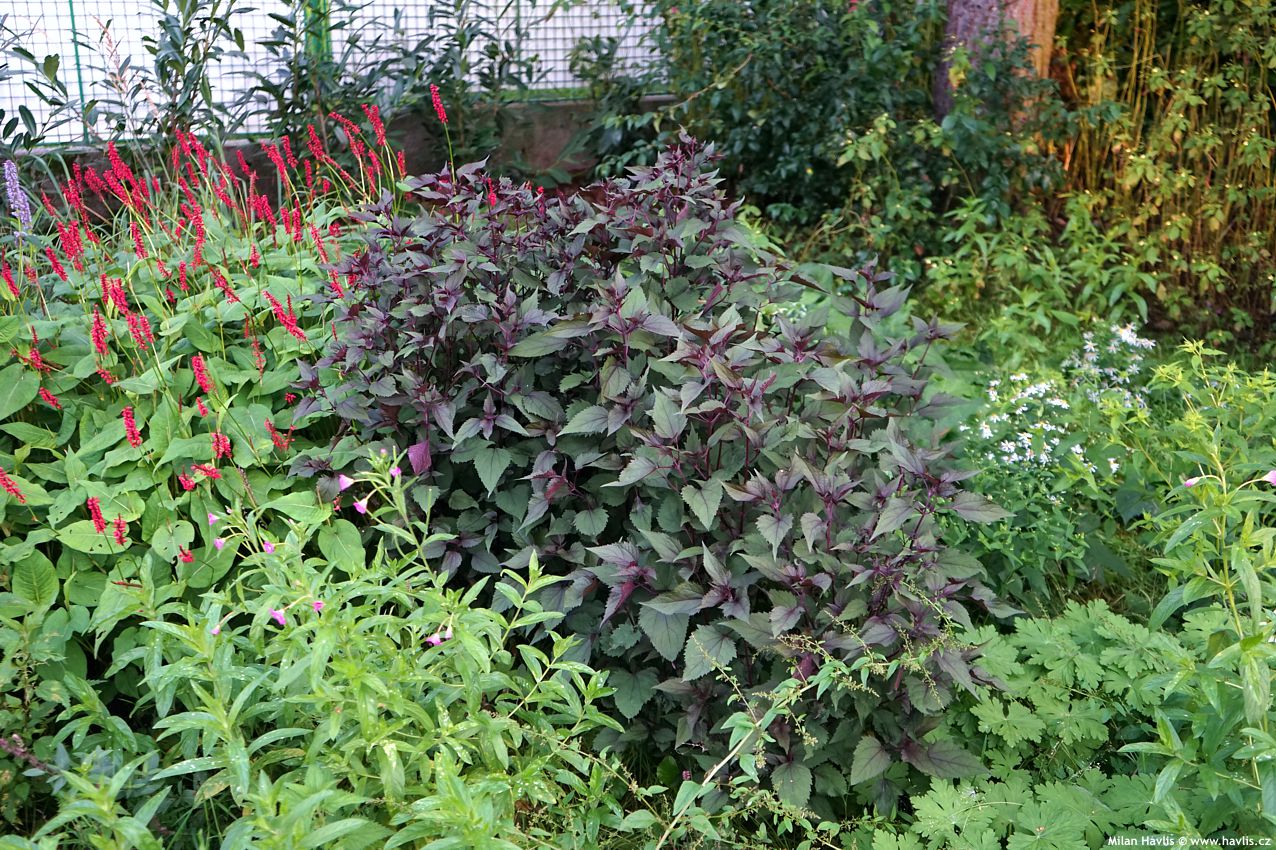
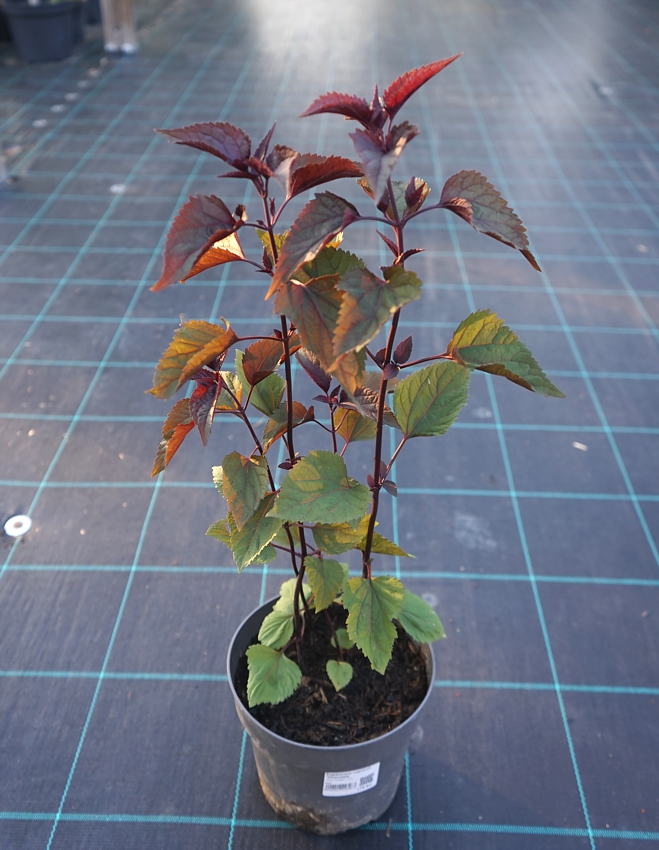
The variety Chocolate of white snakeroot is not a common perennial, yet among perennial specialists it ranks among the most admired. Above all for its foliage colour: a deep chocolate brown with a burgundy tone that in partial shade hangs over the border like a soft haze. It is tall and beautifully structured, so it stands out from a distance in any composition, its dark foliage creating a contrast to ordinary green and a backdrop for the small, snow‑white flowers that hover above the plant like a fine veil. The habit is upright but not rigid, the stems move gently in the wind, and despite its height of around one metre the plant feels supple and light. The leaves are medium‑sized, broadly ovate to triangular with a clearly drawn tip, finely toothed, and marked by a strong wine‑coloured pigment that is most intense in spring and early summer; later the colour opens into warmer tones.
‘Chocolate’ belongs in large perennial borders, ideally in groups where it is not overshadowed by more vigorous neighbours but accompanied by contrasting species of similar height. Although it tolerates partial shade and grows even in shade, its darkest foliage colour develops in full sun, where it acts as a striking accent among late‑summer plants. It looks superb with heleniums in rich autumn shades, with relaxed daylilies whose broad, grass‑like leaves form a natural counterpoint to its upright habit, and the front of the border can be taken by hakonechloas or heucheras in tones that complement one another. For a full, luxurious look in taller perennial borders, delphiniums add attractive leaf shape and abundant flowering in many colours, while rudbeckias and persicarias extend the season into autumn, sharing similar requirements and low maintenance.
The cultivar differs from the species chiefly in its foliage colour, which is exceptional within the genus. It was selected by Dr Richard W. Lighty (1935–2021) at Mt Cuba Center, arising from seedlings found by Hal Bruce (Winterthur Gardens) in the 1970s; it was introduced in 1994 as the darkest‑leaved plant among all those tested. Mt Cuba Center is an American botanical institution dedicated to the study, evaluation and conservation of native plants of the eastern United States; its trial gardens are among the most respected in the world thanks to long‑term, carefully conducted comparative studies. Its contribution to international botany is significant: it is one of the few institutions to test North American perennials under real garden conditions, to introduce new cultivars based on scientifically led evaluations, and to provide data used by universities, botanical gardens and breeders worldwide.
Last update 01-07-2026
Joe Pye weed is an undemanding North American perennial that grows reliably in ordinary garden soil with sufficient moisture, especially in the first half of summer. It thrives best in full sun but copes well with partial shade, where growth remains steady though flowering is weaker. The soil should be humus‑rich, moderately moist and not permanently waterlogged, yet it tolerates occasional summer flooding; in dry, hot periods it benefits from regular watering. It is fully hardy to about −34 °C (USDA zone 4) and re‑sprouts from the roots every year, so in spring it is enough to remove all dry stems at ground level and wait for new growth – which sometimes appears slowly. It does not require staking, as its habit is naturally firm. Feeding is unnecessary, though a light application of compost in spring supports vigour. In dense plantings it is advisable to divide the clump every few years to maintain strength and prevent it from overrunning neighbouring plants. Because of its wide‑spreading root system it is not suitable for long‑term container cultivation; it performs best in open ground, where it has stable moisture and space for its roots.
Goods are shipped all over Europe. For Russia and U.K. and for further details please read about SHIPPING OPTIONS HERE.
Are you interested in a serious discount for orders NOV-FEB? Check your options here.
THE PRICES INCLUDE VAT of 15%. For quick conversion you can use 1 CZK = approx. 0.04 EUR
- STANDARD QUALITY - Plants of this group are 1st class quality with number of branches and overall density adequate to their size and age, considering they were container grown.
- DE LUXE QUALITY - This label guarantees a luxurious quality of manually selected plants that, compared to their height and age, are exceptionally dense and beautiful.
- EXTRA - These plants are usually mature and bigger specimens with exceptional overall appearance.
- STANDARD (as described in the plant form) means a tree with a trunk of 190-210 cm and a crown at the top, unless specified differently. The commercial size for trees is their girth measured in the height of 1m from ground.
- HOBBY - These plants are of the same quality as our standard-quality plants but younger and therefore cheaper.
- SHRUB - a woody plant with branches growing bushy from the ground level.
- HALF-STANDARD or MINI-STANDARD - a small tree with shorter trunk, its size is usually specified.
- FEATHERED - These are trees with branches growing already from the base of the trunk and up along the stem.
- GRASSES and PERENNIALS - Sizes given usually read the diameter of the pot or the clump, as specified.
