.jpg)
.jpg)
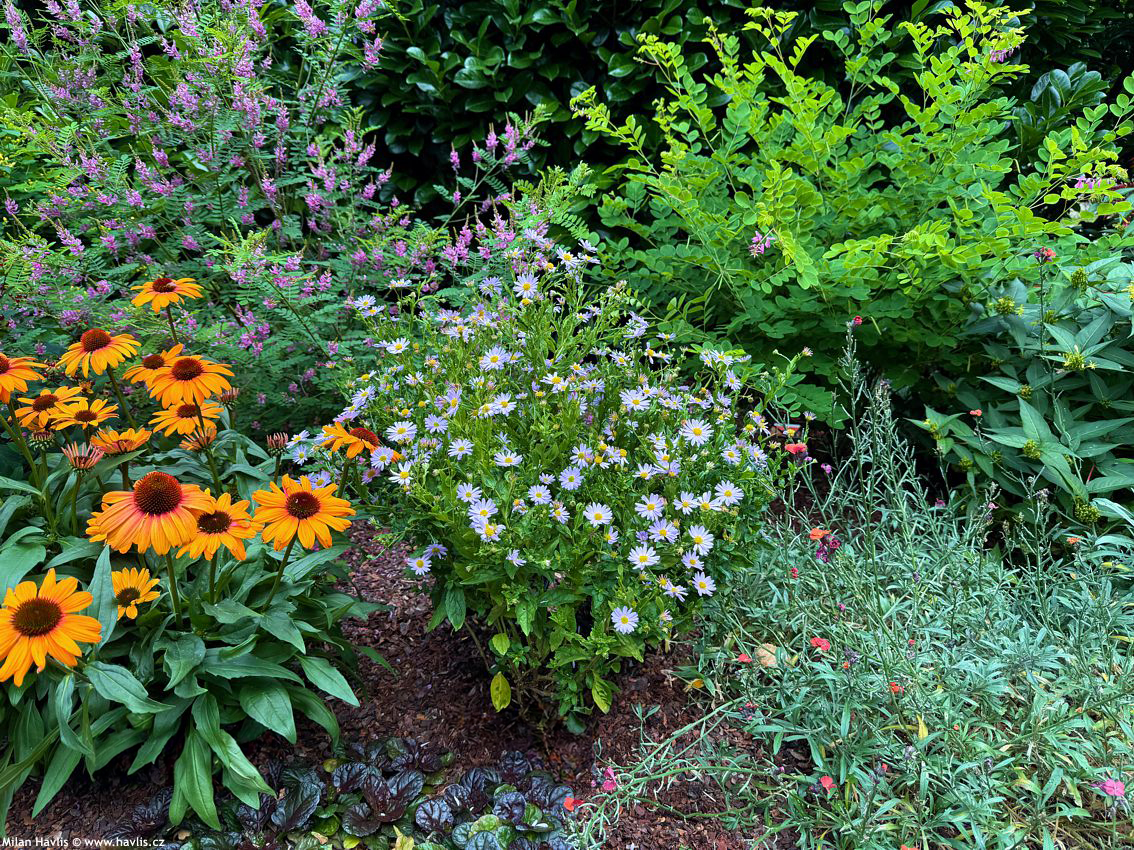
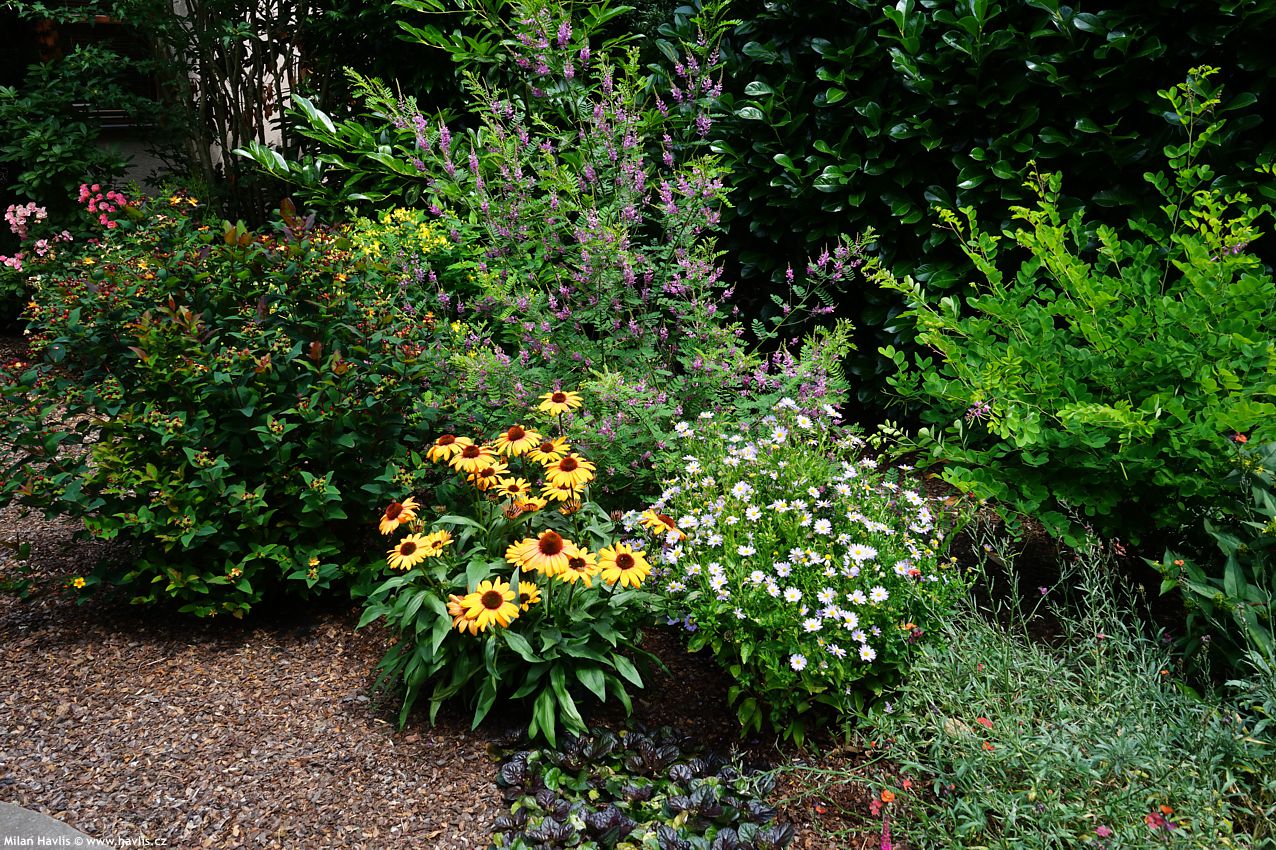
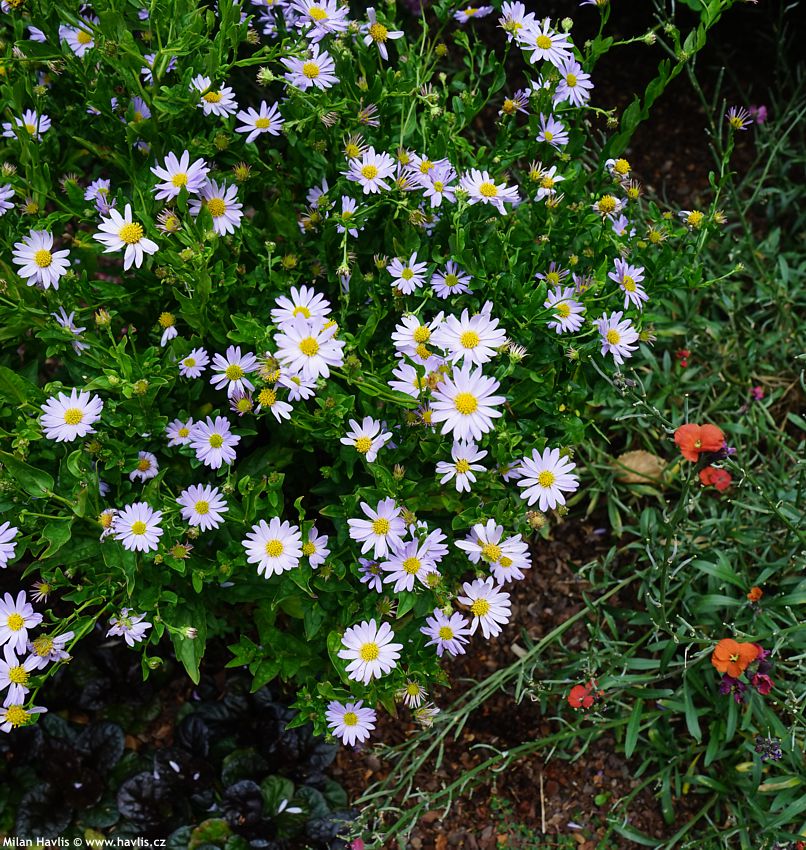
Kalimeris incisa 'BLUE STAR' Japanese aster

 Symbivit Tric (arbuscular)
 Symbivit (arbuscular)
Kalimeris
The genus Kalimeris belongs to the daisy family (Asteraceae) and includes only a small number of perennial species native to East Asia. Their natural range lies mainly in Japan, Korea, and eastern China, where they grow in moist meadows, open woodland, and along streams and riverbanks. These are not botanical curiosities from remote mountain ranges, but plants that have accompanied everyday rural life for centuries. In Japan, kalimeris species appear both in traditional gardens and in agricultural landscapes, especially along the edges of rice paddies, on embankments, and in transitional zones of moist ground. Here they enjoy consistent moisture without ever standing in water, and their long flowering season brings colour at a time when many summer plants are already beginning to fade. The genus was described in the 19th century by Augustin Pyramus de Candolle (1778–1841), a Swiss botanist of French descent and one of the figures who helped translate the flora of Asia into the language of European botany, species by species, genus by genus.
Kalimeris incisa, known in Japanese as Nokon‑giku (ノコンギク), loosely translated as “field chrysanthemum,” has no established scientific common name in Czech, and in practice is referred to by the English-derived name Japanese aster. The species epithet incisa (“cut” or “incised”) refers to the distinctly notched, deeply toothed leaf margins, which appear as if they had been lightly scored with a knife. Native to Japan, this is a plant that wins affection precisely because it is not showy. It is neither a collector’s rarity nor a trophy plant, but a simple, undemanding perennial once planted around houses, along paths, and in ordinary gardens. There it flowered all summer long with little care, forming an unobtrusive yet constant presence in everyday life, naturally woven into the landscape and local customs. The species was first scientifically described by Carl Johann Maximowicz (1827–1891), one of the most important botanists of the 19th century, who devoted his life to the study of East Asian flora. In that botanical world, Maximowicz held a position comparable to that of Linnaeus in Europe, as his work fundamentally helped to name and describe vast numbers of plants that had previously been only vaguely known in the West. A Baltic German in Russian service, he spent most of his professional life at the Imperial Botanical Garden in St. Petersburg, where he eventually became its director. His name is now commemorated in numerous plant species, from trees to perennials.
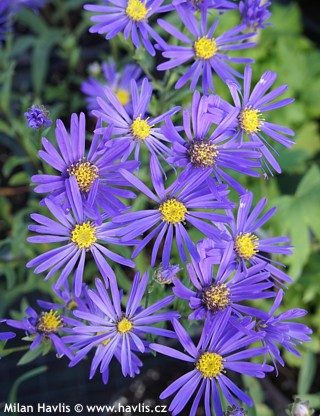
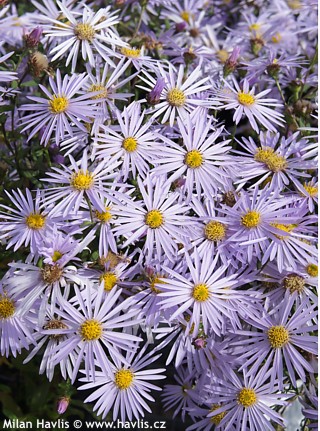
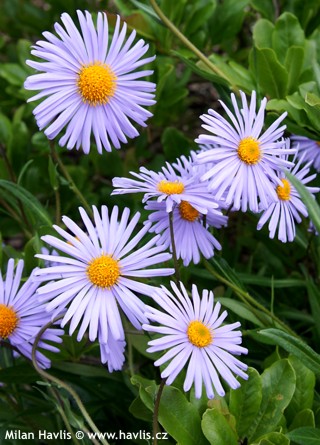
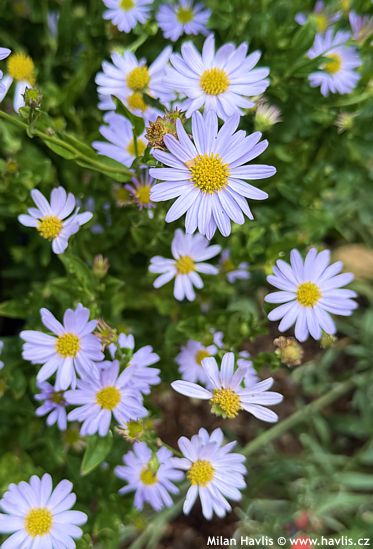
The flowers of the Japanese aster Blue Star display a delicate, pale blue‑violet colour that remains relatively rare among summer‑flowering perennials. It is a clump‑forming perennial with upright, sturdy stems carrying numerous small, star‑shaped flowers with yellow centres. Flowering is long, typically from June through September, and this persistence is one of its greatest strengths. The leaves are narrow, lance‑shaped, and fresh green, forming a light, natural base that never feels heavy, even in dense plantings. Compared to the botanical species, ‘Blue Star’ is more compact, flowers more abundantly, and shows greater colour uniformity. Because of its extended blooming period, removing spent flower heads during the season is recommended to maintain a neat clump and limit seed formation.
You might be surprised by how versatile the Japanese aster can be in the garden. It performs beautifully in naturalistic perennial borders, weaving among ornamental grasses to create a light, meadow‑like effect. It pairs especially well with tall oxeye daisies and coneflowers, or with summer ornamental alliums that highlight its delicacy, as well as with veronicastrums, which enhance the overall sense of airiness. Thanks to its upright habit, it also works well in the middle layer of borders, filling the space between lower perennials and taller clumps. In smaller gardens, it can be used as a repeating motif along paths or terraces, where its long flowering season ensures colour throughout the summer. And because the flowers hold well when cut, it also earns a place in the vase.
Last update 14-12-2025
The growing requirements of the Japanese aster are refreshingly modest. It thrives best in full sun to light partial shade, in well‑drained soil that remains moderately moist. Prolonged waterlogging does not suit it, but short periods of drought are tolerated without difficulty. Heavy feeding is unnecessary; a spring application of compost is more than sufficient. Apart from removing spent flower heads and stems during the growing season, it requires only one main cut: in early spring, before new growth begins, the previous year’s stems are cut back close to the ground. Under our conditions, the plant is reliably hardy to approximately −28 °C (USDA zone 5) and requires no winter protection.