

































Ligustrum lucidum 'EXCELSUM SUPERBUM' Chinese privet, glossy privet


 Symbivit Tric (arbuscular)
 Symbivit (arbuscular)
Ligustrum
The genus Ligustrum comprises around 44 species of shrubs and small trees distributed mainly across the temperate and subtropical regions of Eurasia, with its centre of diversity in East Asia. Native species also occur in Europe, North Africa and as far as Australia (Queensland). Somewhat surprisingly, privets belong to the diverse olive family (Oleaceae), which also includes syringa, fraxinus and forsythia. The greatest species richness is found in China, Japan and Korea, from where privets spread into gardens around the world. Fossil records of Ligustrum are scarce, but pollen grains and macrofossils from the Tertiary period confirm its presence in warm forests of the Northern Hemisphere. Botanically, the genus is characterised by opposite leaves, small four-petalled flowers arranged in panicles, and drupe-like fruits that are particularly attractive to birds. It was precisely this combination of inconspicuous flowers and fruit that gave rise to the Latin name, derived from ligare – to bind – referring to the dense, interwoven growth of the branches. The genus was formally defined in the 18th century as part of the systematic classification of plants, although its taxonomy has never been entirely free of debate. Some species were historically transferred between Ligustrum and Syringa, mainly due to similarities in flower structure, and only modern molecular analyses have confirmed their distinct status. In European garden culture, privet became a symbol of clipped hedges, while in Asia it was perceived more as a natural component of woodland edges and village gardens.
Ligustrum lucidum, Chinese privet or glossy privet, originates from East Asia, primarily China, where it grows as an evergreen shrub or small tree along forest margins, in valleys and near villages and towns. The species was described by William Townsend Aiton (1766–1849) at the end of the 18th century, based on plants cultivated in the Royal Botanic Gardens, Kew, where it arrived through botanical expeditions and the intensive exchange of plants between Europe and Asia. It differs from other privets in its calm, almost arboreal presence and its strikingly glossy leaves, which appear refined and luxurious throughout the year, making it a sought-after plant for formal and representative plantings. After its introduction to Europe and confirmation of its hardiness in temperate climates, it quickly spread far beyond its native range. In warmer parts of the world, it became a typical tree-form privet of streets, courtyards and parks, until it became apparent that under ideal conditions it can behave invasively; in some regions it is now considered problematic and subject to extensive control measures.
In the Chinese cultural context, Ligustrum lucidum holds a deeper and more layered significance than most of its relatives. Its fruits, known as nu zhen zi (女贞子), have been used for centuries in traditional Chinese medicine and are symbolically associated with longevity and vitality. Equally remarkable was its role in the economy: Chinese privet served as a host plant for the insect Ericerus pela, which produces thick waxy coatings on the branches. These were scraped off in autumn and processed into so-called white wax, used in the manufacture of candles, seals and medicinal preparations. This technology is more than a thousand years old, and until the early 20th century, when it was displaced by industrially produced paraffin, white wax was among the most widely used waxes. The collection and processing of wax constituted a distinct and respected craft, securing this otherwise unassuming tree a firm place in everyday life and the cultural memory of its homeland.
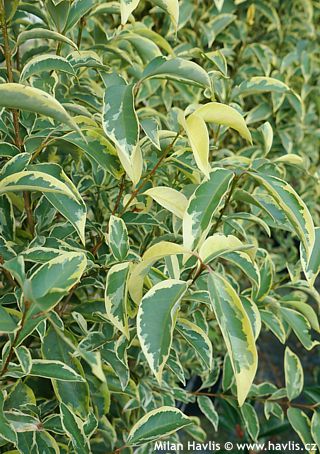
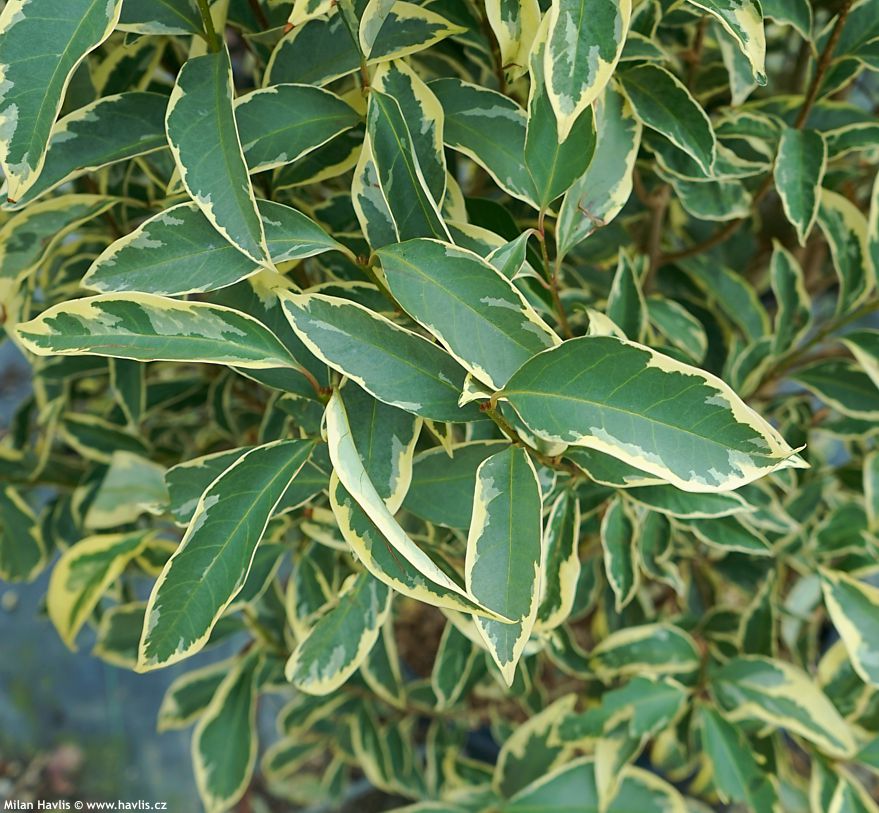
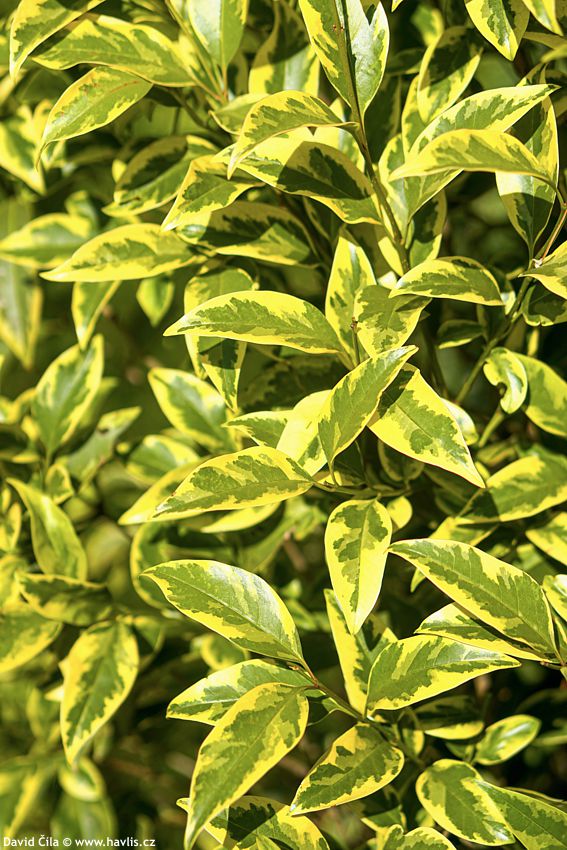
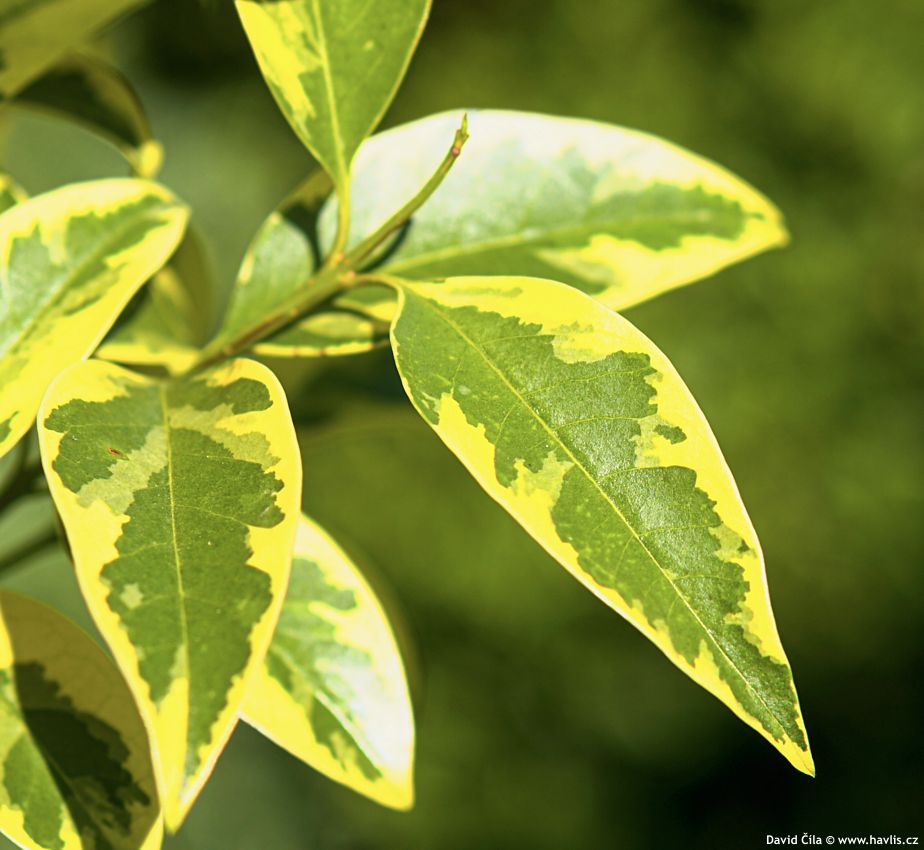
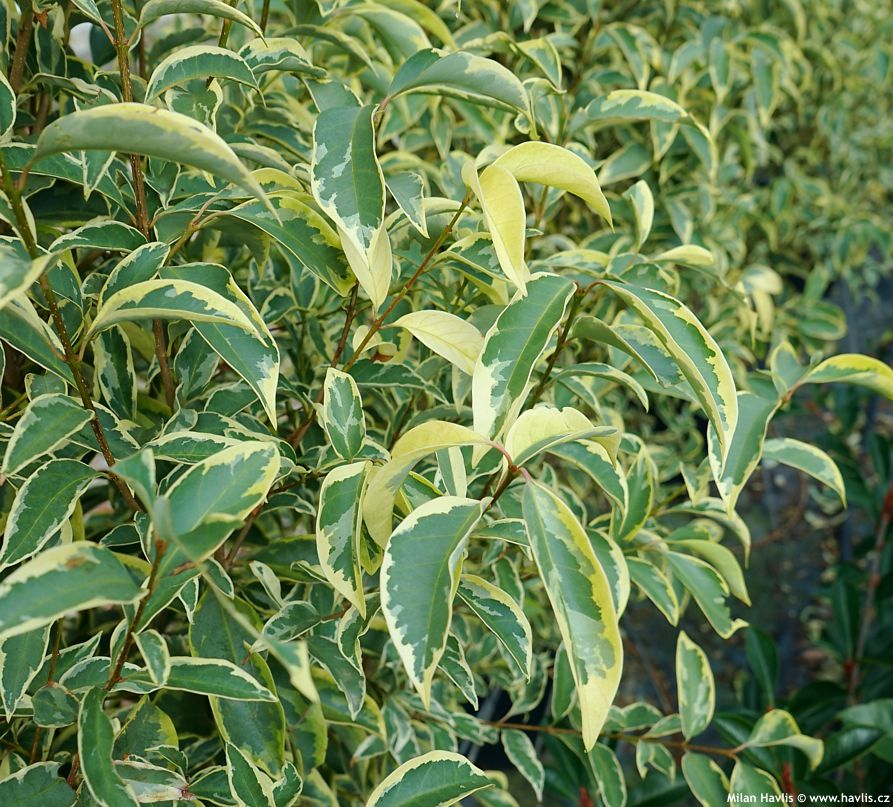
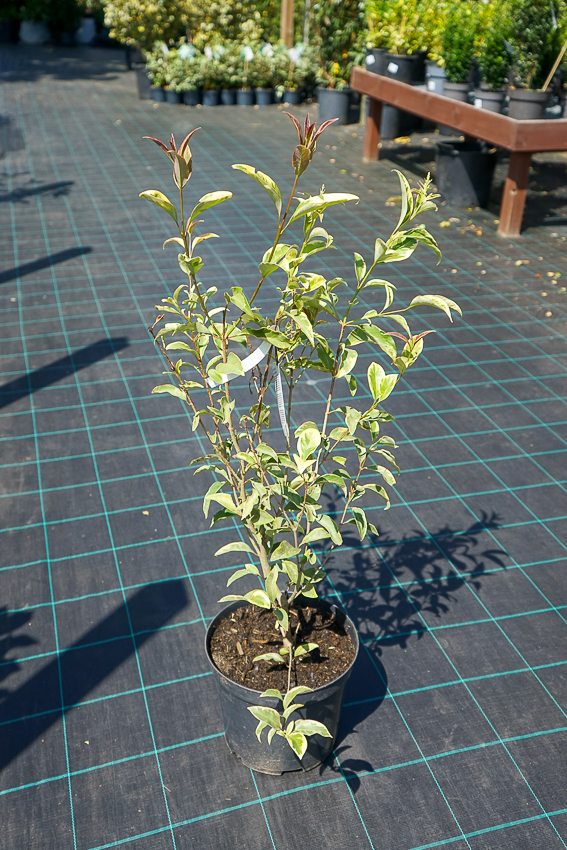
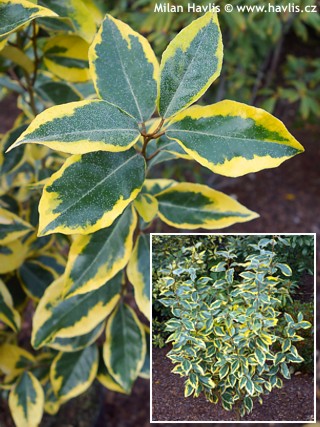
Excelsum Superbum is a highly attractive, variegated form of glossy privet. It makes large, up to 15 cm long and 6 cm wide, ovate to oval, pale dark green leaves abundantly variegated butter yellow, often extended to the midribs. Directly contradicting its botanical name they are NOT glossy, they are rather matte. In late summer may appear numerous lilac-like panicles composed of small, creamy white, narrowly funnel-shaped flowers which may be followed by typical privet berries of blue-black colour. They are poisonous but in C.E. climate this privet needs age to bloom and when it does it is late in the season and seldom sets fruits.
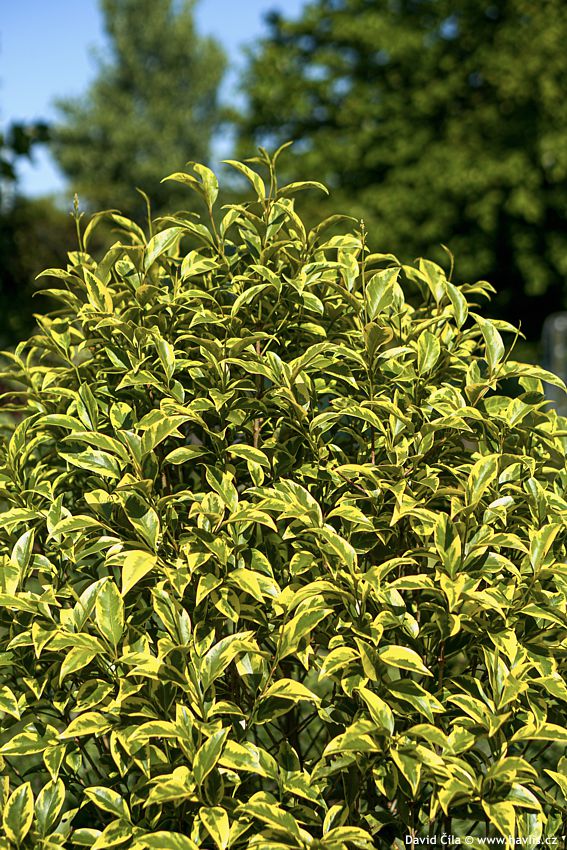
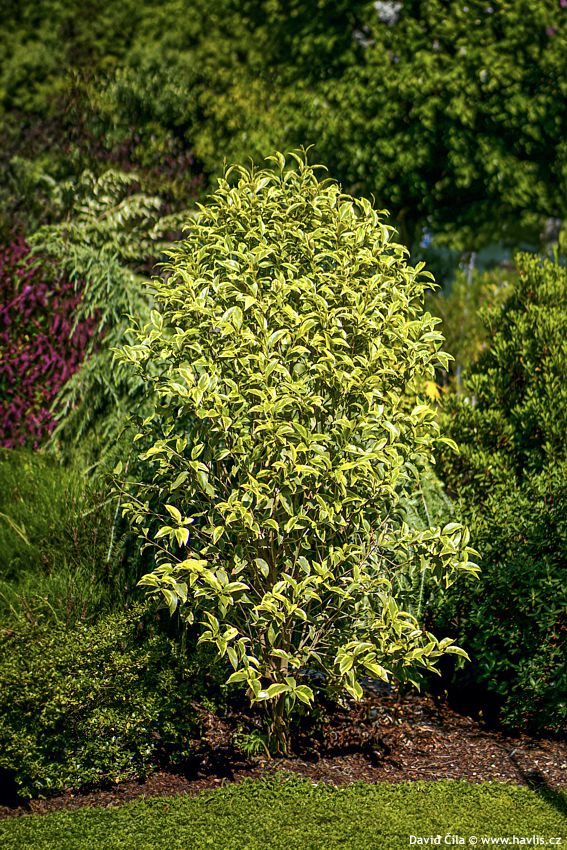
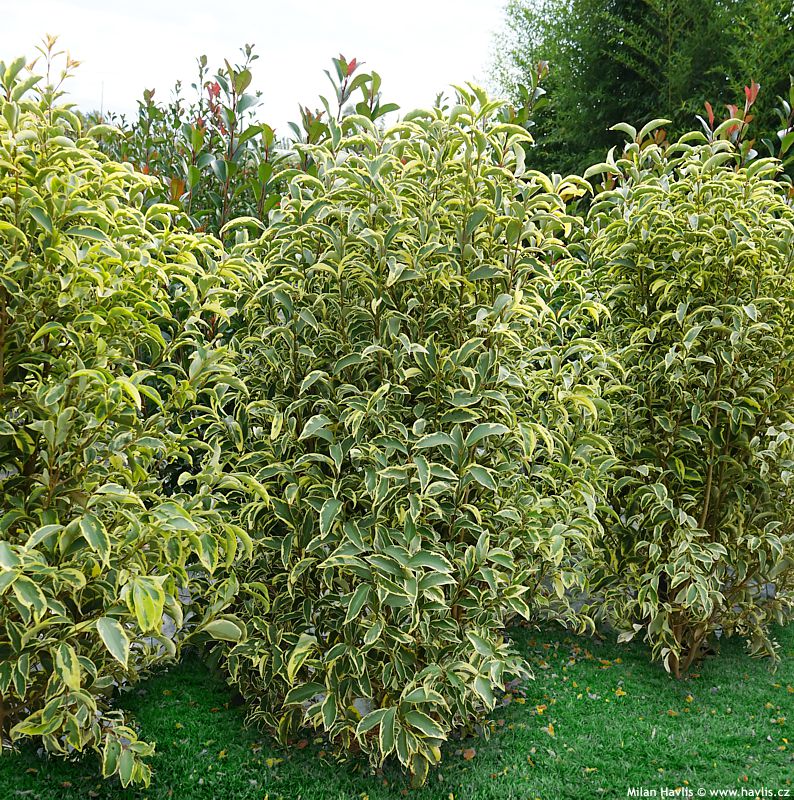
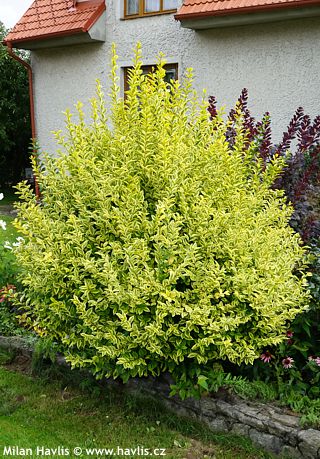
It grows fast into an upright, oval to pyramidal, very dense shrub reaching about 4-5m unpruned in C.E. climate and up to twice as much in zones 8 and 9 in locations with unlimited root space. Yet its size is commonly controlled by regular pruning and shearing, best done in late winter after all frosts. Light trimming is recommended in midsummer.
Evergreen privets will grow in virtually and free-draining soil but thrive in rich, acidic to neutral soil. Avoid waterlogging. Once established it withstands long periods of drought. Grow it in full sun only, green-leaved species and varieties cope with light shade, too. So far it has proved hardy to -17 °C (USDA zone 7) if properly mulched and further trials continue. After harsh winters it may shed some foliage but new leaves will quickly re-emerge in spring.
Last update 01-02-2023
.jpg)
Goods are shipped all over Europe. For Russia and U.K. and for further details please read about SHIPPING OPTIONS HERE.
Are you interested in a serious discount for orders NOV-FEB? Check your options here.
THE PRICES INCLUDE VAT of 15%. For quick conversion you can use 1 CZK = approx. 0.04 EUR
- STANDARD QUALITY - Plants of this group are 1st class quality with number of branches and overall density adequate to their size and age, considering they were container grown.
- DE LUXE QUALITY - This label guarantees a luxurious quality of manually selected plants that, compared to their height and age, are exceptionally dense and beautiful.
- EXTRA - These plants are usually mature and bigger specimens with exceptional overall appearance.
- STANDARD (as described in the plant form) means a tree with a trunk of 190-210 cm and a crown at the top, unless specified differently. The commercial size for trees is their girth measured in the height of 1m from ground.
- HOBBY - These plants are of the same quality as our standard-quality plants but younger and therefore cheaper.
- SHRUB - a woody plant with branches growing bushy from the ground level.
- HALF-STANDARD or MINI-STANDARD - a small tree with shorter trunk, its size is usually specified.
- FEATHERED - These are trees with branches growing already from the base of the trunk and up along the stem.
- GRASSES and PERENNIALS - Sizes given usually read the diameter of the pot or the clump, as specified.
