












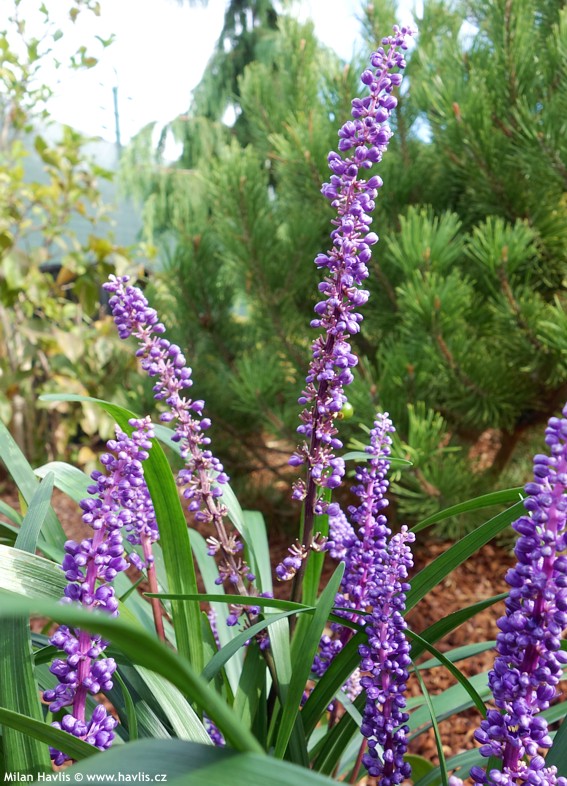
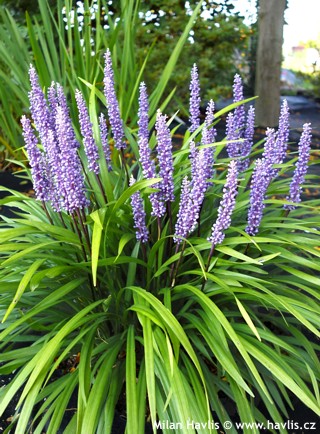
Liriope muscari 'ROYAL PURPLE' border grass, lily-turf

 Symbivit Tric (arbuscular)
 Symbivit (arbuscular)
Liriope
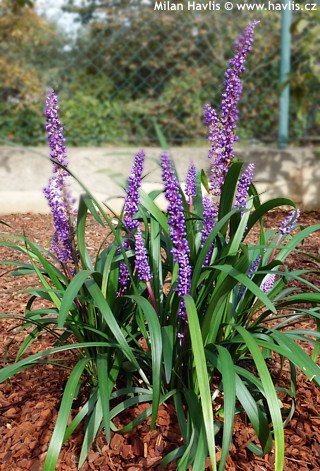
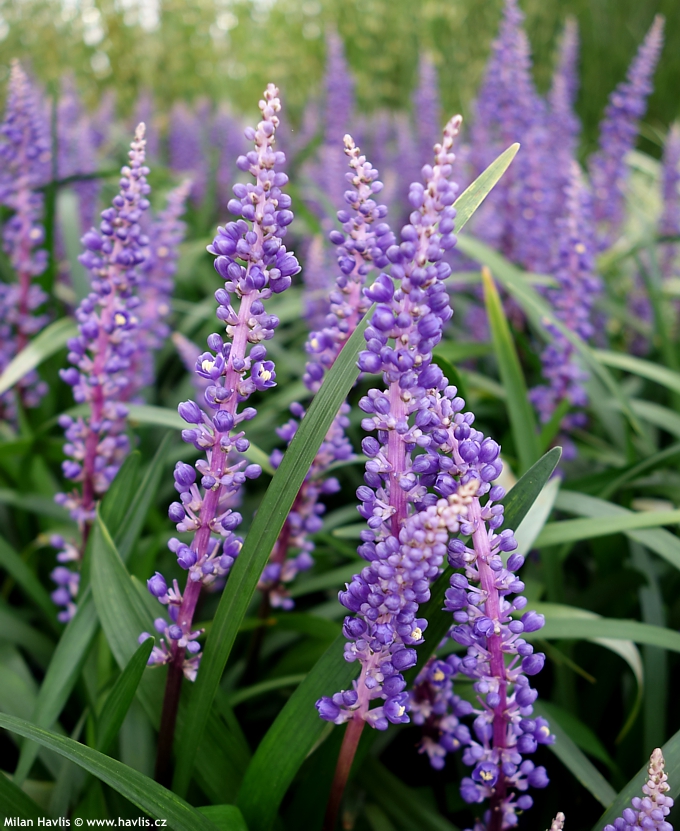
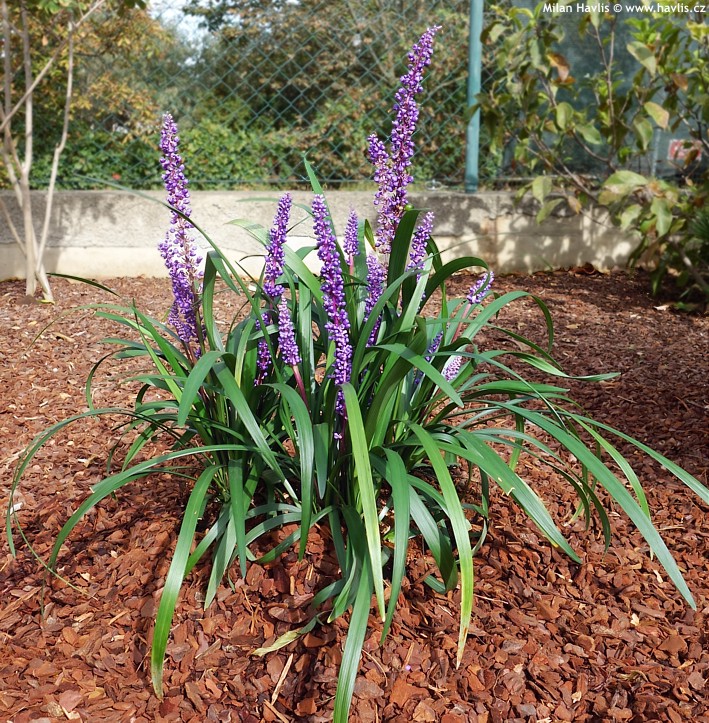
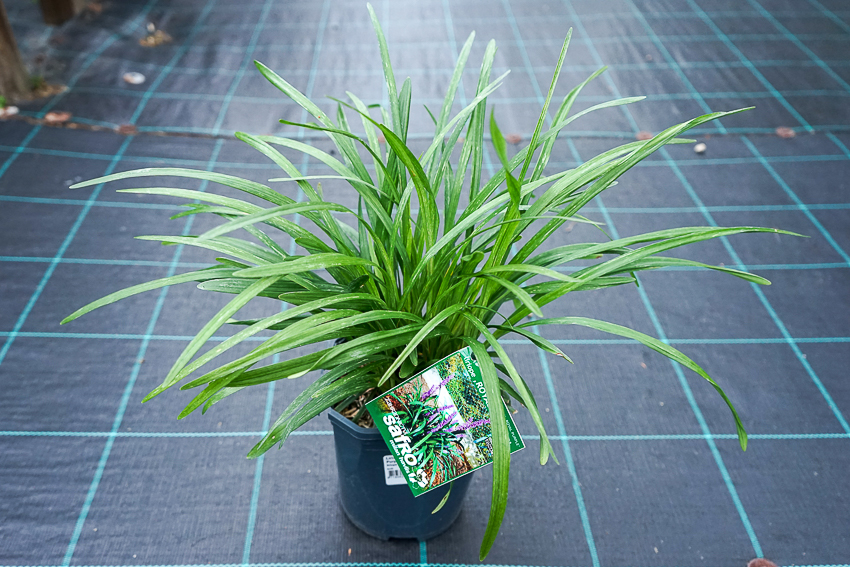
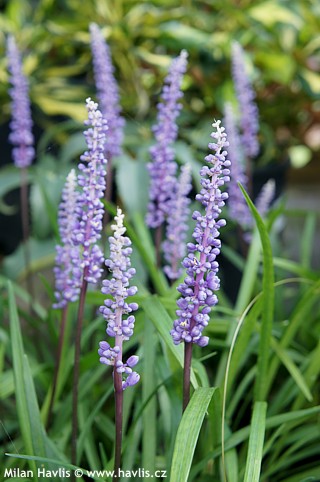
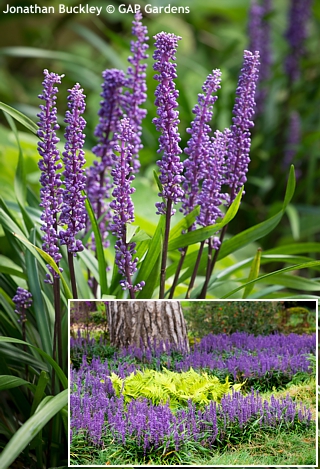
Royal Purple lily-turf is like an improved version of an older car type - better in all aspects compared to its predecessor: larger leaves, larger flowers, deeper colour. The foliage is ribbon-like, dark green, very glossy, and are evergreen in mild winters of zone 6, and reliably evergreen in warmer areas. In early August are borne 30-40 cm tall stem with terminal spikes of deep lavender violet flowers on strong, dark purple stems. They rise well above the foliage making a good display of richly coloured flowers. New spikes are produced continuously until early autumn.
Last update 29-09-2019
Liriope muscari prefers partial shade to full shade and is highly tolerant of drought. It will be more lush in soil that can hold some moisture without staying waterlogged, though ordinary garden soil with a touch of humus is perfectly sufficient. We’ve found that it grows slightly better in acidic soils, with deeper green foliage, but it isn’t essential – it will manage almost anywhere, only perhaps a little slower. Its strong drought tolerance has become especially evident in recent decades, as rainfall decreases and older perennial species begin to show that the new conditions don’t suit them. Liriope copes well even in drier spots under the trees and between their roots, and in urban beds without irrigation, relying solely on whatever rain arrives. Conversely, if you water regularly or have irrigation, you can grow it in full sun. It doesn’t require feeding, but it responds quickly to nutrients with stronger foliage and more generous flowering. The leaves are left on through winter, though if they look tired and untidy by spring, they can be cut back to about 5 cm above the ground. This isn’t needed every year – once every few seasons is enough. Its hardiness reaches –29 °C (USDA zone 5), so in Central Europe it usually needs no winter protection, except for a light mulch in its first year. It can also be grown in outdoor containers with excellent drainage.
Goods are shipped all over Europe. For Russia and U.K. and for further details please read about SHIPPING OPTIONS HERE.
Are you interested in a serious discount for orders NOV-FEB? Check your options here.
THE PRICES INCLUDE VAT of 15%. For quick conversion you can use 1 CZK = approx. 0.04 EUR
- STANDARD QUALITY - Plants of this group are 1st class quality with number of branches and overall density adequate to their size and age, considering they were container grown.
- DE LUXE QUALITY - This label guarantees a luxurious quality of manually selected plants that, compared to their height and age, are exceptionally dense and beautiful.
- EXTRA - These plants are usually mature and bigger specimens with exceptional overall appearance.
- STANDARD (as described in the plant form) means a tree with a trunk of 190-210 cm and a crown at the top, unless specified differently. The commercial size for trees is their girth measured in the height of 1m from ground.
- HOBBY - These plants are of the same quality as our standard-quality plants but younger and therefore cheaper.
- SHRUB - a woody plant with branches growing bushy from the ground level.
- HALF-STANDARD or MINI-STANDARD - a small tree with shorter trunk, its size is usually specified.
- FEATHERED - These are trees with branches growing already from the base of the trunk and up along the stem.
- GRASSES and PERENNIALS - Sizes given usually read the diameter of the pot or the clump, as specified.
