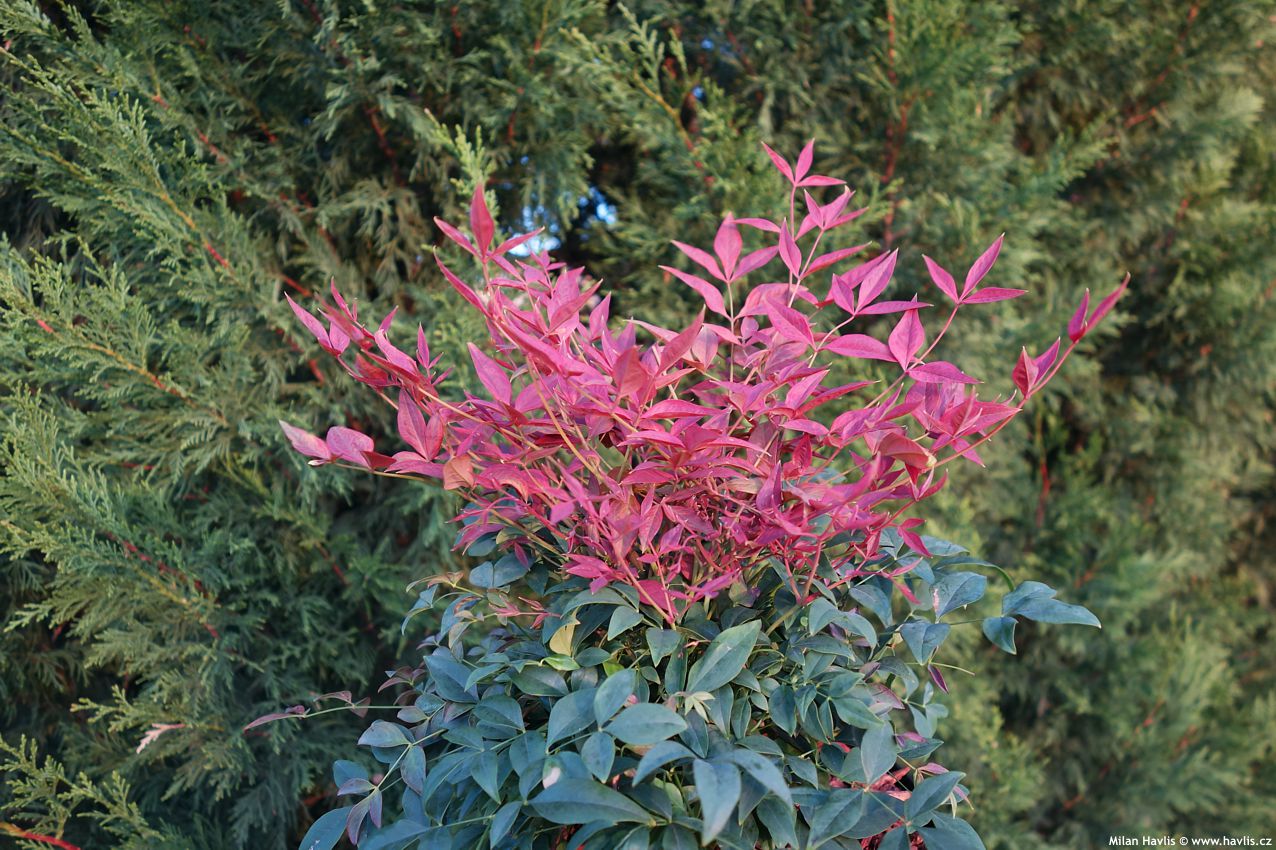
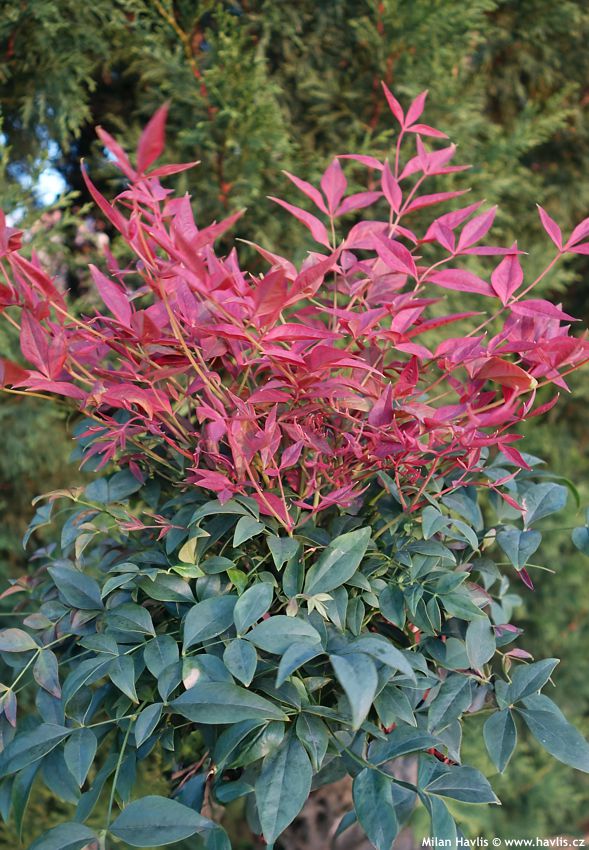
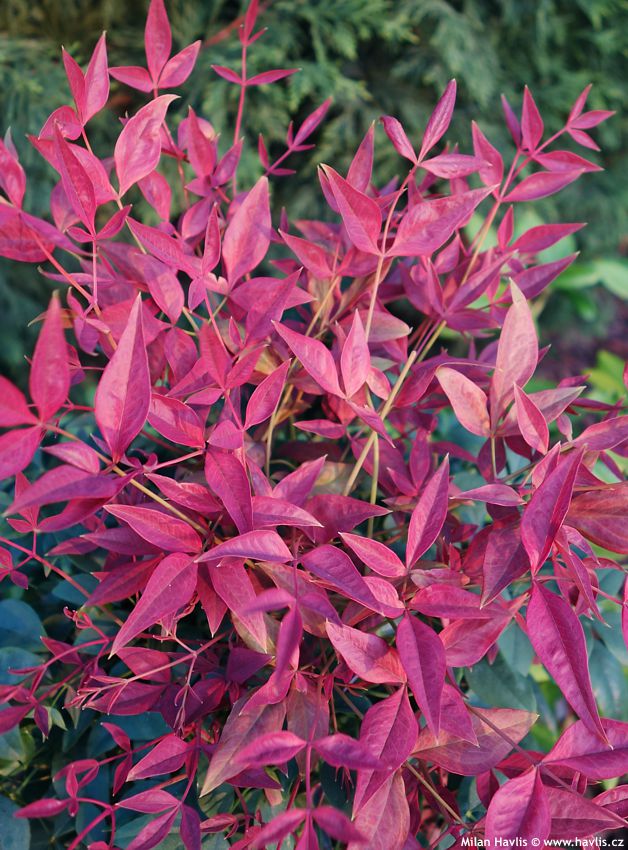
Nandina domestica 'Seika' OBSESSED nandina, heavenly bamboo


 Symbivit Tric (arbuscular)
 Symbivit (arbuscular)
Nandina
The genus Nandina is botanically remarkably modest, comprising a single species, Nandina domestica, which is unusual within the barberry family (Berberidaceae). It is native to East Asia, primarily China and Japan, where it grows in the understorey of open woodlands, along the margins of scrub, and in mountain valleys. The first scientific description was published in 1781 by Carl Peter Thunberg (1743–1828) in his Flora Japonica. Thunberg was a pupil of Carl Linnaeus (1707–1778) and described Nandina within the framework of Linnaeus’s system of scientific plant nomenclature, summarised in his seminal work Species Plantarum, on which botanical taxonomy still relies today. Nandina, however, does not appear there, as Linnaeus never encountered the plant and died three years before Thunberg’s description was published. No fossil records of the genus are known, suggesting a relatively recent evolutionary history, yet its cultural footprint is deep. In Asia, Nandina has been cultivated for centuries in temple gardens and urban courtyards as a symbol of good fortune, perseverance and protection of the home.
The species Nandina domestica is closely associated with human settlement, a relationship reflected in its specific epithet. Here, domestica does not imply domestication in the utilitarian sense familiar from fruit trees, but rather denotes a plant belonging to the household. Thunberg encountered Nandina primarily as a cultivated shrub in gardens, courtyards and temple precincts in Japan, rather than as a purely wild forest species, and this cultural context likely influenced its naming. In Japanese culture it is known as nanten (南天), meaning “southern heaven”, and it traditionally appears in New Year arrangements as a wish for good fortune. Nandina reached Europe in the nineteenth century as part of the fashionable wave of interest in new ornamental plants from East Asia, when botanical gardens and private collections systematically sought species from China and Japan that combined an exotic appearance with good adaptability to the European climate. In Czechia it is already mentioned by Bedřich Berchtold and Jan Svatopluk Presl in their work Rostlinář aneb O přirozenosti rostlin (The Herbal: On the Nature of Plants) as early as 1825.
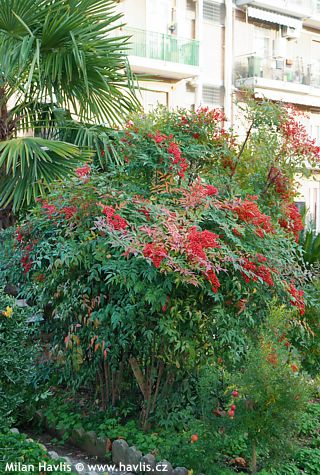
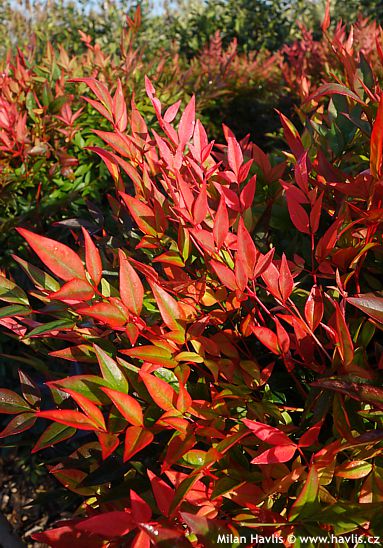
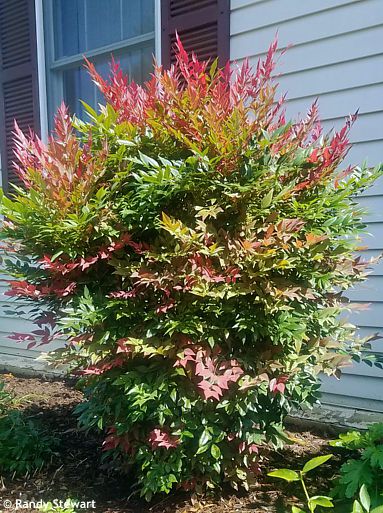
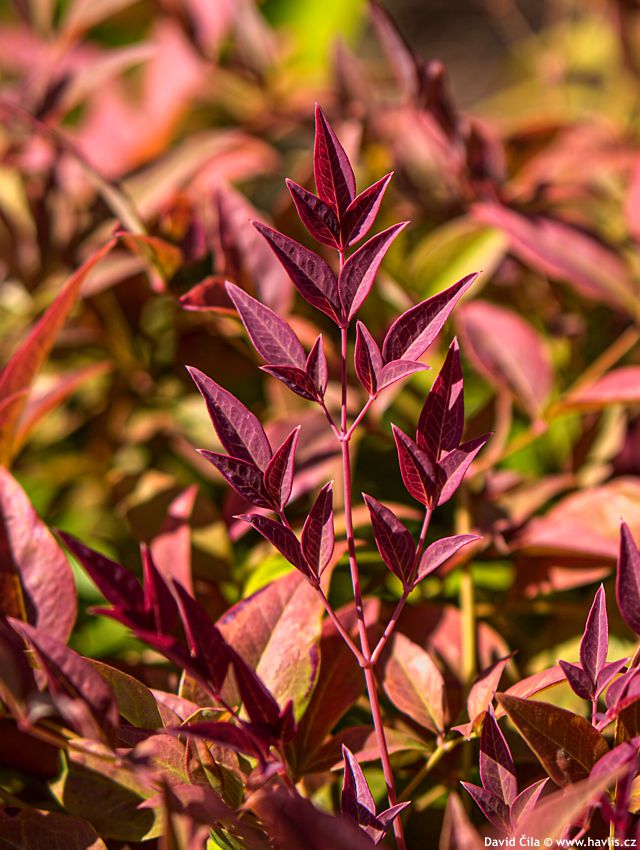
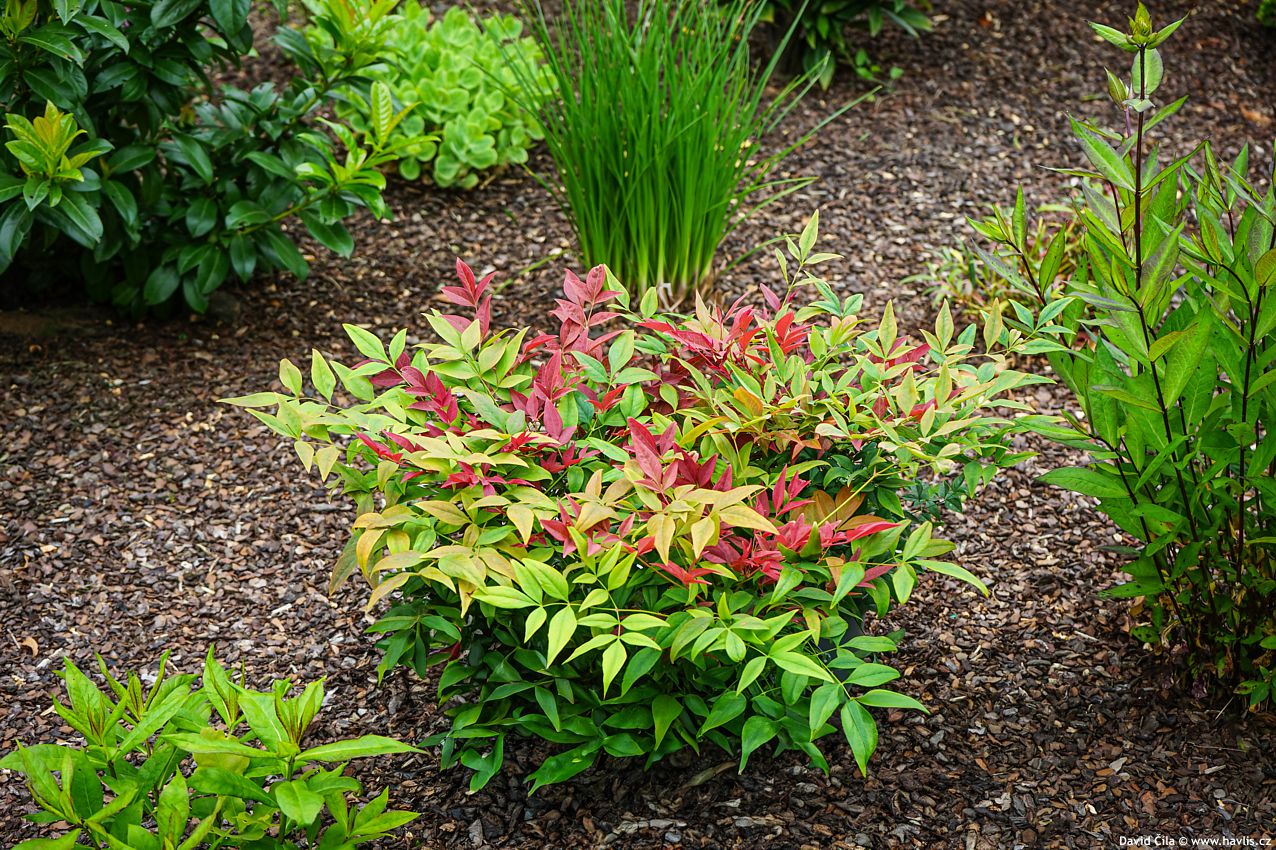
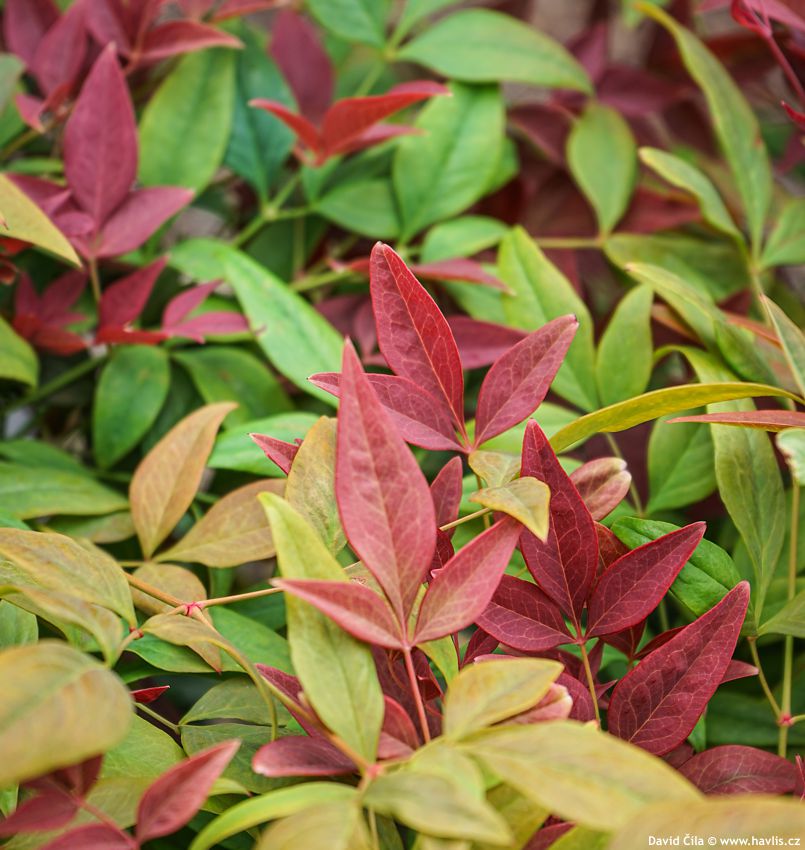
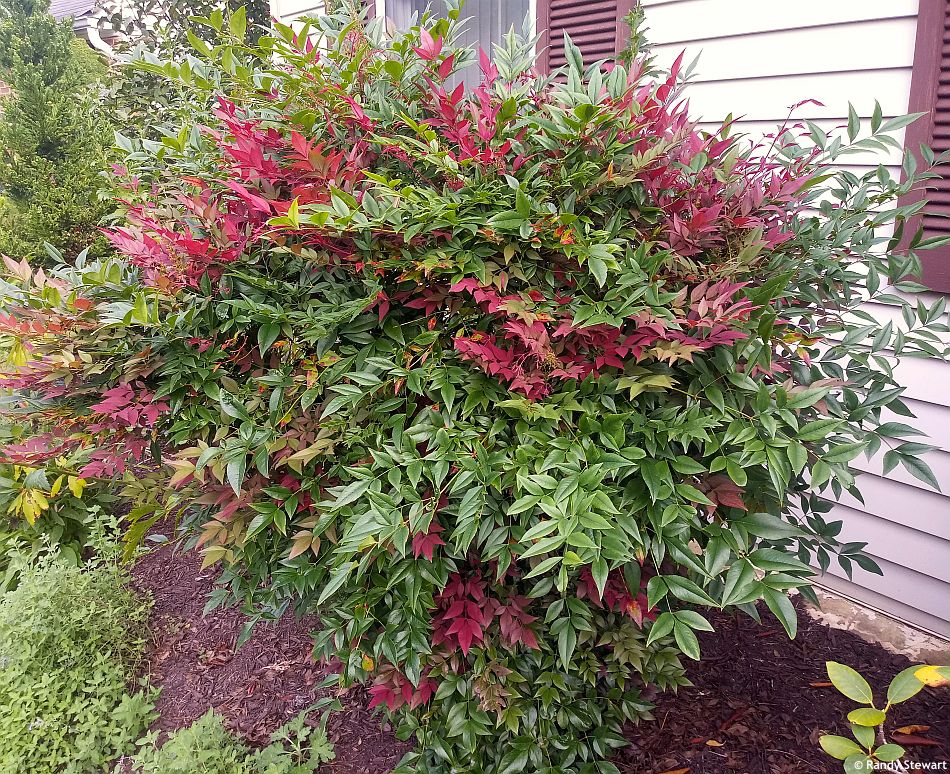
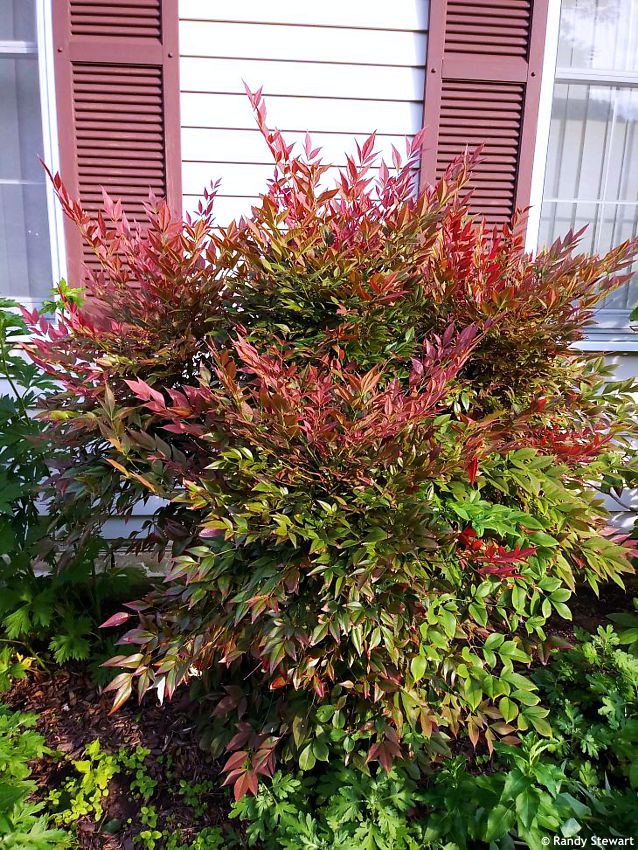
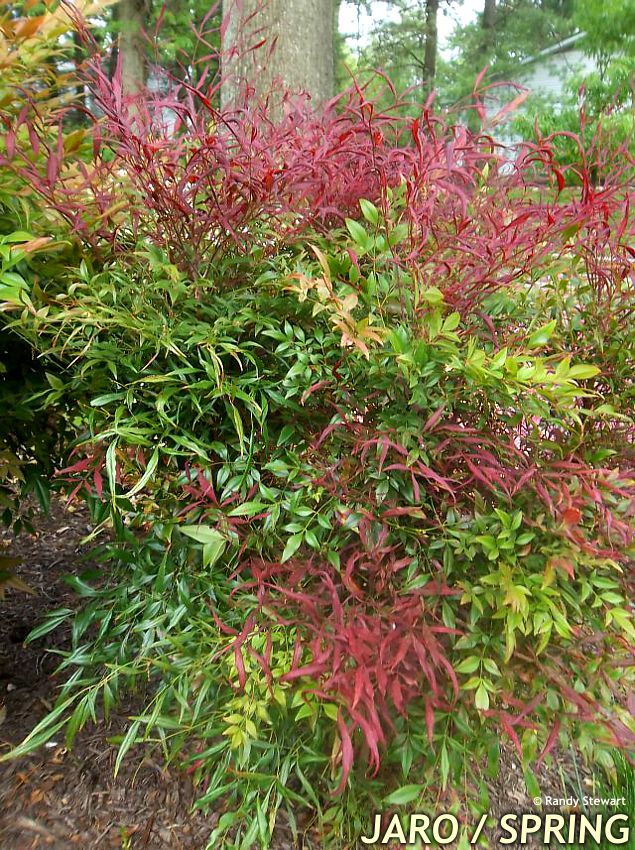
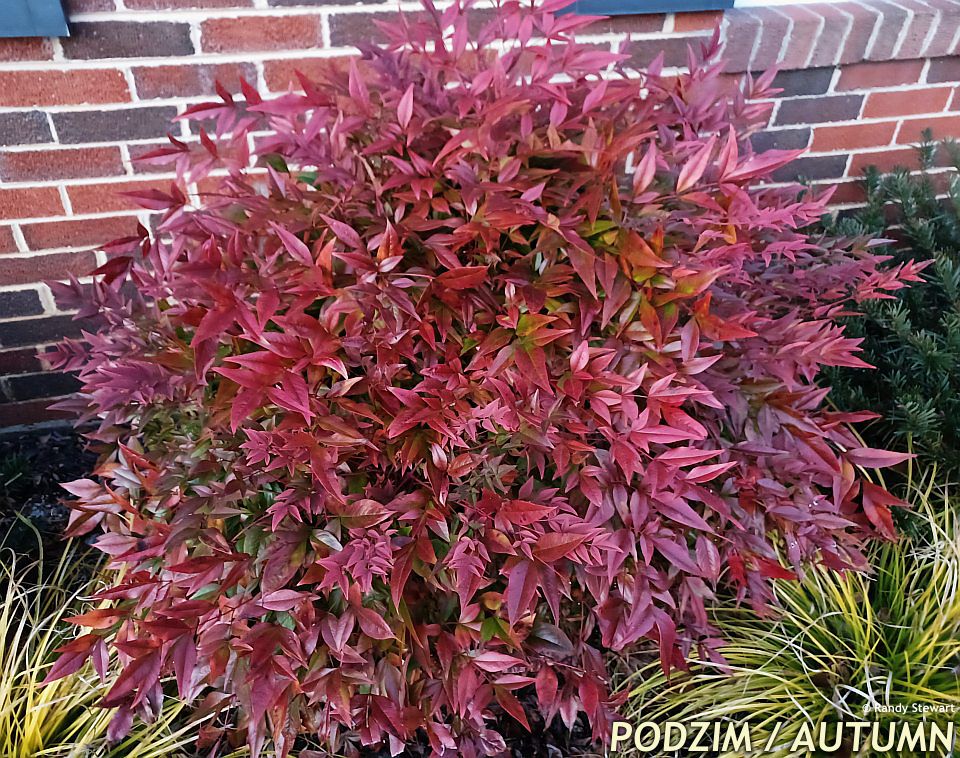
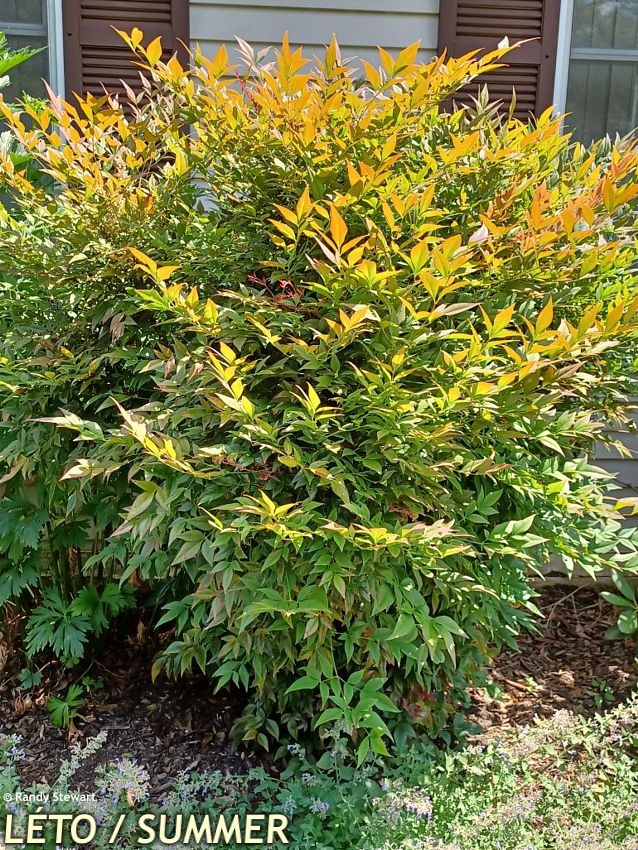
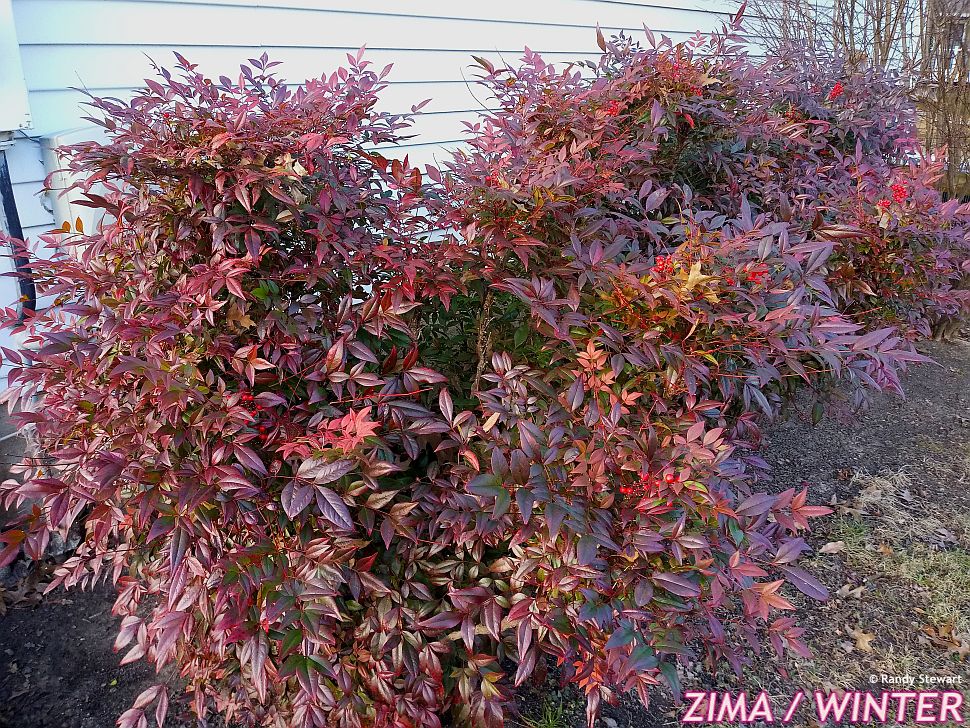
OBSESSED is a patented nandina variety discovered by April Hering and Adeiana Garza from Texas, USA, as a natural mutation of Gulf Stream variety in 2005. It grows slowly and makes a compact shrub with very attractive burgundy red young foliage. The leaves are pinnate, composed of small, lance-shaped leaflets which are green in summer and turn bronze red in autumn and winter. It remains evergreen in mild winters and is semi-deciduous in colder regions. Patent No. PP21891 was issued in 2011.
Last update 06-04-2017
Nandina prefers sunny to lightly shaded, warm sites and a well‑drained, humus‑rich soil. Although it originates from regions of East Asia with relatively high atmospheric and soil moisture, once established it is well tolerant of drought and is far more sensitive to winter waterlogging than to summer drought. Care is limited to occasional watering during prolonged summer droughts and before winter, particularly in young plants. It is not prone to significant diseases or pests. It is classified as evergreen to semi‑deciduous, meaning that in severe frosts it may lose part of its foliage, which is replaced in spring. Because the leaves are long and arise directly from the canes, their fall may give the impression that an entire “branch” has dropped. Frost hardiness is usually given as -20 to -24 °C (USDA zone 6). Exposed sites with frequent cold air movement, such as plateaux, open hilltops without windbreaks or open fields, are unsuitable. Its cultivation in mountainous regions has not yet been reliably tested. It is hardy to about -23°C (USDA zone 6) and even though it is supposed to be tougher than the species we have not tested it in areas with constant cold wind or mountainous regions with long-lasting winters.