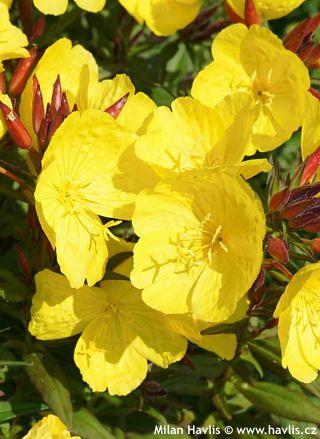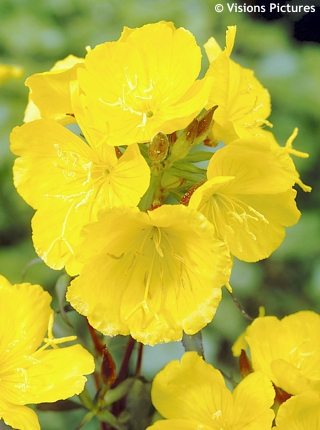
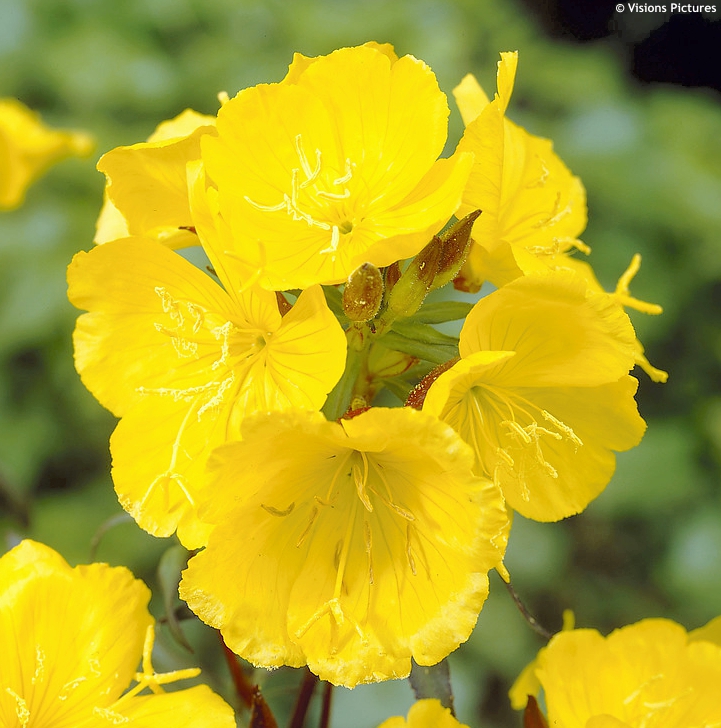

Oenothera fruticosa 'FYRVERKERI' sundrops

 Symbivit Tric (arbuscular)
 Symbivit (arbuscular)
Oenothera
Oenothera is a large genus comprising more than a hundred species distributed mainly across North and South America. It belongs to the evening primrose family (Onagraceae) and includes remarkably diverse herbs and subshrubs with characteristic four‑petalled flowers that often respond to light conditions – many species open at dusk or during the night. The genus includes both low, pink‑flowered species forming compact clumps (Oenothera speciosa, O. berlandieri) and tall, yellow‑flowered evening primroses (O. biennis, O. glazioviana), which have been cultivated in Europe since the 17th century and became renowned for their large flowers opening in the evening. The genus also comprises prairie species with high drought tolerance, as well as steppe, sandy and rocky taxa. More recently, it has come to include the formerly separate monotypic genus Gaura, whose taxonomic placement within Oenothera has been confirmed by modern molecular studies. Species formerly known as Gaura represent a distinct and morphologically exceptional lineage within the genus: the only group with a light, airy habit, long slender stems and small, butterfly‑like flowers that bloom throughout the summer. Their origin in the dry prairies of southern Texas and north‑eastern Mexico is reflected in their remarkable tolerance of heat, wind and poor, stony soils.
Oenothera fruticosa, narrowleaf evening primrose, is one of the longest‑cultivated North American perennials in European gardens. It originates from the eastern United States, where it grows along dry woodland edges, open glades and rocky slopes – habitats that in many ways resemble the warm, sunlit banks and meadows of Central Europe. The species was described by Carl Linnaeus (1707–1778) in 1753, and even then he noted its striking summer flowering, which in its native range coincides with the longest days of the year. It quickly became a cherished garden plant, valued not only for its reliability but also for its bright yellow flowers that shine like small lanterns at a time when most perennials are only beginning to gather strength. In American tradition it appears in folk medicine, and in the gardens of early settlers it was treasured as the “sun drop”, a drop of sunlight capable of brightening even poor soils and dry boundary edges. Compared with other evening primroses, this species is more compact, less aggressive and better at holding its shape, which made it an ideal foundation for modern breeding.
Fyrverkeri (Fireworks) is very probably a Swedish variety of daytime sundrops with large, rich yellow flowers from late June for 4-8 weeks. They are saucer-shaped and appear atop and along 40-60 cm tall stems which makes it a compact and shorter variety compared to the species. Deciduous leaves are shortly lance-shaped, medium green.
Last update 18-06-2020
The plant thrives in full sun and in light, well‑drained soils that warm up quickly in spring. It does not tolerate heavy, waterlogged substrates, where the roots may rot; instead it appreciates sandy or gravelly mixtures. After planting it needs regular watering, but once established it is highly drought‑tolerant. Feeding should be moderate only, as excess nitrogen leads to lush but less stable growth. In spring the plant should be cut back hard to ground level to encourage new, sturdy stems. Container cultivation is possible but requires a very free‑draining substrate and winter protection. According to authoritative American sources, its cold hardiness reaches approximately –34 °C (USDA zone 4).