

































Oenothera fruticosa 'SONNENWENDE' sundrops, evening primrose

 Symbivit Tric (arbuscular)
 Symbivit (arbuscular)
Oenothera
Oenothera is a large genus comprising more than a hundred species distributed mainly across North and South America. It belongs to the evening primrose family (Onagraceae) and includes remarkably diverse herbs and subshrubs with characteristic four‑petalled flowers that often respond to light conditions – many species open at dusk or during the night. The genus includes both low, pink‑flowered species forming compact clumps (Oenothera speciosa, O. berlandieri) and tall, yellow‑flowered evening primroses (O. biennis, O. glazioviana), which have been cultivated in Europe since the 17th century and became renowned for their large flowers opening in the evening. The genus also comprises prairie species with high drought tolerance, as well as steppe, sandy and rocky taxa. More recently, it has come to include the formerly separate monotypic genus Gaura, whose taxonomic placement within Oenothera has been confirmed by modern molecular studies. Species formerly known as Gaura represent a distinct and morphologically exceptional lineage within the genus: the only group with a light, airy habit, long slender stems and small, butterfly‑like flowers that bloom throughout the summer. Their origin in the dry prairies of southern Texas and north‑eastern Mexico is reflected in their remarkable tolerance of heat, wind and poor, stony soils.
Oenothera fruticosa, narrowleaf evening primrose, is one of the longest‑cultivated North American perennials in European gardens. It originates from the eastern United States, where it grows along dry woodland edges, open glades and rocky slopes – habitats that in many ways resemble the warm, sunlit banks and meadows of Central Europe. The species was described by Carl Linnaeus (1707–1778) in 1753, and even then he noted its striking summer flowering, which in its native range coincides with the longest days of the year. It quickly became a cherished garden plant, valued not only for its reliability but also for its bright yellow flowers that shine like small lanterns at a time when most perennials are only beginning to gather strength. In American tradition it appears in folk medicine, and in the gardens of early settlers it was treasured as the “sun drop”, a drop of sunlight capable of brightening even poor soils and dry boundary edges. Compared with other evening primroses, this species is more compact, less aggressive and better at holding its shape, which made it an ideal foundation for modern breeding.
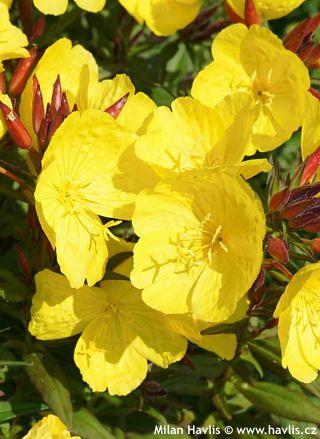
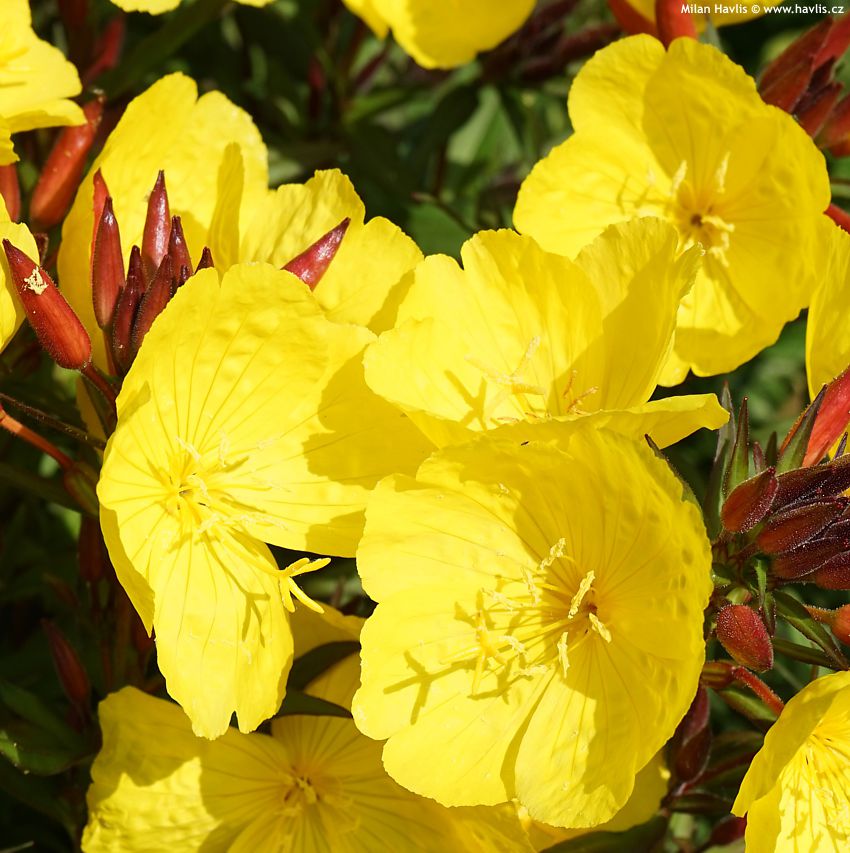
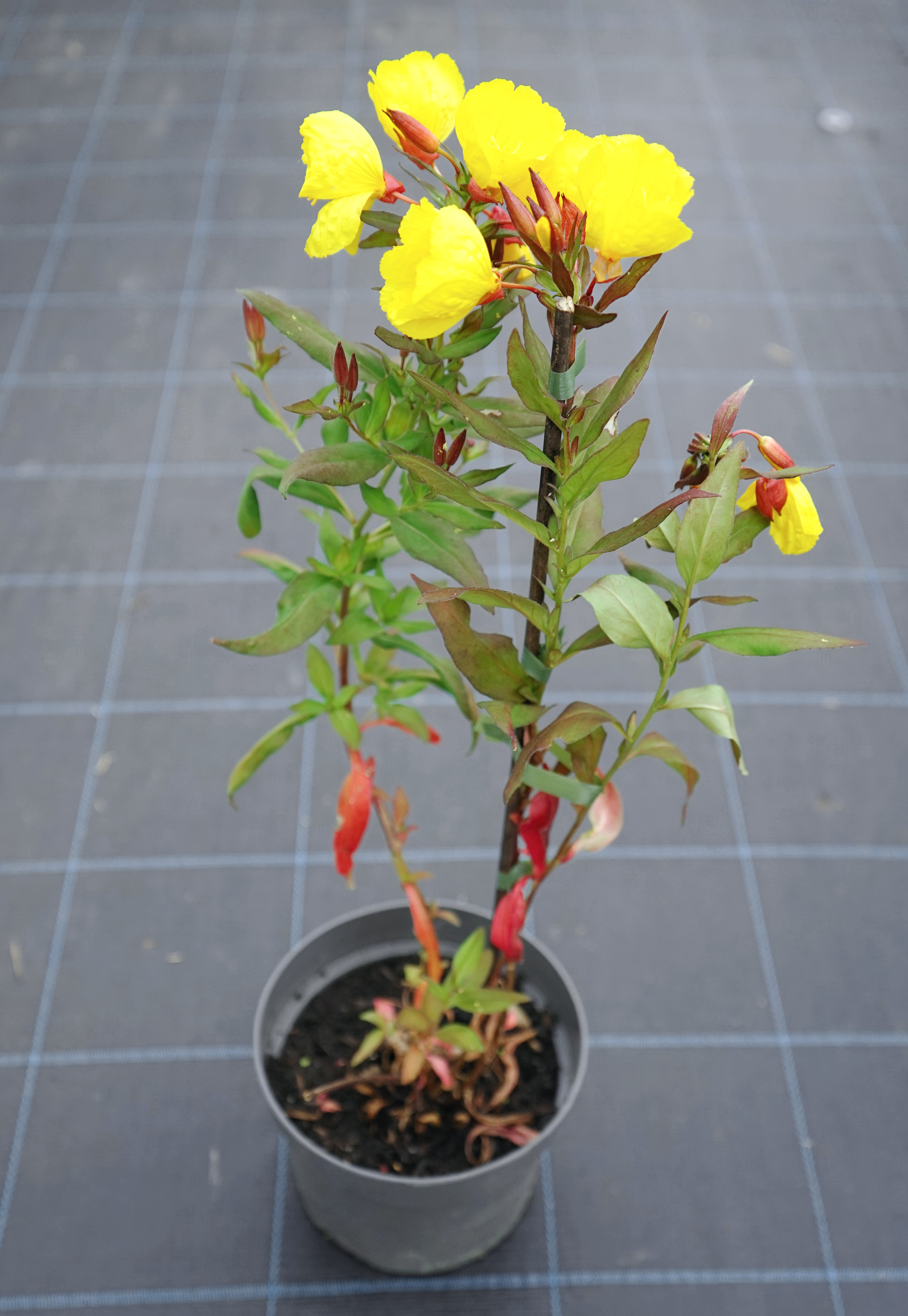
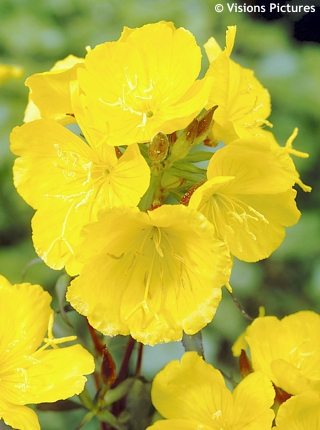
Sonnenwende ('Summer solstice') is an evening primrose variety which won me over at first sight, and I immediately gave it my own name: the Mountain of Suns. Its defining feature is its exceptionally rich, warm yellow colouring, which seems to glow in full sun and truly evokes the summer solstice from which it takes its name. The flowers are broad and fully open, forming a shallow bowl with gently undulating petals and a deep yellow centre that looks like a small disc of light. The plant forms firm, compact clumps about 40 to 50 cm tall, with narrow, slightly glossy leaves that maintain a clean, tidy appearance even outside the flowering season. They are elongated, narrowly elliptic to lanceolate, mid‑green in colour, flushed with wine‑red when young and turning a vivid red in autumn. Compared with the botanical species, 'Sonnenwende' flowers far more abundantly, has sturdier stems and keeps its shape better throughout the season – qualities that seed‑grown forms often lack. The cultivar originated in German breeding, and its name refers to the height of summer, when the plant reaches its full beauty.
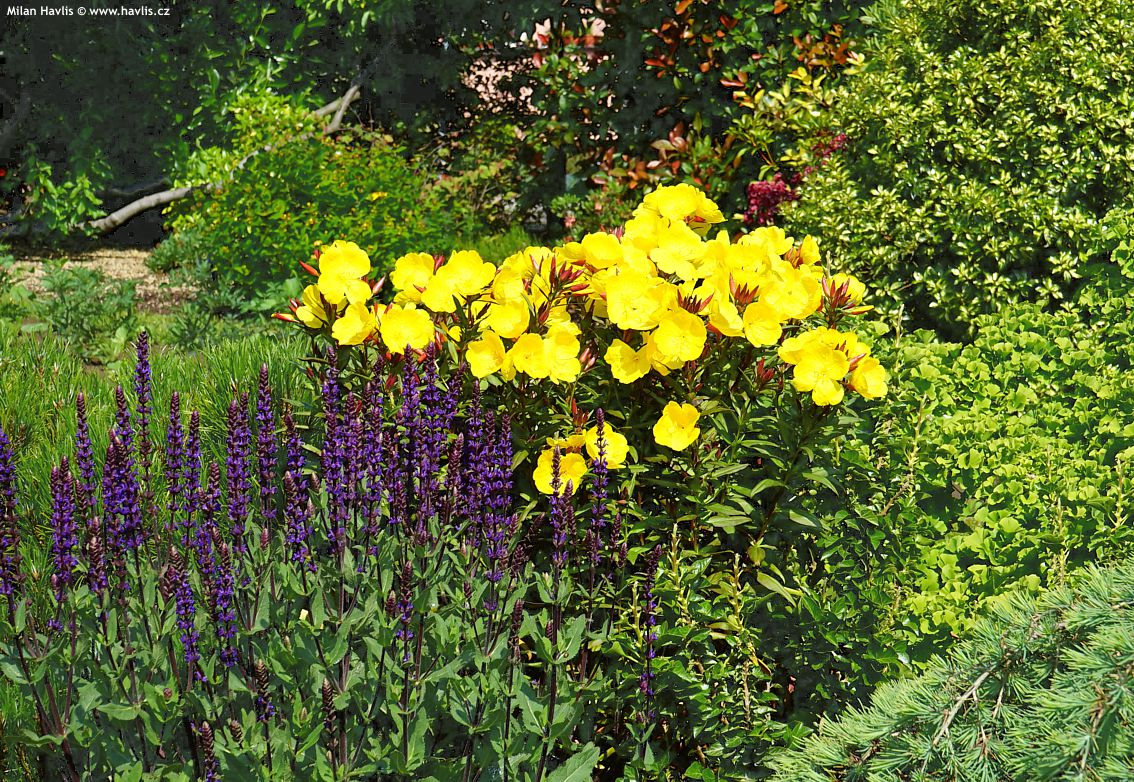
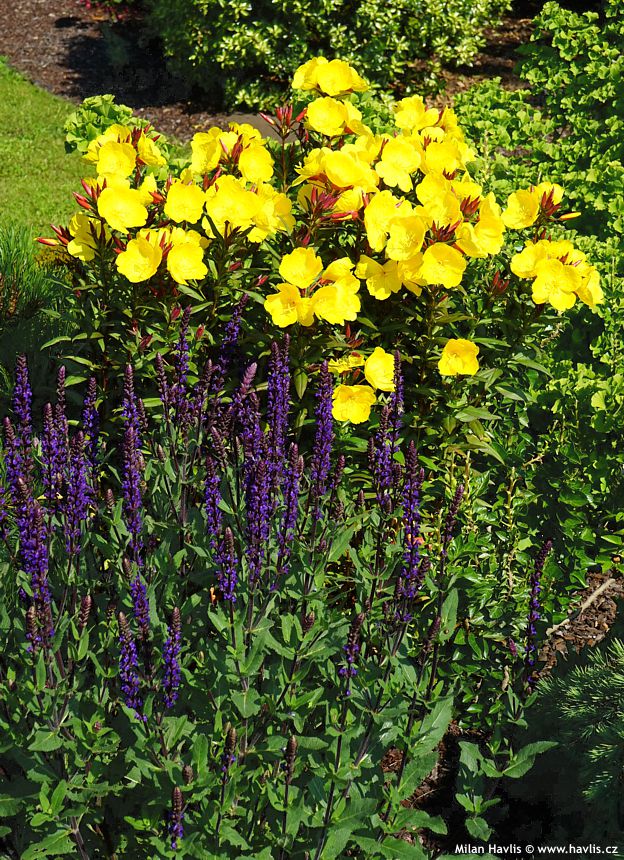
'Sonnenwende' is an excellent choice for sunny borders where you want to create a clear, warm accent that holds its form without appearing heavy. It pairs beautifully with perennials bearing blue or purple flowers, such as Perovskia atriplicifolia, Salvia nemorosa or Nepeta racemosa, where its yellow colouring provides a crisp contrast. In naturalistic plantings it works well alongside grasses such as Panicum virgatum or Sporobolus heterolepis, as its compact habit gives the composition a stable anchor. It is also suitable for smaller urban gardens, where its reliability and long flowering season stand out without requiring attention.
Last update 18-06-2020; 22-06-2026
The plant thrives in full sun and in light, well‑drained soils that warm up quickly in spring. It does not tolerate heavy, waterlogged substrates, where the roots may rot; instead it appreciates sandy or gravelly mixtures. After planting it needs regular watering, but once established it is highly drought‑tolerant. Feeding should be moderate only, as excess nitrogen leads to lush but less stable growth. In spring the plant should be cut back hard to ground level to encourage new, sturdy stems. Container cultivation is possible but requires a very free‑draining substrate and winter protection. According to authoritative American sources, its cold hardiness reaches approximately –34 °C (USDA zone 4).
Goods are shipped all over Europe. For Russia and U.K. and for further details please read about SHIPPING OPTIONS HERE.
Are you interested in a serious discount for orders NOV-FEB? Check your options here.
THE PRICES INCLUDE VAT of 15%. For quick conversion you can use 1 CZK = approx. 0.04 EUR
- STANDARD QUALITY - Plants of this group are 1st class quality with number of branches and overall density adequate to their size and age, considering they were container grown.
- DE LUXE QUALITY - This label guarantees a luxurious quality of manually selected plants that, compared to their height and age, are exceptionally dense and beautiful.
- EXTRA - These plants are usually mature and bigger specimens with exceptional overall appearance.
- STANDARD (as described in the plant form) means a tree with a trunk of 190-210 cm and a crown at the top, unless specified differently. The commercial size for trees is their girth measured in the height of 1m from ground.
- HOBBY - These plants are of the same quality as our standard-quality plants but younger and therefore cheaper.
- SHRUB - a woody plant with branches growing bushy from the ground level.
- HALF-STANDARD or MINI-STANDARD - a small tree with shorter trunk, its size is usually specified.
- FEATHERED - These are trees with branches growing already from the base of the trunk and up along the stem.
- GRASSES and PERENNIALS - Sizes given usually read the diameter of the pot or the clump, as specified.
