










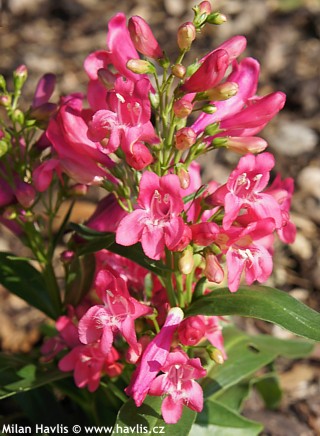
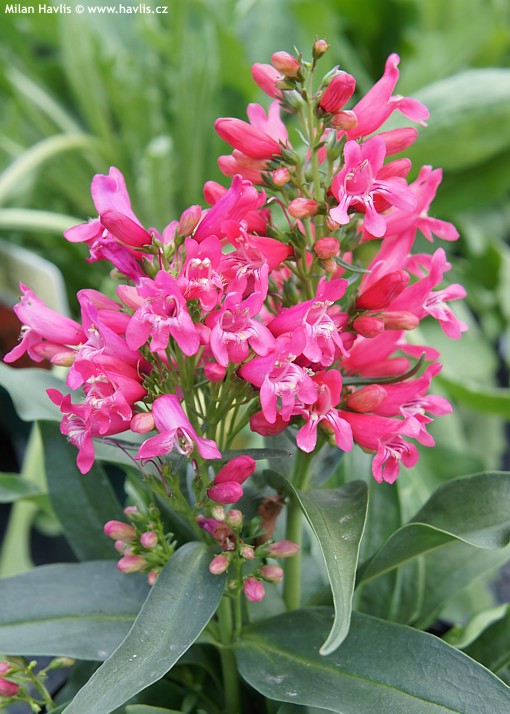
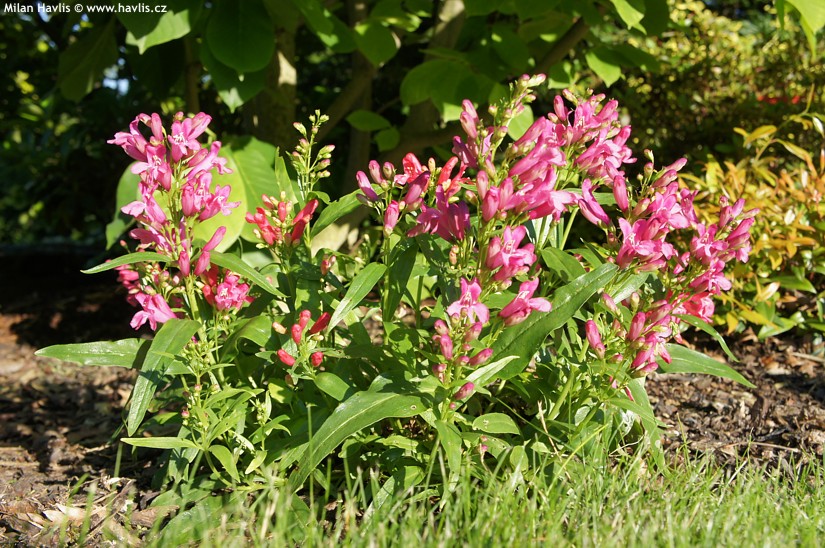
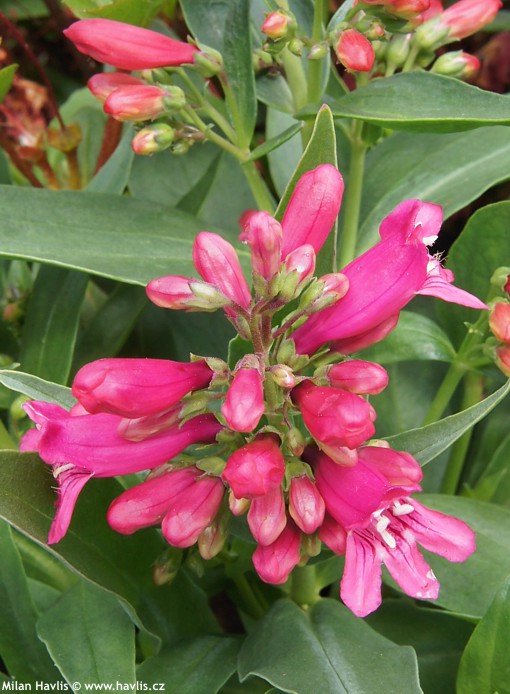
Penstemon barbatus PINACOLADA™ 'Dark Rose' beard-tongue

 Symbivit Tric (arbuscular)
 Symbivit (arbuscular)
Penstemon
Genus Penstemon – Beardtongue is a perennial from the plantain family and includes over two hundred species, among which Penstemon digitalis stands out as one of the most resilient and well-adapted to Central European conditions. Native to North America, specifically the eastern prairies, it was first botanically described in 1823 by Thomas Nuttall (1786–1859), an Englishman who spent most of his botanical career in North America. In the wild, beardtongue thrives in sunny spots, forest edges, and ditches, benefiting from its ability to grow in well-drained, often dry and poor soils. Its species name, digitalis, reflects its resemblance to our native perennial – foxglove (Digitalis), though unlike foxglove, beardtongue is non-toxic. In 2021, the genus Penstemon was declared "Perennial of the Year" by the Czech Perennial Growers Association, earning deserved attention in our gardens, and very likely only then did it begin to gain more recognition.
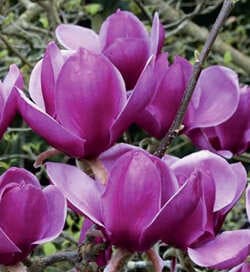
PINACOLADA™ is a fantastic, low and compact growing perennial. It is called beard-tongue and offers small, tubular-shaped flowers of rosy-pink flowers from June until August. Or it can be cut back after the main flowering season in midsummer and it will re-bloom in September.
Leaves are deciduous, linear, mid green and flowering stems are not taller than about 20 cm. Pinacolada likes fertile, well-drained soil that does not dry out completely, especially in its first year. The soil should be neutral to partly alkaline (no peat). It can be grown in full sun or part shade, it does well in outdoor pots with good drainage.
Last update 04-06-2012
Leaves are deciduous, linear, mid green and flowering stems are not taller than about 20 cm. Pinacolada likes fertile, well-drained soil that does not dry out completely, especially in its first year. The soil should be neutral to partly alkaline (no peat). It can be grown in full sun or part shade, it does well in outdoor pots with good drainage. Hardy to about -27°C, in sharp-draining soil it can take harder frost.