Polystichum lonchitis mountain holly fern

 Symbivit Tric (arbuscular)
 Symbivit (arbuscular)
Polystichum
The genus Polystichum is one of the largest and at the same time one of the longest studied groups of ferns. Botanists currently recognise around five hundred species, distributed almost worldwide, from the temperate regions of the Northern Hemisphere to mountainous areas of the tropics. The greatest species diversity is concentrated in East Asia, particularly in China and Japan. It was here that polystichums evolved over millions of years in relatively stable forest ecosystems, a fact indirectly supported by fossil finds of ferns with very similar frond structures dating back to the Tertiary period. The genus belongs to the family Dryopteridaceae, and its systematic delimitation represents one of the most complex chapters of fern taxonomy, as it includes numerous transitional forms, natural hybrids and apomictic species reproducing without fertilisation. The first formal description of the genus was published by Albrecht Wilhelm Roth (1757–1834) at the turn of the eighteenth and nineteenth centuries, at a time when European botany began to study ferns not only as part of the forest understorey but as an independent and evolutionarily remarkable group of plants.
The name Polystichum itself is derived from the Greek words polys and stichos, referring to the dense, regularly arranged rows of sori on the underside of the fronds. These are characteristic of the genus and, on closer inspection, appear almost surprisingly geometric. In the nineteenth century, polystichums became part of the phenomenon known as pteridomania, when ferns quite literally took over European gardens, glasshouses and interiors, and were collected with a passion more commonly associated today with orchids or succulents. Thanks to their evergreen fronds and ability to thrive in shade, many species entered garden cultivation before they had been thoroughly studied botanically. Although it might seem that a genus with such a long history has little left to reveal, modern molecular methods show that research into polystichums is far from complete, and that their relationships and the origins of individual species are still being reassessed.
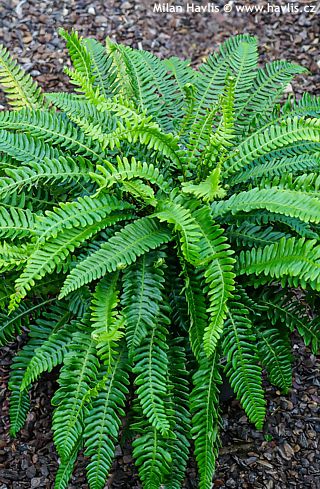
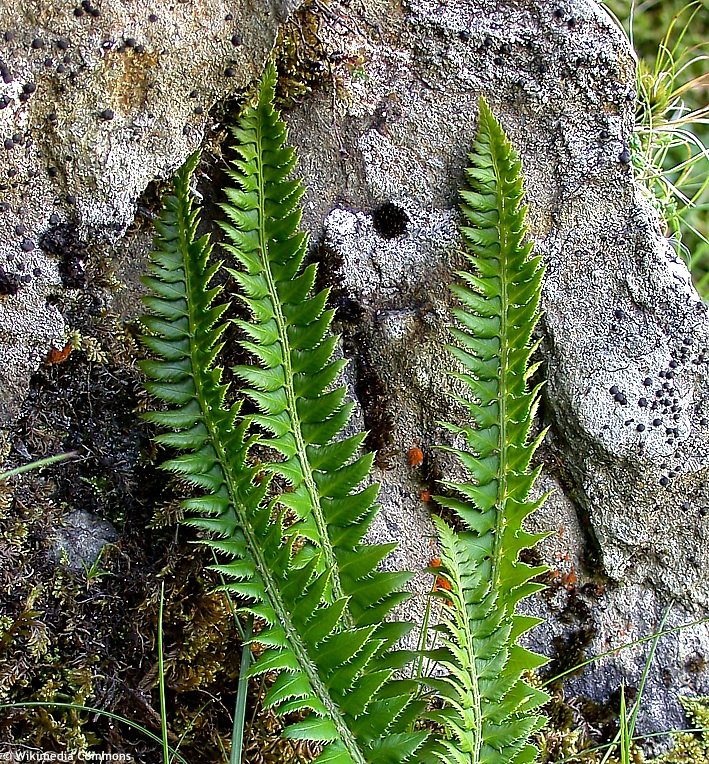
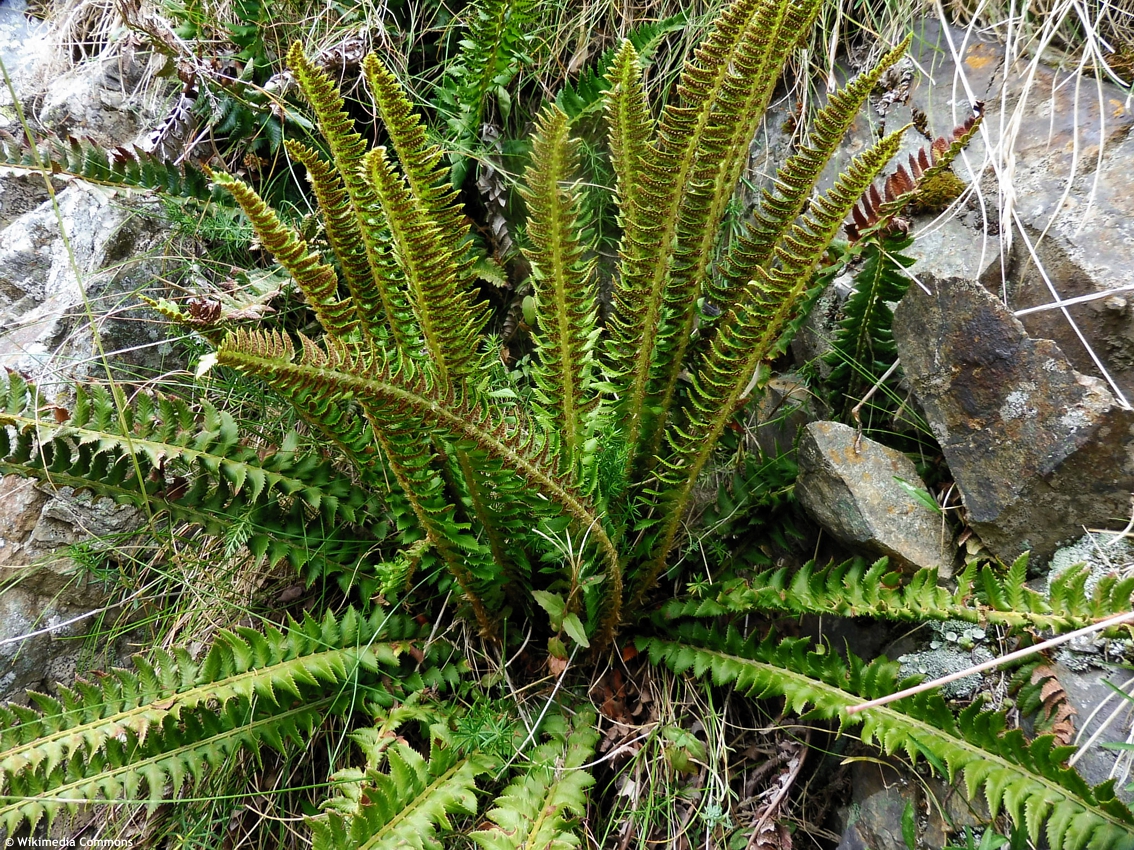
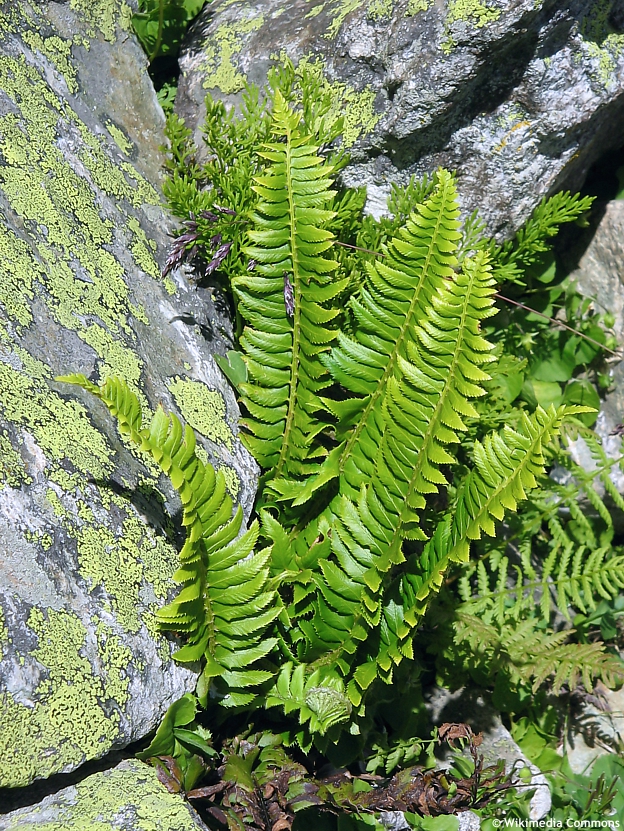
Mountain holly fern, Polystichum lonchitis, is a striking evergreen species native to the cool and mountainous regions of Europe, Asia and North America. Its natural habitat is closely associated with rocky slopes, screes, limestone and siliceous outcrops, as well as alpine woodland margins, where conditions remain cool, windy and remarkably stable over long periods. This broad distribution across northern and high‑mountain landscapes has led to the species being regarded as “local” in many parts of the world, despite the fact that it is a genuinely cosmopolitan mountain fern with a very narrow ecological specialisation.
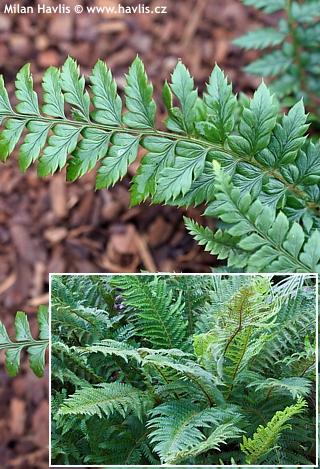
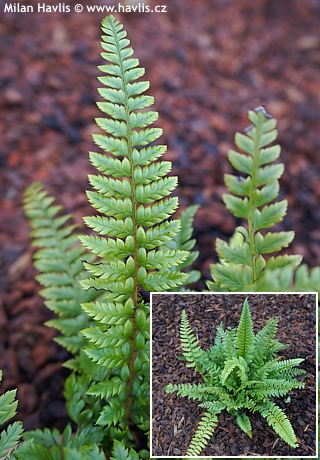
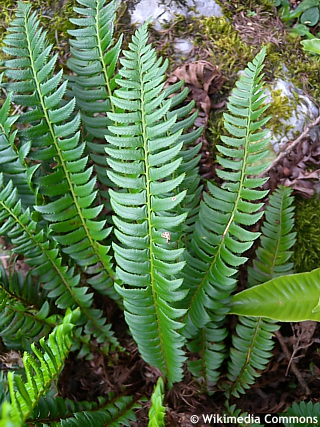
Mountain holly fern is easily distinguished from its closest relatives, such as Polystichum aculeatum and Polystichum braunii, by its simple, once‑pinnate fronds. Each frond consists of a firm central rachis bearing individual leaflets that are not further divided. These leaflets are conspicuously toothed to spiny along the margins, glossy, fresh green to slightly yellowish in colour, and oval to narrowly lanceolate in shape, giving the plant a strict, almost graphic appearance. The fronds typically reach 30 to 50 cm in length, though in exceptionally fertile and sheltered conditions they may grow considerably longer. Owing to their simple division, the fronds remain relatively narrow, usually around 5 to 7 cm wide, forming compact, upright clumps that appear robust, resilient and entirely natural, particularly in rocky or mountain‑inspired plantings.
Last update: 13-12-2021; 27-03-2026
Polystichums are woodland ferns suited to shade or partial shade, where they thrive in humus‑rich, well‑drained soil with a high content of organic matter and evenly maintained moisture.They are not sensitive to soil pH and grow well in mildly acidic to neutral conditions. An organic mulch of leaf litter or fine bark is beneficial throughout the year, helping to maintain stable moisture levels and soil structure. In ordinary garden soils, which lack the natural woodland microflora, the use of a mycorrhizal inoculant at planting is advisable, as it significantly supports establishment, stability and long-term vitality. Mountain holly fern naturally occupies rock outcrops, growing from crevices and cracks with enough moisture and where its roots remain cool. It dislikes drought and waterlogging. The best soil is limey to neutral, evenly moist but free-draining, moderately fertile. It is hardy to about -38 °C (USDA zone 3-4).