.jpg)
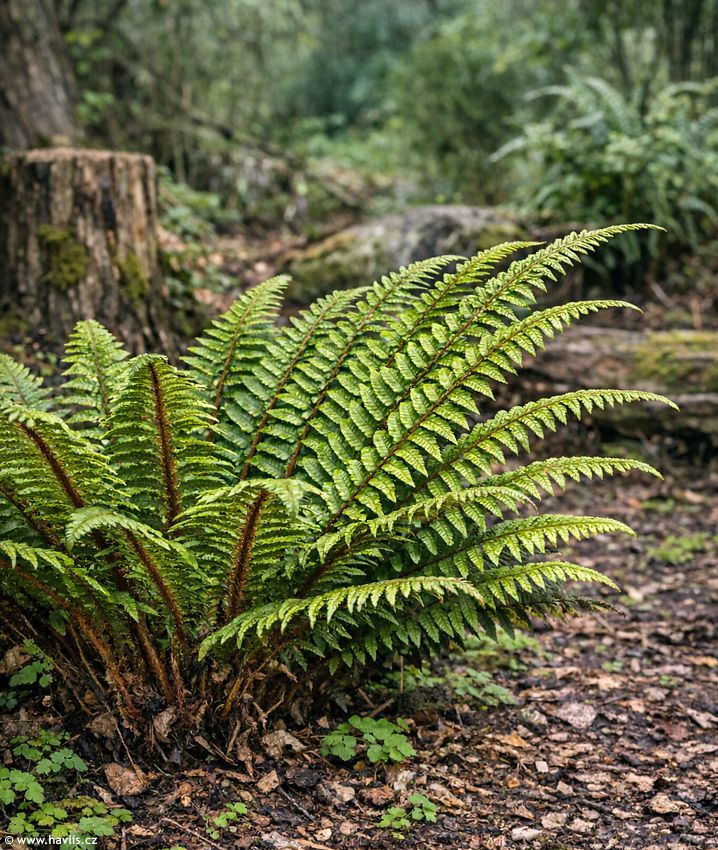
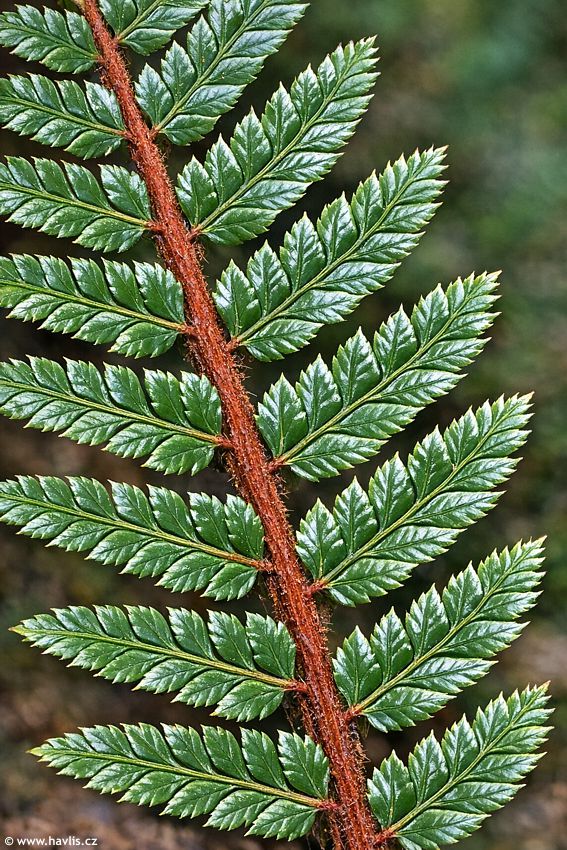
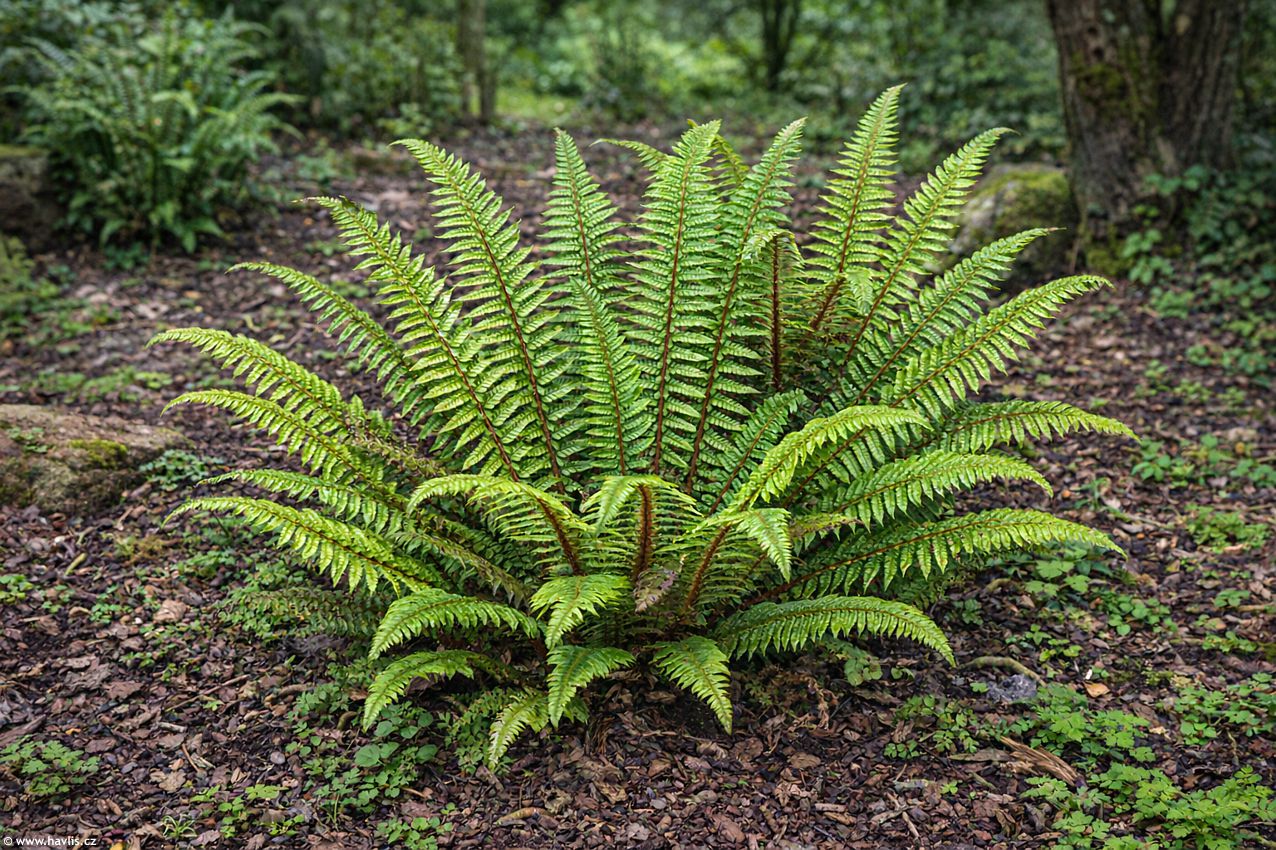
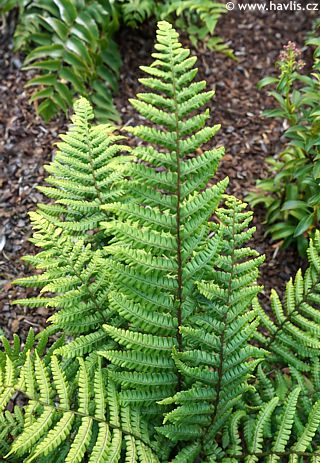
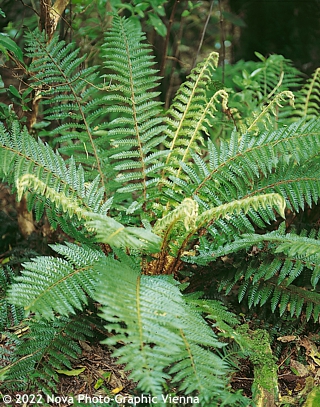
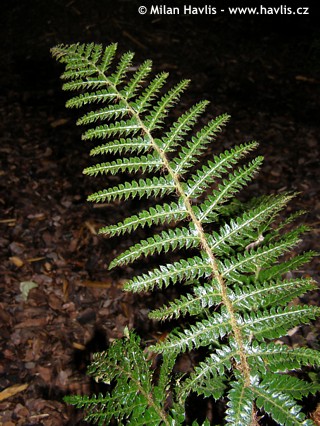
Polystichum neolobatum Asian saber fern, Long eared holly fern

 Symbivit Tric (arbuscular)
 Symbivit (arbuscular)
Polystichum
The genus Polystichum is one of the largest and at the same time one of the longest studied groups of ferns. Botanists currently recognise around five hundred species, distributed almost worldwide, from the temperate regions of the Northern Hemisphere to mountainous areas of the tropics. The greatest species diversity is concentrated in East Asia, particularly in China and Japan. It was here that polystichums evolved over millions of years in relatively stable forest ecosystems, a fact indirectly supported by fossil finds of ferns with very similar frond structures dating back to the Tertiary period. The genus belongs to the family Dryopteridaceae, and its systematic delimitation represents one of the most complex chapters of fern taxonomy, as it includes numerous transitional forms, natural hybrids and apomictic species reproducing without fertilisation. The first formal description of the genus was published by Albrecht Wilhelm Roth (1757–1834) at the turn of the eighteenth and nineteenth centuries, at a time when European botany began to study ferns not only as part of the forest understorey but as an independent and evolutionarily remarkable group of plants.
The name Polystichum itself is derived from the Greek words polys and stichos, referring to the dense, regularly arranged rows of sori on the underside of the fronds. These are characteristic of the genus and, on closer inspection, appear almost surprisingly geometric. In the nineteenth century, polystichums became part of the phenomenon known as pteridomania, when ferns quite literally took over European gardens, glasshouses and interiors, and were collected with a passion more commonly associated today with orchids or succulents. Thanks to their evergreen fronds and ability to thrive in shade, many species entered garden cultivation before they had been thoroughly studied botanically. Although it might seem that a genus with such a long history has little left to reveal, modern molecular methods show that research into polystichums is far from complete, and that their relationships and the origins of individual species are still being reassessed.
Polystichum neolobatum is not merely a ‘Japanese fern for shade’, but a species with a surprisingly wide native range, extending from the Himalayas through Nepal and Tibet, across much of China to Taiwan and central Japan. It entered European awareness during the period when East Asia became a magnet for botanists and plant collectors, yet its story has something of a detective element. Fortunately, we have a private eye: the Korean botanist Takenoshin Nakai (1882–1952) formally established the name Polystichum neolobatum in 1925 in a Tokyo botanical journal, introducing it as a new name to replace an earlier designation derived from ‘lobatum’ used for a Chinese form. This taxonomic renaming neatly illustrates how, in ferns, debates are often less about beauty than about precise identity, and how even long cultivated species continue to have their boundaries and relationships refined.
The first thing any enthusiastic fern collector is likely to tell you about Asian saber fern is that it is probably the hardiest evergreen fern of all. And that is no exaggeration. At first glance, the plant appears robust and resilient, yet at the same time highly ornamental. Its unusually stiff, almost architectural structure immediately sets it apart from most common ferns. Rather than forming a loose, soft clump, it creates an upright, clearly defined silhouette, with individual fronds resembling carefully arranged lamellae. The fronds are deep green, long, glossy and strongly divided, with deeply cut pinnae whose margins bear fine but distinct spines. It is precisely this combination of gloss, rigidity and spinosity that gives the plant a subtly exotic character, evoking subtropical vegetation rather than a fern of the temperate zone. An added advantage is that the fronds retain their shape throughout the year and do not appear tired even in winter.
Where will it fit best in the garden? Look around shaded areas and identify less attractive compositions that lack form and texture. This is exactly what Polystichum neolobatum can provide. It will not be the key plant in the entire landscape, but it is capable of creating a fan shaped, upright structure that lifts the whole border. It works particularly well as a disruption of continuous carpets of shade tolerant ground cover beneath trees and taller shrubs, where its firm silhouette introduces order and depth into the composition. When combined with the remains of an old tree stump, a decaying piece of wood or a rounded stone bearing a forest patina of mosses and lichens, the space begins to feel natural and convincing.
Last update: 18-03-2026
Polystichums are woodland ferns suited to shade or partial shade, and to humus rich, well drained soils with a good supply of organic matter. They are not sensitive to soil pH and grow well in mildly acidic to neutral conditions. They do not tolerate waterlogging or prolonged drought. An organic mulch of leaf litter or fine bark is beneficial throughout the year, helping to maintain stable moisture levels and soil structure. In ordinary garden soils, which lack the natural woodland microflora, the use of a mycorrhizal inoculant at planting is advisable, as it significantly supports establishment, stability and long-term vitality. Polystichum neolobatum is among the hardiest species in the genus, and well-established plants tolerate frosts down to around −34 °C (USDA zone 4) and some sources even claim it can withstand short spells of −40 °C