












Polystichum polyblepharum Japanese tassel fern


 Symbivit Tric (arbuscular)
 Symbivit (arbuscular)
Polystichum
The genus Polystichum is one of the largest and at the same time one of the longest studied groups of ferns. Botanists currently recognise around five hundred species, distributed almost worldwide, from the temperate regions of the Northern Hemisphere to mountainous areas of the tropics. The greatest species diversity is concentrated in East Asia, particularly in China and Japan. It was here that polystichums evolved over millions of years in relatively stable forest ecosystems, a fact indirectly supported by fossil finds of ferns with very similar frond structures dating back to the Tertiary period. The genus belongs to the family Dryopteridaceae, and its systematic delimitation represents one of the most complex chapters of fern taxonomy, as it includes numerous transitional forms, natural hybrids and apomictic species reproducing without fertilisation. The first formal description of the genus was published by Albrecht Wilhelm Roth (1757–1834) at the turn of the eighteenth and nineteenth centuries, at a time when European botany began to study ferns not only as part of the forest understorey but as an independent and evolutionarily remarkable group of plants.
The name Polystichum itself is derived from the Greek words polys and stichos, referring to the dense, regularly arranged rows of sori on the underside of the fronds. These are characteristic of the genus and, on closer inspection, appear almost surprisingly geometric. In the nineteenth century, polystichums became part of the phenomenon known as pteridomania, when ferns quite literally took over European gardens, glasshouses and interiors, and were collected with a passion more commonly associated today with orchids or succulents. Thanks to their evergreen fronds and ability to thrive in shade, many species entered garden cultivation before they had been thoroughly studied botanically. Although it might seem that a genus with such a long history has little left to reveal, modern molecular methods show that research into polystichums is far from complete, and that their relationships and the origins of individual species are still being reassessed.
Japanese holly fern, Polystichum polyblepharum, is native to East Asia, primarily Japan, the Korean Peninsula and adjacent regions of south‑eastern China. In the wild it inhabits moist woodland, shaded ravines and slopes with deep, humus‑rich soils, where a stable microclimate prevails, characterised by high atmospheric humidity and protection from direct sun and wind. The species was first described in the mid‑19th century by the German botanist Gustav Kunze (1793–1851) under the name Aspidium polyblepharon, based on material collected in Japan, and was later transferred to the genus Polystichum. The specific epithet polyblepharum refers to the conspicuously bristle‑edged scales on the stipes and rachises, which are among the most distinctive identifying features of the species. Owing to its origin and exceptional ornamental qualities, Japanese holly fern has become one of the most widely cultivated and best‑loved Asian ferns in temperate garden culture.
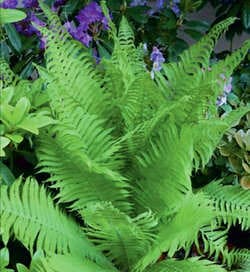
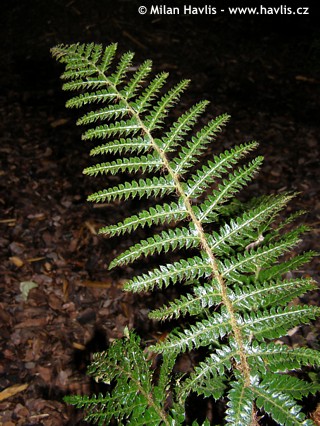
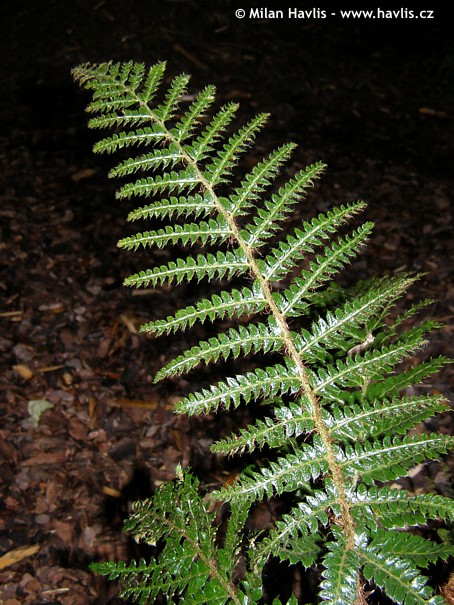
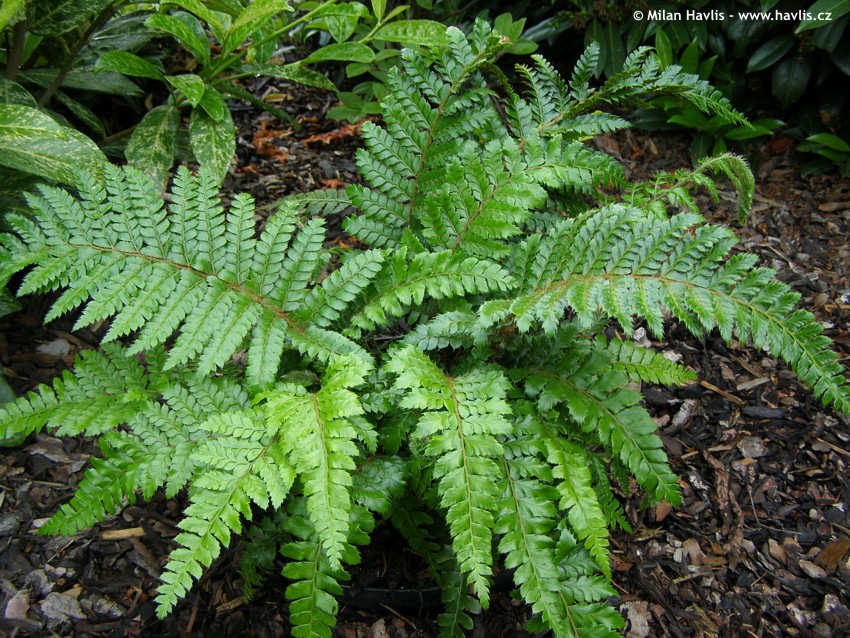
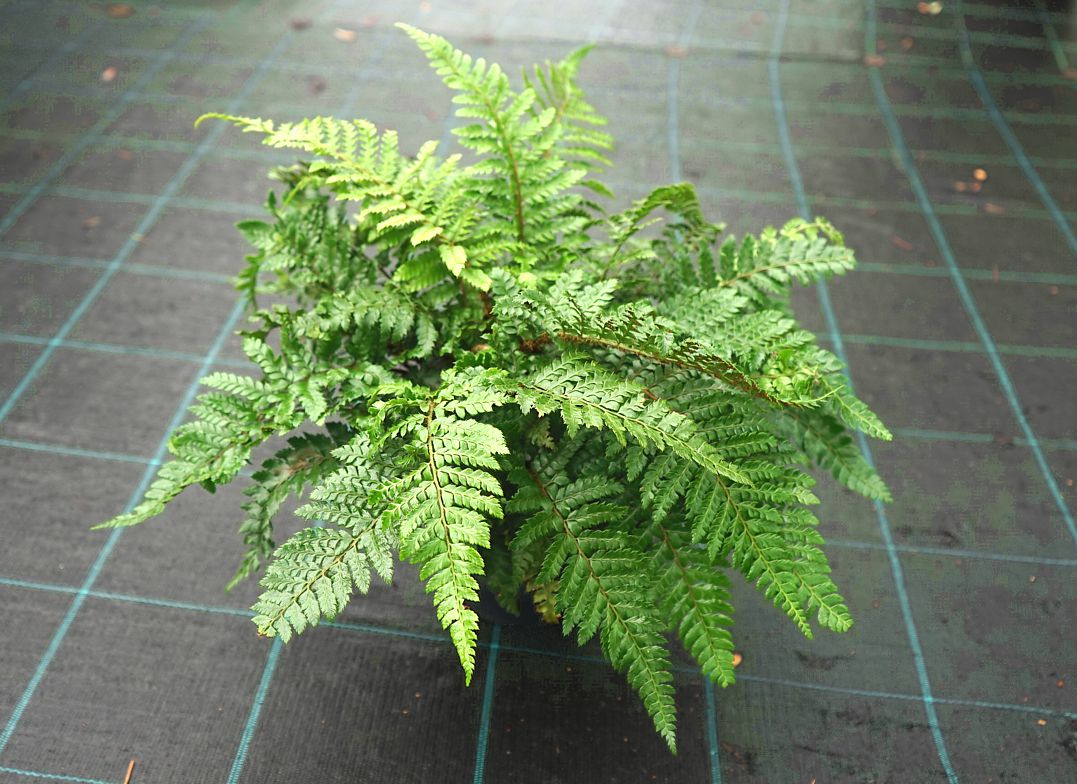
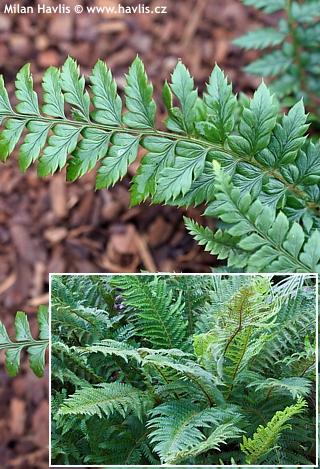
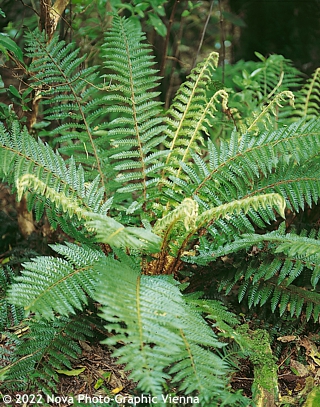
Japanese holly fern is a glossy standout among evergreen ferns. It forms regular, dense clumps with a strong architectural presence. The fronds emerge from a short, robust rhizome in a characteristic shuttlecock‑like arrangement and reach approximately 60 to 80 cm in length. They are bipinnate, firm, leathery and strikingly glossy, with a deep dark‑green colour that retains its intensity throughout the year. The stipes and main axes of the fronds are clothed in prominent brown scales with finely bristled margins, adding a distinctive detail on closer inspection without giving the plant a soft or hairy appearance. The individual leaflets are evenly arranged, slightly spiny along the edges, and together form a compact, elegant silhouette that remains calm and well balanced even in deep shade. Thanks to this combination of solid structure and finely defined detail, Japanese holly fern ranks among the most distinctive and reliable evergreen ferns for woodland and shaded gardens.
Last update: 09-06-2024;27-03-2026
Japanese holly fern is a woodland species best suited to shade or partial shade, thriving in humus‑rich, well‑drained soil with a high content of organic matter. It is not sensitive to soil pH and grows reliably in mildly acidic to neutral conditions, with soil structure and fertility being more important than reaction. It does not tolerate waterlogging or prolonged drought and performs best where moisture levels remain even. An organic mulch of leaf litter or decomposed wood is beneficial throughout the year, helping to maintain stable moisture, improve soil structure and support natural soil processes. In ordinary garden soils lacking woodland microflora, the use of a mycorrhizal inoculant at planting is recommended, as it significantly improves establishment, stability and long‑term vitality. The plant performs best in a position sheltered from winter sun and drying winds. Although evergreen, removing all older fronds after winter is recommended for the best appearance, allowing the plant to regenerate with fresh new growth. Its frost hardiness is very good to approximately −25 to −29 °C, though in some years early spring growth may be damaged by frost without snow cover. It has therefore proved beneficial to protect the crown over winter and into spring with a layer of leaf litter or bark.
.jpg)
Goods are shipped all over Europe. For Russia and U.K. and for further details please read about SHIPPING OPTIONS HERE.
Are you interested in a serious discount for orders NOV-FEB? Check your options here.
THE PRICES INCLUDE VAT of 15%. For quick conversion you can use 1 CZK = approx. 0.04 EUR
- STANDARD QUALITY - Plants of this group are 1st class quality with number of branches and overall density adequate to their size and age, considering they were container grown.
- DE LUXE QUALITY - This label guarantees a luxurious quality of manually selected plants that, compared to their height and age, are exceptionally dense and beautiful.
- EXTRA - These plants are usually mature and bigger specimens with exceptional overall appearance.
- STANDARD (as described in the plant form) means a tree with a trunk of 190-210 cm and a crown at the top, unless specified differently. The commercial size for trees is their girth measured in the height of 1m from ground.
- HOBBY - These plants are of the same quality as our standard-quality plants but younger and therefore cheaper.
- SHRUB - a woody plant with branches growing bushy from the ground level.
- HALF-STANDARD or MINI-STANDARD - a small tree with shorter trunk, its size is usually specified.
- FEATHERED - These are trees with branches growing already from the base of the trunk and up along the stem.
- GRASSES and PERENNIALS - Sizes given usually read the diameter of the pot or the clump, as specified.
