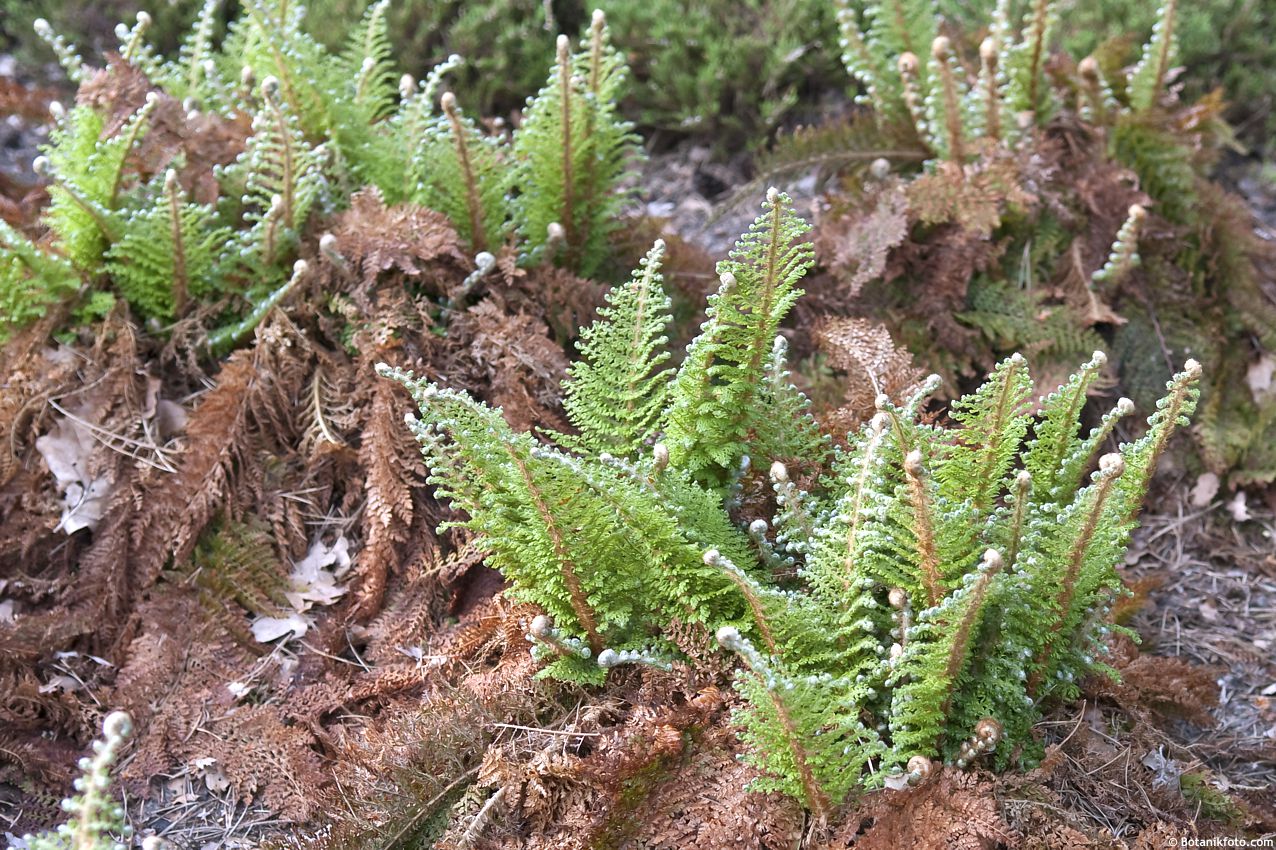
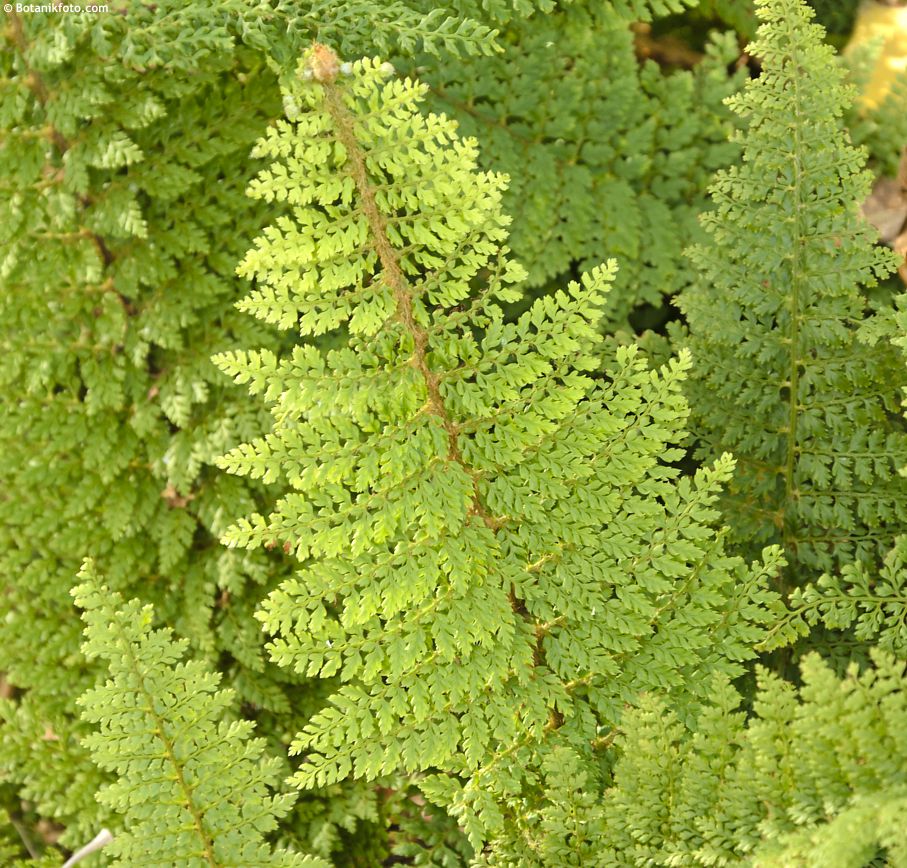
Polystichum setiferum 'PLUMOSUM' soft shield fern

 Symbivit Tric (arbuscular)
 Symbivit (arbuscular)
Polystichum
The genus Polystichum is one of the largest and at the same time one of the longest studied groups of ferns. Botanists currently recognise around five hundred species, distributed almost worldwide, from the temperate regions of the Northern Hemisphere to mountainous areas of the tropics. The greatest species diversity is concentrated in East Asia, particularly in China and Japan. It was here that polystichums evolved over millions of years in relatively stable forest ecosystems, a fact indirectly supported by fossil finds of ferns with very similar frond structures dating back to the Tertiary period. The genus belongs to the family Dryopteridaceae, and its systematic delimitation represents one of the most complex chapters of fern taxonomy, as it includes numerous transitional forms, natural hybrids and apomictic species reproducing without fertilisation. The first formal description of the genus was published by Albrecht Wilhelm Roth (1757–1834) at the turn of the eighteenth and nineteenth centuries, at a time when European botany began to study ferns not only as part of the forest understorey but as an independent and evolutionarily remarkable group of plants.
The name Polystichum itself is derived from the Greek words polys and stichos, referring to the dense, regularly arranged rows of sori on the underside of the fronds. These are characteristic of the genus and, on closer inspection, appear almost surprisingly geometric. In the nineteenth century, polystichums became part of the phenomenon known as pteridomania, when ferns quite literally took over European gardens, glasshouses and interiors, and were collected with a passion more commonly associated today with orchids or succulents. Thanks to their evergreen fronds and ability to thrive in shade, many species entered garden cultivation before they had been thoroughly studied botanically. Although it might seem that a genus with such a long history has little left to reveal, modern molecular methods show that research into polystichums is far from complete, and that their relationships and the origins of individual species are still being reassessed.
Soft shield fern, Polystichum setiferum, is a native European species distributed from Atlantic Europe through the Mediterranean region to Asia Minor and North Africa, where it inhabits shaded, humid woodlands, ravines and stone walls with long‑term stable microclimates. It was botanically described in 1775 by Johann Christian Daniel von Schreber (1739–1810), a German physician and naturalist, a pupil of Carl Linnaeus, who was active not only in botany but also in zoology and ranks among the notable figures of Enlightenment natural history. Owing to its natural variability, ability to form stable deviations and good tolerance of garden conditions, Polystichum setiferum has become one of the most widely cultivated European shield ferns and a foundational species for numerous garden forms that have found a lasting place in historic parks and contemporary gardens alike as reliable plants for shaded areas.
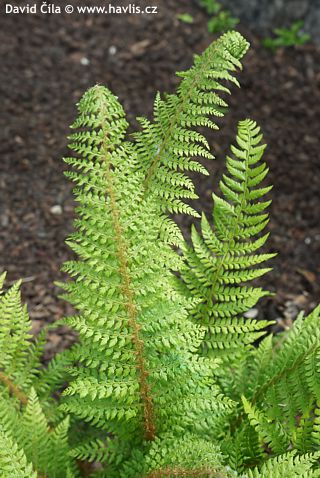
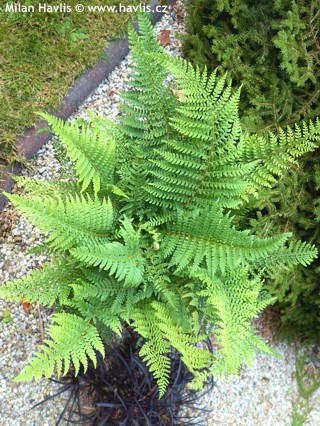
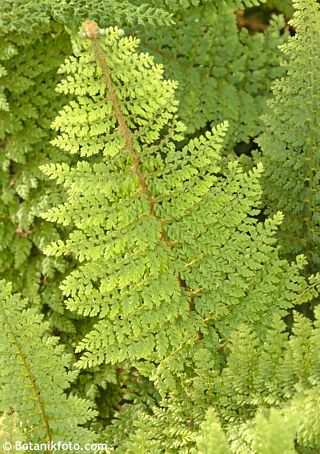
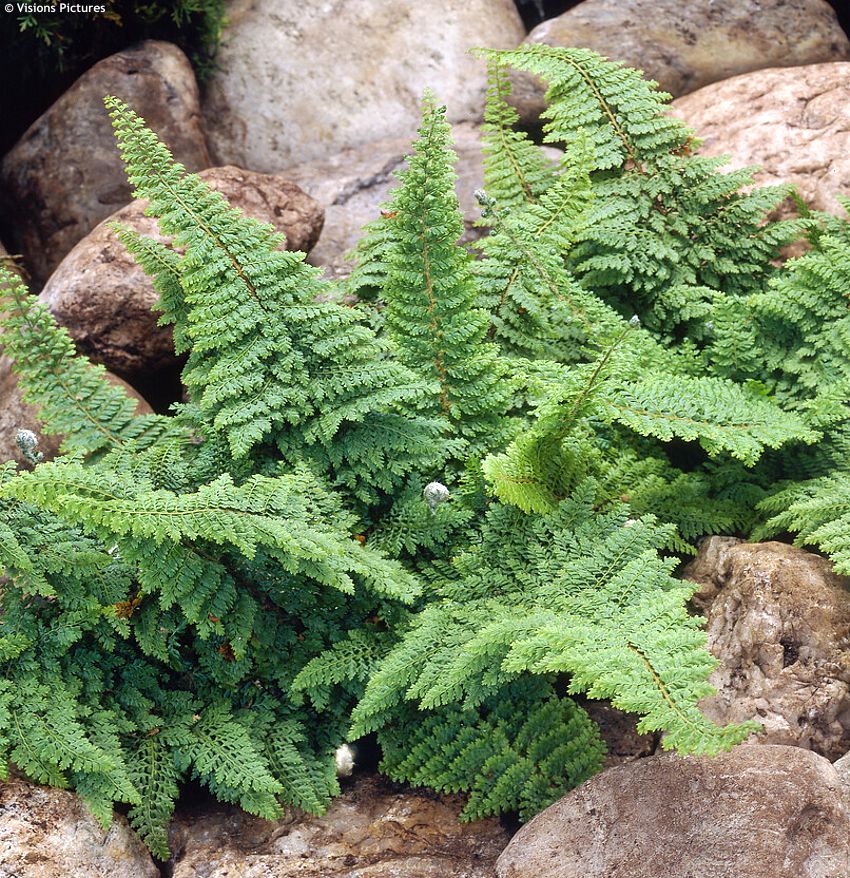
Plumosum is a beautifully dense, finely textured soft shield fern selection with layers of small, overlapping leaflets that give it a light, almost feathery appearance. Its double‑pinnate structure means that instead of simple, elongated leaflets along the main axis, the fronds branch again into delicate secondary axes, which then carry the finely cut segments. This intricate construction is what gives the plant its characteristic softness and airy elegance, even though it forms a surprisingly firm and well‑anchored clump. The fronds are typically 30 to 50 cm long and are usually held almost horizontally, with only a few of the youngest leaves in the centre of the plant standing more upright. The overall effect is calm, natural and inviting. Soft shield fern ‘Plumosum’ is an excellent choice for brightening darker corners of the garden or for softening compositions with strong, rigid outlines, where it brings lightness, movement and a gentle woodland atmosphere.
Last update: 23-04-2023; 27-03-2026
Shield ferns are woodland ferns suited to shade or partial shade, where they thrive in humus‑rich, well‑drained soil with a high content of organic matter and evenly maintained moisture. They are not sensitive to soil pH and grow well in slightly acidic to neutral soils, provided they are not exposed to prolonged waterlogging or drought. A year‑round mulch of leaf litter or decomposed wood helps to stabilise soil conditions and protect the root system; in ordinary garden soils, the use of a mycorrhizal inoculant at planting has proven beneficial. They perform best in positions sheltered from winter sun and drying winds, and in spring it is advisable to cut back all old fronds. While the fronds of the cultivar ‘Herrenhausen’ may be damaged during severe frosts, the plant itself is exceptionally hardy and, when well established in free‑draining soil, reliably survives temperatures well below −25 °C, often approaching −30 °C, without any negative effect on spring growth or overall vitality.