

































Rhododendron (forestii) 'SCARLET WONDER' rhododendron

 Rhodovit (ericoid)
Rhododendron
Rhododendron is a large genus within the Ericaceae family, currently comprising around 1,000 recognized species, with the greatest species diversity found in the Himalayas, southwestern China, and the Japanese archipelago. The natural range of the genus extends from Arctic regions of the Northern Hemisphere through the montane forests of Europe and Asia to the tropical cloud forests of Southeast Asia and New Guinea; fossil and molecular evidence points to an ancient origin with major diversification during the Tertiary and Neogene periods. Rhododendrons reached Europe on a larger scale in the 18th and 19th centuries through collecting expeditions and botanical gardens; among the early key figures were Francis Buchanan‑Hamilton (1762–1829) and Nathaniel Wallich (1786–1854), followed later by Robert Fortune (1812–1880). A major breakthrough came with the work of William Jackson Hooker (1785–1865) at Kew and subsequently his son Joseph Dalton Hooker (1817–1911), who during expeditions to Sikkim and the Himalayas described and introduced dozens of new species, profoundly influencing modern breeding. The tradition of plant collecting and breeding was later continued by Ernest Wilson (1876–1930) and others.
Rhododendron forrestii is an evergreen species native to the mountainous regions of south‑western China, particularly Yunnan Province, where it grows in forests and along their margins at high elevations. It became one of the most important sources of pure red colouring in modern rhododendron breeding. Hybrids carrying its genetic influence, collectively known as forrestii hybrids, are characterised by a more compact habit, slower growth and a firm, well‑structured framework that clearly distinguishes them from the classic park‑scale elepidote hybrids. As a result, they have found particular use in smaller gardens and specialist collections, where, alongside flower colour, long‑term stability of form and good hardiness within the large‑leaved rhododendrons are especially valued. The species was introduced to European botany in the early 20th century and formally described by Isaac Bayley Balfour, who named it in honour of the British botanist and plant collector George Forrest (1873–1932). Forrest’s expeditions to western China, which in their time represented a major chapter in the European discovery of the botanical “Orient”, brought to Europe a number of rhododendron species that are now considered fundamental and profoundly influenced the subsequent development of their cultivation and breeding.
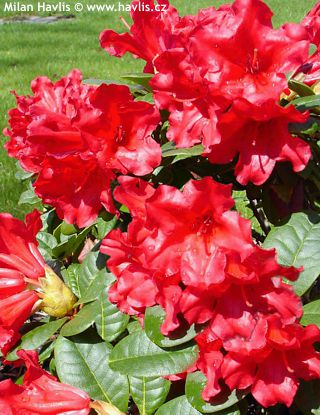
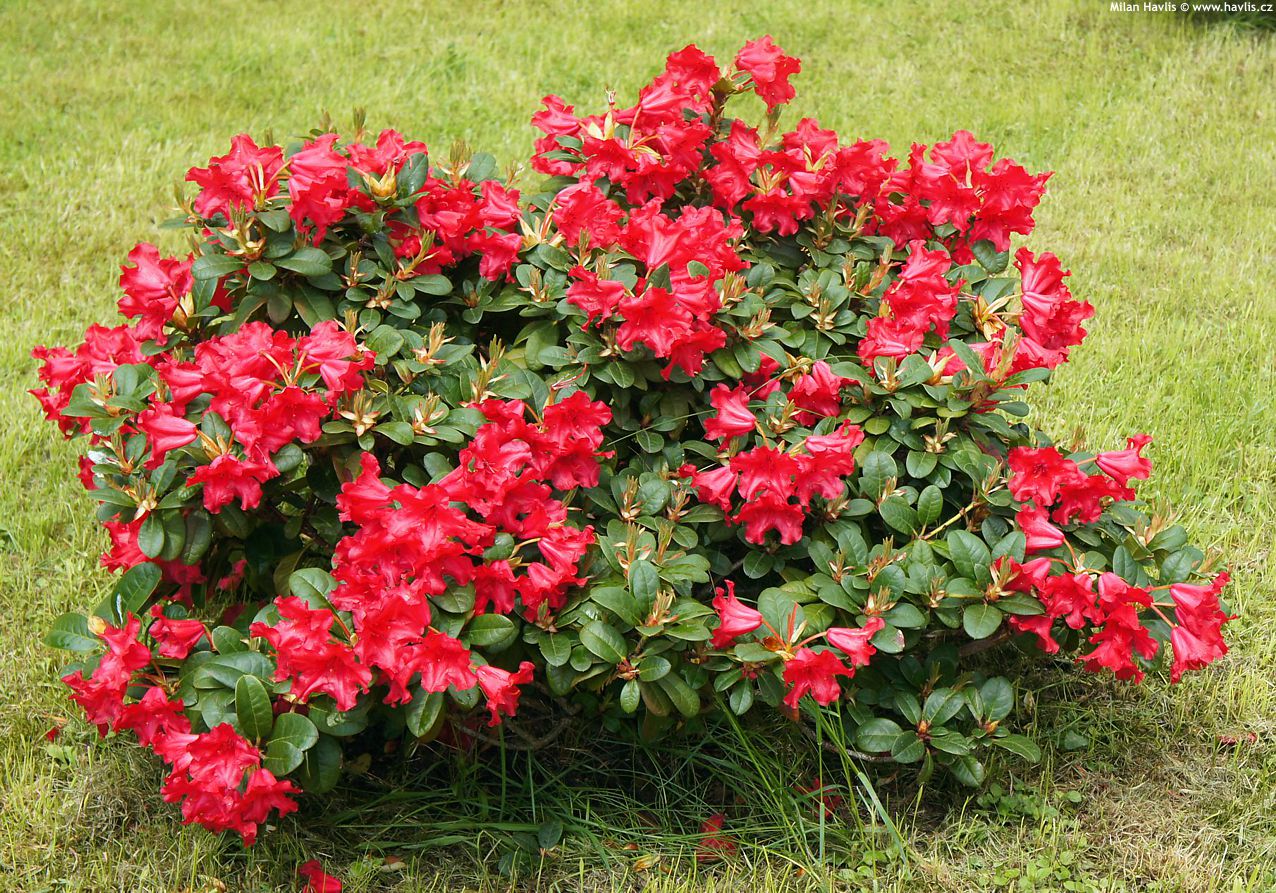
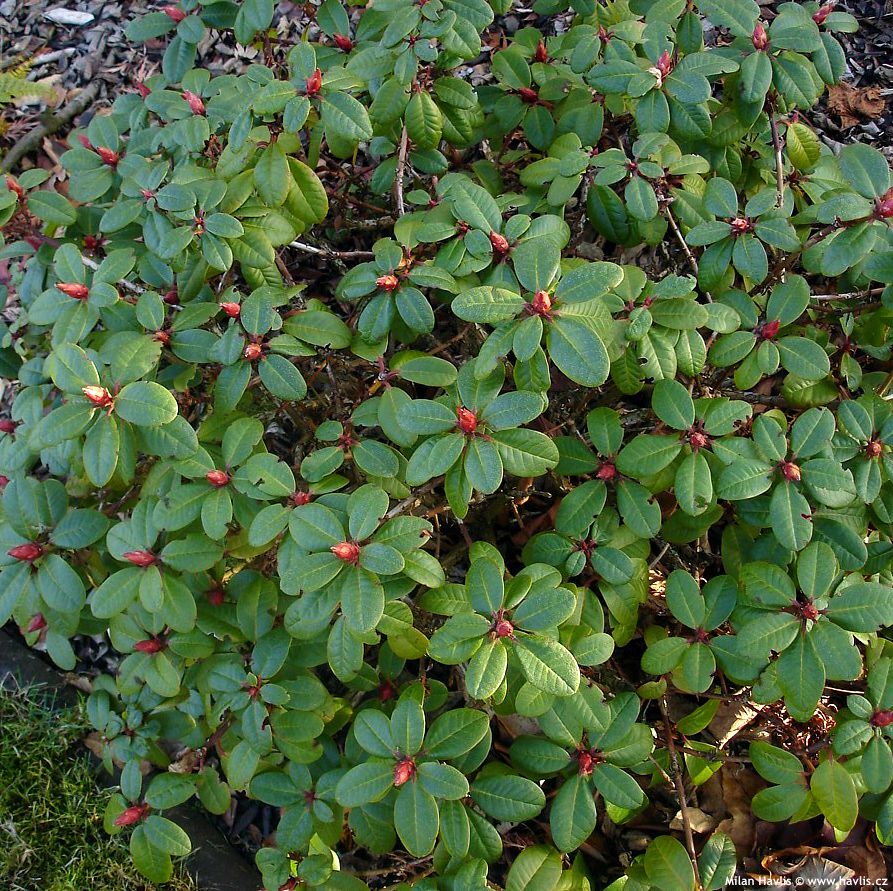
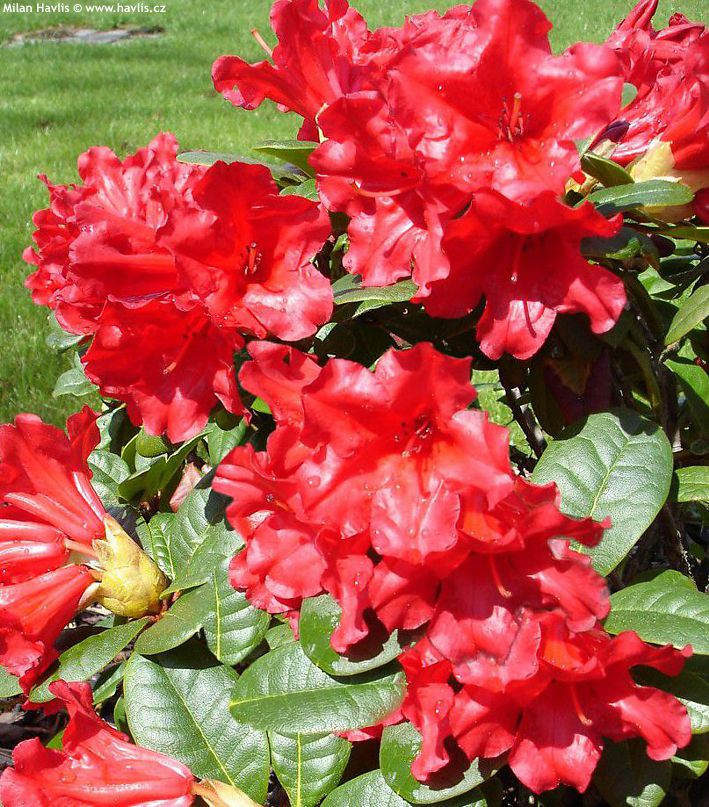
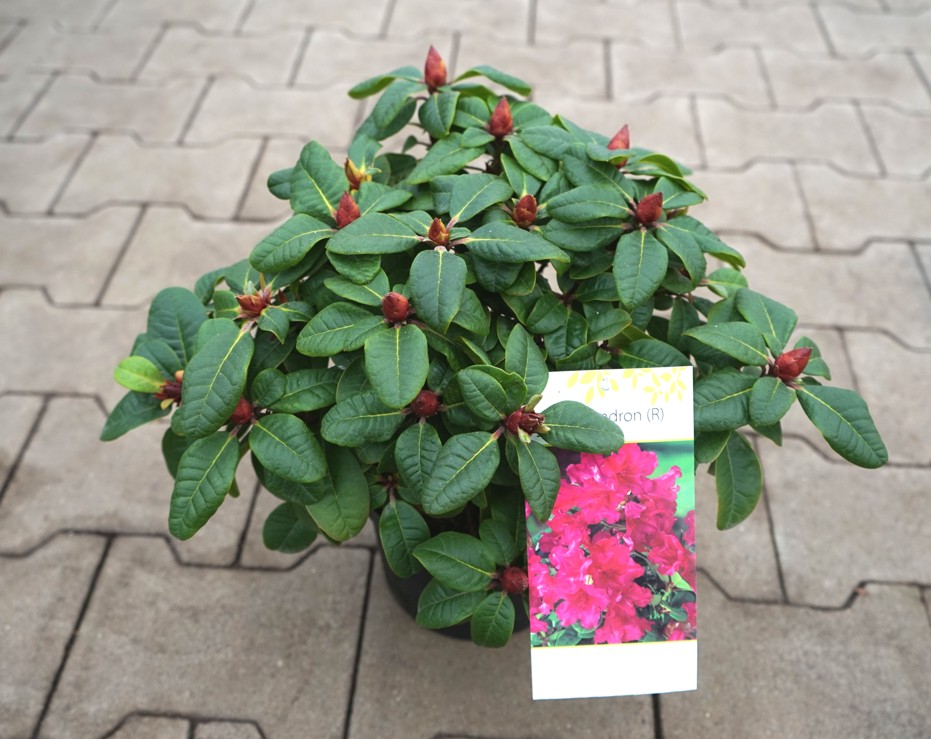
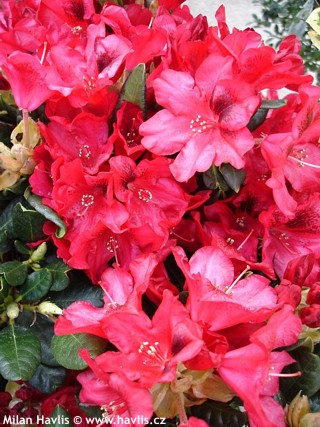
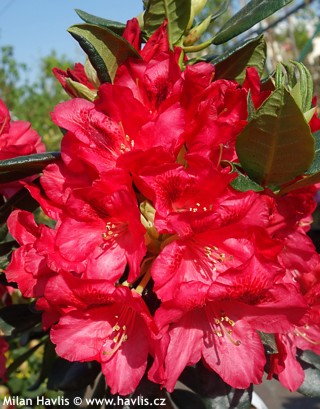
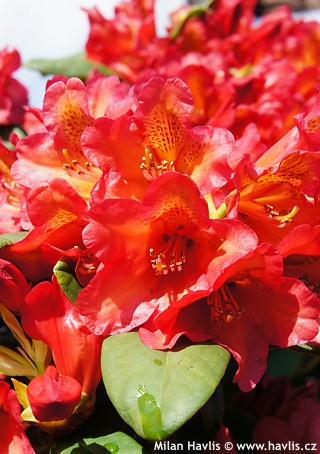
Scarlet Wonder is one of those rhododendrons that cannot be overlooked in spring. Its flowers display an exceptionally intense, almost neon‑bright cardinal red, which after opening quite literally lights up the garden and draws attention from many metres away. The blooms are bell‑shaped to broadly funnel‑shaped, arranged in low, flattened, globular trusses, and they retain their colour well even in brighter positions. A striking feature is the wine‑red, distinctly pointed flower buds, which before opening form an attractive contrast with the rounded, compact foliage. Only very fine, barely perceptible spotting may appear in the throat of the flowers. Flowering usually takes place in May. The leaves are shorter, oval with rounded tips, medium green and slightly glossy. The cultivar was bred in England from a cross between ‘Essex Scarlet’ and Rhododendron forrestii of the Repens Group; the selection was made by D. G. Hobbie, introduced by the nursery Le Feber & Co. in 1960, and officially registered in 1970.
Growth is very slow, forming a low, broadly spreading to almost groundcovering shrub with dense foliage that maintains a compact outline over many years without the need for pruning. A mature height of just under one metre should be expected only after several decades, and then only under ideal growing conditions. This makes it particularly suitable for smaller gardens, heather gardens, rock gardens and as a strong colour accent in the foreground of plantings, where its intense red flowering can be fully appreciated. With good mulching and sufficient soil moisture it tolerates full sun, retaining a dense habit and reliable flowering. It requires an acidic, humus‑rich, well‑drained soil with even moisture and no waterlogging; the root system is shallow, so permanent mulching is highly beneficial. Pruning is generally unnecessary, with any corrective cuts best carried out shortly after flowering.
Last update 15-12-2008; 28-02-2026
Yakushimanum rhododendrons and their hybrids prefer bright to lightly shaded positions but tolerate full sun throughout the day and cope well with exposed sites subject to wind and cold. They require shallow planting in acidic, humus‑rich, well‑drained soil with consistent moisture but without waterlogging; the roots grow close to the surface and spread laterally, so plants should never be set too deeply, with the top of the root ball kept just below ground level and ideally mulched with leaf litter or bark. For improved appearance, spent flowers may be removed after flowering (deadheading), carefully to avoid damaging new shoots, although this is not essential for plant health. Routine pruning is unnecessary; if rejuvenation or size control is required, pruning should be carried out immediately after flowering, while deeper rejuvenation pruning is best done in late winter before sap flow begins. Fertilize sparingly with fertilizers for ericaceous plants in early spring and, if needed, again during summer; avoid excessive nitrogen and regularly monitor plant health. ‘Scarlet Wonder’ is reliably hardy to at least −26 °C (USDA zone 5b), including flower buds; greater hardiness is possible but has not yet been conclusively documented.
Goods are shipped all over Europe. For Russia and U.K. and for further details please read about SHIPPING OPTIONS HERE.
Are you interested in a serious discount for orders NOV-FEB? Check your options here.
THE PRICES INCLUDE VAT of 15%. For quick conversion you can use 1 CZK = approx. 0.04 EUR
- STANDARD QUALITY - Plants of this group are 1st class quality with number of branches and overall density adequate to their size and age, considering they were container grown.
- DE LUXE QUALITY - This label guarantees a luxurious quality of manually selected plants that, compared to their height and age, are exceptionally dense and beautiful.
- EXTRA - These plants are usually mature and bigger specimens with exceptional overall appearance.
- STANDARD (as described in the plant form) means a tree with a trunk of 190-210 cm and a crown at the top, unless specified differently. The commercial size for trees is their girth measured in the height of 1m from ground.
- HOBBY - These plants are of the same quality as our standard-quality plants but younger and therefore cheaper.
- SHRUB - a woody plant with branches growing bushy from the ground level.
- HALF-STANDARD or MINI-STANDARD - a small tree with shorter trunk, its size is usually specified.
- FEATHERED - These are trees with branches growing already from the base of the trunk and up along the stem.
- GRASSES and PERENNIALS - Sizes given usually read the diameter of the pot or the clump, as specified.
