










Viburnum farreri 'DECEMBER DWARF' Farrer viburnum, fragrant viburnum

 Symbivit Tric (arbuscular)
 Symbivit (arbuscular)
Viburnum
The genus Viburnum includes around 150 species distributed across the temperate regions of the Northern Hemisphere, from eastern Asia through the Caucasus and Europe to North and South America. Botanically, it is an exceptionally diverse group: it comprises both deciduous and evergreen shrubs, species with strongly fragrant flowers as well as those with only a faint scent or none at all, and others grown primarily for their (inedible) fruit. This diversity is reflected in common horticultural practice and several informal groups – the fragrant winter viburnums (V. farreri and V. × bodnantense), the fruiting viburnums (V. opulus, V. trilobum), the evergreen Asian viburnums (V. davidii, V. tinus, V. cinnamomifolium), the large-leaved ornamental viburnums (V. plicatum, V. japonicum), and many more, including hybrids that combine traits from several groups. The genus has been known since antiquity, and its Latin name Viburnum appears in the works of Roman authors around the turn of the era, such as Virgil and Pliny the Elder.
The fragrant viburnum, Viburnum farreri, originates from northern China, where it grows on mountain slopes and open woodland margins. Although it had already been mentioned by the Russian collector and traveller Potanin in 1885, it was first brought to Europe by the plant collector William Purdom (1880–1921) during his expeditions for the Veitch nursery in 1910. Shortly afterwards it was rediscovered in the wild and brought to wider attention in Western botany by Reginald Farrer (1879–1955), who wrote about it, sent home seed, and described it as one of the most striking shrubs of the winter season. The species was formally described by William Wright Smith and George Forrest, who honoured Farrer’s contribution to the knowledge of Chinese flora by giving the plant his name. In its native habitat, where winters are milder, this viburnum can flower at the very beginning of the cold season, while in Central Europe its buds open later, yet still at a time when the garden remains in deep dormancy. In Britain it quickly became an important element of so‑called winter gardens. In China, viburnums were traditionally planted near dwellings as symbols of unity and good health, and similarly in Europe winter‑flowering viburnums are often placed along paths, near doors and windows, so that their blossoms greet us at the closest possible distance.
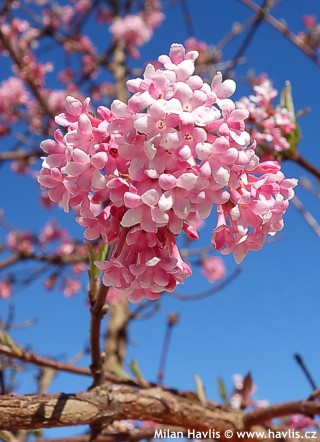
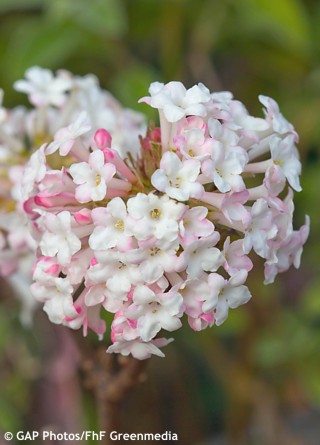
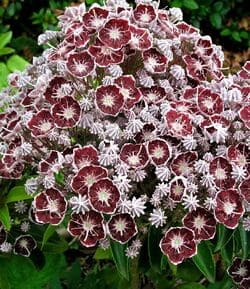
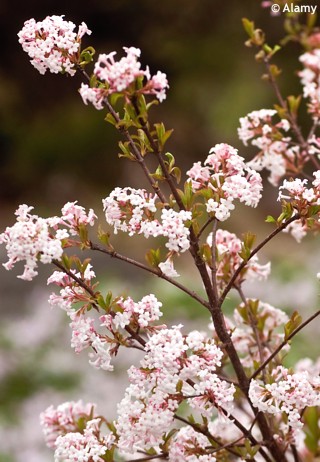
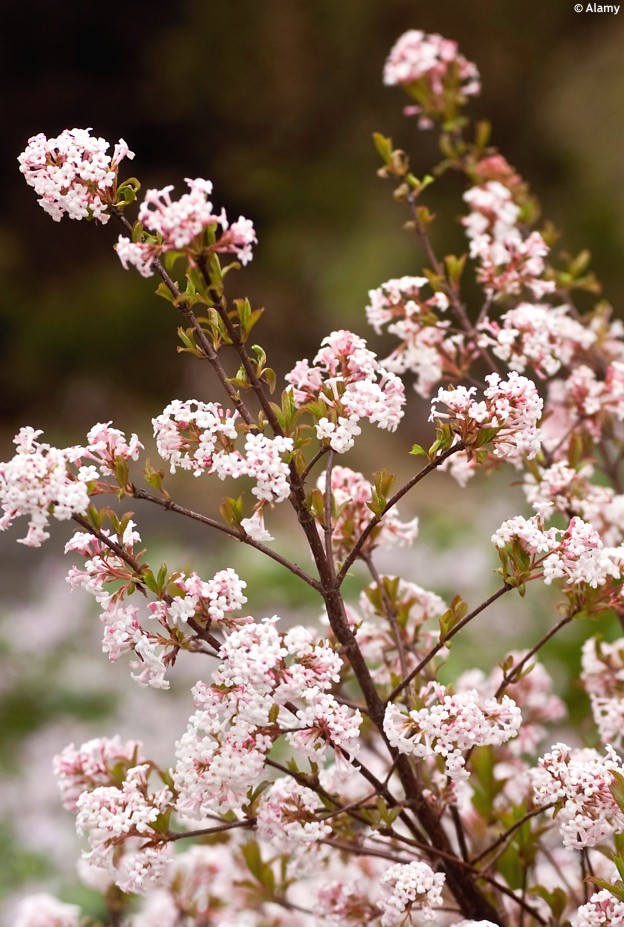
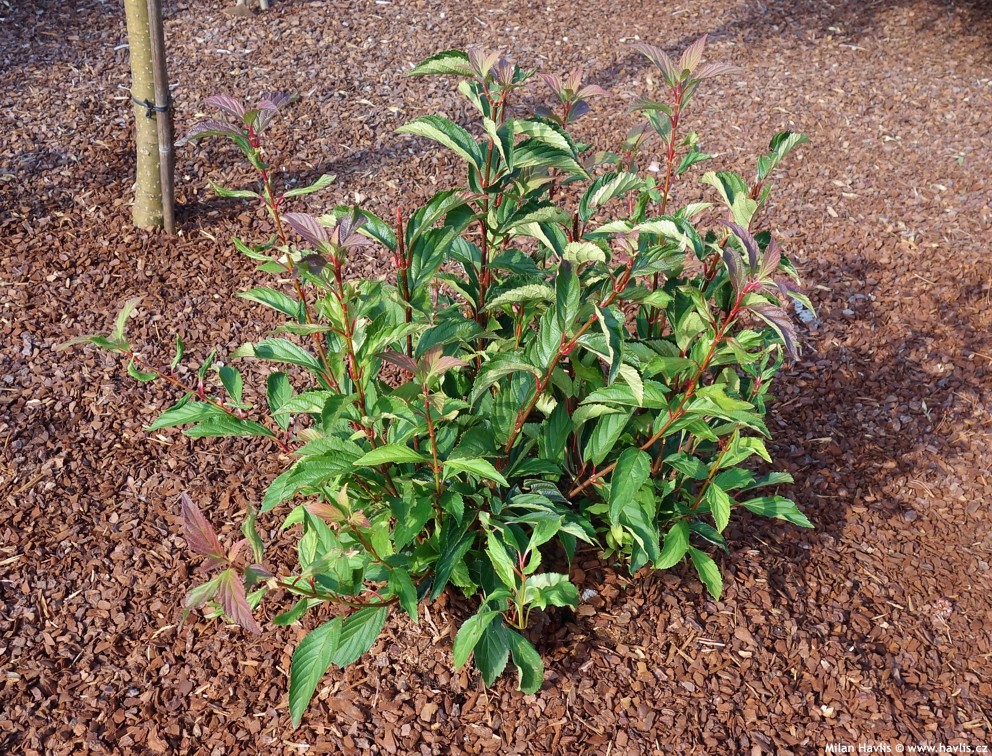
Fragrant viburnum species can make a substantial shrub, however, December Dwarf is only about half its size - about 1.5m tall and a bit less wide. It was bred in Dutch nursery town Boskoop in 1982. Its flowers are small, tubular, pink in buds, pale pink to almost white when they open, intensely sweetly scented, and composed in partially hanging clusters. The inflorescence recall that of Dawn viburnum but is smaller and less spherical.
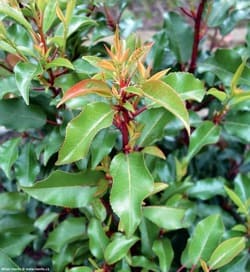
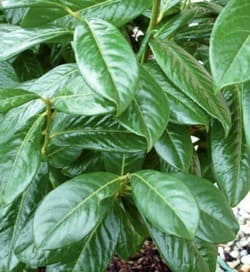
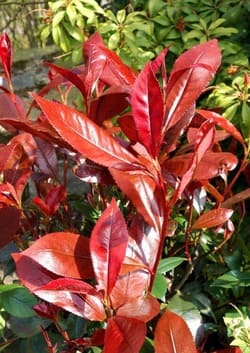
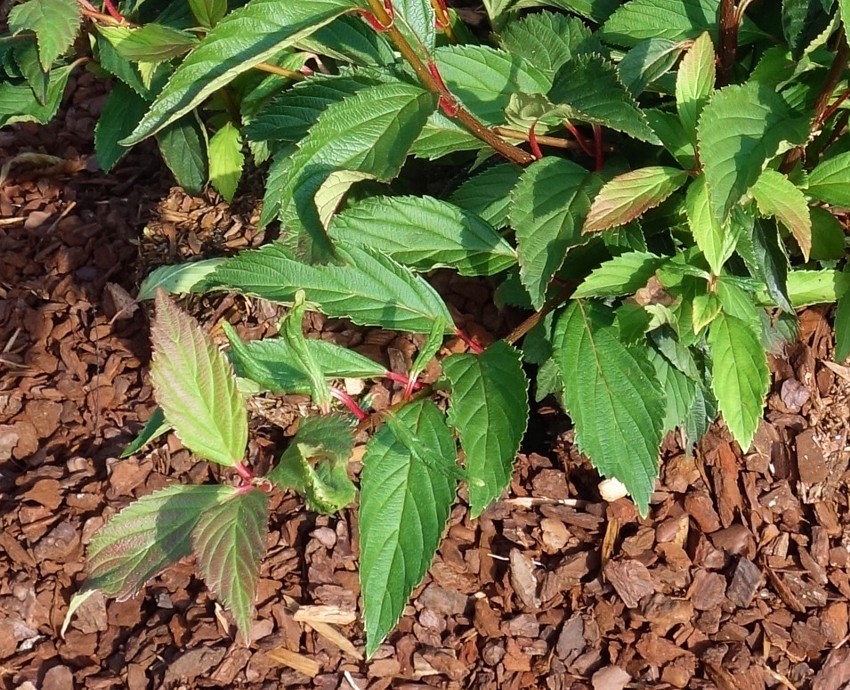
December Dwarf viburnum makes a handsome shrub even when not in bloom. It has a rounded, compact, bushy habit with upright branches, and nice foliage. The leaves are deciduous, narrowly oval or elliptic, significantly veined, toothed at margins, rich green in summer with some burgundy red hues, and wine red, orange and yellow in autumn. Pruning is not needed to improve branching, but can be done to keep the plant smaller. Prune it just after the blooming has finished before the leaves unfold completely.
Last update 14-11-2018; 25-11-2022
The fragrant viburnum ranks among the most reliable winter shrubs and requires no special care. It thrives best in full sun to partial shade, in fertile, moderately moist soil that does not dry out completely in summer. It tolerates heavier soils and typical garden conditions well, making it suitable for most gardens without the need for soil modification. It does not require pruning, though it can be kept tidier and more compact with a moderate spring pruning immediately after flowering, allowing the shrub to set buds for the following winter. It is hardy to roughly –34 °C (USDA zone 4) and is also suitable for growing in large outdoor containers