












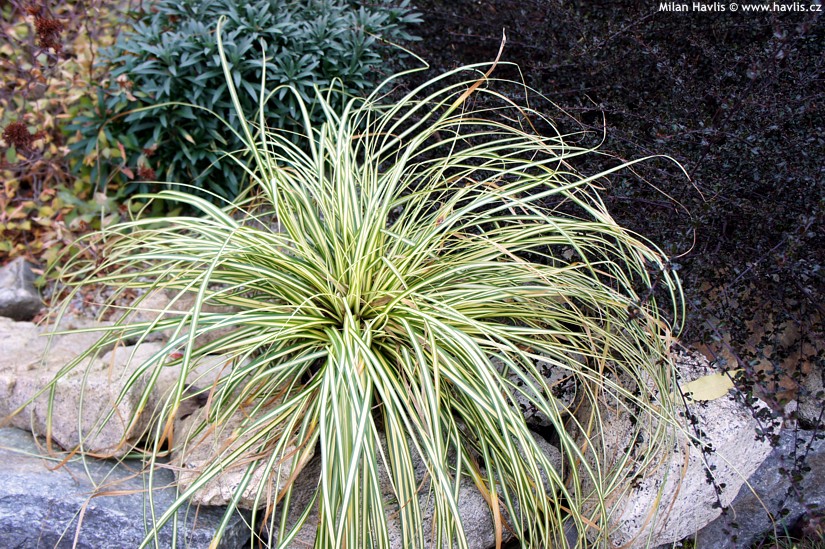
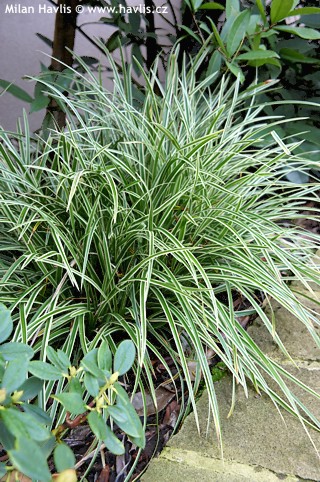
Carex oshimensis 'EVERGOLD' Japanese sedge

Carex
Sedges (Carex) form an enormous genus of evergreen and deciduous grasses united by a distinctive feature that gave them their botanical name and echoes in many languages: the edges of their leaves are usually sharp, like the cleanly cut sheets of office paper. There are more than 1500 species, and modern sources already speak of over 2000, occurring in almost every climate zone from hot tropics to arctic tundra. In the far north they are among the most important groups of plants capable of surviving in such harsh conditions. The first botanical descriptions appeared in the 18th century, when Carl Linnaeus (1707–1778) began to classify the vast diversity of sedges, but the real breakthrough came later with detailed studies of spikelet and utricle morphology, which allowed botanists to distinguish species with greater precision. The genus is extraordinarily variable: species differ in size, colour, leaf width, flowering and growth habit. Some form tight clumps, others spread and create dense groundcover. Most sedges, including those native to temperate climates, naturally grow in moist to wet habitats, which is somewhat paradoxical because many of them cope surprisingly well with long periods of drought as long as they are not planted in full sun.
Carex oshimensis, Japanese sedge, originates from the islands of Honshu and Shikoku, where it grows on lightly shaded slopes, in open woodlands and in stony, well drained soils. These habitats explain its unusual combination of evergreen foliage, resilience and the ability to maintain a compact shape even in winter. The species was described by the Japanese botanist Jisaburó Ohwi (1905–1977), whose meticulous work on the flora of Japan highlighted the remarkable ecological plasticity of sedges and their capacity to adapt to a wide range of conditions. It entered European horticulture only in the second half of the twentieth century, when garden designers recognised its fine yet firm habit and its year-round presence, qualities that many European sedges lacked.
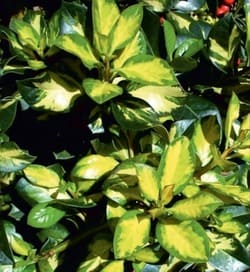
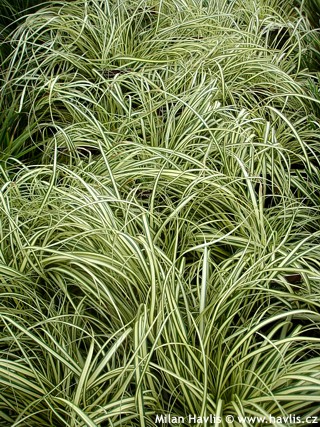
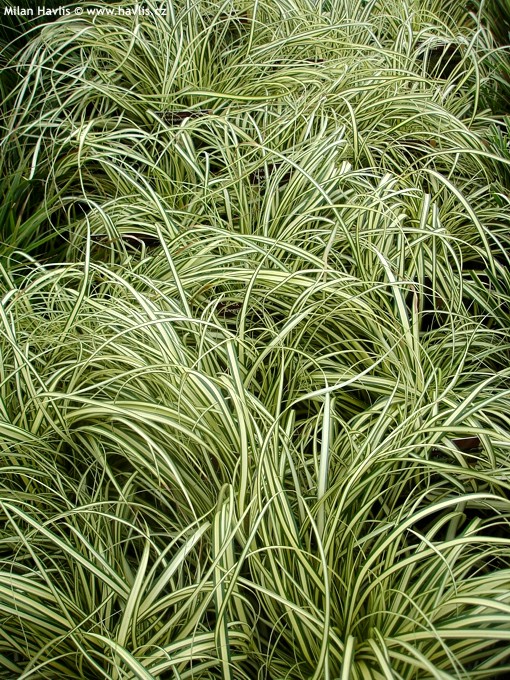
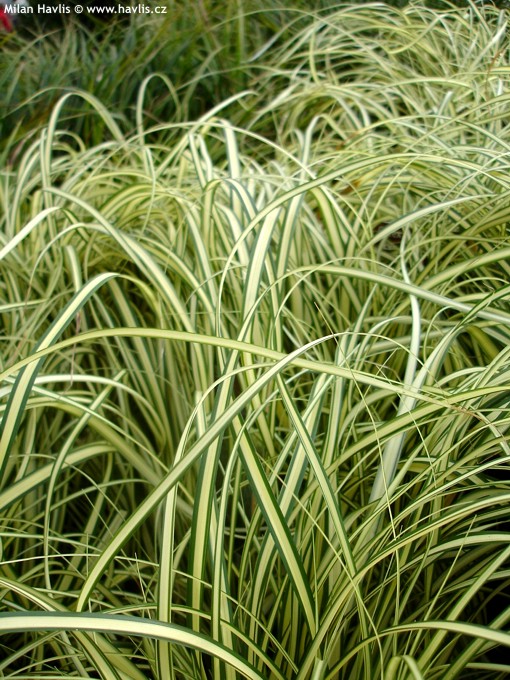
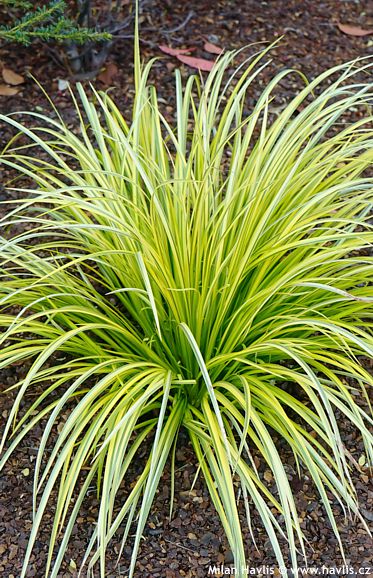
Evergold, introduced in 1977, is now regarded as a pioneer among these colourful and evergreen Japanese sedges. It offers a broad, creamy yellow central stripe that runs along the leaf like a ray of light set between deep green margins. It is one of the earliest variegated sedges that gained wider attention, and its stable leaf pattern was one of the reasons why Carex oshimensis began to establish itself in Europe as an evergreen perennial with year-round effect. The leaves are narrow, soft and gracefully arching, and the clump keeps its compact shape even in winter, a quality that was far from common in sedges at the time. The cultivar was bred by the Japanese grower Hiroshi Koba and reached Europe soon afterwards, when British growers recognised its reliability in cooler climates. It differs from the species mainly in its variegation and slightly finer habit, while its ecological requirements remain almost identical. The inflorescences are short, upright and unobtrusive, formed by narrow male and female spikelets in shades of light brown to yellowish brown. They appear in spring and play only a minor role in the overall ornamental effect. Although it is not part of the EverColor series, as its name might suggest, it certainly provided the initial inspiration.
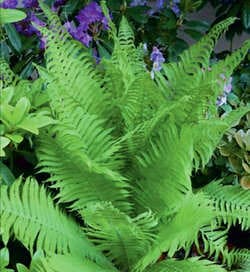
‘Evergold’ is an ideal plant for places that need a touch of colour throughout the year, whether in shaded corners beneath shrubs, along paths or in small urban courtyards where every line of colour matters. It looks best when paired with dark leaved perennials such as Heuchera, Ligularia or Actaea, or with delicate ferns that emphasise its arching shape. In sunnier plantings it complements small leaved shrubs like box, Japanese hollies, leucothoe or pieris, bringing softness where the structure is otherwise too rigid. It also performs beautifully in handsome patio planters, where it provides a year-round base that can be combined with seasonal plants. In smaller gardens it works well as an edging plant that unifies the planting, while in larger borders it can form gentle, pale-coloured waves among darker perennials.
Last update 27-01-2011; 14-06-2026
Japanese sedge is a reliable evergreen grass that grows best in partial shade or light shade, where it maintains its colour and compact shape. It tolerates morning or late afternoon sun if the soil is evenly moist, humus rich and well drained. It dislikes prolonged waterlogging, which leads to root root, and heavy clay soils require drainage, although experience shows that once well-established it copes with occasional wet periods. The soil reaction may be slightly acidic to neutral; strongly alkaline soils cause paling of the leaves. It is reliable also in containers in partial shade and shade, provided it has drainage and regular watering, and in severe winters the pot benefits from protection against deep frost. Light spring feeding is sufficient, preferably organic; excessive nitrogen softens the tissues. Cutting back is not necessary, only the removal of dry or damaged leaves in spring to encourage fresh growth; older plants, however, may be rejuvenated by cutting back to about 5 cm after all frosts, followed by two months of feeding. The plant is not poisonous, suffers from no significant pests or diseases and in temperate climates it reliably withstands temperatures down to about –29 °C without protection (USDA zone 5).

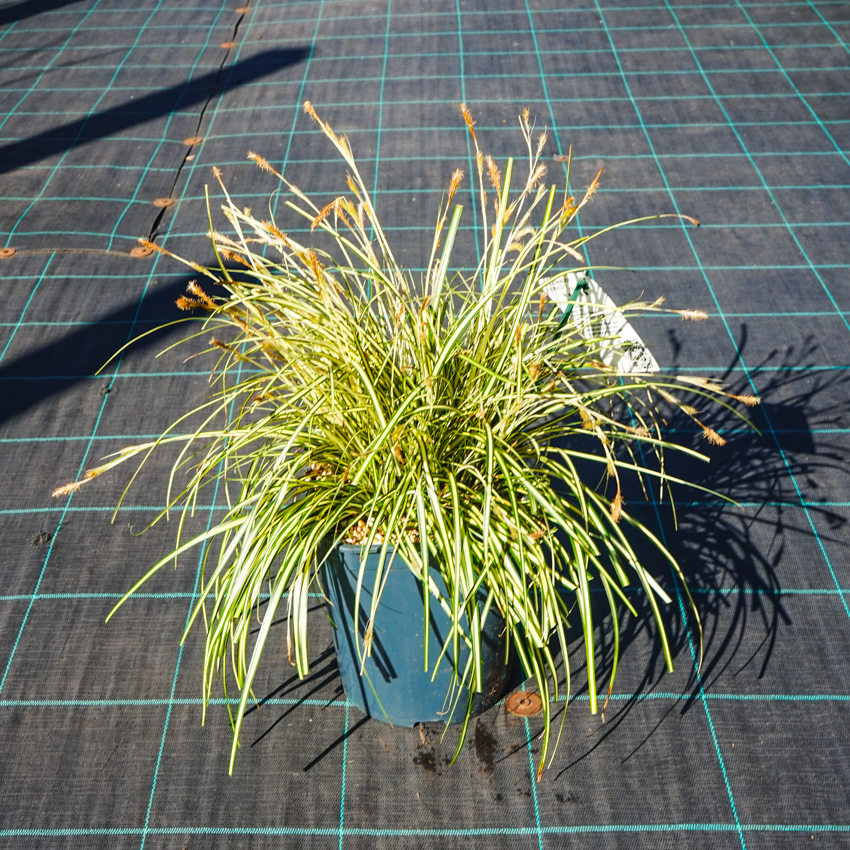
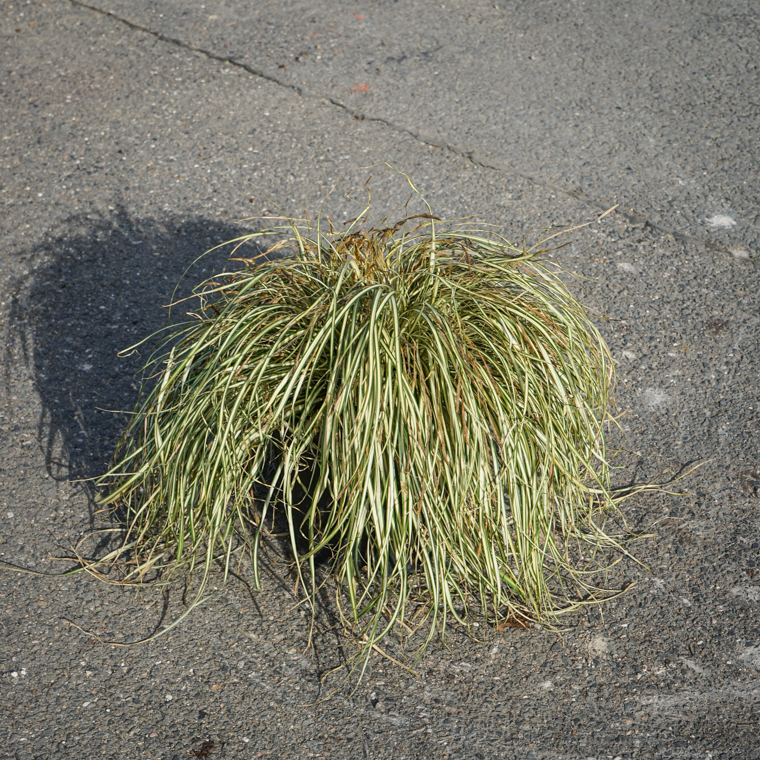
Goods are shipped all over Europe. For Russia and U.K. and for further details please read about SHIPPING OPTIONS HERE.
Are you interested in a serious discount for orders NOV-FEB? Check your options here.
THE PRICES INCLUDE VAT of 15%. For quick conversion you can use 1 CZK = approx. 0.04 EUR
- STANDARD QUALITY - Plants of this group are 1st class quality with number of branches and overall density adequate to their size and age, considering they were container grown.
- DE LUXE QUALITY - This label guarantees a luxurious quality of manually selected plants that, compared to their height and age, are exceptionally dense and beautiful.
- EXTRA - These plants are usually mature and bigger specimens with exceptional overall appearance.
- STANDARD (as described in the plant form) means a tree with a trunk of 190-210 cm and a crown at the top, unless specified differently. The commercial size for trees is their girth measured in the height of 1m from ground.
- HOBBY - These plants are of the same quality as our standard-quality plants but younger and therefore cheaper.
- SHRUB - a woody plant with branches growing bushy from the ground level.
- HALF-STANDARD or MINI-STANDARD - a small tree with shorter trunk, its size is usually specified.
- FEATHERED - These are trees with branches growing already from the base of the trunk and up along the stem.
- GRASSES and PERENNIALS - Sizes given usually read the diameter of the pot or the clump, as specified.
