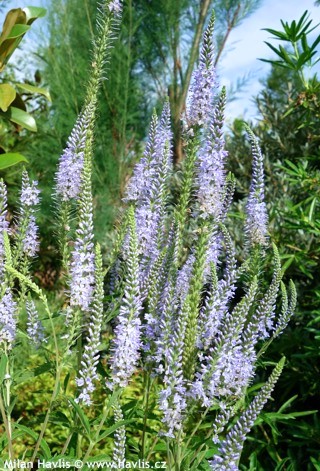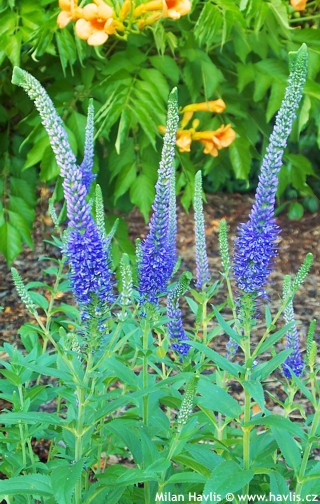











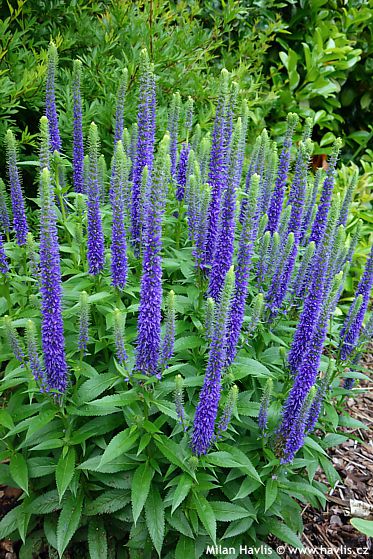
Veronica spicata 'ULSTER BLUE DWARF' spiked speedwell

 Symbivit Tric (arbuscular)
 Symbivit (arbuscular)
Veronica
The genus spikewell – Veronica belongs among the most numerous and the most diverse groups of flowering plants of the temperate zone. It includes several hundred species distributed almost worldwide, from alpine meadows and forest understories to dry steppes and coastal rocks. It was described in the 18th century by Carl Linnaeus, who adopted an already established name linked to the legend of Saint Veronica. The legend says that she offered Christ a piece of cloth during his arduous journey to Golgotha, with which he wiped sweat and blood off his face. His image was said to have miraculously imprinted itself on the fabric, the so‑called vera icon, or “true image”. This idea of a faithful, unembellished imprint of reality was symbolically transferred in pre‑modern botany to speedwells, whose small, clearly drawn flowers were perceived as honest and needing no adornment.
Spiked speedwell is our native European perennial, botanically described as early as the 18th century. In the wild, it grows on dry meadows, steppe slopes, and open hillsides of Europe and western Asia with well‑drained soils, where it forms firm, compact clumps and blooms in upright spikes. It belongs to the group of speedwells adapted to full sun and relatively dry conditions. The inflorescences appear from early summer and give the plant a clear, vertical silhouette which distinguishes it from creeping or ground‑covering species. It is often hybridized with related species (V. longifolia, V. incana) to obtain longer inflorescences, slightly different foliage, or increased drought tolerance. The combination of its simplicity and natural beauty has ensured its long‑standing popularity in cottage and naturalistic gardens, and in England it has even become the official flower of Montgomeryshire in Wales.
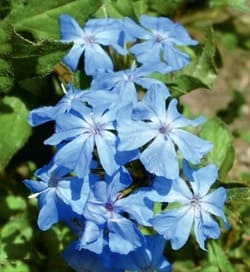
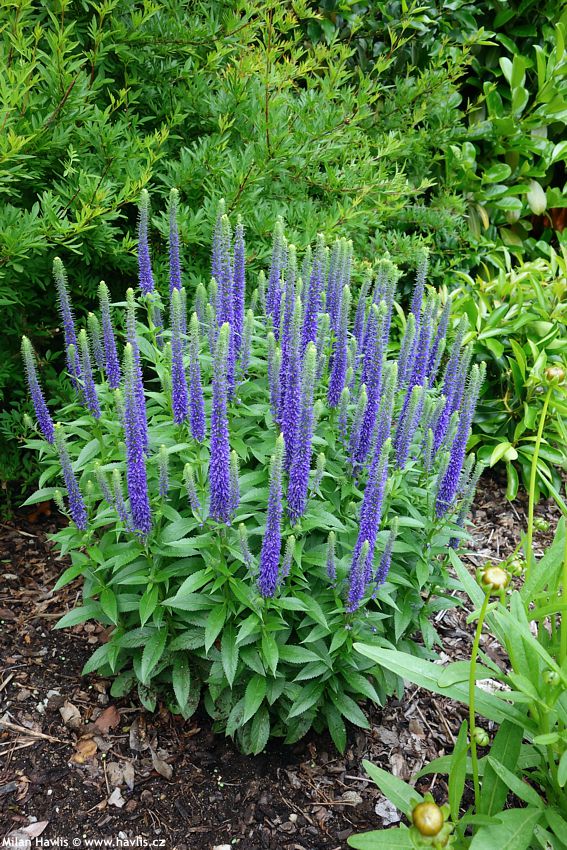
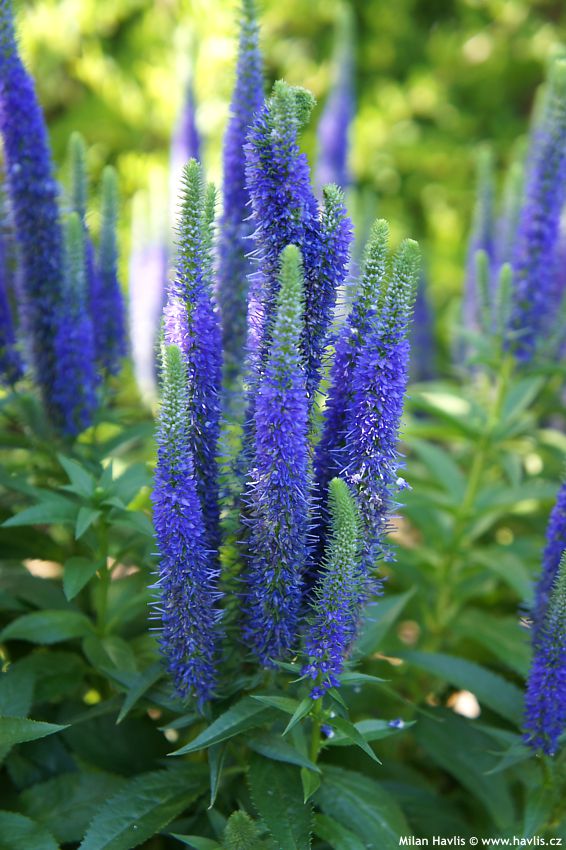
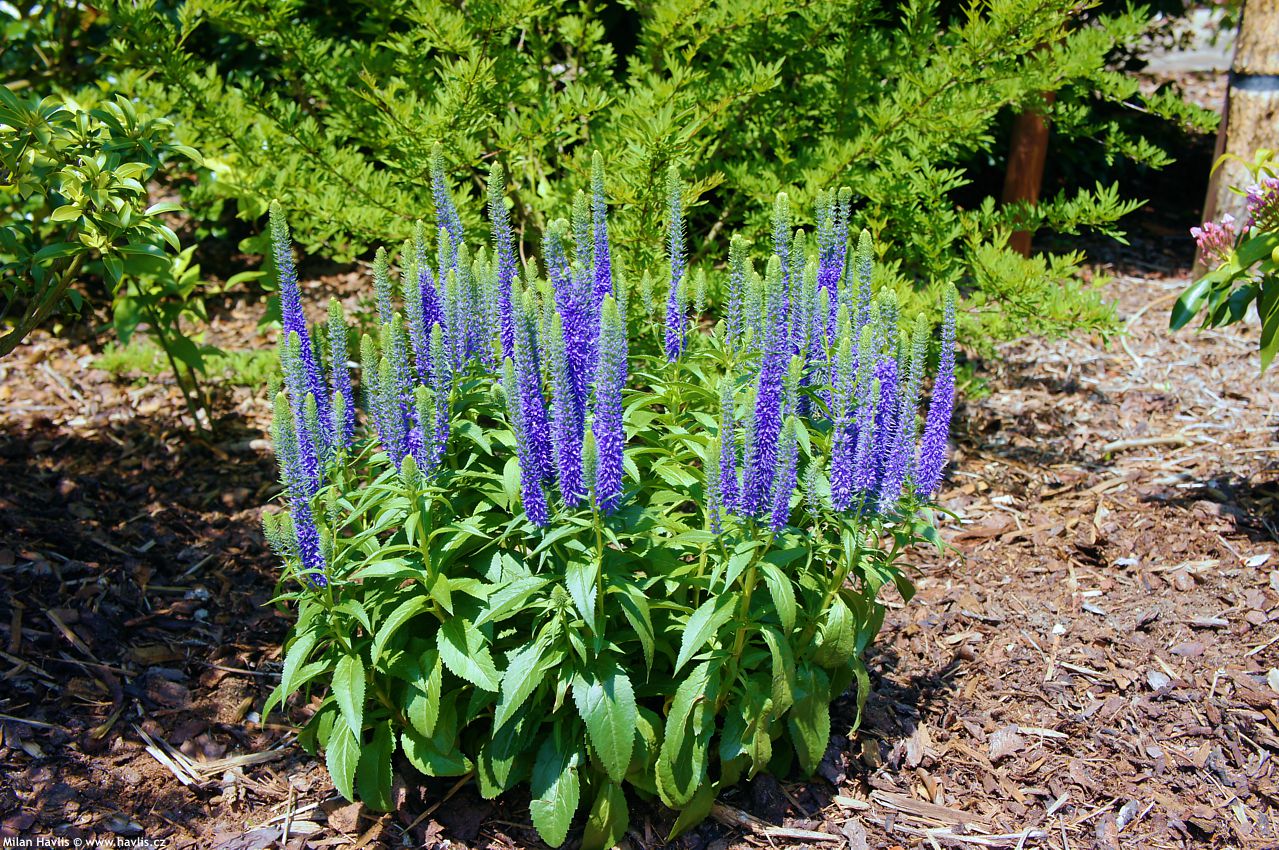
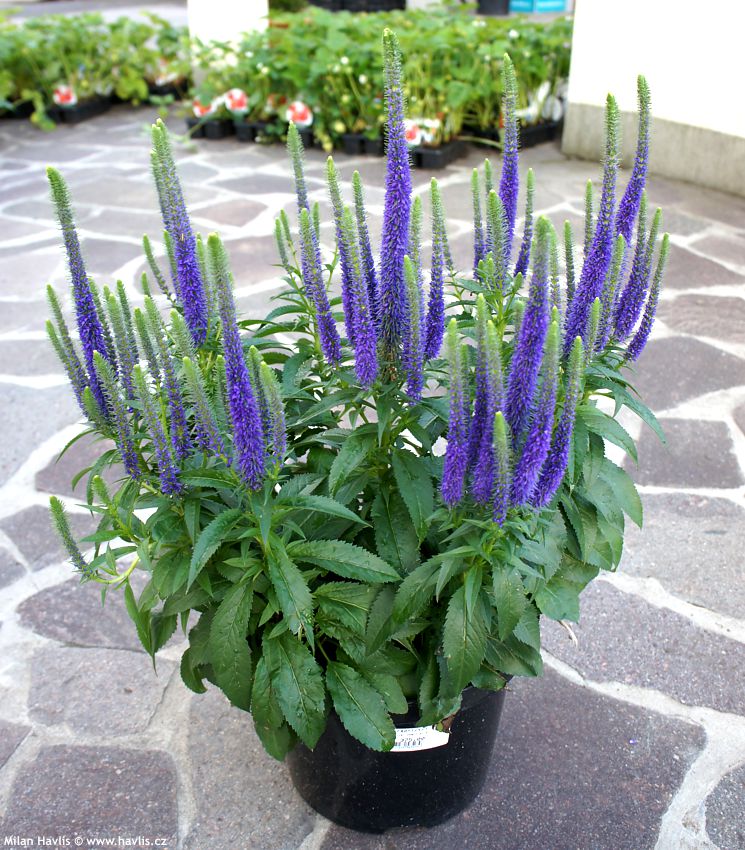
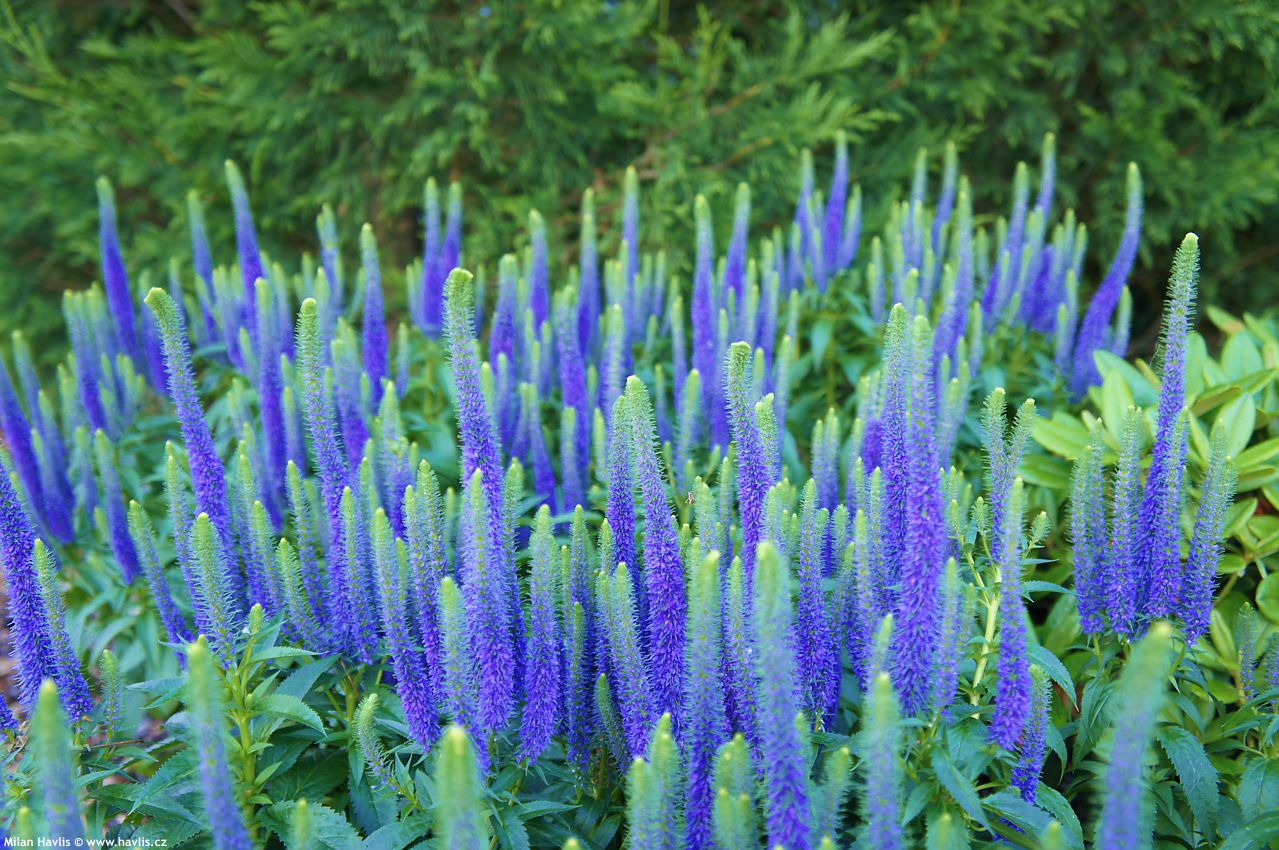
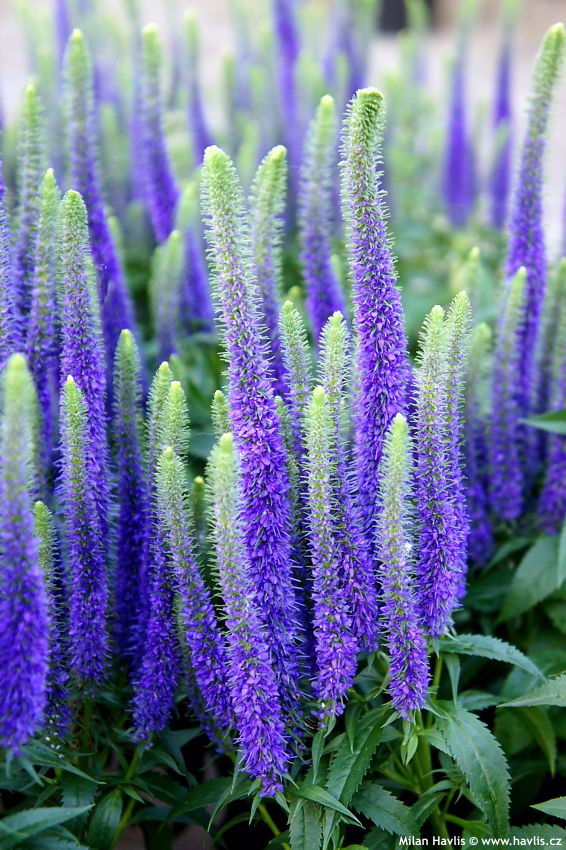
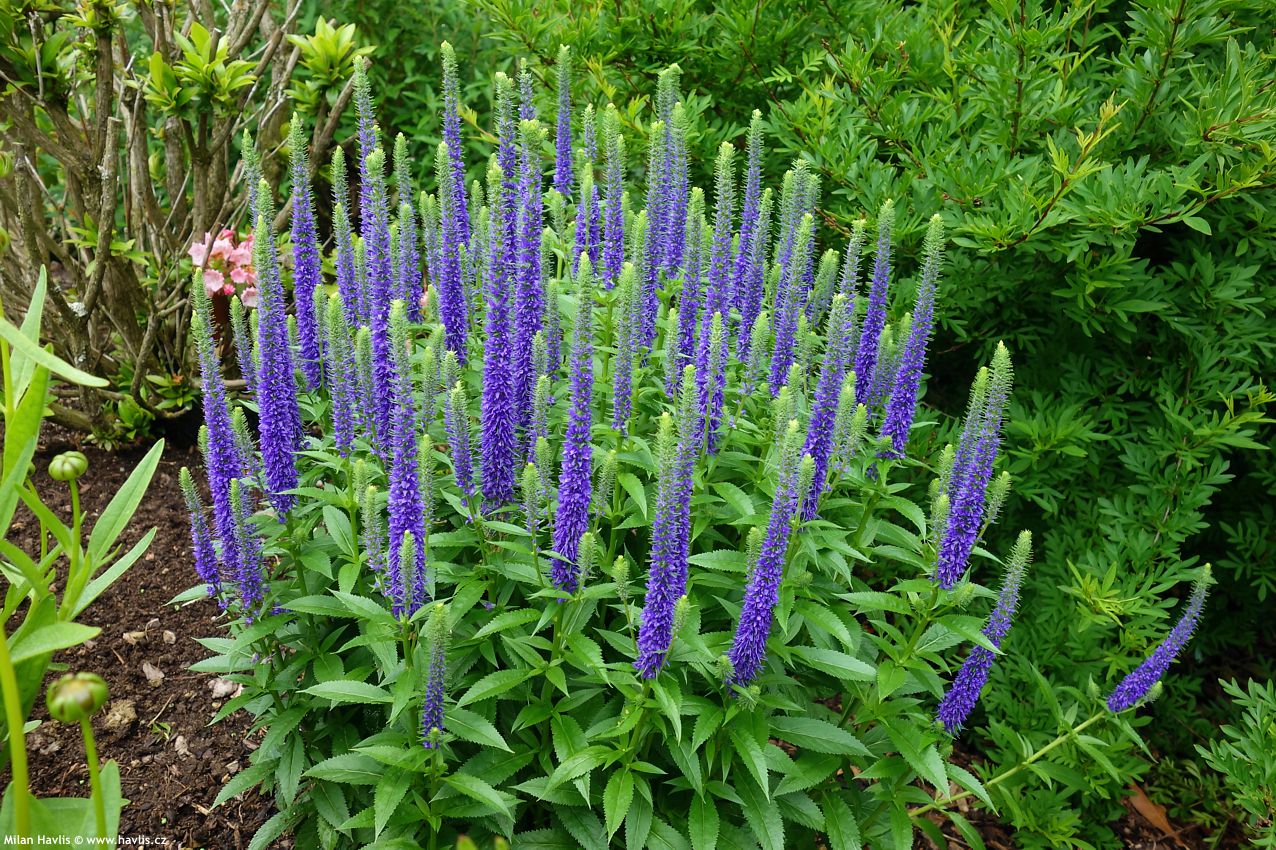
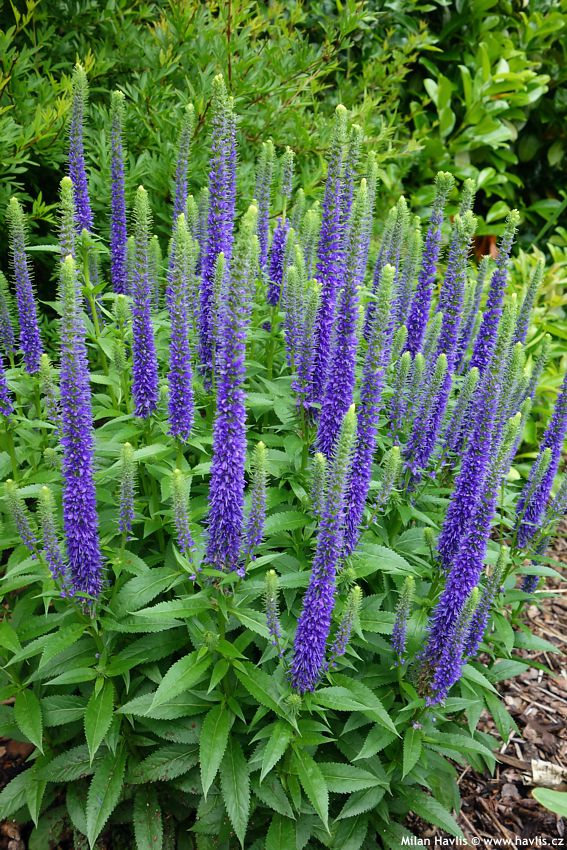
Ulster Blue Dwarf belongs among the most compact varieties of spiked speedwell, as if someone had taken an ordinary spicata and reduced it to a garden bonsai without losing any of its strength or colour. It forms low, dense, almost cushion‑like clumps, from which short but surprisingly profuse flower spikes rise in early June, coloured in a soft, pastel blue with deep violet tones. The leaves are narrowly lanceolate, finely serrated at margins, bright green and firm in texture, holding their shape even after flowering so the plant never looks tired, not even in the heat of summer. The origin of this cultivar is not documented, but its name suggests it may have arisen or been discovered in the Ulster region of Northern Ireland, where perennial plants were commonly named after local areas and colours in the mid‑20th century. This is supported by several other garden plants that proudly carry the name Ulster as well.
Thanks to its size, Ulster Blue Dwarf is ideal wherever ordinary speedwells would feel too robust. It works beautifully at the front of perennial borders, on dry stone walls, tucked into pockets between rocks, or as gentle blue accents in gravel plantings. In small urban gardens it can even stand in for lavender where something lower and less woody is needed. It pairs well with thymes, helianthemums, pasque flowers or low blanket flowers, all of which give it space while highlighting its soft blue spikes. In contemporary plantings it performs reliably as a repeating motif along paths or terraces, creating rhythm without overwhelming the surrounding plants. It always looks neat, a small but confident detail that quietly holds the composition together.
Last update 09-06-2014; 28-12-2025
Spiked speedwell and its hybrids are undemanding, long‑lived perennials that perform best in full sun and in well‑drained, rather dry soils. They do not tolerate waterlogging: during summer, excess moisture may lead to powdery mildew, while winter wet can cause root rot. On the other hand, they cope well with drought and summer heat. Except for cultivars explicitly noted as remontant without cutting, we recommend cutting the stems back to ground level after flowering, which encourages re-growth and often a second, lighter flush of bloom. The plant is fully hardy to abt. −34 °C (USDA zone 4) and requires no special care or winter protection. It can also be grown year‑round in outdoor containers, provided excellent drainage is ensured as well as occasional light watering.