.jpg)
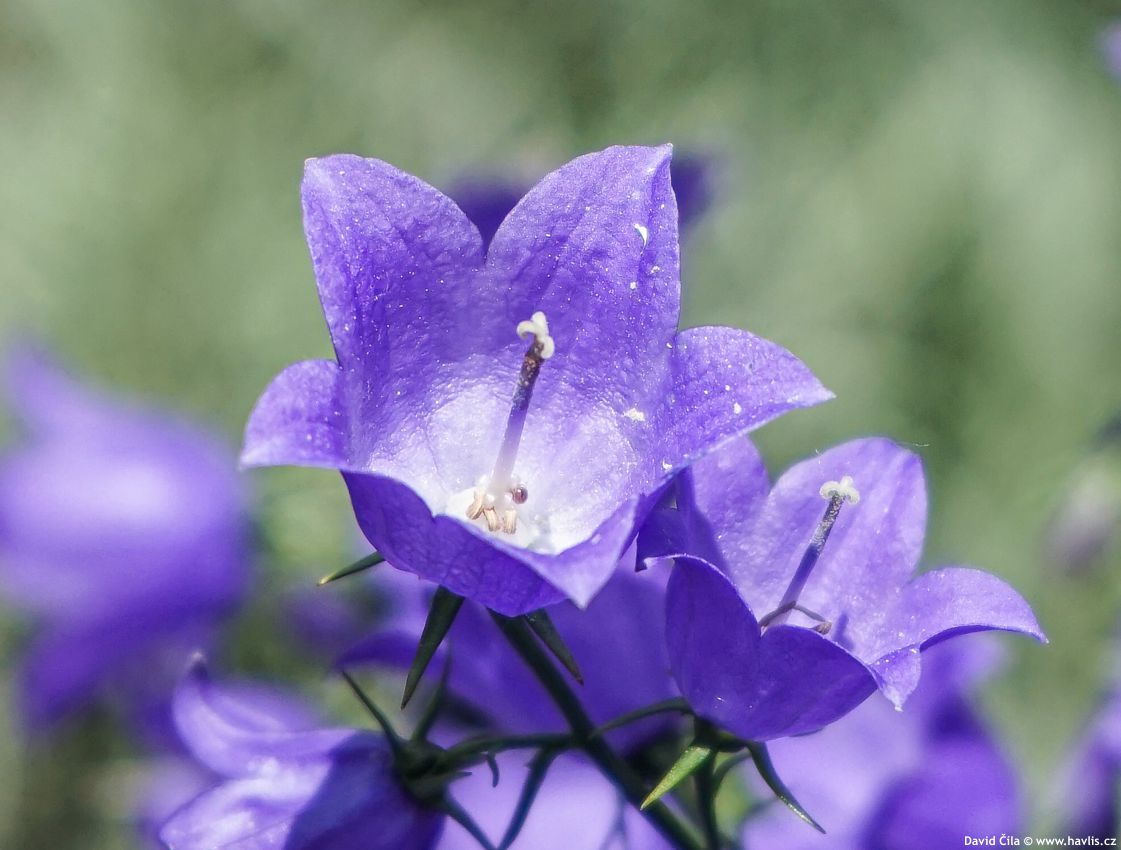
Campanula 'Camp Bule' STARINA SPRING BELL bellflower

 Symbivit Tric (arbuscular)
 Symbivit (arbuscular)
Campanula
The genus Campanula is one of the largest and most deeply rooted groups within the European flora. Depending on the taxonomic approach, it includes approximately 300 to 500 species, with the greatest diversity concentrated in the Mediterranean region, the Balkans, and the mountain ranges of Europe and western Asia. The genus was formally described by Carl Linnaeus (1707–1778) in 1753 in his seminal work Species Plantarum, where he already noted its remarkable variability in form and growth strategy. Bellflowers have accompanied people for centuries not only as ornamental plants, but also as part of folk symbolism, where the bell-shaped flower evoked voice, calling and protection. Genetic studies point to an ancient origin and repeated adaptations to extreme habitats, ranging from alpine screes to dry limestone slopes.
The variability and adaptability of many perennial bellflowers attracted numerous breeders who began working with their hybridisation as early as the late 19th century. Pure botanical species are undoubtedly beautiful, but they are often inconsistent in appearance and behaviour, short-lived in flower, or poorly adapted to garden conditions. For this reason, targeted breeding took place in research stations and nurseries, where a balance between natural character and reliability was sought. An important role was played by figures such as Karl Foerster (1874–1970), who in his Potsdam nursery systematically selected and crossed perennials with an emphasis on longevity and garden performance, including several groups of bellflowers. His work was continued by British growers such as Alan Bloom (1906–2005) in Bressingham, who integrated bellflowers into a modern concept of perennial planting. Breeders have therefore long focused on species such as C. portenschlagiana, C. poscharskyana and C. carpatica, originating from the Balkans and the Carpathians, which naturally combine low growth, abundant flowering and the ability to regenerate. These species were described at the turn of the 18th and 19th centuries, for example Campanula carpatica by Johann Christian Jacquin (1727–1817), and they very quickly became part of garden culture and everyday life, from rural gardens to urban courtyards.
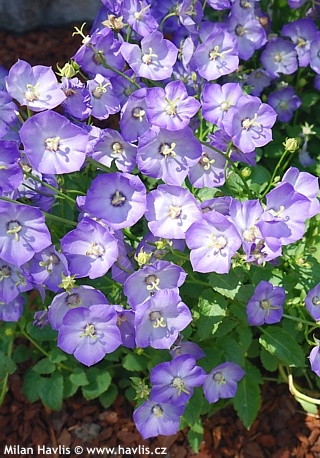
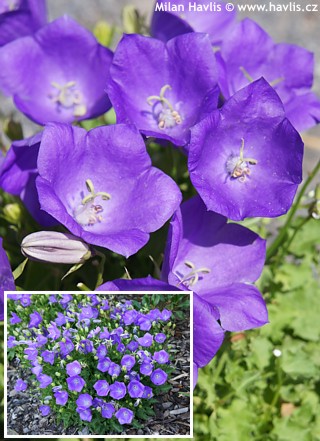
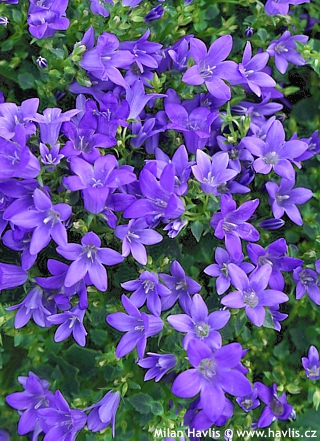
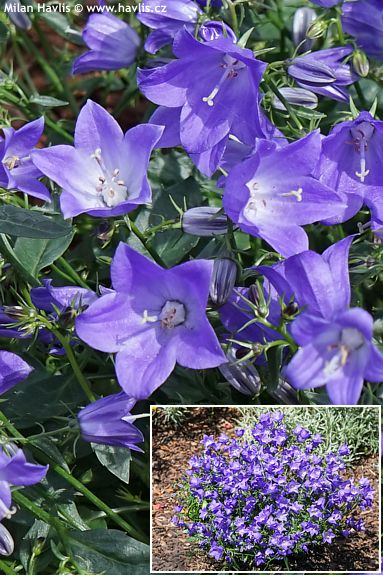
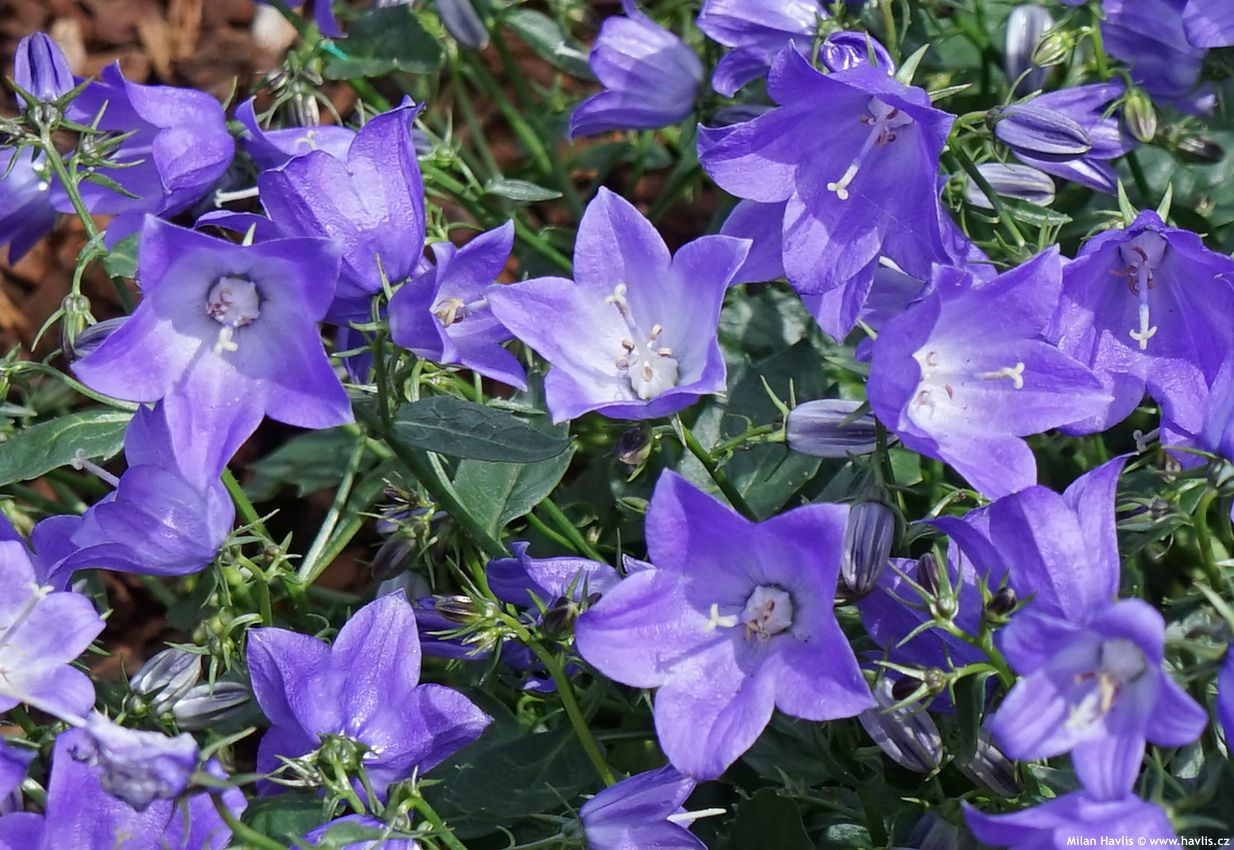
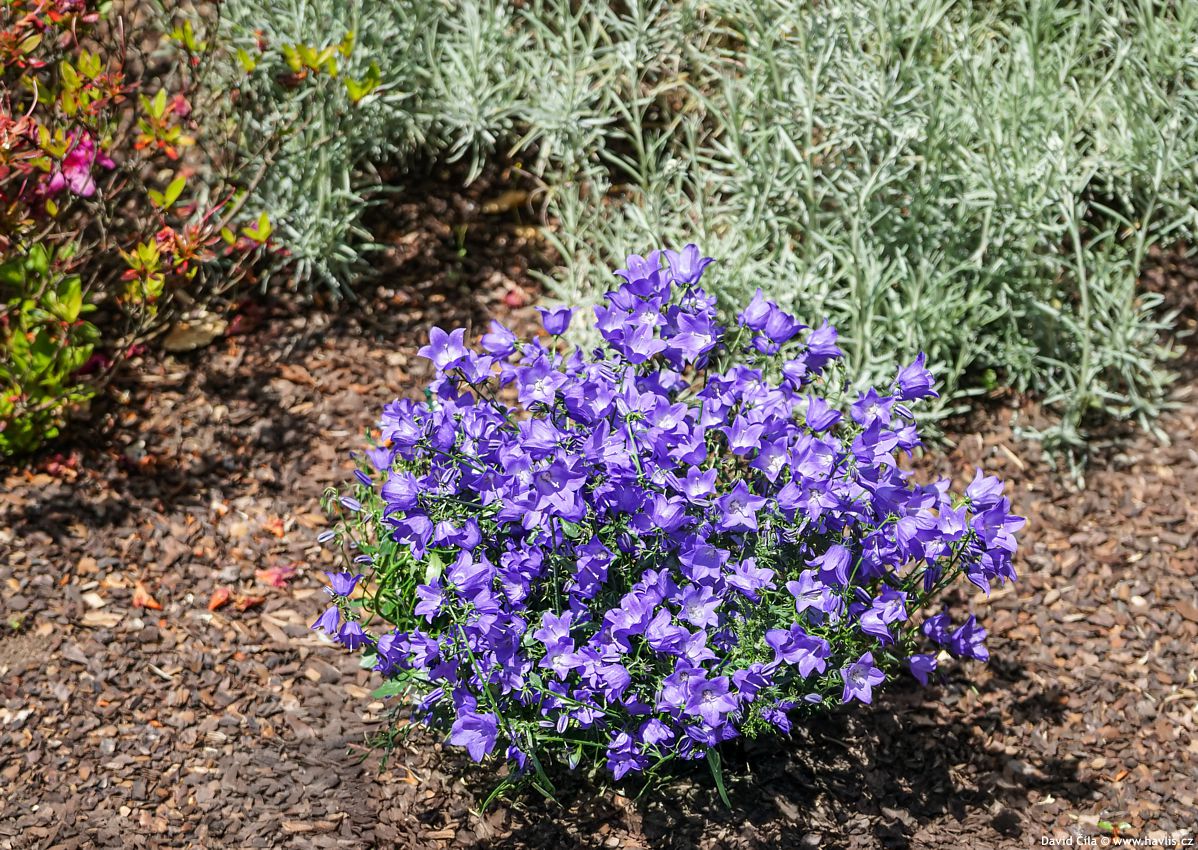
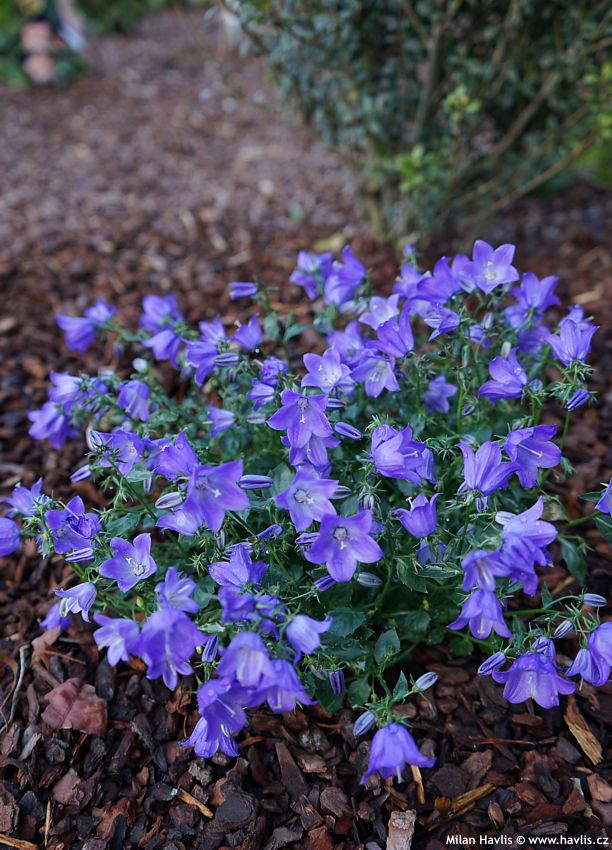
STARINA SPRING BELL is a charming, blue to blue-violet flowering cultivar of a low-growing bellflower, bred by the Dutch breeder Pim Kaagman in the town of Andijk. It is a freely and long-flowering perennial with a compact cushion of foliage, above which the flowers rise clearly and remain well visible throughout the flowering period. The plant appears neat yet natural, as if it were instinctively maintaining its own proportions. The flowers are bell-shaped, medium-sized, and carried on short, sturdy stems, contributing to an overall balanced appearance. The leaves are small, dark green, gently glossy and often heart-shaped at the base, a feature typical of low Balkan bellflowers. Compared with botanical species, growth is markedly more uniform and flowering lasts longer, often with a tendency to repeat after cutting back. It is part of a small breeding series of early-flowering bellflowers intended for containers as well as the garden, marketed under the name STARINA. It was bred in 1995 and is protected by the US plant patent PP18236, granted in 2007.
Last update 29-03-2026
STARINA SPRING BELL can create a low yet striking feature along the edges of borders, in stone walls or in larger bowls, where it spreads into a continuous blue carpet. Thanks to its compact growth, it combines well with plants of fine texture, such as small ornamental grasses or low perennials, without overgrowing or suppressing them. Care should be taken, however, to ensure it is not shaded or crowded out by larger, fast-spreading perennials, as ground-covering bellflowers are poor competitors and will begin to thin out. For added colour contrast, it can be combined with plants such as aurinia, aubrieta or saxifraga, where differences in form and colour are particularly effective. In containers it appears cultivated and stable, which will be appreciated by anyone who does not wish to deal with collapsed or drawn plants every spring. If the clump is cut back by at least half after flowering and given regular but moderate feeding, it will often regrow and flower again, reliably and sometimes up to three times during the season.