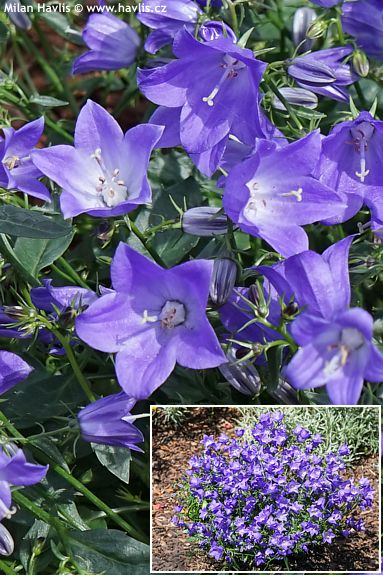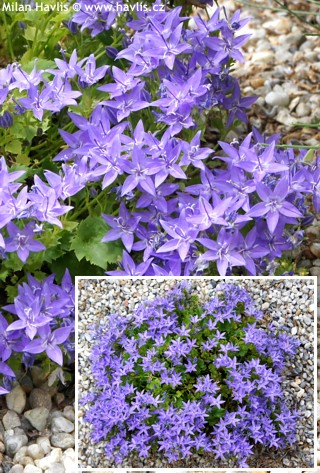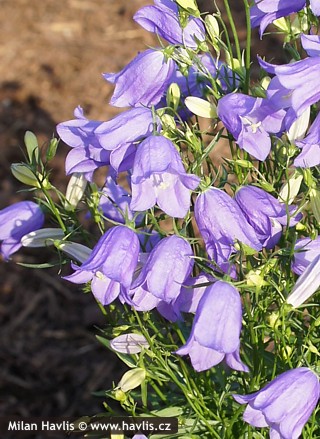





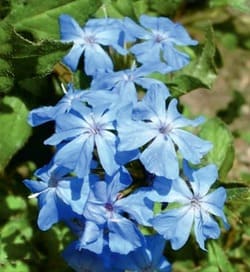







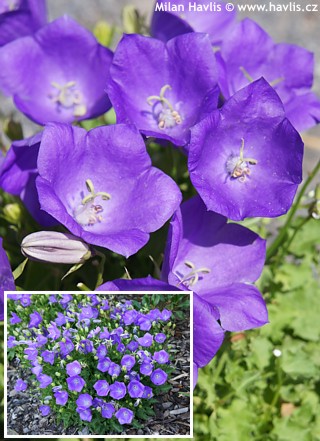
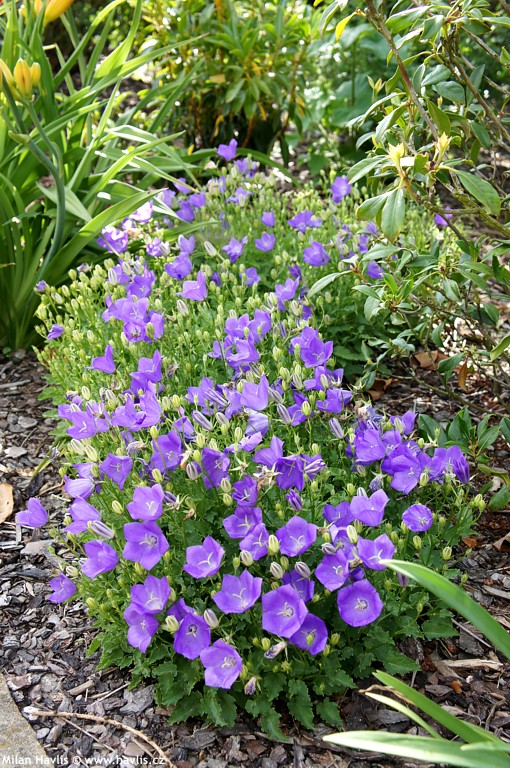
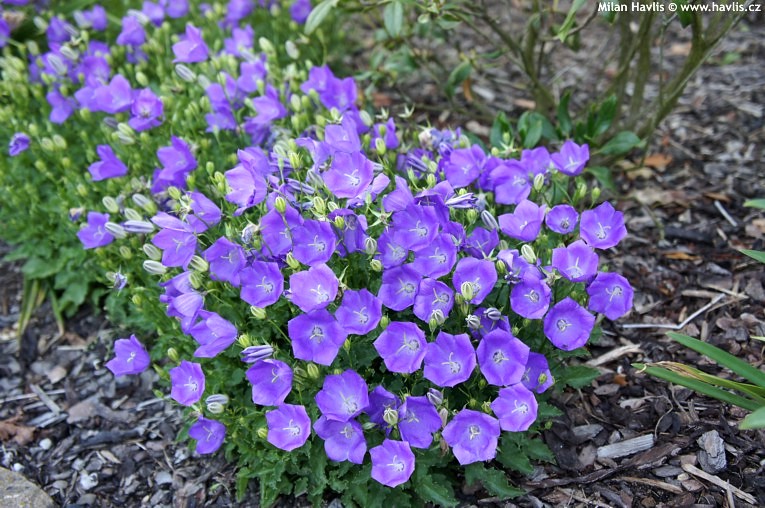
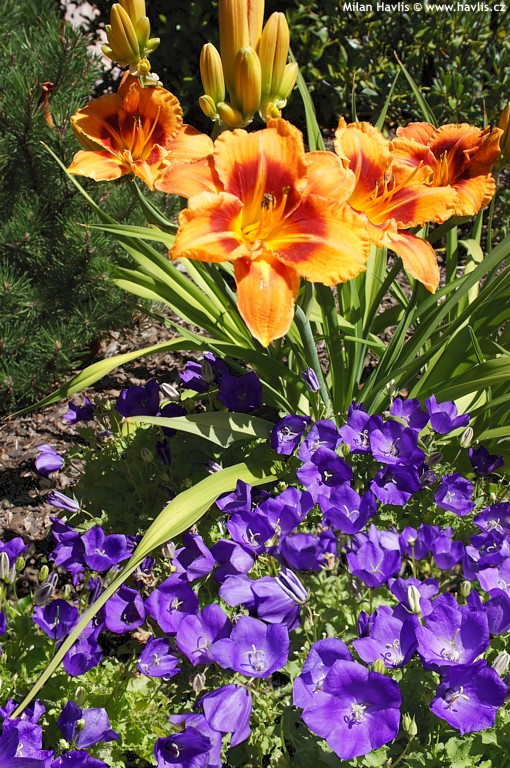
Campanula carpatica 'DEEP BLUE CLIPS' Carpathian bellflower

 Symbivit Tric (arbuscular)
 Symbivit (arbuscular)
Campanula
The genus Campanula is one of the largest and most deeply rooted groups within the European flora. Depending on the taxonomic approach, it includes approximately 300 to 500 species, with the greatest diversity concentrated in the Mediterranean region, the Balkans, and the mountain ranges of Europe and western Asia. The genus was formally described by Carl Linnaeus (1707–1778) in 1753 in his seminal work Species Plantarum, where he already noted its remarkable variability in form and growth strategy. Bellflowers have accompanied people for centuries not only as ornamental plants, but also as part of folk symbolism, where the bell-shaped flower evoked voice, calling and protection. Genetic studies point to an ancient origin and repeated adaptations to extreme habitats, ranging from alpine screes to dry limestone slopes.
Campanula carpatica, the Carpathian bellflower, is a species native to the mountainous regions of the Carpathians, where it grows on open meadows, rocky slopes, and in sparse montane vegetation at altitudes of approximately 800 to 2,000 metres. Its natural range includes primarily present-day Romania, Ukraine, and the northern parts of the Balkans, where it encounters cooler summers, pronounced temperature differences between day and night, and soils that are shallow and stony yet never completely dry. This combination of conditions has shaped its compact growth, capacity for rapid regeneration, and abundant but time-limited flowering. The species was described by Johann Christian Jacquin (1727–1817), a distinguished Austrian botanist and physician whose work made a significant contribution to the understanding of alpine and Carpathian flora. Campanula carpatica entered gardens very soon after its description, gaining popularity for its reliability, clean flower form, and ability to adapt to a wide range of garden conditions. Owing to its genetic stability and natural variability, it has also become one of the foundational species used in the breeding of low-growing bellflowers.
Deep Blue Clips is a large-flowered variety of Carpathian bellflower. It bears typically violet flowers on short, erect stems that are about 5 cm above the leaves. The plants produce flowers from early July for a number of weeks, and blooming time can be extended by regular deadheading. The stems and leaves contain white sap which could cause discomfort if you are allergic. Leaves are light green, narrowly heart-shaped but the shape is not very clear as the margins are richly frilled.
Last update 05-01-2013
Carpathian bellflowers prefer evenly moist but well-drained soil in full sun, though they also tolerate light shade, particularly in warmer regions. For abundant and repeat flowering they require an adequate supply of nutrients, yet excessive fertilisation is detrimental, promoting leafy growth at the expense of flowers. They can also be grown in ornamental outdoor containers with good drainage (without saucers) and regular, but not excessive, watering. They favour slightly alkaline to neutral soils. These are perennials of moderate longevity which, under good conditions, can remain in one place for many years, although the centre of the clump may thin over time; this is a natural process rather than a sign of failure. They tolerate transplanting reasonably well if carried out outside the main flowering period and with care for the fine root system. When stems are cut, a milky sap appears, which is neither toxic nor strongly allergenic and poses no risk during normal garden work. Ground-covering hybrid bellflowers are generally healthy and resilient perennials, not prone to serious diseases or pests provided they are not grown in waterlogged soil or overly dense plantings. They are hardy to about −40 °C (USDA zone 3).