

































.jpg)
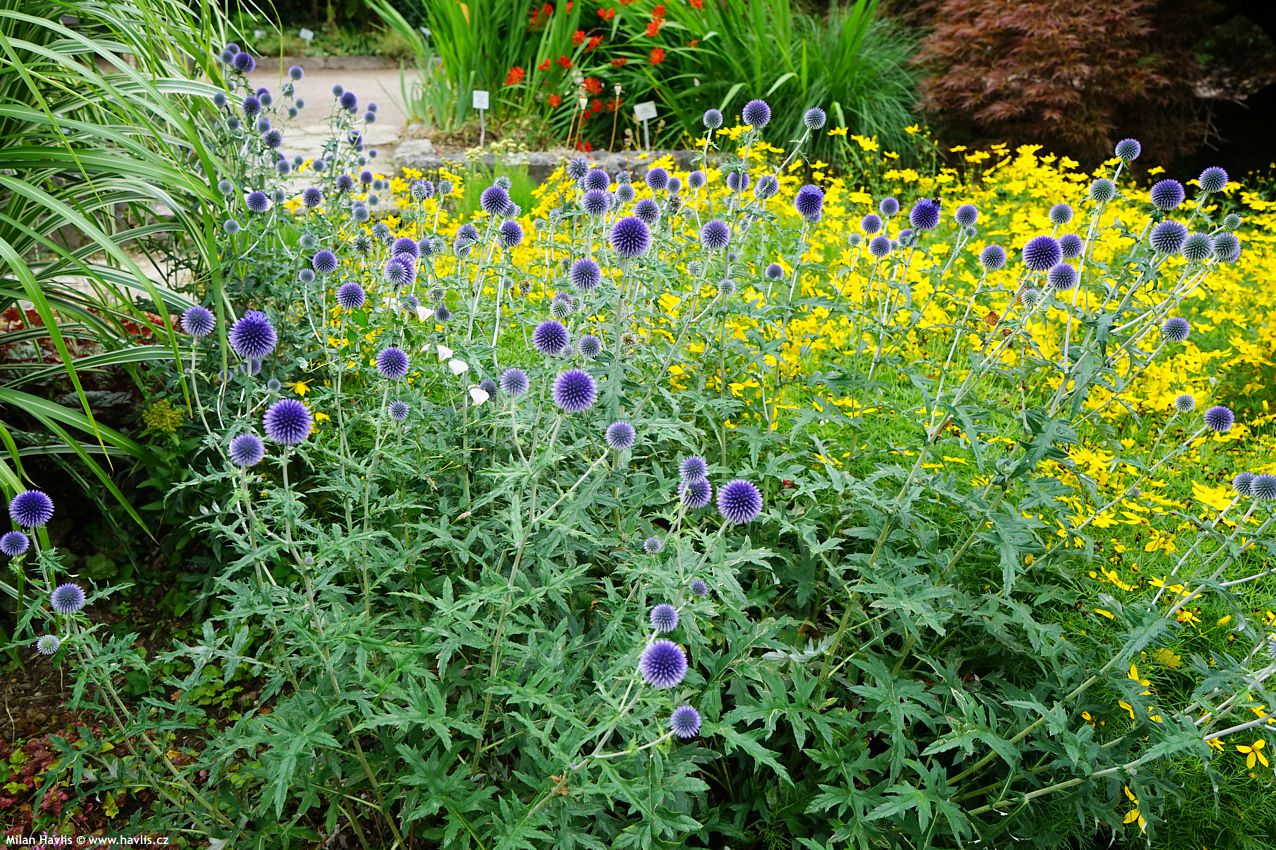
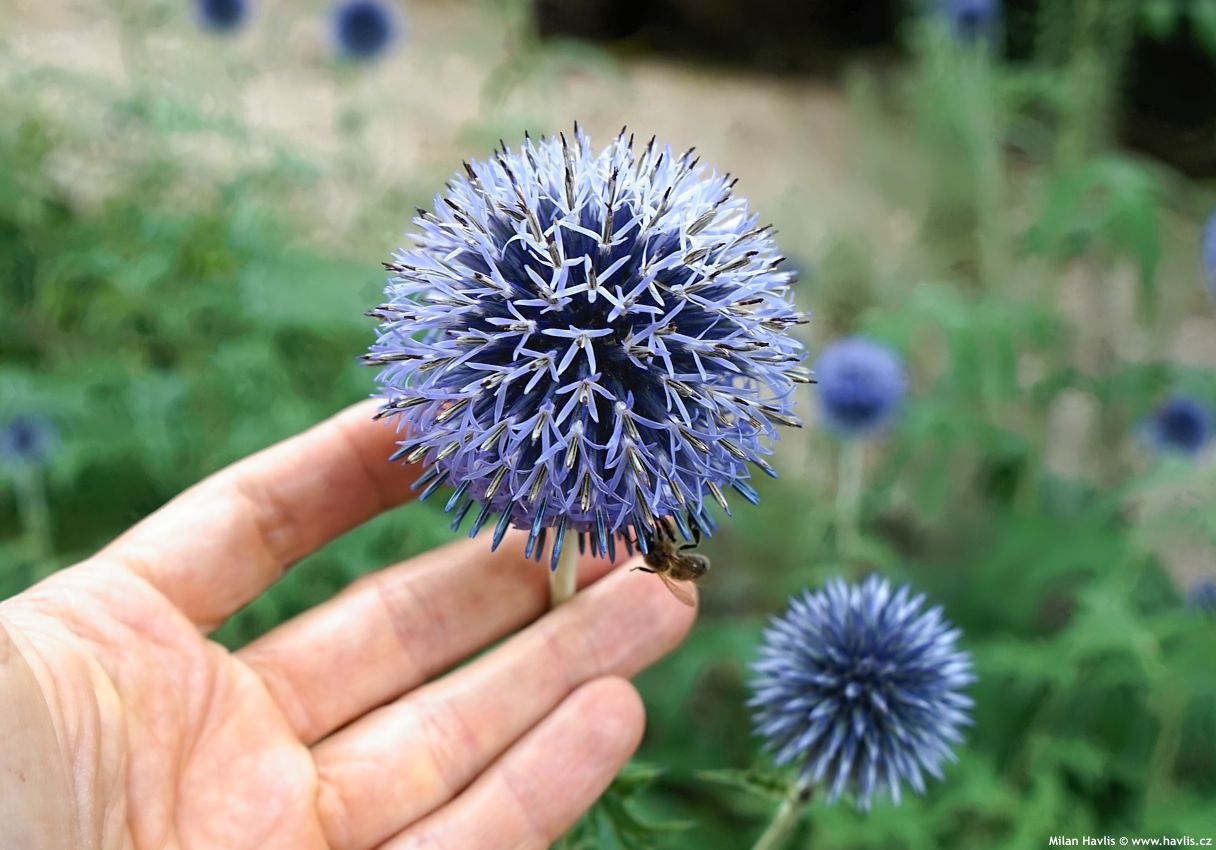
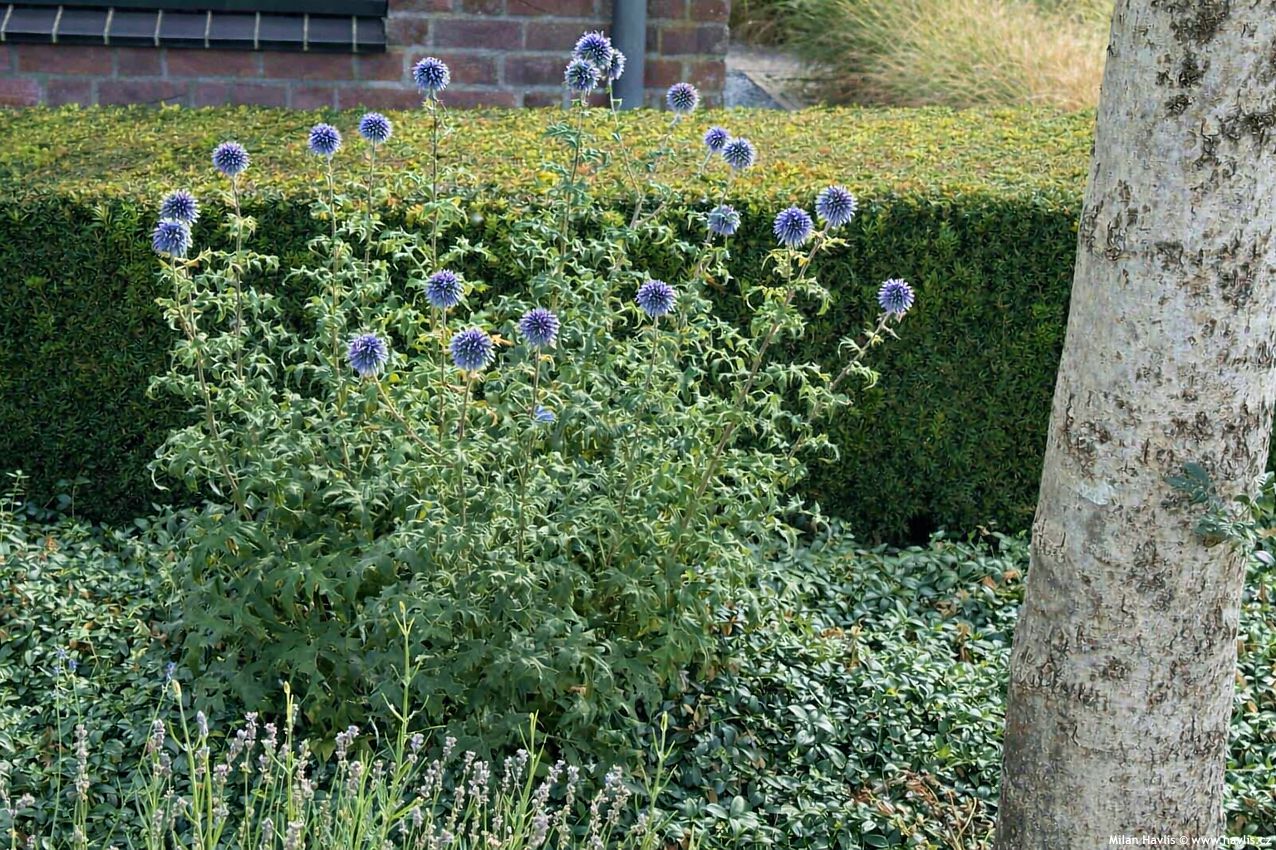
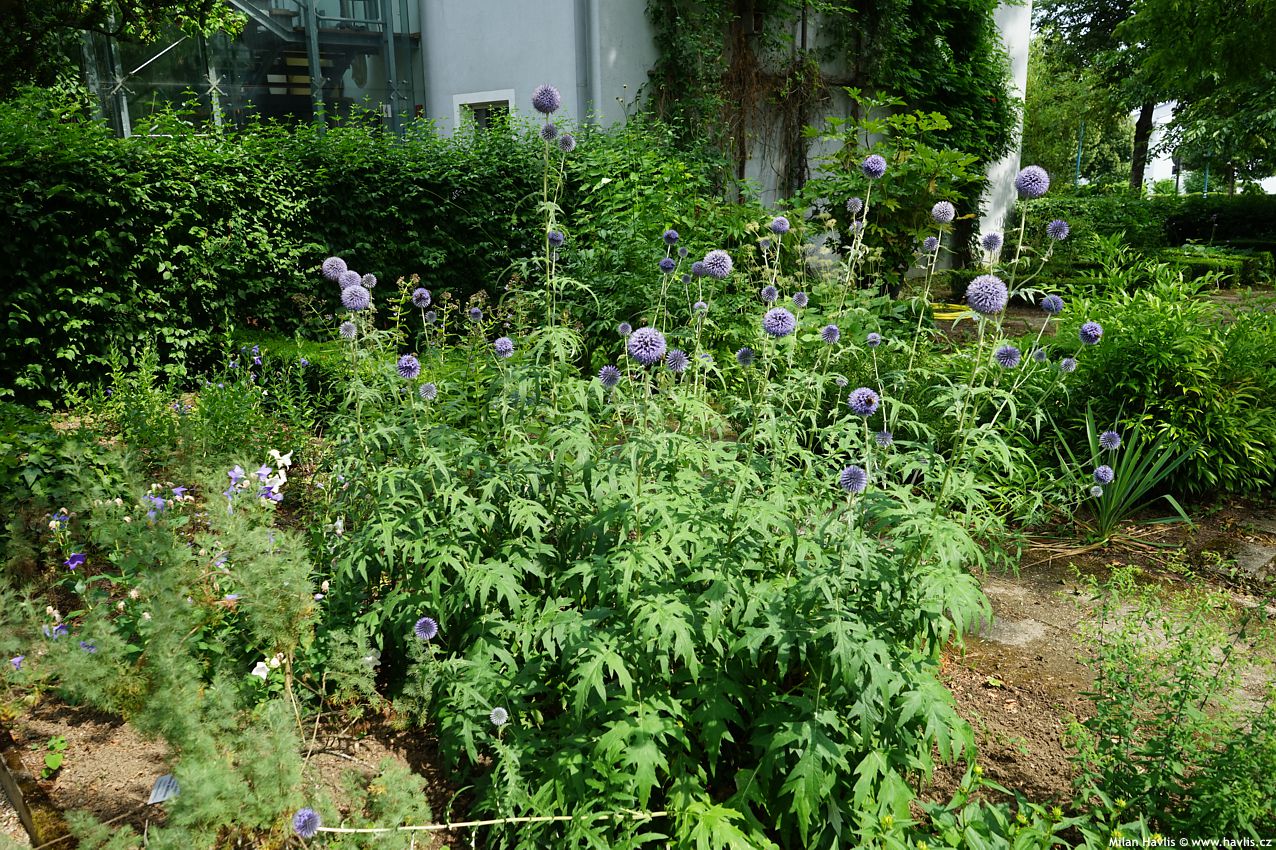
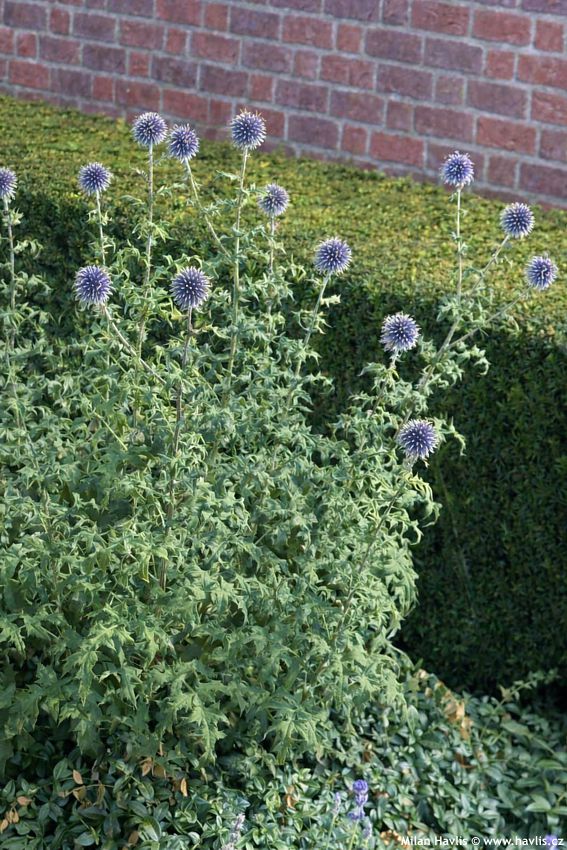
Echinops ritro blue globe thistle

Echinops
Genus Echinops comprises roughly 120 species within the daisy family and is distributed from the Mediterranean across the Caucasus and Iran to Central Asia, North Africa and the dry regions of eastern Africa. The first botanical descriptions appeared in the eighteenth century, when Carl Linnaeus included several then‑known species in his Species Plantarum (1753) and drew attention to their unusual spherical flower heads, which differ markedly from the typical inflorescence structure within the family. Later work by Christian Friedrich Lessing (1809–1862) and nineteenth‑century Russian botanists refined the delimitation of the genus based on the shape of the bracts and the hairiness of the involucral scales, leading to long‑standing debates over the boundaries between E. ritro, E. bannaticus and E. sphaerocephalus. These taxonomic uncertainties persist today, supported by the plants’ marked ecological variability and wide natural range.
Echinops ritro, the blue globe thistle, originates from a broad region stretching from the Balkans through Pannonia and the Carpathians to the Caucasus and western Siberia, where it grows on dry meadows, stony slopes and light, sun‑rich soils. The species was described by Carl Linnaeus (1707–1778) in 1753, but a true understanding of its variability came only with the work of nineteenth‑century Eastern European botanists, who noticed that the plant forms distinctly different populations depending on altitude and substrate. It became popular for its unusual flower heads, both in shape and colour, and it dried easily: it was used in bouquets and as decoration in homes, and thanks to its firm stems it kept its appearance throughout the summer without wilting leaves. Compared with other members of the genus, E. ritro is more compact, less robust than E. sphaerocephalus and has finer, more intensely blue flower heads, which later became the basis for the breeding of garden cultivars.
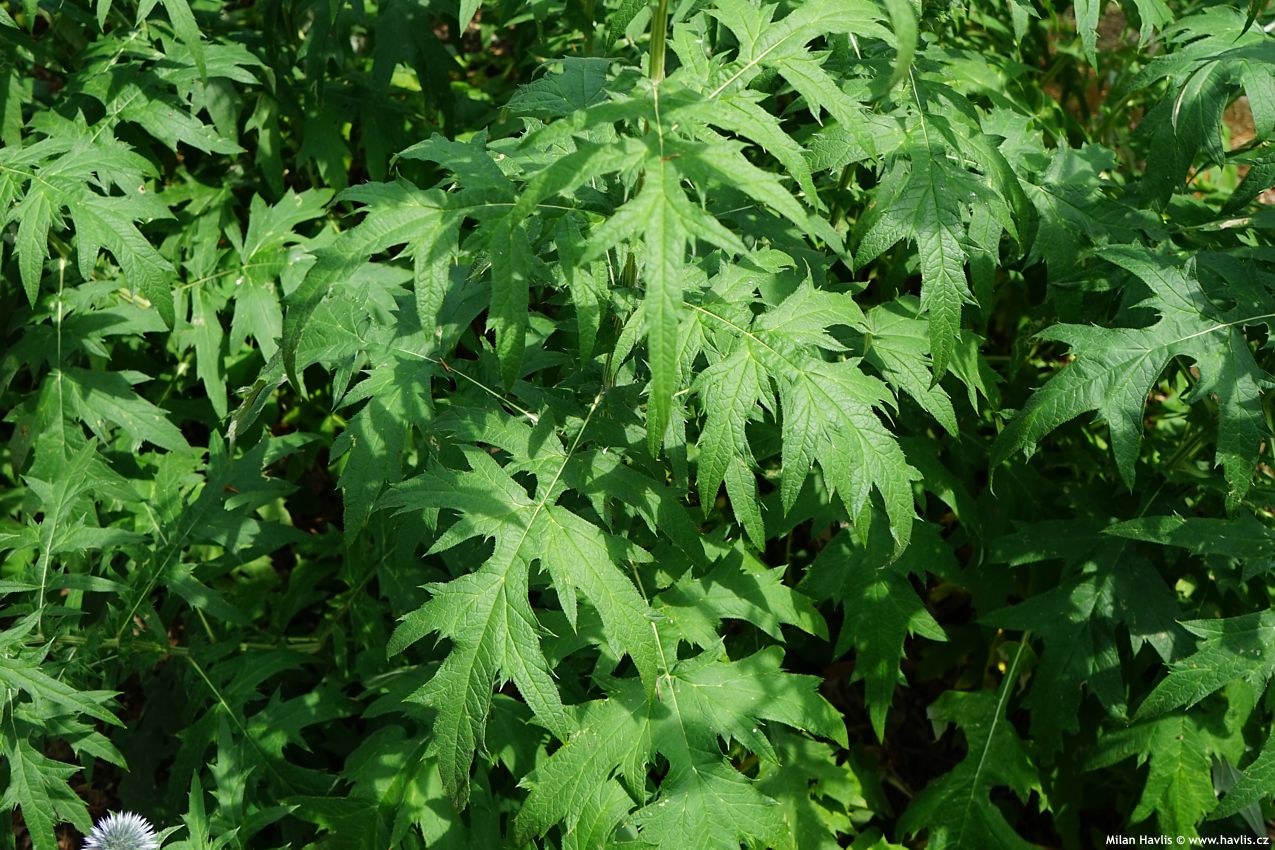
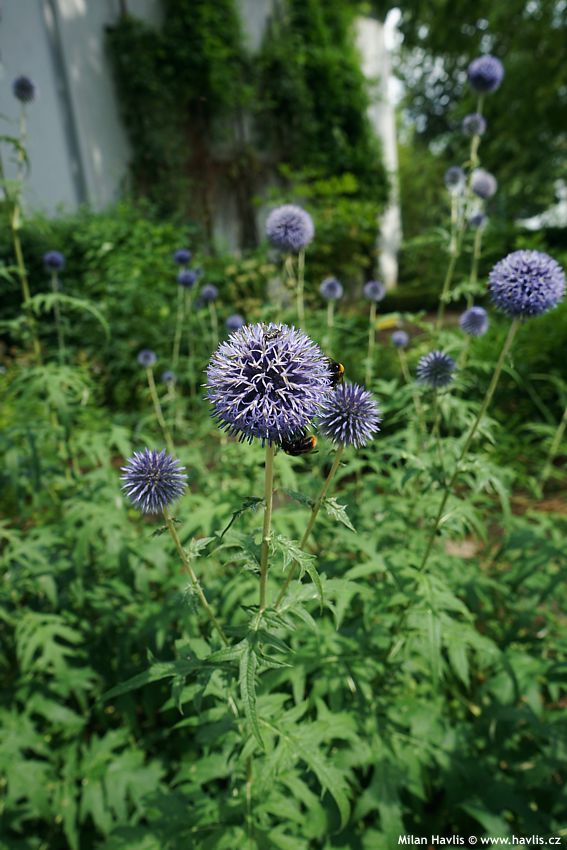
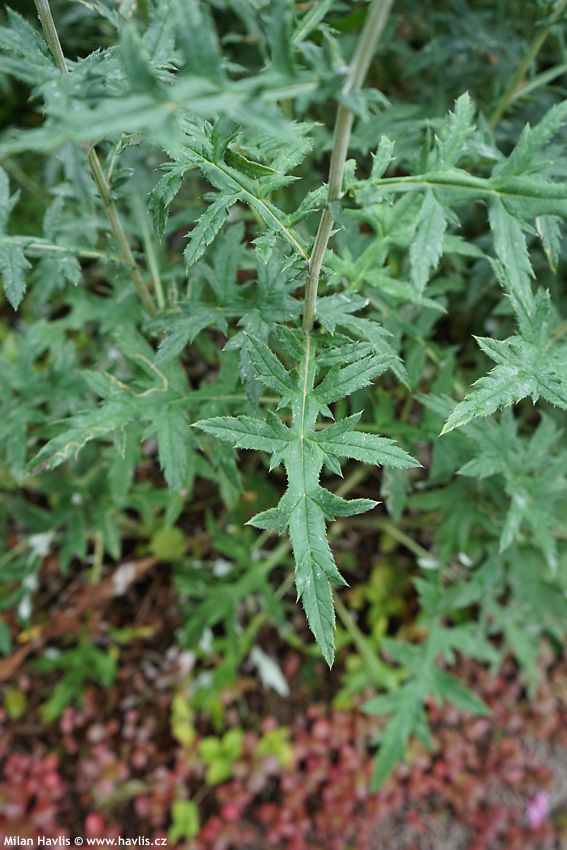
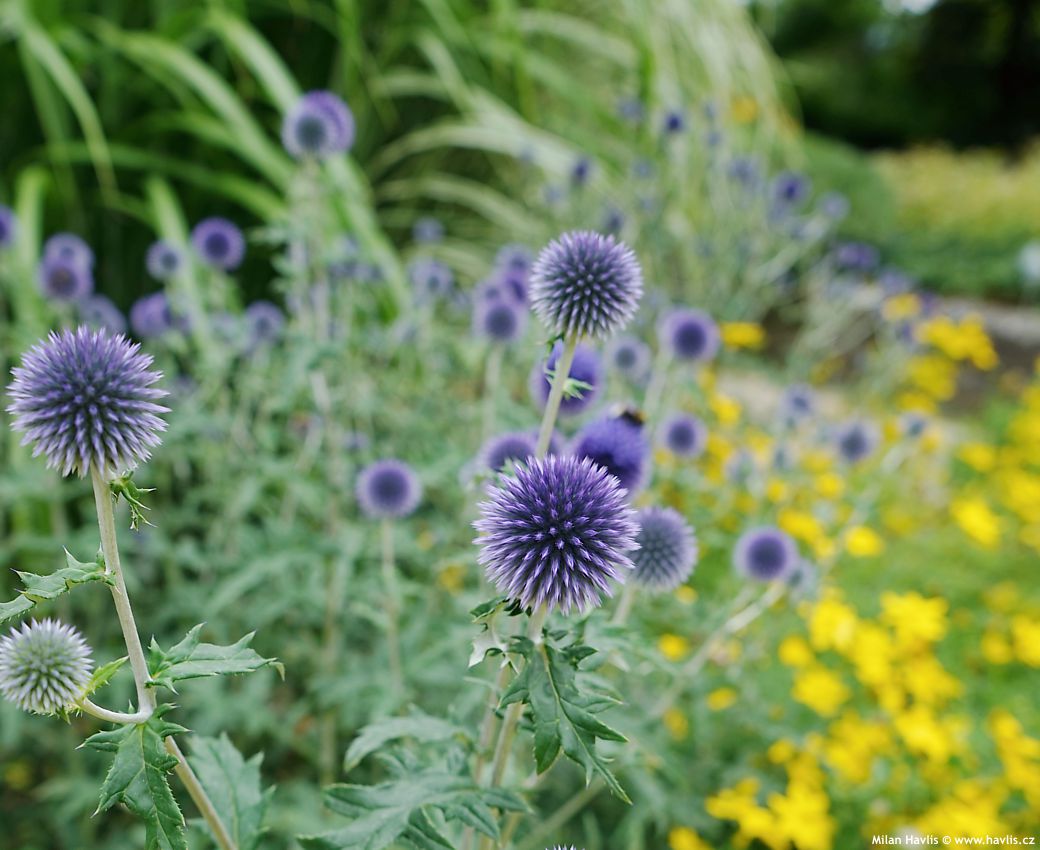
The blue globe thistle wins over anyone who delights in true blue tones and plants with an unusual, sculptural charm. Its perfectly spherical flower heads resemble tiny metallic hedgehogs floating above firm stems lined with striking foliage. The plant forms a compact, naturally symmetrical habit, usually around one metre tall, with leaves deeply cut into sharp lobes. Their upper surface is dark green, while the underside shows a pronounced silvery sheen. Each flower head is made up of dozens of tiny florets, whose blue colouring is one of the most reliable traits of the species – it is this pure, cool blue that distinguishes ritro from the more massive E. sphaerocephalus, whose heads tend to be paler and whose overall growth is more robust.
The intensely blue, spiky spheres that appear first are in fact unopened buds: come a little closer and you will see how the tubular florets open one by one, as if pushed out from each spine of our little hedgehog, unfolding into pale lavender stars with five narrow petals. From their centre protrude conspicuous, almost anthracite-grey anthers at the tips of the stamens, giving the flower head its characteristic star-like appearance. Compared with its relative E. bannaticus, ritro is lower, more compact, and less prone to splaying. The name ritro comes from a Latinised term used in medieval herbals for plants with spherical flower heads, reflecting a long history during which the species earned a reputation as a resilient, undemanding companion of dry steppes and human settlements.
Although native to steppe habitats, the blue globe thistle thrives surprisingly well in an ordinary garden border, provided the soil is not permanently wet or heavy. It loves sun and lighter soils, yet grows reliably even in standard garden loam if given a little space. It combines beautifully with yellow coreopsis, silver‑leaved helichrysum or santolina, with rudbeckias, gypsophila, and makes an excellent underplanting with thymes or low sedums. Let its structure stand out – the plant is at its best when the leaves and the whole shape are visible, not only the blue spheres at the top. In crowded English‑style borders it often disappears among other perennials, where each stem competes for light and one perceives mainly a mixture of flower heads rather than the whole plant. In simpler, airier plantings it shows its beauty fully: firm stems, clear blue colour, attractive foliage and that particular dry‑loving elegance which feels natural and unforced.
Last revised 05‑07‑2026
Globe thistles are perennials that forgive almost anything, provided they receive sun and soil that dries quickly after rain. They grow best in light, gravelly or sandy soils, but cope reliably with ordinary garden soil as long as it is not heavy or permanently wet. They survive in partial shade, though the flower heads are smaller and the stems longer. They need watering mainly during planting in the first year; afterwards they rely on natural rainfall. Feeding is unnecessary – overly rich soil leads to lush growth and less striking flower heads. Cutting is limited to removing spent spheres if you wish to prevent self‑seeding; the seeds are viable and will settle in dry crevices, from which they can be easily removed in spring because the seedlings are easy to recognise. Globe thistles are not expansive or troublesome; they behave politely and never overrun a border in the way that valerian (Centranthus) can. Otherwise you may leave the plants standing over winter, as the dry heads look beautiful even in frost. They are difficult to grow in containers because they need deeper root space and a fast‑drying substrate that is hard to maintain in a pot. Wind does not bother them – they perform best in open sites. The plants are not poisonous, but their flowers attract large numbers of bees and bumblebees, which is worth considering when planting near paths or children’s areas. Hardiness is high: globe thistles tolerate winter temperatures down to –34 °C and, according to American sources, even –37 °C.

Goods are shipped all over Europe. For Russia and U.K. and for further details please read about SHIPPING OPTIONS HERE.
Are you interested in a serious discount for orders NOV-FEB? Check your options here.
THE PRICES INCLUDE VAT of 15%. For quick conversion you can use 1 CZK = approx. 0.04 EUR
- STANDARD QUALITY - Plants of this group are 1st class quality with number of branches and overall density adequate to their size and age, considering they were container grown.
- DE LUXE QUALITY - This label guarantees a luxurious quality of manually selected plants that, compared to their height and age, are exceptionally dense and beautiful.
- EXTRA - These plants are usually mature and bigger specimens with exceptional overall appearance.
- STANDARD (as described in the plant form) means a tree with a trunk of 190-210 cm and a crown at the top, unless specified differently. The commercial size for trees is their girth measured in the height of 1m from ground.
- HOBBY - These plants are of the same quality as our standard-quality plants but younger and therefore cheaper.
- SHRUB - a woody plant with branches growing bushy from the ground level.
- HALF-STANDARD or MINI-STANDARD - a small tree with shorter trunk, its size is usually specified.
- FEATHERED - These are trees with branches growing already from the base of the trunk and up along the stem.
- GRASSES and PERENNIALS - Sizes given usually read the diameter of the pot or the clump, as specified.
