










Eryngium × zabelii 'BIG BLUE' Zabel's sea holly

 Symbivit Tric (arbuscular)
 Symbivit (arbuscular)
Eryngium
The genus Eryngium, sea holly, comprises roughly 230 species distributed from the steppes of Europe and the Mediterranean to the pampas of South America and the dry regions of Asia, making it one of the most diverse genera within the Apiaceae family. Although at first glance it resembles thistles, it is a true member of the umbellifers, a point botanists have emphasised since the 18th century. The genus was described by Carl Linnaeus in 1753 in Species Plantarum, yet its name appears much earlier in the writings of ancient authors, who mentioned sea holly as a medicinal plant with stimulating effects. Interestingly, several species of the genus are known from fossil finds in Europe, indicating a long evolutionary history in dry, sunny habitats. Within botany, minor disputes arise over the precise delimitation of certain South American species, as their morphology overlaps with the genera Azorella and Bolax, but modern molecular studies largely support Linnaeus’s original concept.
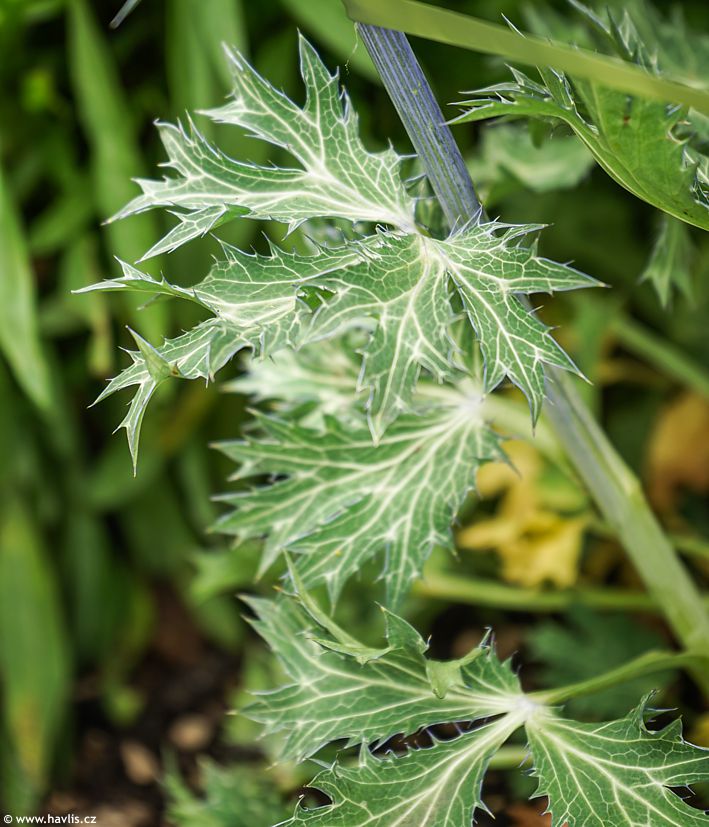
Eryngium × zabelii is a natural interspecific hybrid that arose from a cross between the alpine species E. alpinum and the Pyrenean E. bourgatii. It was first described by the German botanist and dendrologist Victor Zabel (1834–1910), who noticed that the plant combines the intense blue colouring and delicate veining of the bracts inherited from its Pyrenean parent with the strength and upright habit of the alpine species. The hybrid spread quickly through European gardens because it offered exactly what pure species rarely provide – reliable growth in ordinary garden soils, drought tolerance, and an aesthetic that feels modern even in naturalistic plantings. It also proved less demanding in terms of site conditions, which is why Zabel’s hybrid became a favourite for dry borders in temperate gardens, for urban plantings, and for modern xeriscape‑inspired perennial compositions, where its metallic blue tones and striking bracts feel more that appropriate. It is an example of a plant that arose by chance and entirely on its own in nature, yet thanks to the attentiveness of one observant botanist found a firm place in the horticultural world.
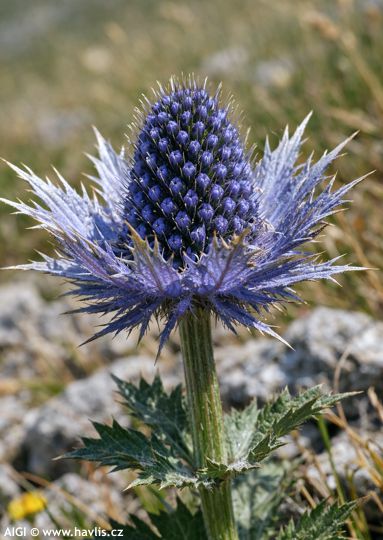
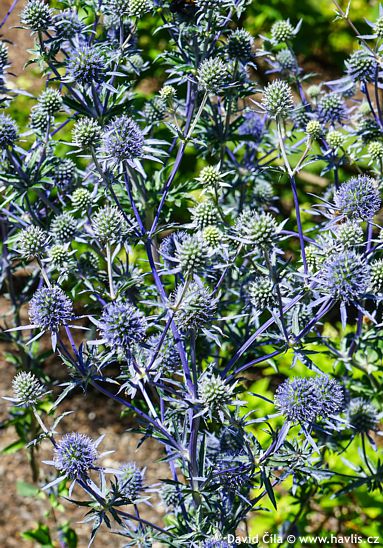
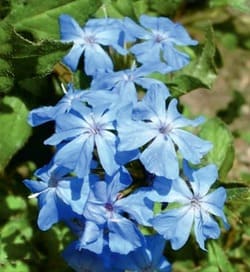
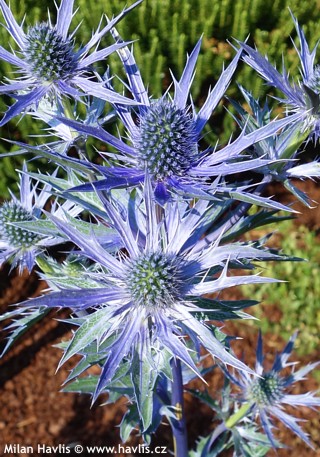
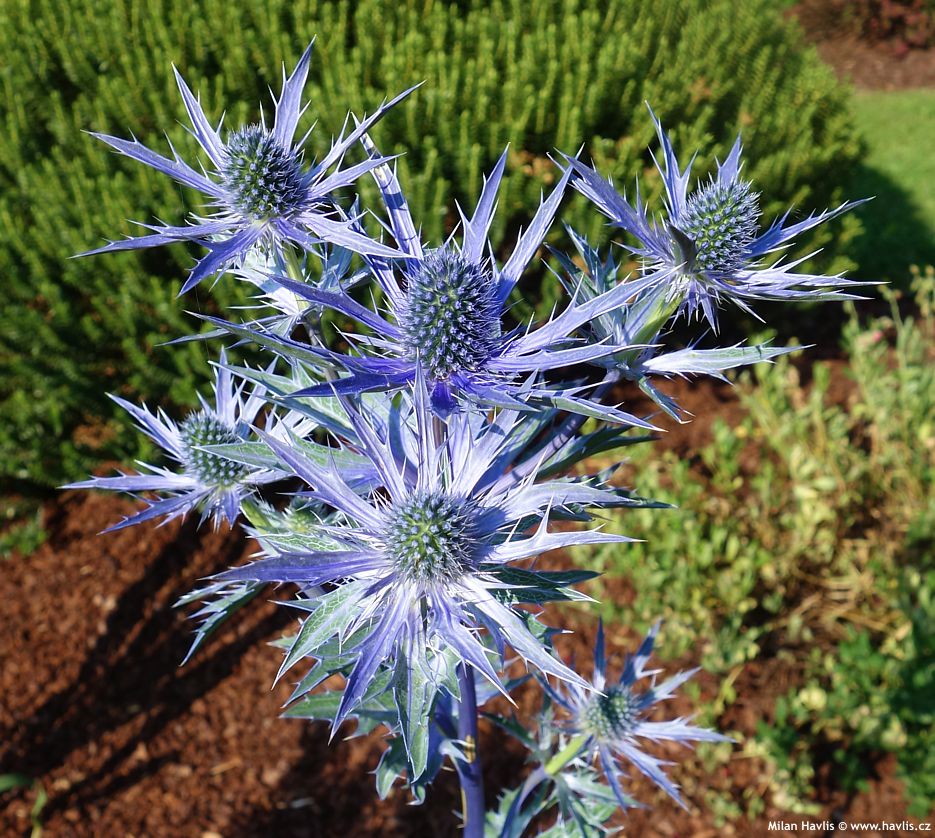
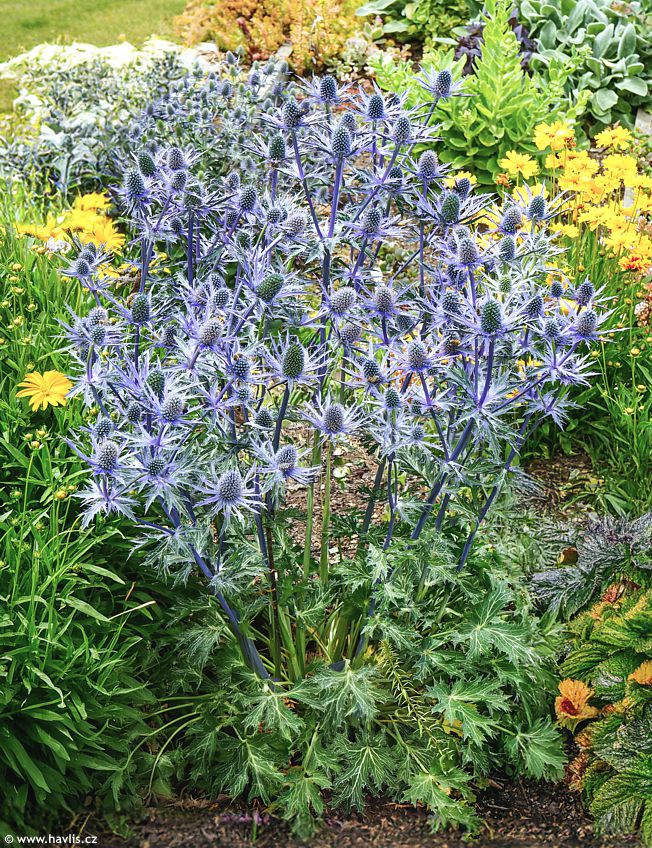
Some plants, when you search for their photos online, tend to be colour‑enhanced to the point of absurdity. Big Blue sea holly, however, needs nothing of the sort. This hybrid carries the most intense steel‑blue colour a human eye has ever seen – well, I mean eyes – I am not a Cyclops. It is a medium‑sized perennial forming firm, richly branched stems about 40 to 60 cm tall, with plenty of flowers from June to July. The flower heads are prickly cones surrounded by narrow, serrated bracts that spread out like a finely cut serving tray. The inflorescences stay attractive for up to three weeks, and thanks to the sturdy stems Big Blue is often used as a cut flower or for drying, as it barely loses colour even as it desiccates. Compared with the original hybrid, Big Blue is more compact, notably bluer and altogether more robust, making it one of the most striking modern sea hollies. The cultivar was found as a chance seedling by Jeff Hodson in 1997 at his nursery in Preston, England, and is patented under PP20636 from 2010.
Zabel’s hybrid sea hollies can give a garden structure and colour without any effort. They perform best in dry perennial plantings, where their metallic blue flower heads contrast beautifully with the warm tones of summer plants, such as yellow and ochre rudbeckias, light brown ornamental grasses or low gypsophilas. I planted mine in the centre of a bed with a mix of low sedums in various foliage colours, alternating with several warm‑toned coreopsis, and the rhythm it creates through summer is fantastic. Thanks to firm stems, they also thrive in windy positions where other perennials flop, and in urban plantings where they tolerate heat, dust and prolonged drought. Their long‑lasting flower heads make them an excellent cut flower as they keep their shape and colour in the vase, and if you wish to dry them, cut the stems at peak colour and hang them upside down in a warm, dark room.
Last revision 24‑06‑2018; 05‑07‑2026
Sea hollies are perennials that require full sun and very well‑drained, poor to stony soil; in rich or heavy soils they quickly lose their compact shape and may rot. They dislike moisture, so drainage and restrained watering are essential — water only during prolonged drought, otherwise natural rainfall is sufficient. Fertilising is unnecessary; higher nitrogen levels lead to soft growth and flopping. Sea hollies are not cut back during the season, only the spent flower heads may be removed if you do not want them to self‑seed; otherwise it is best to leave the inflorescences over winter, as they hold their shape and add structure to the bed. Only taller species and cultivars may look tired after flowering, so it is useful to cut them back close to the ground to encourage fresh foliage that will remain attractive until winter. They are difficult to grow in containers because they need a deep root system and suffer quickly from overwatering. They are tolerant of wind and heat, but young plants can be sensitive to winter wet, so choose a site that does not stay waterlogged. Sea hollies are not edible and may cause mild skin irritation when handled. Their cold tolerance in most species ranges from –25 °C to –30 °C (USDA zone 5), making them reliable perennials for temperate climates.

.jpg)