











Viburnum opulus guelder rose, Eurobean cranberrybush

 Symbivit Tric (arbuscular)
 Symbivit (arbuscular)
Viburnum
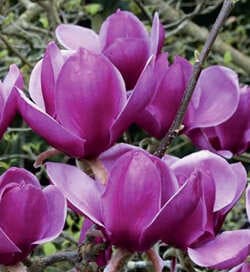
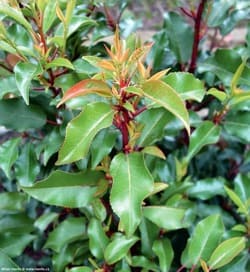
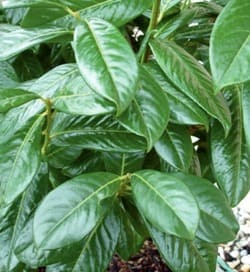
The genus Viburnum includes around 150 species distributed across the temperate regions of the Northern Hemisphere, from eastern Asia through the Caucasus and Europe to North and South America. Botanically, it is an exceptionally diverse group: it comprises both deciduous and evergreen shrubs, species with strongly fragrant flowers as well as those with only a faint scent or none at all, and others grown primarily for their (inedible) fruit. This diversity is reflected in common horticultural practice and several informal groups – the fragrant winter viburnums (V. farreri and V. × bodnantense), the fruiting viburnums (V. opulus, V. trilobum), the evergreen Asian viburnums (V. davidii, V. tinus, V. cinnamomifolium), the large-leaved ornamental viburnums (V. plicatum, V. japonicum), and many more, including hybrids that combine traits from several groups. The genus has been known since antiquity, and its Latin name Viburnum appears in the works of Roman authors around the turn of the era, such as Virgil and Pliny the Elder.
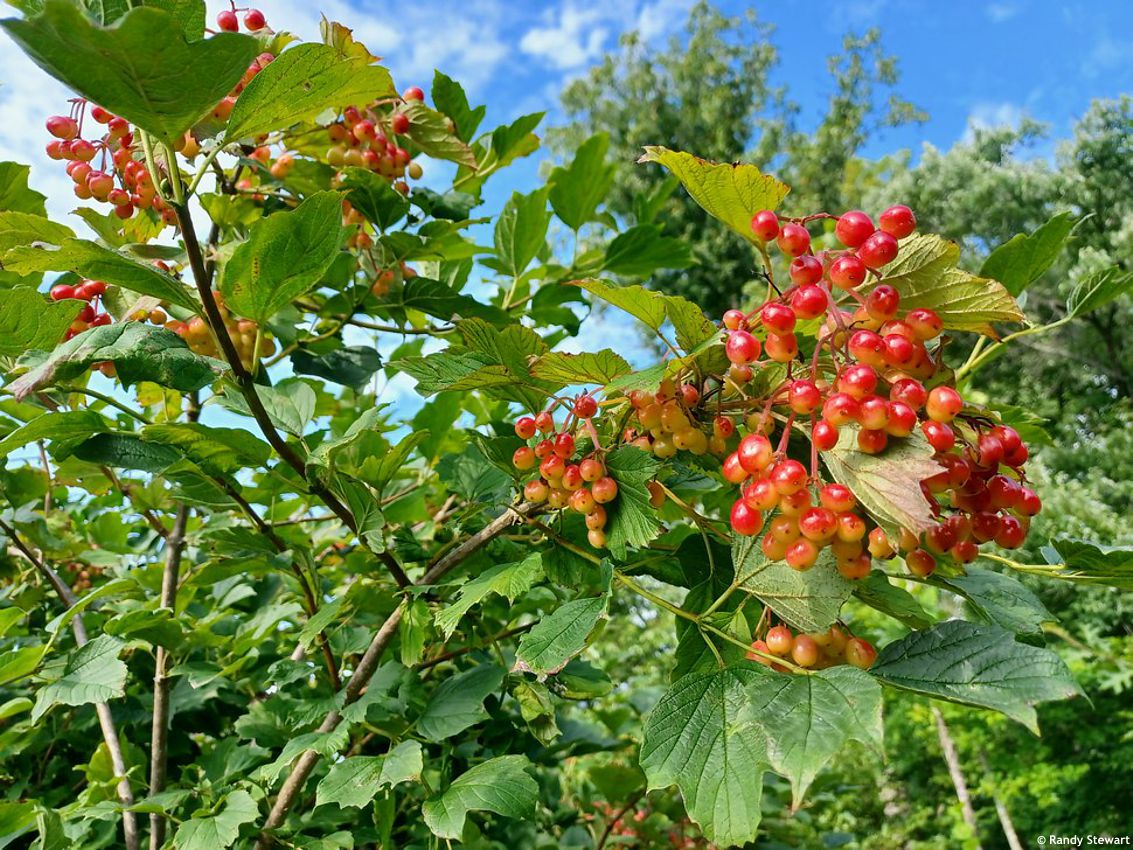
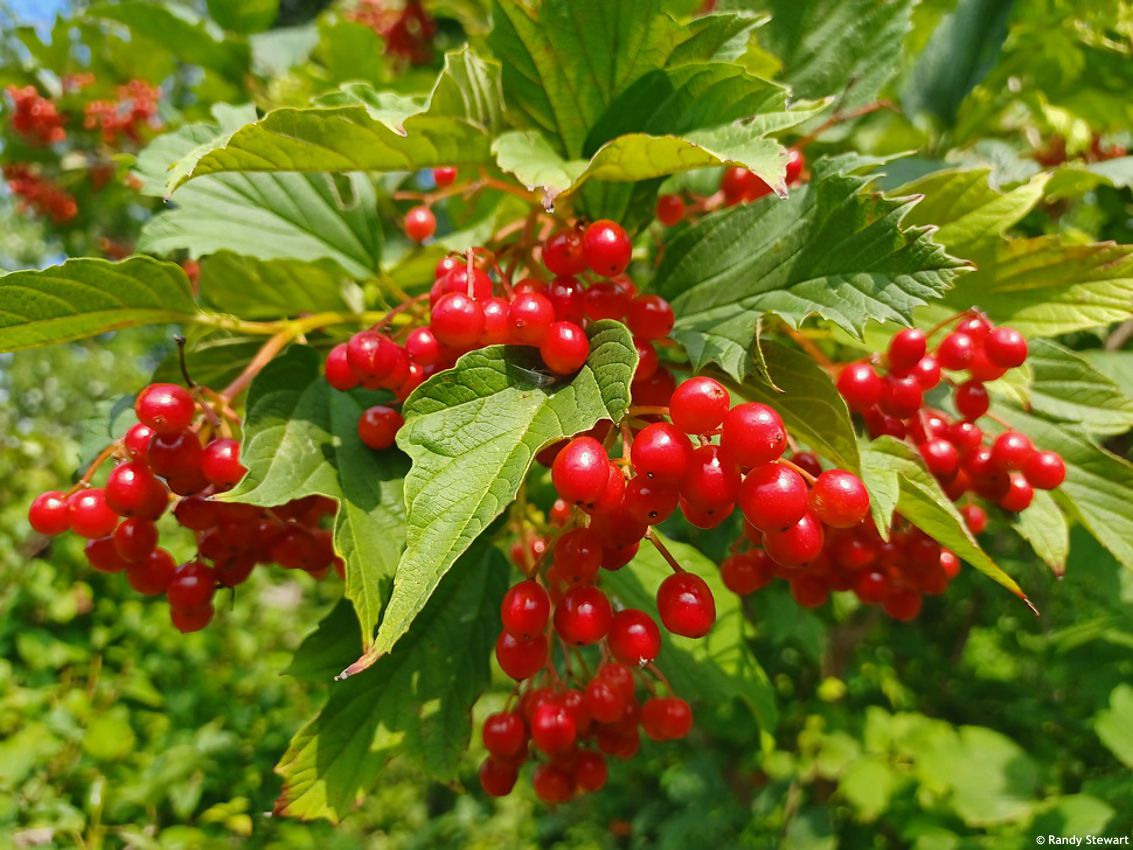
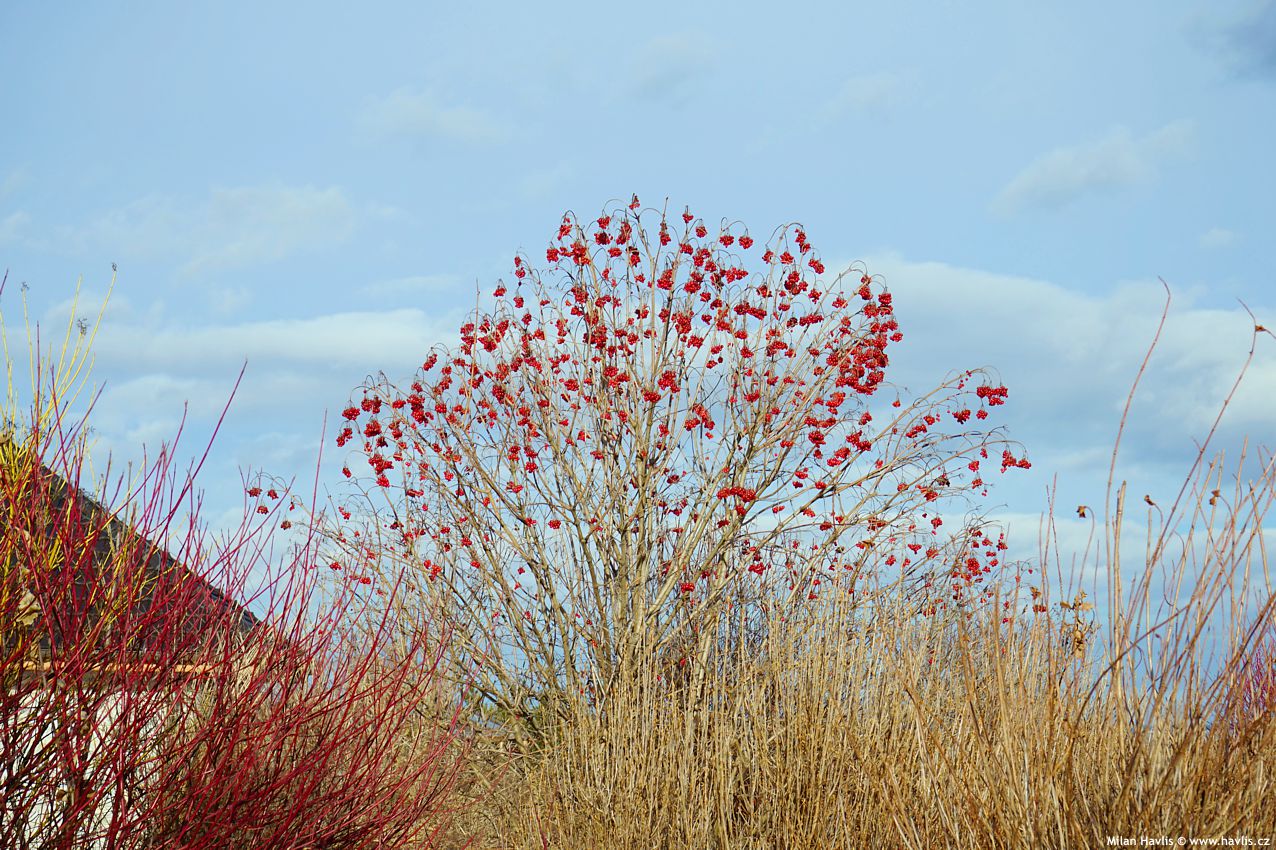
Guelder rose, Viburnum opulus, is arguably THE species by which many people picture a viburnum. It occurs naturally from the British Isles and France across central and northern Europe, through Ukraine and the Balkans, and onwards to the Caucasus, Kazakhstan and western Siberia. This is the species that inspired many traditional names and customs associated with viburnums throughout the Slavic world. Unlike numerous Asian species, it is valued not for exotic foliage or evergreen leaves but for the dramatic changes it undergoes throughout the year. In late spring and early summer, it flowers abundantly, providing nectar for a wide range of pollinators, while in autumn it becomes laden with translucent red fruits that often remain on the branches deep into winter. This ability to provide food for birds during the lean months helps explain why the species has persisted for centuries not only in natural habitats but also around villages, along roadsides, on field margins and in rural gardens. In traditional herbal medicine, both the bark and the fruits were used, although their distinctly bitter flavour, caused by the compound viburnin, remains a challenge for most people even when fully ripe.
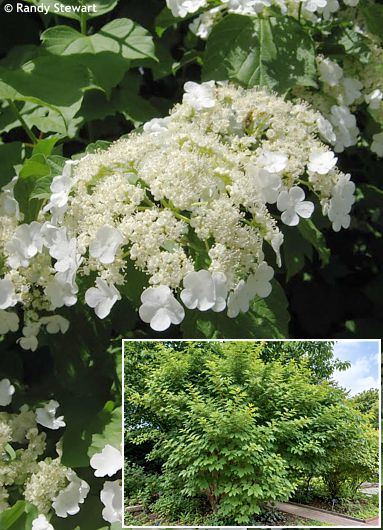
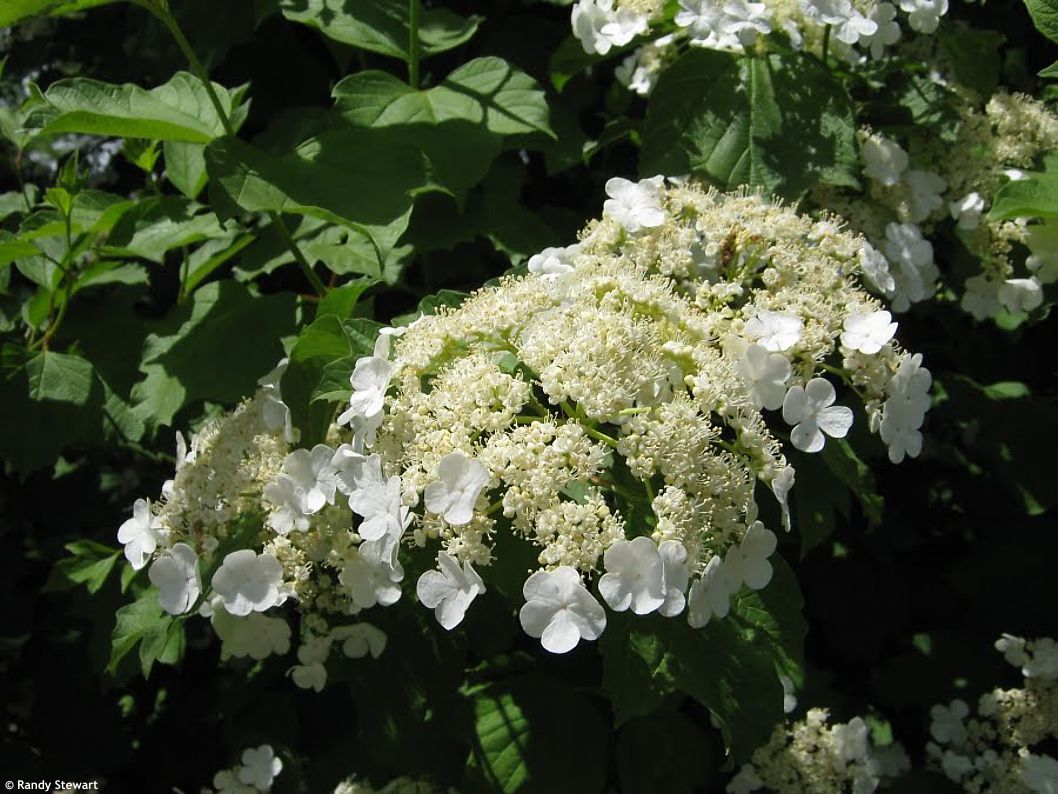
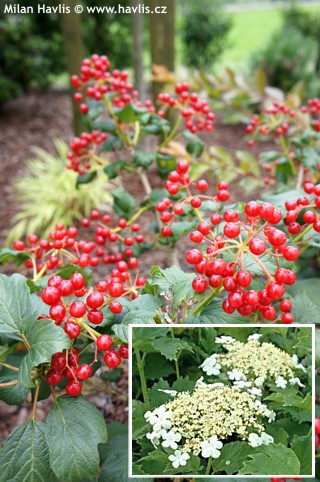
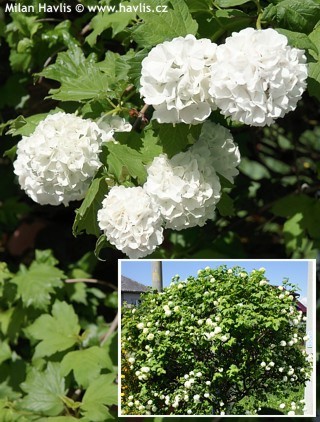
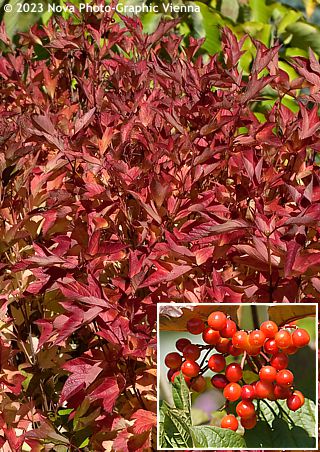
The species of guelder rose is a favourite shrub for naturalistic and cottage-style gardens. In spring and early summer it produces flat, umbel-like flower heads, almost lace-like in their structure, composed of tiny fertile flowers in the centre surrounded by larger sterile flowers around the edge. For pollinating insects these serve primarily as visual beacons – the horticultural equivalent of garden billboard promising a rich source of nectar – while for gardeners they are one of the chief reasons to plant the shrub in the first place. By late summer the flowers are followed by glossy, translucent red fruits carried in dense clusters that remain attractive for a remarkably long time, often even after the leaves have fallen.
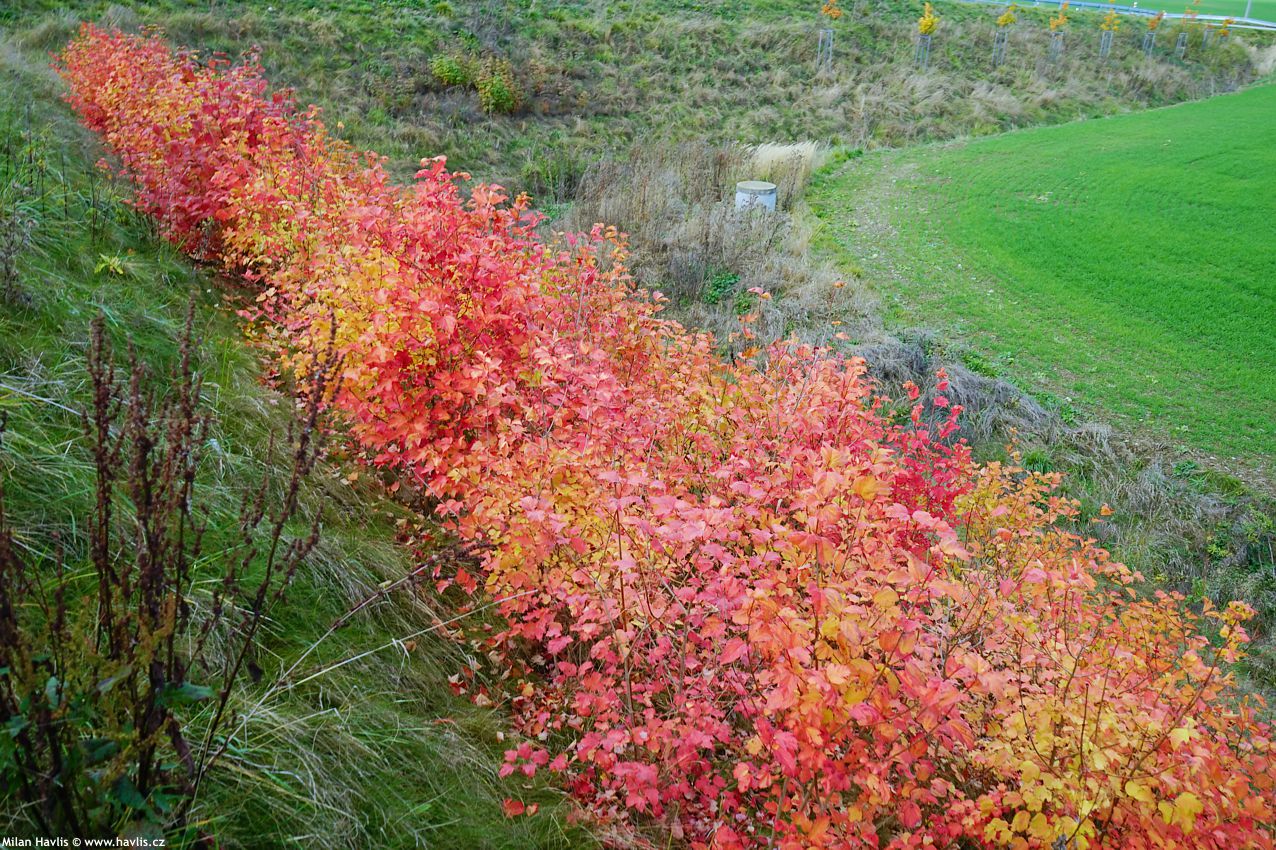
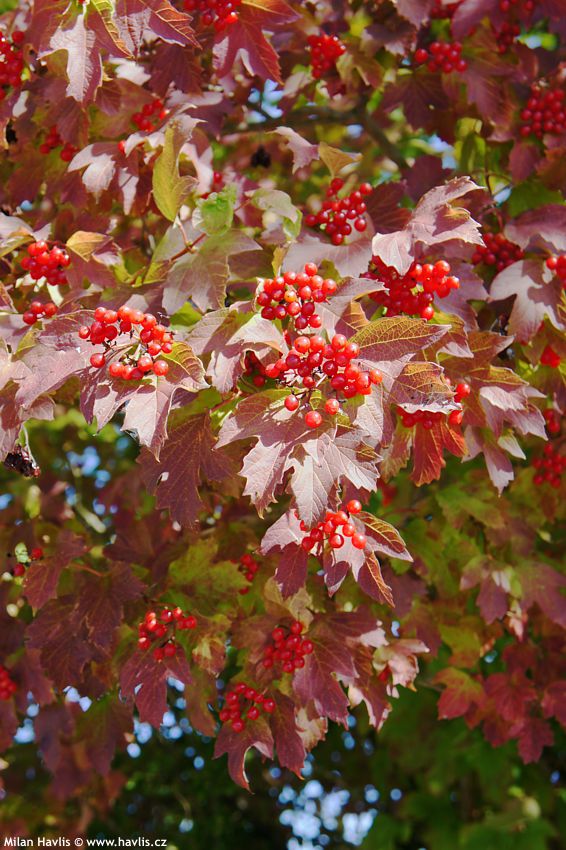
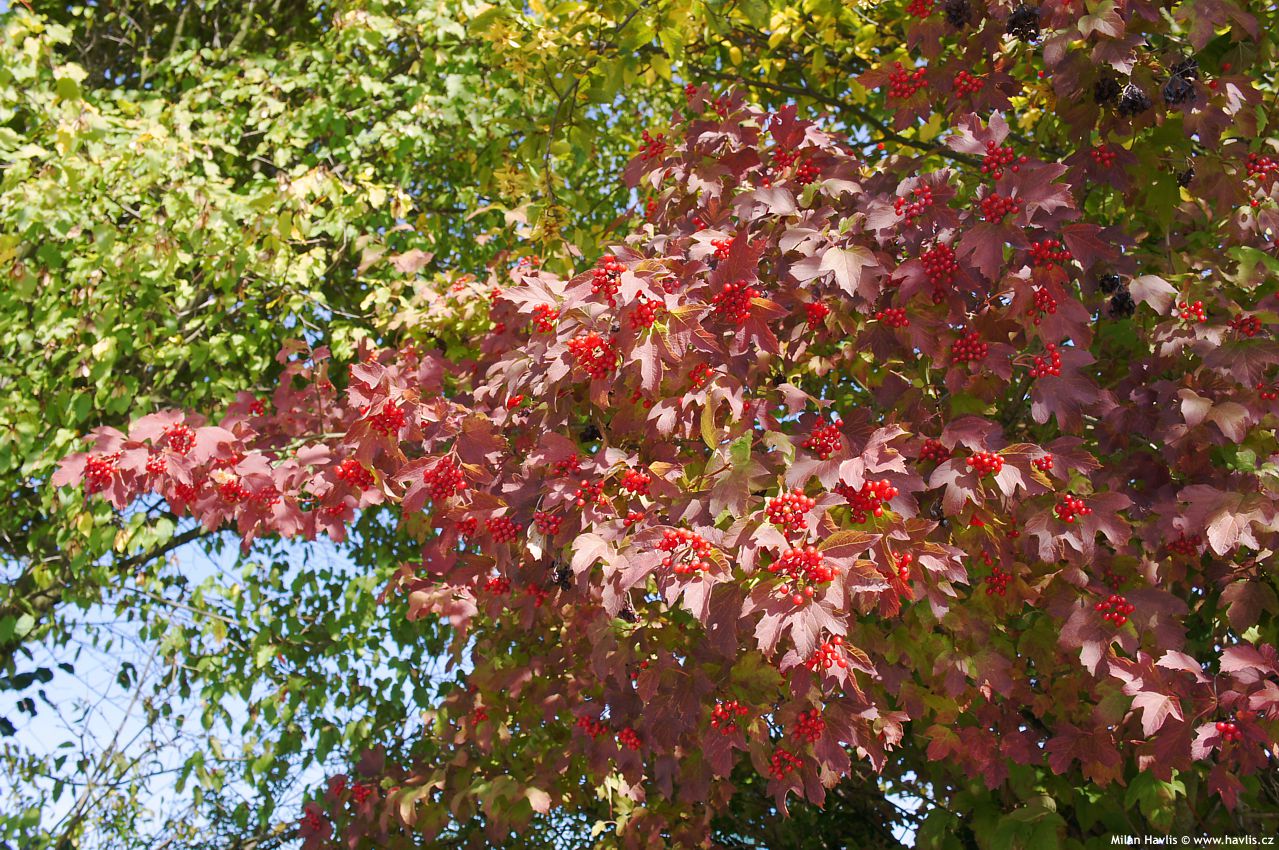
The leaves are deciduous and among the easiest to recognise within the genus, being shallowly three-lobed and somewhat reminiscent of miniature maple leaves. Although references often state that autumn colour can range from yellow through orange to red, the most characteristic and frequently encountered shade is a rich burgundy red. In fact, this is often one of the most reliable ways to identify guelder rose in the landscape. When you see a thicket, roadside embankment or park planting filled with shrubs that all look similarly green in summer, yet a few suddenly blaze red in autumn, there is a good chance you have found Viburnum opulus.
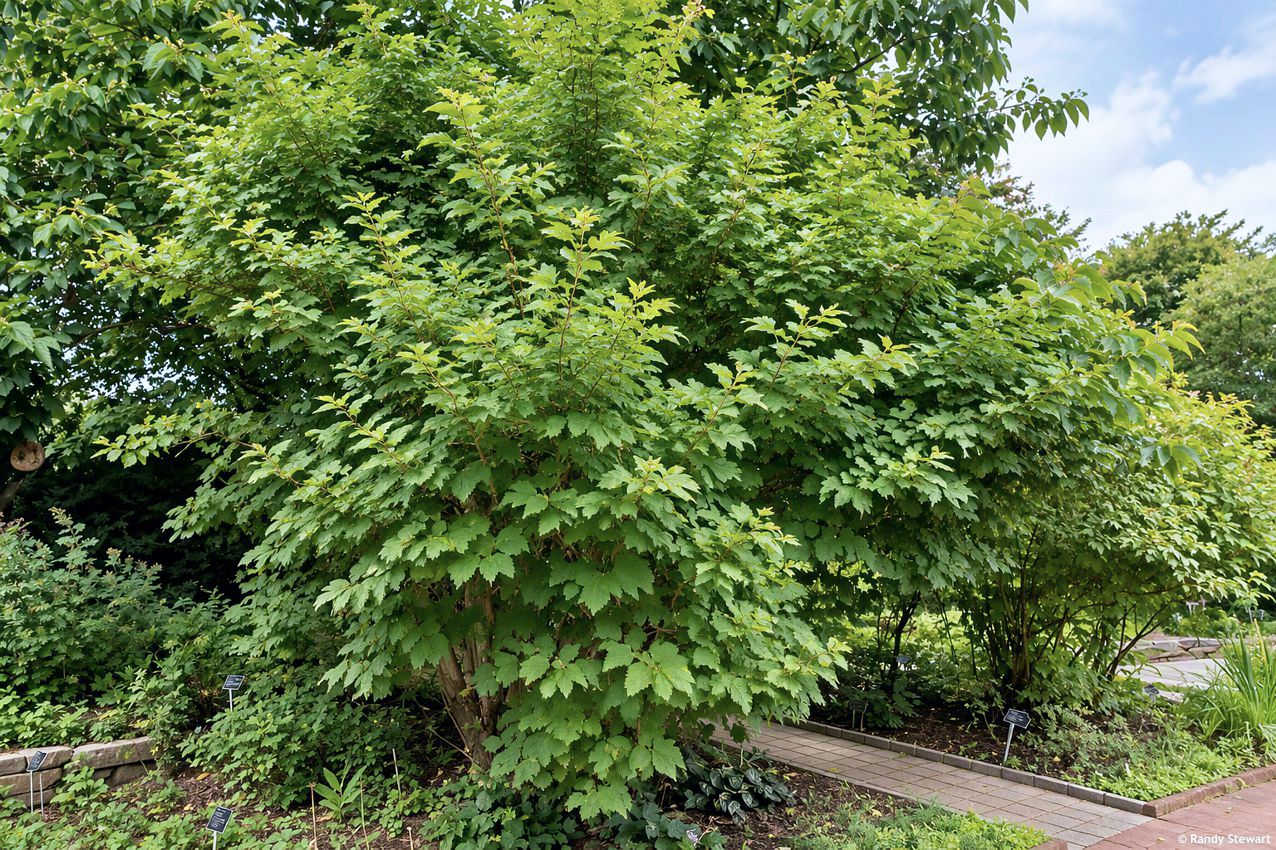
It forms a dense, broadly spreading shrub, typically reaching 3 to 5 metres in height and a similar width. Guelder rose has a remarkably close North American relative, the American cranberrybush, Viburnum trilobum. The two are so similar that botanists debated for generations whether they should be treated as distinct species or merely as geographical forms of the same plant. Opinions still differ to some extent today, although most modern authorities recognise American cranberrybush as a separate North American species. Their close relationship is evident not only in the overall appearance of the shrubs, but also in their three-lobed leaves, white flower heads and striking red fruits.
Last revised: 20 November 2026
Guelder rose is an exceptionally adaptable, undemanding and genuinely low- or even no-maintenance shrub. It performs best in full sun or light partial shade, although it tolerates considerably deeper shade, where it flowers and fruits less freely. While highly tolerant of different soil types, it is mostly found in the wild on moist sites. If you want it to look its very best, provide a deep, humus-rich soil that does not dry out completely during summer. Even so, it remains perfectly happy under far less favourable conditions. It copes well with heavier clay soils and occasional waterlogging, and surprisingly also withstands periods of summer drought. It requires no fertiliser. Pruning is unnecessary, as the plant naturally develops an attractive, well-balanced framework. Should reduction, thinning or rejuvenation become necessary, the best time is shortly after flowering. Hard annual pruning is generally counterproductive, as it reduces both flowering and fruiting while spoiling the shrub’s natural habit. It is not particularly suited to long-term container cultivation because it eventually develops both a substantial shrub and an extensive root system. It tolerates wind, urban conditions, winter road salt and severe frost with ease. The fruits are edible only after processing or exposure to frost; when eaten raw in larger quantities they may cause digestive discomfort, although they are not generally classified as poisonous. The species is fully hardy to approximately −40 °C (USDA Zone 3).

Goods are shipped all over Europe. For Russia and U.K. and for further details please read about SHIPPING OPTIONS HERE.
Are you interested in a serious discount for orders NOV-FEB? Check your options here.
THE PRICES INCLUDE VAT of 15%. For quick conversion you can use 1 CZK = approx. 0.04 EUR
- STANDARD QUALITY - Plants of this group are 1st class quality with number of branches and overall density adequate to their size and age, considering they were container grown.
- DE LUXE QUALITY - This label guarantees a luxurious quality of manually selected plants that, compared to their height and age, are exceptionally dense and beautiful.
- EXTRA - These plants are usually mature and bigger specimens with exceptional overall appearance.
- STANDARD (as described in the plant form) means a tree with a trunk of 190-210 cm and a crown at the top, unless specified differently. The commercial size for trees is their girth measured in the height of 1m from ground.
- HOBBY - These plants are of the same quality as our standard-quality plants but younger and therefore cheaper.
- SHRUB - a woody plant with branches growing bushy from the ground level.
- HALF-STANDARD or MINI-STANDARD - a small tree with shorter trunk, its size is usually specified.
- FEATHERED - These are trees with branches growing already from the base of the trunk and up along the stem.
- GRASSES and PERENNIALS - Sizes given usually read the diameter of the pot or the clump, as specified.
