

































CURRENTLY IN STOCK:
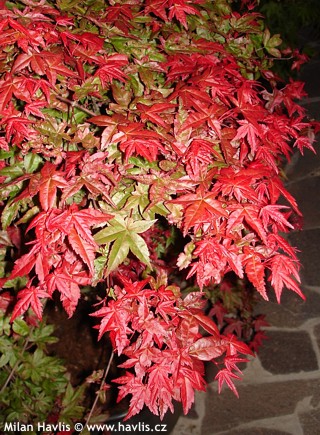
Beni Maiko is a fantastic variety of Japanese maple with brilliant red new foliage. Its Japanese name means a red-haired dancing girl. The deciduous leaves are not large, only about 5 cm across, but their emerging colour in the spring is striking and is even more enhanced when new lea ...

1 - 2,5m

1 - 2m

full to partial sun

5b (down to -27°C)

for zone 5+6
for zone 7
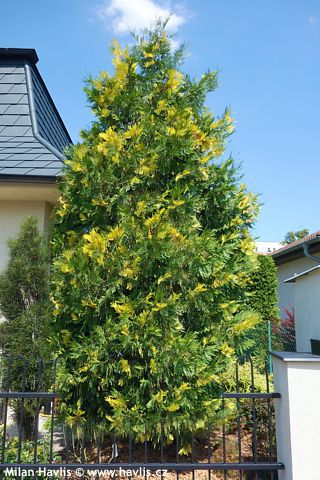
Although this incense cedar is one of the most sought after conifers of the south, it seems to perform much better in Czech climate thanks to cold and wet winters. It needs a lot of sun in summer though to keep its varigated leaves golden. Though, if the sun is not as hot as in the Mediterranean, fo ...
5 - 10m
full to partial sun
5 (down to -29°C)
for zone 5+6
for zone 7
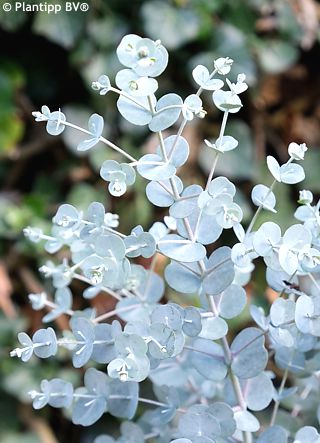
In 2006, a miracle occurred that at first looked rather ominous – in a French nursery, all seedlings of this botanical species froze except for a single plant, even though everyone was convinced of its suitability for the French climate. One eucalyptus, one pot, survived an unusually severe winter t ...
5 - 10m
2 - 4m
full to partial sun
6 (down to -23°C)

for zone 5+6
for zone 7
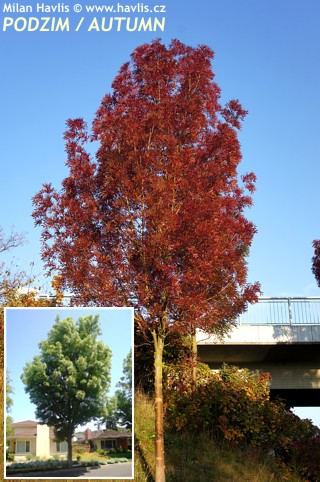
Raywood is a very elegant variety of a deciduous tree called Claret ash. Its leaves are pinnate, up to 25 cm long and are composed of narrow, elliptic and very glossy individual leaflets that are deep green in summer and turn breathtaking shades of brilliant carmine red and deep burgundy red in the ...
10 - 15m
2 - 5m

full sun
5 (down to -29°C)
for zone 5+6
for zone 7
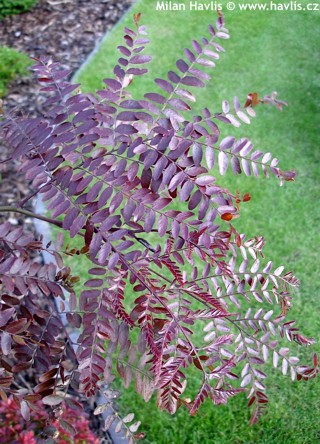
Some of you, gleditsia lovers, may have read about this quite rare and unique version of honey locust. Its charm consists in the unusual colour of leaves. They are bright purple as they emerge, turning chocolate brown later and light bronze in summer. They are pinnate or bi-pinnate and look like fer ...
3 - 8m
2 - 5m
full sun
5 (down to -29°C)
for zone 5+6
for zone 7
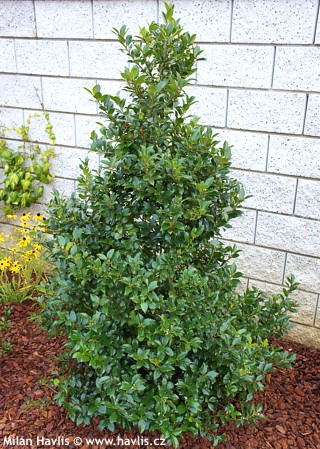
Heckenstar® is quite a novelty from Germany, bred by Hans Hachmann and patented only in 1998. It is a cross ilex aquifolium „Pyramidalis“ and ilex x meserveae „Blue Prince“® . The result is a strictly upright growing, very hardy, evergreen shrub. Outside Europe it ...
2 - 3m
0,5 - 1,5m
full to partial sun
5 (down to -29°C)
for zone 5+6
for zone 7
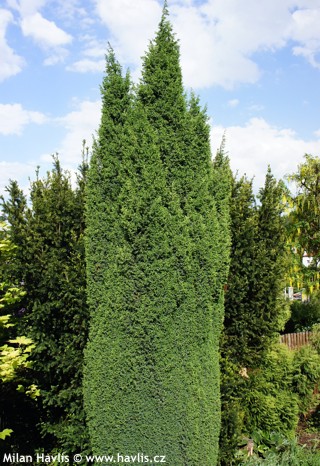
Hibernica juniper belongs among the oldest cultivated columnar forms of common juniper, and its origin is traditionally associated with Ireland (Hibernia), from which its name is derived. It is not the result of deliberate breeding, but rather a selection of a naturally upright form from the wild, i ...
3 - 5m
1 - 2m
full sun
3 (down to -40°C)
for zone 5+6
for zone 7
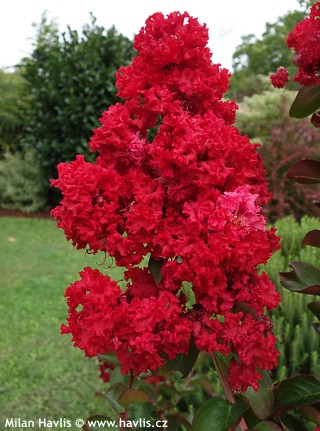
DYNAMITE® is among the reddest crape myrtle cultivars currently available and also one of the hardiest, able to withstand winters of zone 6 (down to about –23 °C). Its name was chosen aptly and with humour, reflecting the explosive red of its flowers. It belongs to the Play It Again® series, which i ...

VIII - IX
1,5 - 3m
1 - 1,5m
full sun
6 (down to -23°C)
for zone 5+6
for zone 7
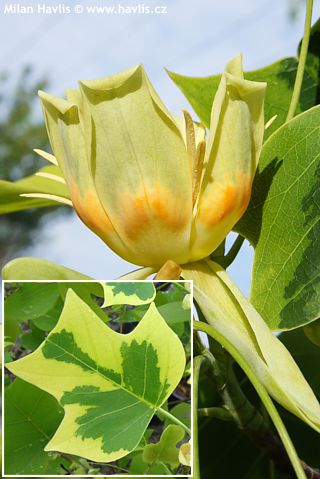
Aureomarginatum is a tulip tree variety that truly shines in spring. Its uniquely saddle-shaped, deciduous leaves emerge bright green, edged with a striking, irregular daffodil-yellow margin. It’s a spectacular sight – and one to savour – because this burst of spring colour is fleeting. As summer ar ...
VI - VII
15 - 20m
6 - 10m
full sun
5 (down to -29°C)
for zone 5+6
for zone 7
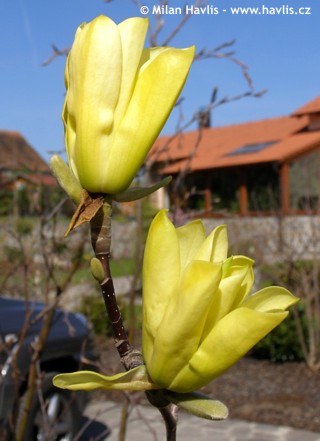
Another unique jewel among magnolias is this yellow flowering hybrid called Butterflies. It is a cross between M. acuminata var. acuminata ‘Fertile Myrtle’ and M. denudata ‘Sawada’s Cream’. It was raised by Phil Savage in Michigan, USA, introduced in 1989 and patented in 1991. Both their colour and ...
IV - V
3 - 5m
3 - 5m
full to partial sun
5 (down to -29°C)
for zone 5+6
for zone 7
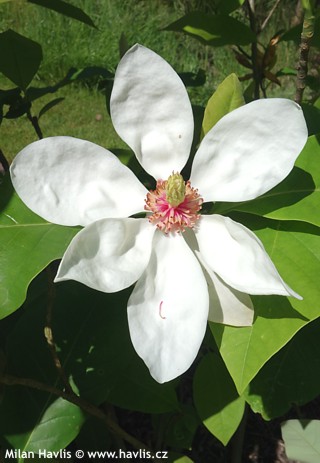
Among deciduous magnolias there are varieties that bloom later than most of the Asian ones. This selection named Charles Coates originated in England in Kew, famous for its Kew Gardens, by crossing m.sieboldii and m.tripetala.It makes leaves first, and only at the end of spring it shows a magnificen ...
V - VI
3 - 5m
1,5 - 2,5m
full to partial sun
5b (down to -27°C)
for zone 5+6
for zone 7
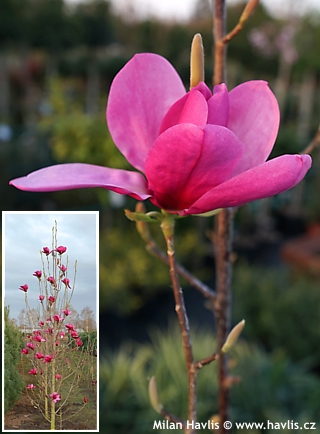
Livingstone magnolia is a cross between m. sprengeri ‘Diva’ and m. ‘Vulcan’. Sprenger’s magnolia is often used in hybridization for flower size and fragrance, and Vulcan was surely chosen for the colour. The result is splendid. A large flower of a vibrant purple red colour and pleasant scent. Bloomi ...
IV - V
4 - 6m
1,5 - 3m
full to partial sun
5b (down to -27°C)
for zone 5+6
for zone 7
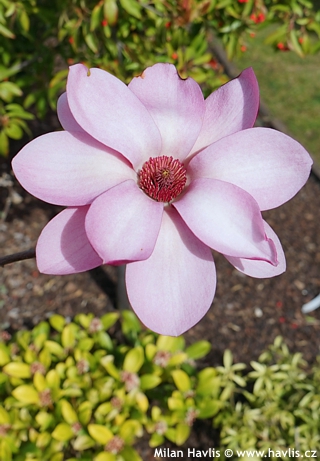
Purple Star magnolia is a modern variety from 2015 from the renowned Belgian breeder Phillippe de Spoleberch, whose perhaps the greatest success, with which he gained fame around the world, is Daphne magnolia, so far considered the best deep yellow available. Purple Star is a cross between m. cylind ...
IV - V
3 - 6m
2 - 3m
full to partial sun
6 (down to -23°C)
for zone 5+6
for zone 7
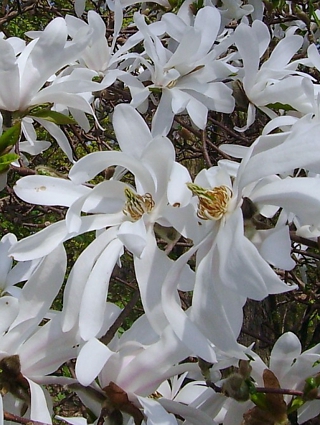
Proctor magnolia is a hybrid of two Japanese magnolia species – m. stellata and m. salicifolia. It is distinguished by early flowering and profusion of star-shaped, white, fragrant flowers, larger than on m. stellata, with less petals but of firmer appearance. Slavin’s Snowy is a selection composed ...
III - IV
6 - 8m
3 - 4m
full to partial sun
5 (down to -29°C)
for zone 5+6
for zone 7
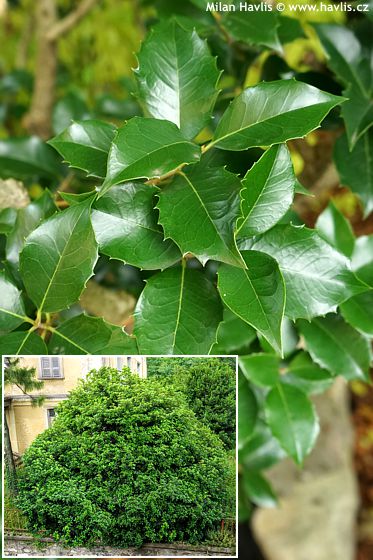
Fortune's osmanthus is a cross between o.heterophyllus (small, very spiny leaves) and o.fragrans (large, entire leaves). It was first brought from Japan to Europe to Holland Philipp Franz von Siebold in 1856. Over the years its name has developed from osmanthus aquifolium to o.aquifolium var.latifo ...
X - XI
1,5 - 3m
1,5 - 2,5m
full to partial sun
6b (down to -21°C)

for zone 5+6
for zone 7
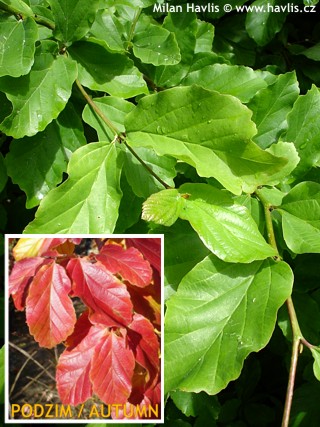
The Persian ironwood is a deciduous, usually multi‑stemmed tree with handsome leaves. They are smooth, glossy, broadly oval, similar to beech leaves but about twice the size: 6–15 × 4–10 cm, with pronounced veins that give them a sculptural quality. In spring they are light green, remaining fr ...
5 - 12m
4 - 6m
full to partial sun
4 (down to -34°C)
for zone 5+6
for zone 7
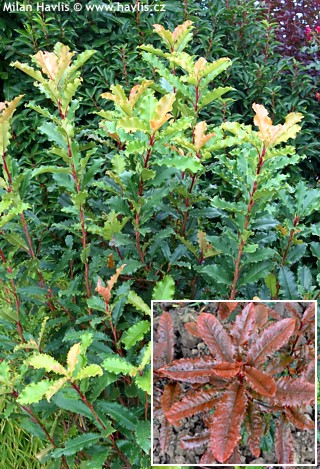
Chinese photinia is a species which is less common in trade and almost nonexistent in European nurseries. Reason being that all European encyclopedias rate it much less winter hardy than David’s or Fraser’s photinia which are very popular evergreen shrubs used for hedges in zones 6 and h ...
1,5 - 2m
1 - 1,3m

full sun to shade
6 (down to -23°C)
for zone 5+6
for zone 7
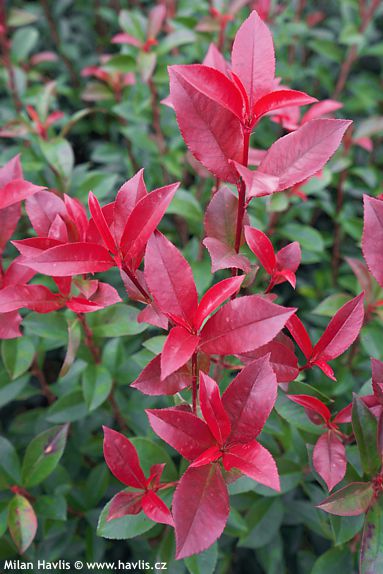
From the very moment CARRÉ ROUGE photinia hit the market, it became an overnight sensation. It originates from the hugely successful ‘Red Robin’, but offers a far more compact and denser habit, with smaller leaves that look elegant and completely smother the plant’s coat, turning the photinia into a ...
2 - 3m
1 - 2m
full to partial sun
6 (down to -23°C)
for zone 5+6
for zone 7
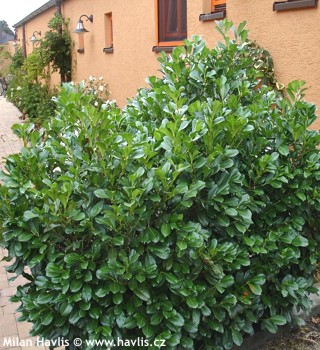
Cherry laurel ETNA® is a small miracle of the early 1990s. It was noticed by grower Adrian Straver because, among countless others, it stood out through the shape and colour of its leaves. The leaves are unusually formed – ovate at the base, widening towards the tip and ending almost flat ...
IV - V
1,5 - 3m
2 - 4m
full sun to shade
5b (down to -27°C)
for zone 5+6
for zone 7
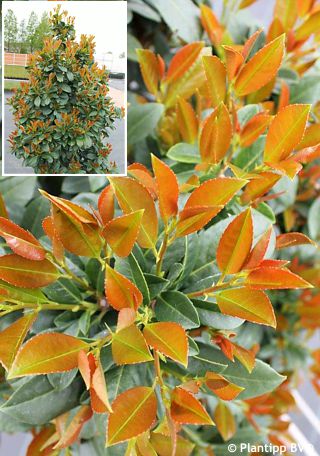
BONAPARTE® is a beautiful cherry laurel cultivar with striking copper‑coloured new growth, once again personally discovered by nurseryman Adrian Straver as a continuation of his work with cherry laurels. It thus follows the highly successful cultivar ETNA®, his first major discovery from a ...
IV
2 - 4m
1 - 2m
full to partial sun
6 (down to -23°C)
for zone 5+6
for zone 7
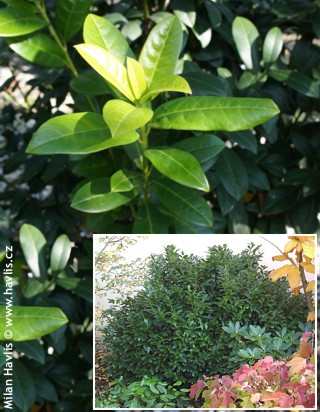
KLEOPATRA® is a Hungarian cherry laurel variety bred by Dr. Józsa Miklos and introduced in 2007. It forms a compact, graceful shrub or a small tree with spreading branches and dark green, glossy, leathery, evergreen leaves. They emerge coppery orange just like on ETNA® variety and can be distinguish ...
1 - 2m
1 - 3m
full sun to shade
6 (down to -23°C)
for zone 5+6
for zone 7
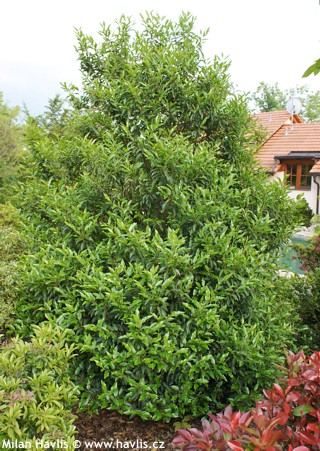
Angustifolia is a popular cultivar of Portuguese laurel, valued for its more compact growth and narrower leaves. The foliage is evergreen, leathery and firmer than that of the species, slightly incurved, narrowly elliptic, 6–10 cm long and 1.5–3 cm wide, with a striking glossy surface. The leaves de ...
V - VI
2 - 6m
2 - 4m
full to partial sun
5b (down to -27°C)
for zone 5+6
for zone 7
.jpg)
Brenelia is a modern and attractive cultivar of Portuguese laurel from France, selected by Yves Brenelière in the early 21st century. It is distinguished by its larger, distinctly undulated leaves with a higher gloss. The foliage is evergreen, narrowly elliptic, typically 8–12 cm long and 2–4 c ...
V - VI
4 - 6m
3 - 4m
full to partial sun
5b (down to -27°C)
for zone 5+6
for zone 7
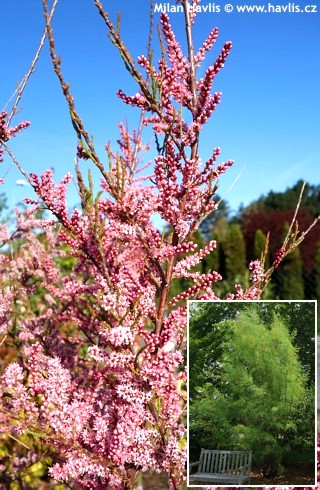
Tamarisk (salt cedar) is a beautiful plant with tiny leaves and profusion of flowers. There are several types (species) which differ mainly in their flowering period. This one is called 4-stamen tamarisk and belongs to the spring flowering species and Rubra is a variety with very rich pink flowers f ...
V - VI
2 - 3m
1 - 2m
full sun
5 (down to -29°C)
for zone 5+6
for zone 7
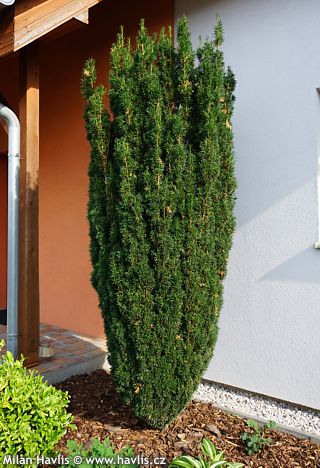
Irish yew is a popular evergreen conifer. They are very practical due to many varieties available offering various shapes and sizes. Another advantage is that they grow well in both full sun and in deep shade.
Fastigiata has strictly upright, narrow habit. It grows very slowly which makes it suitab ...
3 - 7m
1 - 2m
full sun to shade
5 (down to -29°C)
for zone 5+6
for zone 7
