Home > Catalogue > by type and use >

evergreen trees

evergreen trees beginning with: complete list

CURRENTLY IN STOCK:

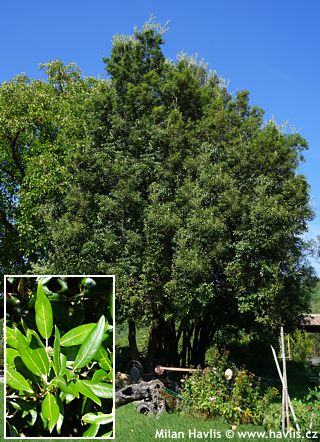
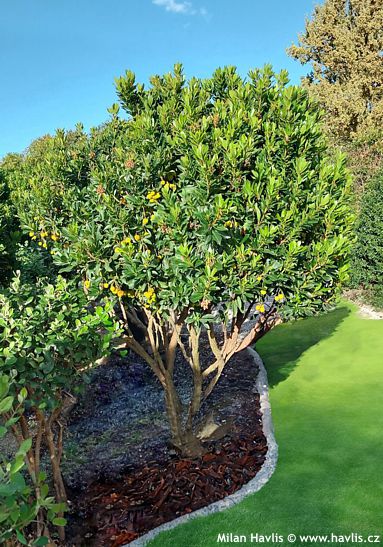
Arbutus unedo
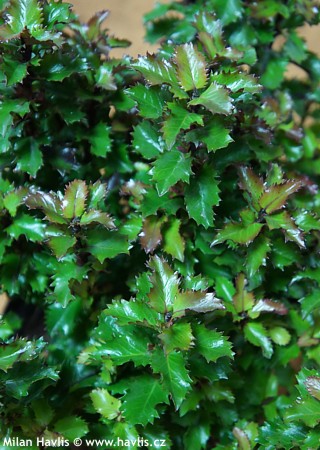
The leaves of the strawberry tree are evergreen, narrowly oval to obovate, 6–10 cm long, leathery, stiff, and with serrated margins that are more pronounced toward the tip. They are bright green and glossy and very handsome. The twigs are slightly orange, reddish when young, and as the bark ages it ...
X - V
2 - 4m
2 - 4m
full to partial sun
6b   (down to -21°C)
Code of winter protection zone 5+6
for zone 5+6
Code of winter protection zone 7
for zone 7
26_1.jpeg
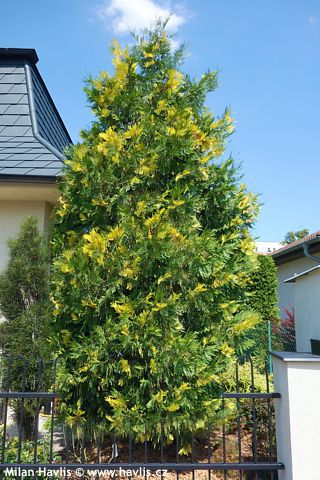
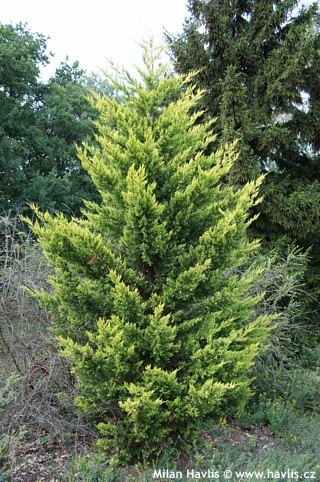
Although this incense cedar is one of the most sought after conifers of the south, it seems to perform much better in Czech climate thanks to cold and wet winters. It needs a lot of sun in summer though to keep its varigated leaves golden. Though, if the sun is not as hot as in the Mediterranean, fo ...
5 - 10m
full to partial sun
5   (down to -29°C)
Code of winter protection zone 5+6
for zone 5+6
Code of winter protection zone 7
for zone 7
894_1.jpeg
Would you like a fairy tale? Once upon a time, out of nowhere, a little witch’s broom appeared in gardens – a mutated, dwarf form of the Atlas cedar that was given the lapidary name Compacta. Meaning compact and small. True, it’s not terribly original. They could just as well have called it Bilbo, b ...
1 - 2,5m
1 - 2m
full sun
5b   (down to -27°C)
Code of winter protection zone 5+6
for zone 5+6
Code of winter protection zone 7
for zone 7
Cedrus atlantica f. 'GLAUCA PENDULA'
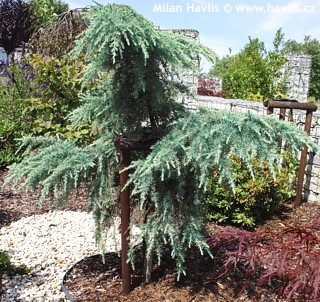
Glauca Pendula represents a truly distinctive form of the Atlas cedar, offering an almost aristocratic character. This cultivar was discovered and selected in France around 1873, in the horticultural setting of Châtenay‑les‑Sceaux near Paris, then a centre of botanical experimentation an ...
2 - 4m
3 - 5m
full sun
5   (down to -29°C)
Code of winter protection zone 5+6
for zone 5+6
Code of winter protection zone 7
for zone 7
352_1.jpeg
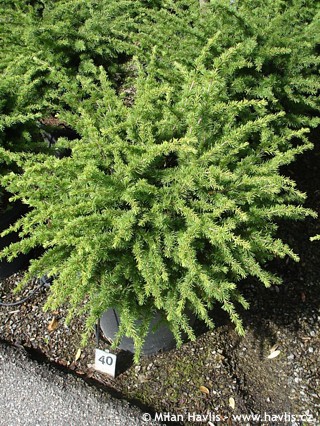
Feelin‘ Blue is a striking Dutch introduction of Himalayan cedar, which in fact turned out to be one of the most reliable cedars we ever had. Formerly a ground-covering plant is often staked up to a bamboo stick in order to form an appearance of a classic but much smaller cedar tree with pictu ...
0,2 - 3m
0,5 - 3m
full sun
5b   (down to -27°C)
Code of winter protection zone 5+6
for zone 5+6
Code of winter protection zone 7
for zone 7
895_1.jpeg
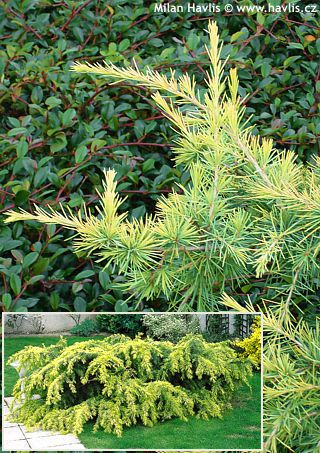
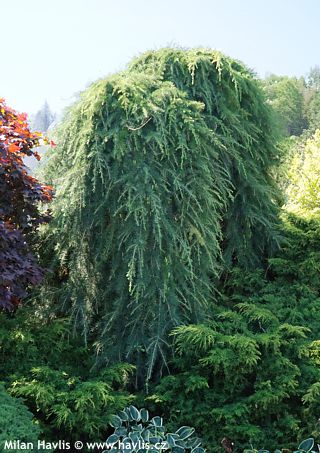
Golden Horizon is an interesting variety of Himalayan cedar with weeping branches. The needles are evergreen, yellow-green when young and in summer, turning blue-green as they mature and in the shade. The shape of the shrub is irregular, making horizontal branches with weeping ends. It grows slowl ...
1 - 1,5m
1 - 3m
full sun
6b   (down to -21°C)
Code of winter protection zone 5+6
for zone 5+6
Code of winter protection zone 7
for zone 7
350_1.jpeg
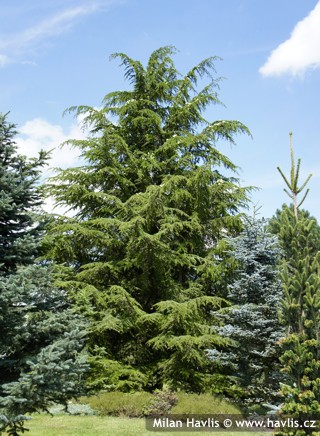
The Lebanon cedar is a magnificent evergreen conifer, aristocratic yet entirely natural in appearance. It offers a dense framework of almost horizontal, sturdy branches and a regular, broadly conical crown, whose pronounced terminal leader conveys youthful elegance. After reaching a certain age and ...
15 - 30m
10 - 20m
full sun
5   (down to -29°C)
Code of winter protection zone 5+6
for zone 5+6
Code of winter protection zone 7
for zone 7
25_1.jpeg
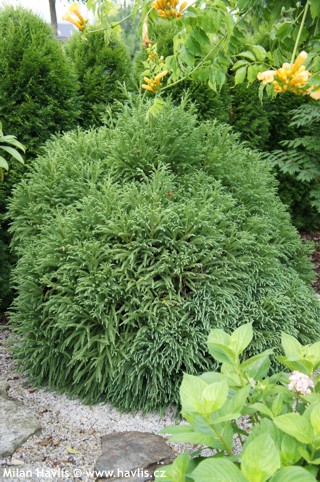
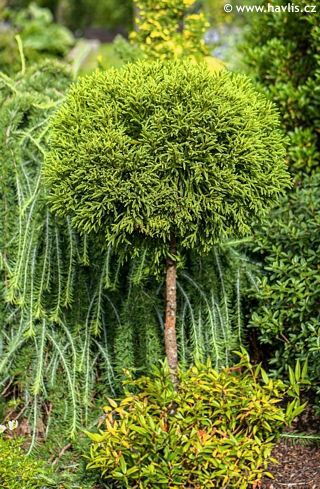
One of the most beautiful conifers of our climate is Japanese cedar. There are many species and varieties. Globosa Nana was first discovered in 1923 in Japan, where it is called Mitama-sugi. It is a dense, compact conifer with rounded branches. The needles are curved, inward-pointing, bright gree ...
1 - 2m
1 - 2m
full to partial sun
5b   (down to -27°C)
Code of winter protection zone 5+6
for zone 5+6
Code of winter protection zone 7
for zone 7
5582_1.jpeg
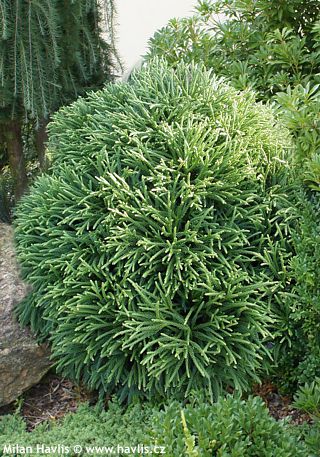
Following the success Little Champion variety, Little Diamond is another dwarf Japanese cedar variety with a spherical habit. It originated in the Netherlands in 1990, and its beauty inspired the growers to train it into a gorgeous little tree with a single trunk. Since Little Diamond grows slowly, ...
1 - 2m
0,5 - 1m
full to partial sun
5   (down to -29°C)
Code of winter protection zone 5+6
for zone 5+6
Code of winter protection zone 7
for zone 7
219_1.jpeg
Gold Rider is still quite new in the Leyland cypress family. It produces flattened sprays of bright yellow-green, scale-like leaves. The branches are not pendent, not erect. Something in between and that makes it stand apart from chamaecyparis. The big advantage of Leyland cypress is the fact that i ...
2 - 10m
2 - 4m
full to partial sun
5b   (down to -27°C)
Code of winter protection zone 5+6
for zone 5+6
Code of winter protection zone 7
for zone 7
3987_1.jpeg
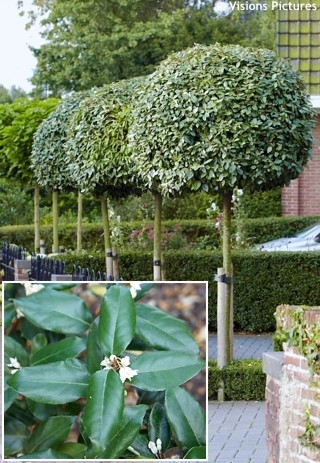
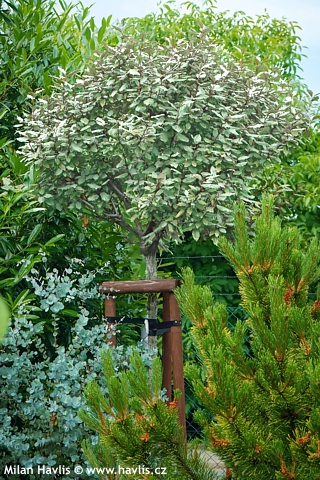
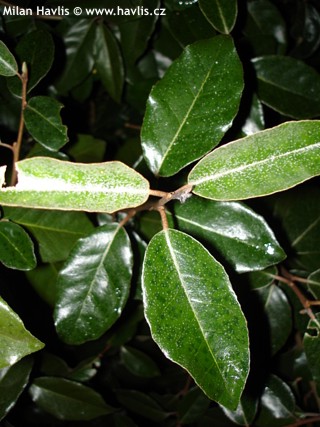
This evergreen silverthorn is a hybrid of e.macrophylla and e.pungens. Its leathery leaves emerge beige-grey and mature to glossy dark green with lots of grey dots making it look like stardusted. Thanks to the foliage it is sometimes called Russian olive which is not correct as this name is already ...
VIII - X
2 - 4m
2 - 3m
full to partial sun
6   (down to -23°C)
Code of winter protection zone 5+6
for zone 5+6
Code of winter protection zone 7
for zone 7
3836_1.jpeg
Compacta is a recent selection of Evergreen (Ebbing's) silverthorn, very probably of Italian origin (not confirmed). Unlike its mother plant - the species of Ebbing's silverthorn - it makes a compact and well-behaved shrub without overgrown twigs in one season. In fact, this sport makes quite a hand ...
IX - X
2 - 3m
1,5 - 2m
full to partial sun
6   (down to -23°C)
Code of winter protection zone 5+6
for zone 5+6
Code of winter protection zone 7
for zone 7
4812_1.jpeg
Compacta is a recent selection of Ebbing's silverthorn, very probably of Italian origin (not confirmed). Unlike its mother plant - the species of Ebbing's silverthorn - it makes a compact and well-behaved shrub without overgrown twigs in one season. In fact, this sport makes quite a handsome shrub. ...
IX - X
2 - 5m
1,5 - 2m
full to partial sun
6   (down to -23°C)
Code of winter protection zone 5+6
for zone 5+6
Code of winter protection zone 7
for zone 7
5058_1.jpeg
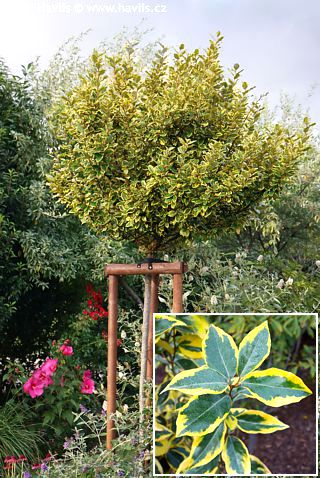
MARYLINE® is a trade name for a striking selection of evergreen silverthorn, found by Albert Brenelière in France. It is a very bushy, upright growing, evergreen shrub with irregularly variegated leaves. They are leathery, oval to ovate, partially undulated, and glossy. The centres are pal ...
IX - X
2 - 4m
1 - 2m
full to partial sun
6   (down to -23°C)
Code of winter protection zone 5+6
for zone 5+6
Code of winter protection zone 7
for zone 7
4811_1.jpeg
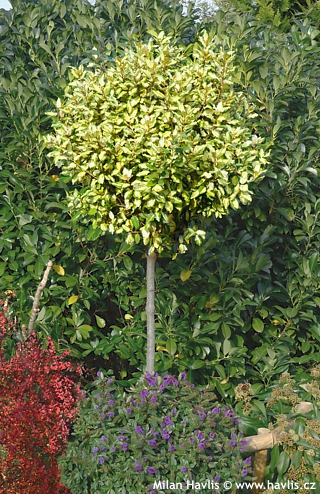
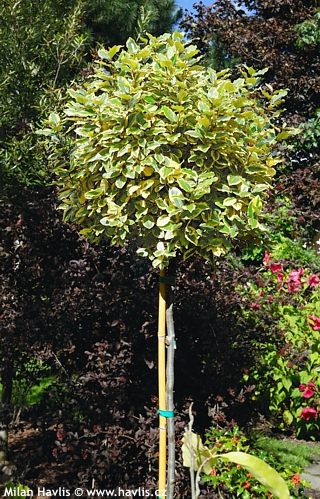
Viveleg silverthorn is a bushy, upright growing, evergreen shrub or small tree with irregularly variegated leaves. They are leathery, oval to ovate, partially undulated, and glossy. The centres are dark green, the margins are rich yellow, and the borderline between these two colours is light green b ...
IX - X
2 - 4m
1 - 2m
full to partial sun
6   (down to -23°C)
Code of winter protection zone 5+6
for zone 5+6
Code of winter protection zone 7
for zone 7
4209_1.jpeg
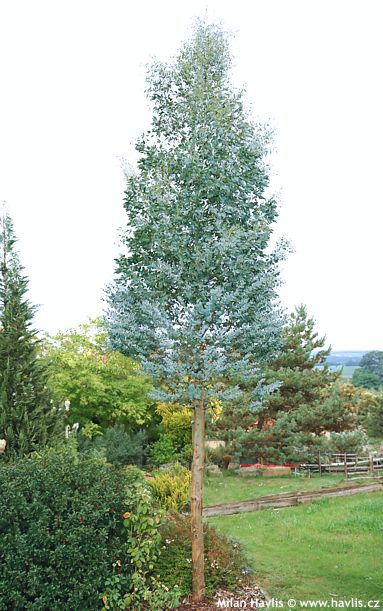
In 2006, a miracle occurred that at first looked rather ominous – in a French nursery, all seedlings of this botanical species froze except for a single plant, even though everyone was convinced of its suitability for the French climate. One eucalyptus, one pot, survived an unusually severe winter t ...
5 - 10m
2 - 4m
full to partial sun
6   (down to -23°C)
Code of winter protection zone 5+6
for zone 5+6
Code of winter protection zone 7
for zone 7
419_1.jpeg
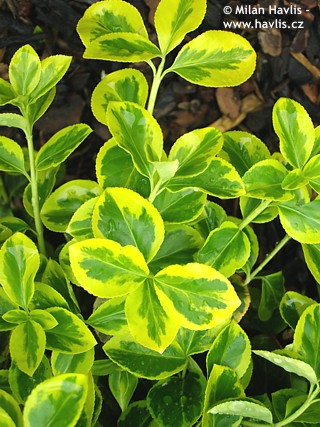
Canadale Gold is a sensational, fully hardy variety with large, gently serrated, ovate to rounded leaves of mid green colour with bright yellow margins that turn pink in winter. It grows vigorously and bushy in sun or not too deep shade. Wintercreepers are excellent, low shrubs that not only with ...
0,5 - 1,5m
0,5 - 1,5m
full sun to shade
5   (down to -29°C)
Code of winter protection zone 5+6
for zone 5+6
Code of winter protection zone 7
for zone 7
411_1.jpeg
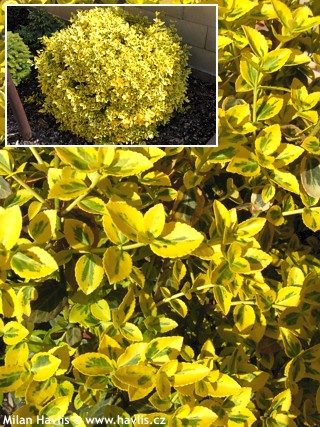
Emerald'n'Gold spindle has bright green leaves in the centre and vivid yellow edges that often override the green colour giving a golden effect to the whole shrub. In autumn and winter majority of leaves turn pink or purple red and if some of them fall down in spring the plant quickly replaces the ...
0,3 - 1m
full to partial sun
5   (down to -29°C)
Code of winter protection zone 5+6
for zone 5+6
Code of winter protection zone 7
for zone 7
582_1.jpeg
Maidenhair tree is probably one of the oldest species on Earth. It was here some 180 million years ago … obviously it was the time when the Dead Sea was still ill. Its extreme tolerance of various conditions made it survive to our time. One tree can live as long as 2000 years. It belongs to c ...
15 - 30m
full sun
3   (down to -40°C)
Code of winter protection zone 5+6
for zone 5+6
Code of winter protection zone 7
for zone 7
4217_1.jpeg
Eiffel is an attractive maidenhair tree variety from the beginning of the new millennium. It makes compact, more densely branched trees or multistemmed shrubs with deciduous, 4-7 cm wide, fan-shaped, divided, mid green leaves (botanically classified as needles), that change to fantastic shade of bri ...
6 - 10m
2 - 4m
full sun
4   (down to -34°C)
Code of winter protection zone 5+6
for zone 5+6
Code of winter protection zone 7
for zone 7
1729_1.jpeg
Fastigiata Blagon is a French variety of maidenhair tree with narrowly conical or almost columnar growth. It bears deciduous, 4-7 cm wide, fan-shaped, divided, mid green leaves (botanically classified as needles), that change to fantastic shade of bright golden yellow in autumn. It is often pruned o ...
8 - 12m
2 - 3m
full sun
3   (down to -40°C)
Code of winter protection zone 5+6
for zone 5+6
Code of winter protection zone 7
for zone 7
2517_1.jpeg
Horizontalis is a small variety of maidenhair tree with almost flat canopy with deciduous, 4-7 cm wide, fan-shaped, divided, mid green leaves (botanically classified as needles), that change to fantastic shade of bright golden yellow in autumn. It grows relatively slowly making some 20-30 cm per yea ...
2 - 3m
2 - 6m
full sun
4   (down to -34°C)
Code of winter protection zone 5+6
for zone 5+6
Code of winter protection zone 7
for zone 7
934_1.jpeg
Mariken is a new variety from 1999. It is a dwarf form with short branches, densely covered with foliage. It is usually available as a small shrub suitable for rockeries, or a half-standard for gardens with less space, or a standard tree. Thanks to its dense growth and attractive foliage mainly tree ...
0,5 - 2,5m
0,5 - 1,3m
full sun
3   (down to -40°C)
Code of winter protection zone 5+6
for zone 5+6
Code of winter protection zone 7
for zone 7
114_1.jpeg
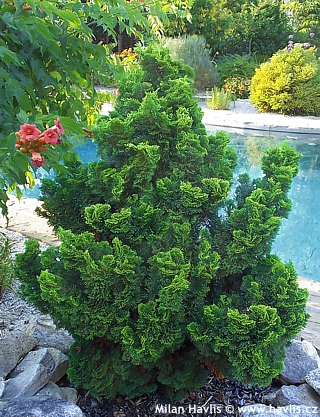
The Hinoki cypress is both a must-see and a must-have thereafter. Its dark green foliage is tightly congested, forming a tiny mound. It forms twisting fan-shaped branchlets in dense tiered layers. Want to ask how fast it grows? Well it takes the same time as your partner does getting prepared for ...
1 - 1,5m
1 - 1,5m
full to partial sun
5   (down to -29°C)
Code of winter protection zone 5+6
for zone 5+6
Code of winter protection zone 7
for zone 7
4588_1.jpeg
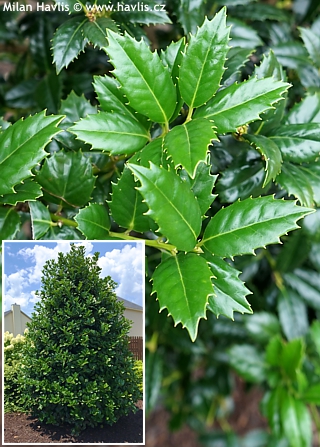
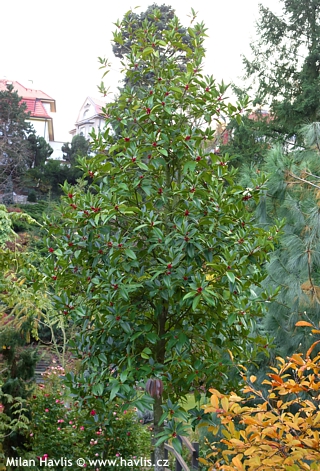
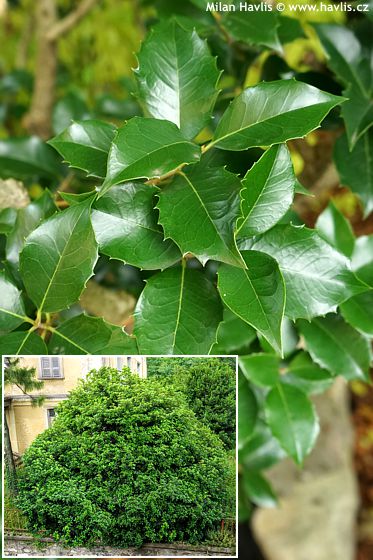
Mary Nell is a hybrid holly from the USA, bred by Joe McDaniels in Tom Dodd Nursery in Alabama in 1962. It is a cross between large-leaved holly ilex latifolia and hybrid holly Red Delight which is a cross between ilex cornuta and ilex pernyi. Joseph C. McDaniels (1912-1982) was a renowned horticult ...
3 - 4m
1,5 - 2m
full to partial sun
6   (down to -23°C)
Code of winter protection zone 5+6
for zone 5+6
Code of winter protection zone 7
for zone 7
4014_1.jpeg
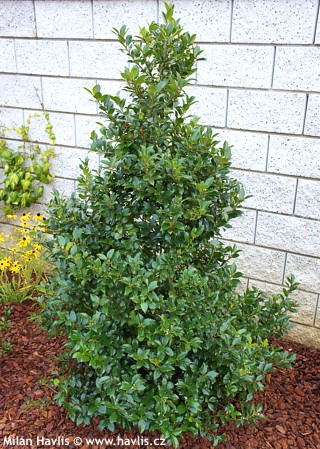
Nellie R. Stevens holly is one of the most cultivate hardy hollies worldwide simply because it is beautiful and versatile. It is a cross between English holly (ilex aquifolium) and Chinese holly (ilex cornuta). It grows relatively fast and can be trained into a gorgeous looking evergreen tree. The ...
2 - 5m
1,5 - 2,5m
full to partial sun
6   (down to -23°C)
Code of winter protection zone 5+6
for zone 5+6
Code of winter protection zone 7
for zone 7
5202_1.jpeg
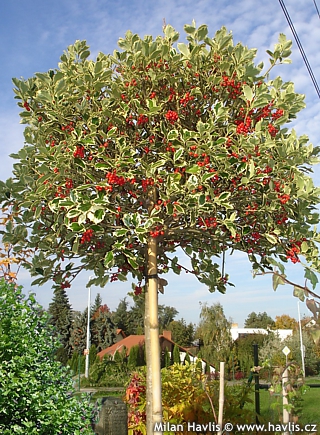
Argentea Marginata is an eye-catching cultivar of variegated English holly. Its sharply serrated, evergreen leaves are almost identical to those of the species but moreover are decorated with a wide brim of creamy white colour at margins. Young leaves show prominent purple red to dark pink hues as t ...
3 - 6m
2 - 3m
full to partial sun
5b   (down to -27°C)
Code of winter protection zone 5+6
for zone 5+6
Code of winter protection zone 7
for zone 7
4341_1.jpeg
Ingramii is a male English holly variety whose origin I did not manage to find. There are notes about its existence yet before 2000 but it appears to be commercially attractive only from about 2015 or so. It makes heavily toothed, mid-sized leaves or deep green colour with rich silver-white marblin ...
1 - 1,8m
1 - 1,8m
full to partial sun
5b   (down to -27°C)
Code of winter protection zone 5+6
for zone 5+6
Code of winter protection zone 7
for zone 7
919_1.jpeg
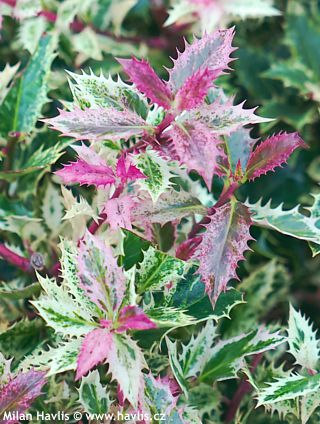
White Cream? is a fantastic new variety of holly. It was bred in Germany by Ingo Stührenberg. White Cream? is a natural mutation of another English holly called Myrtifolia, hence its spiny margins. The leaves are bright creamy white in the centres, changing through light green to deep green at the m ...
1 - 2m
1 - 2m
full sun to shade
6   (down to -23°C)
Code of winter protection zone 5+6
for zone 5+6
Code of winter protection zone 7
for zone 7
3927_1.jpeg
DARK GREEN is a Japanese holly variety which says it all in a name. Evergreen, small, oval leaves are very dark green, handsome, and glossy, and appear along deep purple red stems. Being a female variety, it produces profusion of small, creamy white flowers in mid spring, followed by abundance of sp ...
1 - 3m
1 - 2m
full sun to shade
5b   (down to -27°C)
Code of winter protection zone 5+6
for zone 5+6
Code of winter protection zone 7
for zone 7
95_1.jpeg
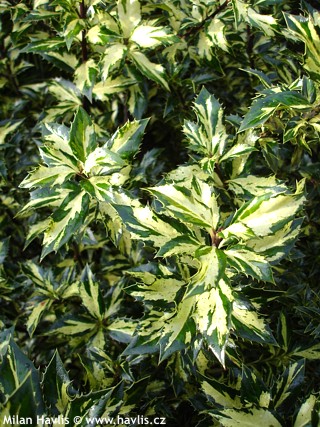
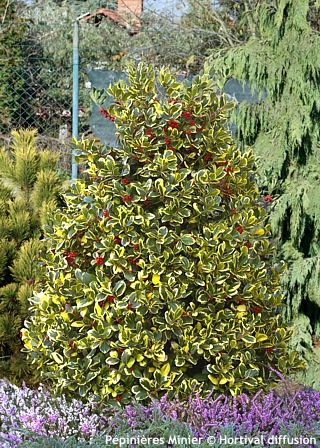
Golden King is a High Clare hybrid holly that will win you over with its conspicuously variegated, almost thornless leaves. They are evergreen, leathery, glossy, broadly oval to obovate, dark green in the middle and bright yellow at margins. It was discovered at the Bangholm Nursery in Scotland shor ...
1 - 3m
1 - 3m
full to partial sun
5b   (down to -27°C)
Code of winter protection zone 5+6
for zone 5+6
Code of winter protection zone 7
for zone 7
340_1.jpeg
Lawsoniana is my favourite. It is a female, variegated version of male plant Hendersonii which is just green. The leaves of Lawsoniana are deep green at the margins, grading through light green towards bright yellow centres. They are curled which gives the plant an extraordinary appearance. Being a ...
1,5 - 4m
1 - 2,5m
full to partial sun
6   (down to -23°C)
Code of winter protection zone 5+6
for zone 5+6
Code of winter protection zone 7
for zone 7
5194_1.jpeg
Chestnut Leaf is probably the most common variety when you happen to come across a Koehne holly in Europe early 21st century. I am giving this date deliberately in case you are reading this article in 2050 or later, laughing how come that we used to be so deprived having just one Koehne holly then. ...
2 - 6m
1,5 - 3m
full to partial sun
6   (down to -23°C)
Code of winter protection zone 5+6
for zone 5+6
Code of winter protection zone 7
for zone 7
238_1.jpeg
Blue Prince® is probably the most popular variety of all so-called blue hollies. It is a male plant that does not produce fruits but is a pollinator for female plants of this group (e.g. Blue Princess). On the other hand, it grows faster than female varieties and has larger, attractive leaves, ...
1,5 - 3m
1 - 2m
full to partial sun
5   (down to -29°C)
Code of winter protection zone 5+6
for zone 5+6
Code of winter protection zone 7
for zone 7
316_1.jpeg
Heckenstar® is quite a novelty from Germany, bred by Hans Hachmann and patented only in 1998. It is a cross ilex aquifolium „Pyramidalis“ and ilex x meserveae „Blue Prince“® . The result is a strictly upright growing, very hardy, evergreen shrub. Outside Europe it ...
2 - 3m
0,5 - 1,5m
full to partial sun
5   (down to -29°C)
Code of winter protection zone 5+6
for zone 5+6
Code of winter protection zone 7
for zone 7
328_1.jpeg
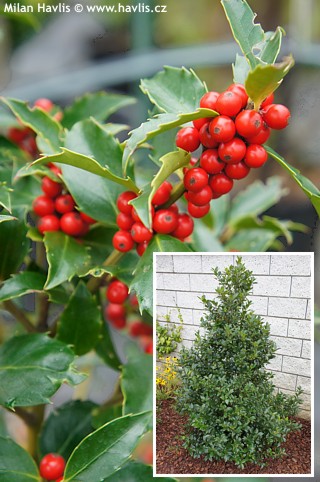
Blue Maid® is a female variety of blue holly. It produces abundance of tiny, white flowers in spring that are followed by attractive berries in autumn. They are bright red and glossy, and remain on the plant until the birds find them in winter. Once they do they will eat them all. In order to p ...
1,5 - 3,5m
1 - 1,8m
full to partial sun
5   (down to -29°C)
Code of winter protection zone 5+6
for zone 5+6
Code of winter protection zone 7
for zone 7
1967_1.jpeg
Grey Pearl is a picturesque dwarf variety of Japanese larch. It is a low growing shrub with soft, deciduous needles that emerge fresh green and soon turn silvery blue green. It makes a fluffy appearance and is almost irresistible not to touch every time you pass by. It grows slowly making tiered bra ...
0,5 - 1m
0,6 - 1,3m
full sun
4   (down to -34°C)
Code of winter protection zone 5+6
for zone 5+6
Code of winter protection zone 7
for zone 7
901_1.jpeg
Weeping form of deciduous larch Stiff Weeper is one of the most sought-after conifers in our country. It has strictly pendent branches with no horizontal growth. The crown looks like a head of a long-haired girl. The needles are about 4 cm long, bright green with a silvery blue shade, turning yellow ...
0,5 - 2m
0,5 - 1m
full sun
4   (down to -34°C)
Code of winter protection zone 5+6
for zone 5+6
Code of winter protection zone 7
for zone 7
5506_1.jpeg
Texanum is a highly attractive variety of Japanese privet, also called waxleaf privet. Its evergreen leaves are leathery, narrowly ovate, 4-6 cm long, bright green and glossy above, pale green and matte on the reverse. In mid-summer appears a quantity of about 10 cm long, terminal panicles composed ...
VII - VIII
1,5 - 2m
1,5 - 2m
full to partial sun
7   (down to -18°C)
Code of winter protection zone 5+6
for zone 5+6
Code of winter protection zone 7
for zone 7
5459_1.jpeg
Excelsum Superbum is a highly attractive, variegated form of glossy privet. It makes large, up to 15 cm long and 6 cm wide, ovate to oval, pale dark green leaves abundantly variegated butter yellow, often extended to the midribs. Directly contradicting its botanical name they are NOT glossy, they ar ...
IX - X
2 - 5m
1 - 3m
full sun
7   (down to -18°C)
Code of winter protection zone 5+6
for zone 5+6
Code of winter protection zone 7
for zone 7
3571_1.jpeg
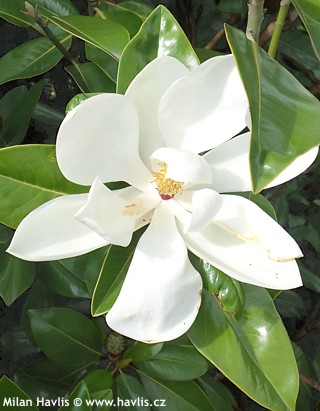
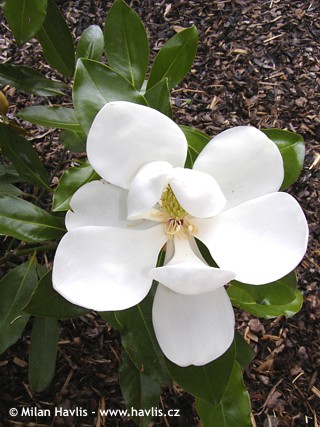
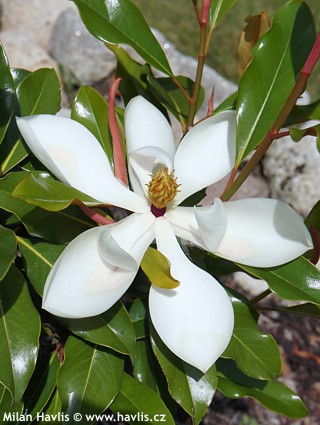
Ferruginea is a southern magnolia variety with large, 24-26 cm across, creamy white, lotus-like flowers whose fragrance attracts not only bees and other insects, but also most perfume producers and every passer-by, especially in late afternoon and early evening when it releases its rich, sweet and c ...
VI - IX
4 - 8m
3 - 5m
full sun
6   (down to -23°C)
Code of winter protection zone 5+6
for zone 5+6
Code of winter protection zone 7
for zone 7
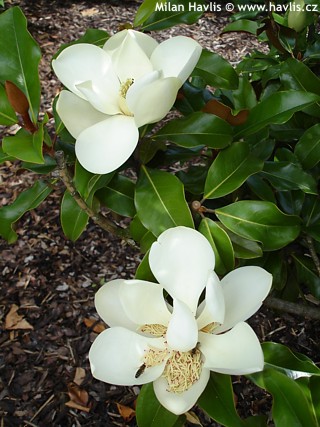
1264_1.jpeg
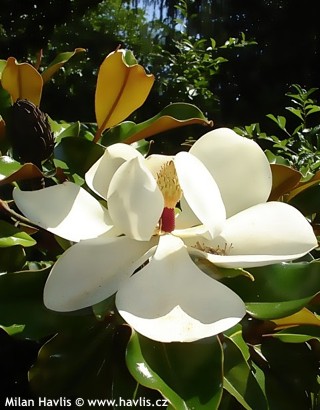
Francois Treyve evergreen magnolia is more compact than the species. It bears deep green, glossy, broadly ovate or almost rounded leaves with cinnamon-brown leathery undersides that protect them from drying winds and cold. Flowers appear from the first hot and sunny days of summer. They are beautifu ...
VII - VIII
3 - 6m
2 - 3m
full sun
6   (down to -23°C)
Code of winter protection zone 5+6
for zone 5+6
Code of winter protection zone 7
for zone 7
3001_1.jpeg
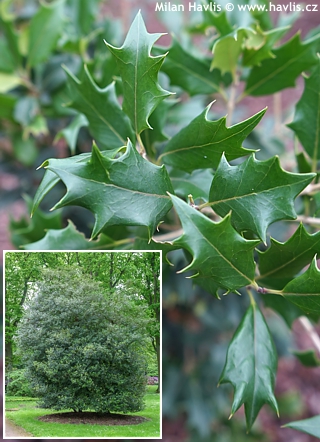
Evergreen magnolias are the queens of flowering trees. We choose the most beautiful and at the same time the hardiest varieties. Goliath is a cultivar found by American botanist Albert Charles Smith (1906-1999) in former Caledonian Nurseries on British island Guernsey in 1910. The nursery no longer ...
VI - IX
3 - 8m
3 - 5m
full sun
5a   (down to -29°C)
Code of winter protection zone 5+6
for zone 5+6
Code of winter protection zone 7
for zone 7
1856_1.jpeg
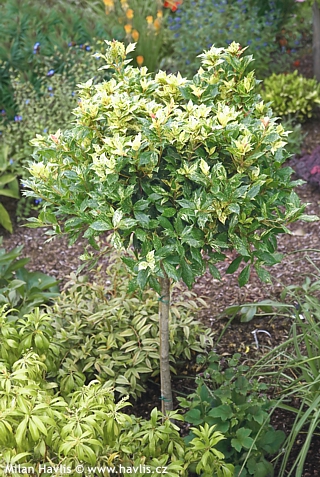
Evergreen - bull bay magnolias are the queens of flowering trees. We choose the most beautiful and at the same time the hardiest varieties. Ever since Little Gem bull bay magnolia appeared in European market, it has been a sought after variety ever since. Though, not everyone could grow this jewel s ...
VI - VIII
2 - 4m
1 - 2m
full sun
6   (down to -23°C)
Code of winter protection zone 5+6
for zone 5+6
Code of winter protection zone 7
for zone 7
310_1.jpeg
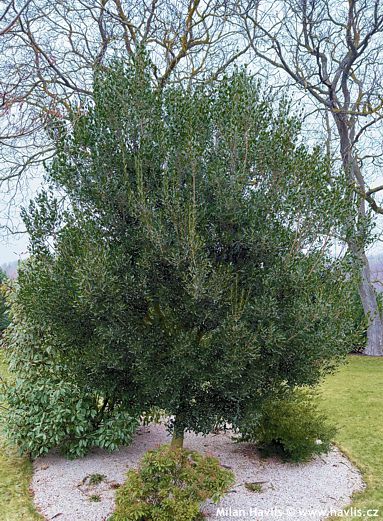
Little Gem is an evergreen magnolia which is smaller in every aspect but offers more of everything. The glossy, leathery leaves are numerous, making the plant very dense. They are deep green with distinct rusty underneath. When crushed they release a fine resin perfume. The amount of creamy white, ...
VI - X
2 - 4m
1,5 - 2,5m
full sun
6b   (down to -21°C)
Code of winter protection zone 5+6
for zone 5+6
Code of winter protection zone 7
for zone 7
2202_1.jpeg
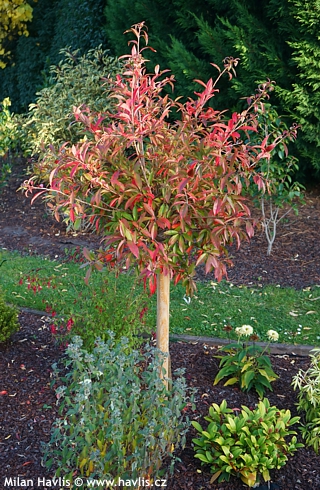
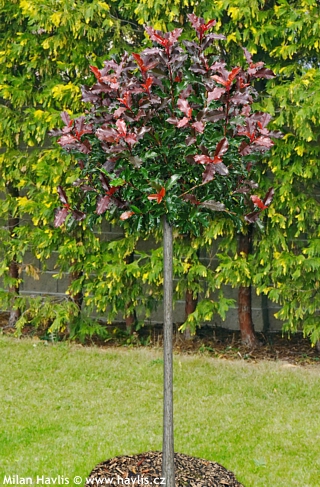
Purpan is possibly the fastest growing bull bay magnolia in Europe. It makes large, leathery, deep green and glossy leaves with thin rusty brown indumentum on the undersides. Once established it can grow half a meter or more per year. Still, this evergreen beauty is more likely valued for its l ...
VI - VIII
8 - 10m
3 - 4m
full to partial sun
6   (down to -23°C)
Code of winter protection zone 5+6
for zone 5+6
Code of winter protection zone 7
for zone 7
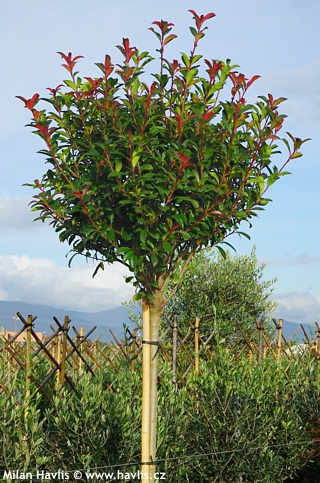
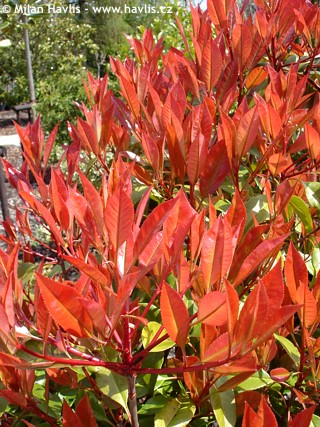
88_1.jpeg
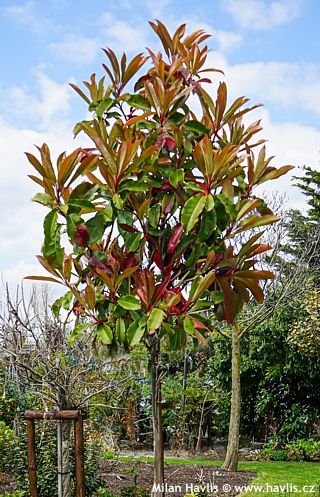
This variety received its name after a French governor in Canada in 18 century, and has been in cultivation in France for more than 150 years. It is very popular in Britain, too, where it is considered fully hardy. And Italy, namely Tuscany, would most definitely lose its most spectacular symbol wit ...
VI - VII
3 - 8m
2 - 4m
full sun
7   (down to -18°C)
Code of winter protection zone 5+6
for zone 5+6
Code of winter protection zone 7
for zone 7
1534_1.jpeg
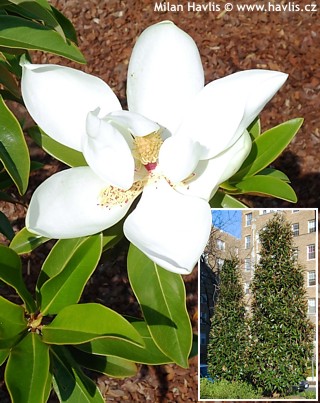
ALTA® is a gorgeous southern magnolia of dense habit and narrowly columnar, very elegant shape that looks like a candle flame. From the first hot days of summer large – 20-24 cm across, creamy white, strongly sweet-scented flowers are produced singly and continuously for 2 months or a little longer ...
VII - VIII
3 - 6m
1 - 2m
full sun
6   (down to -23°C)
Code of winter protection zone 5+6
for zone 5+6
Code of winter protection zone 7
for zone 7
39_1.jpeg
Dawn redwood was believed to be extinct for centuries. Until first specimen were brought from China in 1941 and propagated throughout the world. It is a deciduous conifer which, thanks to its flat, fresh green needles, is often mistaken for swamp cypress (taxodium distichum). The needles are soft an ...
10 - 30m
2 - 4m
full to partial sun
4   (down to -34°C)
Code of winter protection zone 5+6
for zone 5+6
Code of winter protection zone 7
for zone 7
73_1.jpeg
Fortune's osmanthus is a cross between o.heterophyllus (small, very spiny leaves) and o.fragrans (large, entire leaves). It was first brought from Japan to Europe to Holland Philipp Franz von Siebold in 1856. Over the years its name has developed from osmanthus aquifolium to o.aquifolium var.latifo ...
X - XI
1,5 - 3m
1,5 - 2,5m
full to partial sun
6b   (down to -21°C)
Code of winter protection zone 5+6
for zone 5+6
Code of winter protection zone 7
for zone 7
4888_1.jpeg
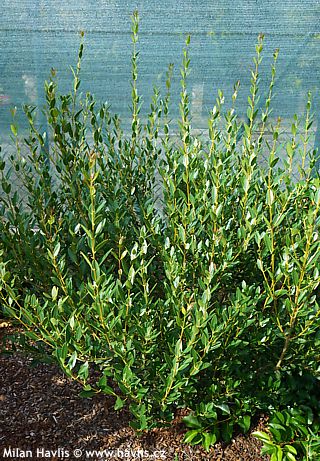
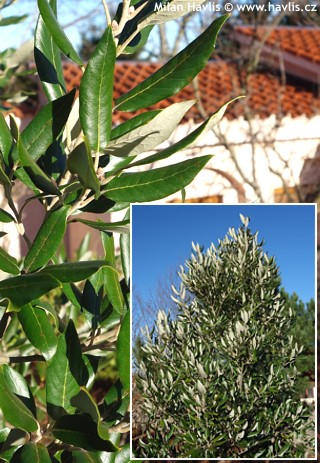
Narrow-leaved mock privet is another typical plant of so-called macchia vegetation found in dry and hot, rocky slopes of South Europe, i.e. plants which cope extremely well with long-lasting drought and are usually unattacked by wild animals. This mock privet has narrowly elliptic to lance-shaped, 4 ...
2 - 3m
2 - 3m
full sun
6   (down to -23°C)
Code of winter protection zone 5+6
for zone 5+6
Code of winter protection zone 7
for zone 7
3813_1.jpeg
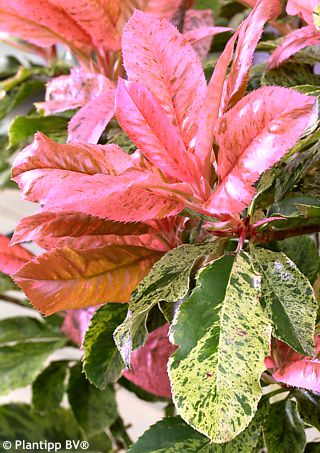
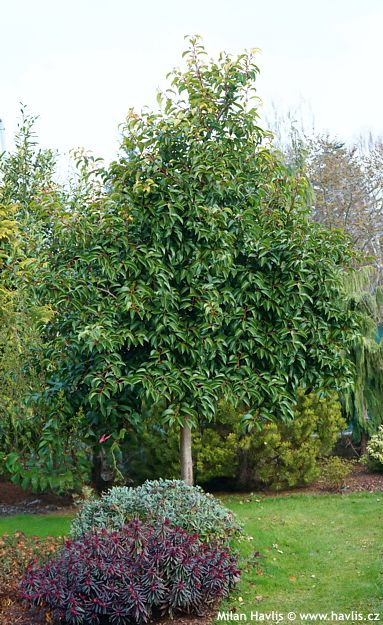
PINK CRISPY photinia is a drama at first glance. Exceedingly showy foliage reveals creamy white variegation on dark green, slightly undulated, gently serrated, and broadly oval to obovate, evergreen leaves. And the real extravaganza show kicks off when new leaves emerge. They are so intensely pink y ...
2 - 4m
1,5 - 3m
full to partial sun
6b   (down to -21°C)
Code of winter protection zone 5+6
for zone 5+6
Code of winter protection zone 7
for zone 7
41_1.jpeg
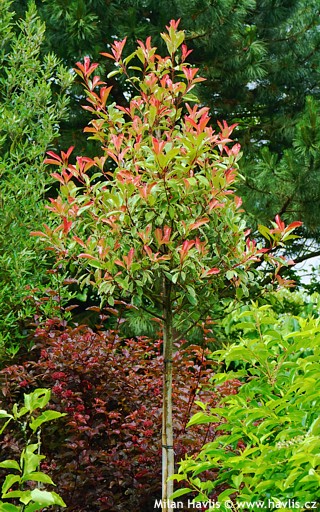
Red Robin is the very first and, it must be said, still a remarkably successful cultivar of Fraser's photinia. Twenty years after its introduction it received the AGM (Award of Garden Merit) from the Royal Horticultural Society for its resilience, beauty and reliability. It is a New Zealand selecti ...
V
2 - 5m
1 - 4m
full to partial sun
6   (down to -23°C)
Code of winter protection zone 5+6
for zone 5+6
Code of winter protection zone 7
for zone 7
4261_1.jpeg
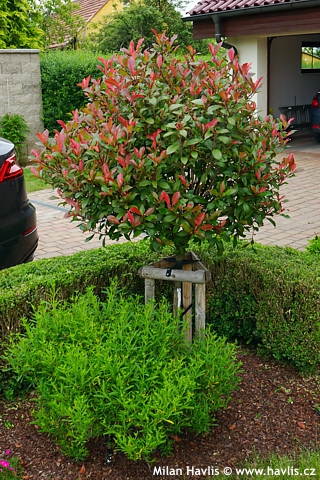
Red Robin is the very first and, it must be said, still a remarkably successful cultivar of Fraser's photinia. Twenty years after its introduction it received the AGM (Award of Garden Merit) from the Royal Horticultural Society for its resilience, beauty and reliability. It is a New Zealand selecti ...
V
2 - 6m
2 - 5m
full to partial sun
6   (down to -23°C)
Code of winter protection zone 5+6
for zone 5+6
Code of winter protection zone 7
for zone 7
1494_1.jpeg
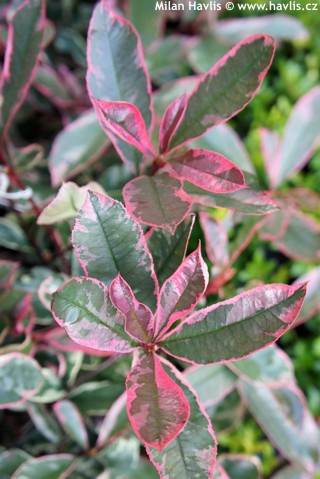
This photinia was originally named Cassini, a very charming name, but the commercial world insisted on a new designation: PINK MARBLE®. It must be said that it is fits – this evergreen shrub bears ovate leaves intricately threaded with white and silvery tones that turn distinctly pink towards the en ...
2 - 4m
2 - 4m
full to partial sun
6   (down to -23°C)
Code of winter protection zone 5+6
for zone 5+6
Code of winter protection zone 7
for zone 7
4115_1.jpeg
This photinia was originally named Cassini, a very charming name, but the commercial world insisted on a new designation: PINK MARBLE®. It must be said that it is fits – this evergreen shrub bears ovate leaves intricately threaded with white and silvery tones that turn distinctly pink towards the en ...
V
2 - 4m
2 - 4m
full to partial sun
6   (down to -23°C)
Code of winter protection zone 5+6
for zone 5+6
Code of winter protection zone 7
for zone 7
4365_1.jpeg
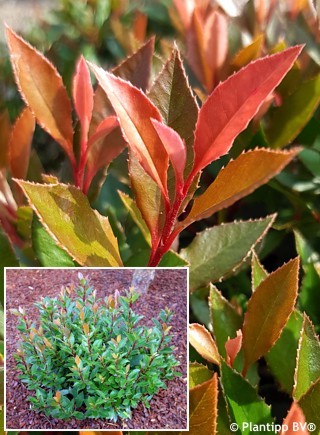
From the very moment CARRÉ ROUGE photinia hit the market, it became an overnight sensation. It originates from the hugely successful ‘Red Robin’, but offers a far more compact and denser habit, with slower growth and smaller leaves that look elegant and completely smother the plant’s coat, turning t ...
2 - 3m
1 - 2m
full to partial sun
6   (down to -23°C)
Code of winter protection zone 5+6
for zone 5+6
Code of winter protection zone 7
for zone 7
1169_1.jpeg
There are about 20 currently registered varieties of Japanese red pine and if you admire Mediterranean stone pines with their rounded crowns, take a look at this variety, which shares several similar traits but is perfectly suited to temperate climates. Its name is Alice Verkade, and it is truly a g ...
1 - 2m
0,5 - 1,5m
full sun
5   (down to -29°C)
Code of winter protection zone 5+6
for zone 5+6
Code of winter protection zone 7
for zone 7
4372_1.jpeg
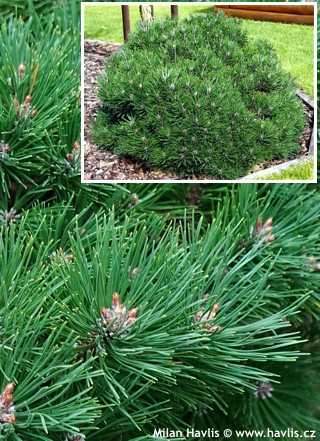
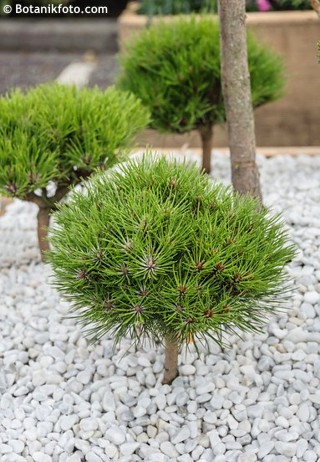
BAMBINO® is another beautiful dwarf hybrid pine, following success of its forerunners Marie Brégeon and BREPO®. It has medium to dark green, 3-4 cm long needles that recall those of pinus mugo. The plant naturally forms symmetrical, mounding shrubs which need no trimming whatsoever, and gr ...
0,5 - 0,8m
0,8 - 1,3m
full sun
4   (down to -34°C)
Code of winter protection zone 5+6
for zone 5+6
Code of winter protection zone 7
for zone 7
1520_1.jpeg
After a huge success with BREPO® variety, a breeder of pines from Switzerland Henri Bregeon comes up with another dwarf pine variety, this time called Marie Bregeon. It is a result of a controlled crossbreeding of pinus nigra and pinus densiflora, both of which were H.Bregeon’s own select ...
0,5 - 1m
0,5 - 1m
full sun
5   (down to -29°C)
Code of winter protection zone 5+6
for zone 5+6
Code of winter protection zone 7
for zone 7
5_1.jpeg
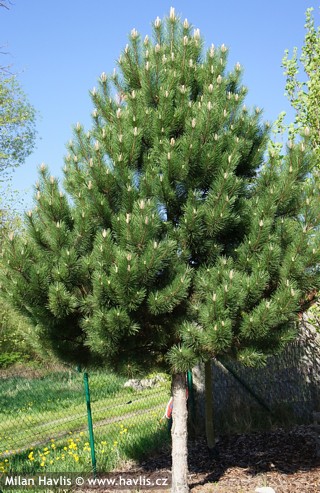
Austrian (black) pine was first classified by Austrian botanist Johann Arnold in 1785. It is a hardy tree which escaped Austria in early 20th century, and can now be found all around Europe, down to Turkey, and in North Africa. Hard to say if Mother Nature needed a stronger substitute for more tende ...
10 - 30m
6 - 8m
full to partial sun
3   (down to -40°C)
Code of winter protection zone 5+6
for zone 5+6
Code of winter protection zone 7
for zone 7
5575_1.jpeg
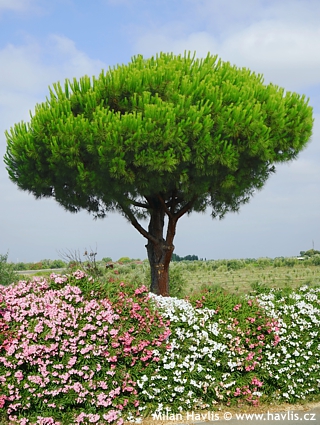
Italian stone pine, often called just umbrella pine, is a long-lived conifer with fresh green, evergreen, and relatively soft needles 10-20 cm long, which grow in pairs and densely cover the branches creating an impenetrable screen. Young plants grown from seeds till the age of about ten years first ...
10 - 20m
8 - 15m
full sun
7   (down to -18°C)
Code of winter protection zone 5+6
for zone 5+6
Code of winter protection zone 7
for zone 7
376_1.jpeg
If you like pines with soft needles, white pines are the best choice. Radiata is an old variety from 1923 which is a slow grower with silvery blue-green needles decorated with green underneath. The appearance is fluffy and you feel like touching it everytime you pass it. Radiata forms a mounding h ...
1,5 - 4m
1,5 - 2,5m
full sun
3   (down to -40°C)
Code of winter protection zone 5+6
for zone 5+6
Code of winter protection zone 7
for zone 7
129_1.jpeg
Watereri is a small, slow-growing pine which is also commercially known under the name “Nana” – a typical name for many dwarf plants. Its needles are borne in pairs, dark green with only a hint of blue-green in summer, and more bluish in cold months of autumn and winter. It is very ...
2 - 4m
1 - 4m
full sun
2   (down to -45°C)
Code of winter protection zone 5+6
for zone 5+6
Code of winter protection zone 7
for zone 7
1009_1.jpeg
Aurea Nana is a dwarf conifer with golden-yellow, scale-like leaves. It belongs to cypress family and is known under its other name – oriental thuja. It grows slowly, keeps it compact shape and dense habit and is suitable for cultivation on short stems. Platycladus is a trouble-free conifer w ...
1 - 2m
0,5 - 1m
full to partial sun
5b   (down to -27°C)
Code of winter protection zone 5+6
for zone 5+6
Code of winter protection zone 7
for zone 7
3657_1.jpeg
Cherry laurel Novita became a sensation the very moment it hit the market – a true horticultural blockbuster. Its dark, intensely glossy leaves looked luxurious and were impossible not to fall in love with. On top of that, it grew strongly and vigorously, quickly finding its place wherever a den ...
V
3 - 6m
2 - 5m
full sun to shade
5b   (down to -27°C)
Code of winter protection zone 5+6
for zone 5+6
Code of winter protection zone 7
for zone 7
4366_1.jpeg
Otto Luyken is one of the hardiest and now truly classic low‑growing cultivars of cherry laurel. It is perhaps the only one to have reliably survived temperatures as low as –29 °C without a single leaf showing frost damage. Growth is slow and compact, with narrow, elongated, lance‑sh ...
IV - V
1,5 - 3m
2 - 3m
full sun to shade
5   (down to -29°C)
Code of winter protection zone 5+6
for zone 5+6
Code of winter protection zone 7
for zone 7
5484_1.jpeg
KLEOPATRA® is a Hungarian cherry laurel variety bred by Dr. Józsa Miklos and introduced in 2007. It forms a compact, graceful shrub or a small tree with spreading branches and dark green, glossy, leathery, evergreen leaves. They emerge coppery orange just like on Etna® variety and can be distinguish ...
IV - V
2,5 - 3,5m
1 - 2m
full sun to shade
5b   (down to -27°C)
Code of winter protection zone 5+6
for zone 5+6
Code of winter protection zone 7
for zone 7
3869_1.jpeg
GENOLIA® cherry laurel originates from Switzerland, where it was selected in 2002 at the nursery Pépinières de Genolier. It is a selection of a chance seedling that not only offered a distinct appearance but also demonstrated high hardiness following an unusually severe winter. The cultivar ...
IV - V
2 - 3m
0,5 - 1m
full sun to shade
6   (down to -23°C)
Code of winter protection zone 5+6
for zone 5+6
Code of winter protection zone 7
for zone 7
5005_1.jpeg
SOFIA is a Hungarian cherry laurel variety from 2020 and an attractive addition to the family of new and hardy varieties from Hungarian breeders. It was granted an EU patent 53851 in 2020, and a year before it won Gold Medal at a prestigious fair of novelties Plantarium 2019. SOFIA is a dwarf ...
0,5 - 1,5m
0,5 - 1,5m
full sun to shade
5b   (down to -27°C)
Code of winter protection zone 5+6
for zone 5+6
Code of winter protection zone 7
for zone 7
Prunus lusitanica 'ANGUSTIFOLIA'
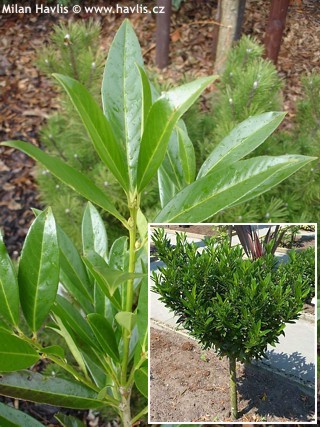
Angustifolia is a popular cultivar of Portuguese laurel, valued for its more compact growth and narrower leaves. The foliage is evergreen, leathery and firmer than that of the species, slightly incurved, narrowly elliptic, 6–10 cm long and 1.5–3 cm wide, with a striking glossy surface. The leaves de ...
V - VI
4 - 8m
2 - 4m
full to partial sun
5b   (down to -27°C)
Code of winter protection zone 5+6
for zone 5+6
Code of winter protection zone 7
for zone 7
5195_1.jpeg
Brenelia is a modern and attractive cultivar of Portuguese laurel from France, selected by Yves Brenelière in the early 21st century. It is distinguished by its larger, distinctly undulated leaves with a higher gloss. The foliage is evergreen, narrowly elliptic, typically 8–12 cm long and 2–4 c ...
VI
4 - 8m
2 - 4m
full to partial sun
5b   (down to -27°C)
Code of winter protection zone 5+6
for zone 5+6
Code of winter protection zone 7
for zone 7
5544_1.jpeg
TICO® Portugal laurel is exceptional. It is a vigorously growing, large‑leaved form of this evergreen species, which I fell in love with the very first moment I encountered its luxurious foliage – one of the most distinctive features of this selection. The leaves are conspicuously large, thick ...
VI
2 - 6m
3 - 4m
full sun
5b   (down to -27°C)
Code of winter protection zone 5+6
for zone 5+6
Code of winter protection zone 7
for zone 7
3269_1.jpeg
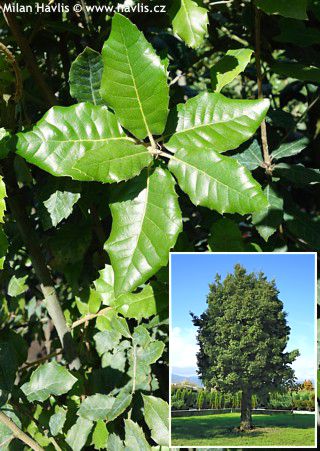
Holm oak or holly oak (holm is an old word for holly) is native to the Mediterranean and is spread from southern parts of Italy, France, Spain and Portugal, to west Balkan and milder parts of North Africa. It used to form vast areas of evergreen forests most of which are chopped down today. It was f ...
8 - 15m
6 - 8m
full sun
6   (down to -23°C)
Code of winter protection zone 5+6
for zone 5+6
Code of winter protection zone 7
for zone 7
5442_1.jpeg
Holm oakis a natural species, not a hybrid despite two specific names in its Latin title. Integrifolia is one of its few selections first described in 1836. Its evergreen, leathery leaves are spineless with less conspicuous notches or serration at margins, often with none whatsoever. They are 3-6 cm ...
4 - 10m
3 - 6m
full sun
6   (down to -23°C)
Code of winter protection zone 5+6
for zone 5+6
Code of winter protection zone 7
for zone 7
1156_1.jpeg
The bamboo-leaf oak is a small to medium-sized evergreen tree whose leaves resemble those of bamboo. They are narrow, elongated to lanceolate, with finely serrated edges or almost entire. New foliage emerges in attractive shades that vary from seedling to seedling and may be bronze, salmon, red, or ...
5 - 12m
4 - 6m
full sun
6   (down to -23°C)
Code of winter protection zone 5+6
for zone 5+6
Code of winter protection zone 7
for zone 7
1412_1.jpeg
Mexican oak is not a widespread tree. It is not listed in many encyclopedias in America and is almost non existent in Europe as it is too tender to grow in most parts of the old continent. Still, there is a mention in 1979 of a special sport selected from this species. At that time Internet was yet ...
2 - 5m
2 - 4m
full to partial sun
6   (down to -23°C)
Code of winter protection zone 5+6
for zone 5+6
Code of winter protection zone 7
for zone 7
5443_1.jpeg
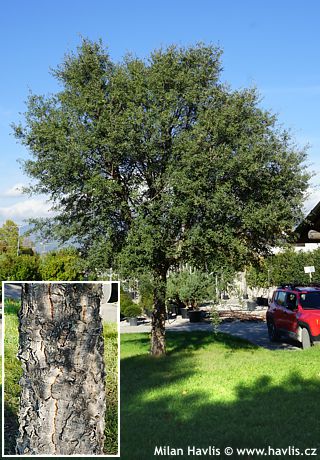
The cork oak is a medium-fast growing evergreen tree with leathery leaves. They are narrowly oval, bright silvery grey as they emerge and medium green and glossy when mature. The reverse retains a silvery gray indumentum. Older plants produce small, elongated acorns. It has a highly attractive, d ...
6 - 10m
6 - 8m
full sun
7   (down to -18°C)
Code of winter protection zone 5+6
for zone 5+6
Code of winter protection zone 7
for zone 7
5060_1.jpeg
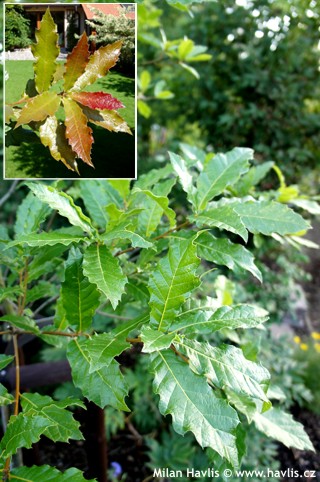
Waasland is a variety of hybrid Spanish oak and the name of a Belgian region where it was found. It features elongated leaves with irregular lobes, which resemble oak leaves more than most other varieties. They are very stiff, leathery, shiny, dark green, the underside is protected by silvery grey i ...
6 - 12m
4 - 8m
full sun
6   (down to -23°C)
Code of winter protection zone 5+6
for zone 5+6
Code of winter protection zone 7
for zone 7
854_1.jpeg
Pseudoturneri is a later variety of Turners oak. Its leaves are very similar to common oak, mid green, shallowly lobed and partly glossy. Compared to its hybrid parent it is a little smaller, hardier, and holds its leaves more reliably over the winter. Still, some leaves may fall down at the end of ...
3 - 6m
2 - 4m
full sun
6   (down to -23°C)
Code of winter protection zone 5+6
for zone 5+6
Code of winter protection zone 7
for zone 7
677_1.jpeg
Cascade Falls is an exciting new variety of bald cypress. It is a novelty from New Zealand, patented in the USA under PP12,296 in 1999. Its eye-catching feature are its pendent branches forming several cascades from the top of the graft. It is a deciduous conifer with bright green, linear leaves. If ...
1 - 2m
1,5 - 3m
full to partial sun
5   (down to -29°C)
Code of winter protection zone 5+6
for zone 5+6
Code of winter protection zone 7
for zone 7
648_1.jpeg
Eskimo is a jewel among viburnums. It is an evergreen or semi-evergreen, compact shrub, growing slowly about 1m tall and wide. In mid-spring it makes almost spherical corymbs of pure white, lightly scented flowers. The flowering is reliable and abundant every year. There are so many flower-heads tha ...
V - V
0,5 - 1,5m
0,5 - 1,5m
full to partial sun
5   (down to -29°C)
Code of winter protection zone 5+6
for zone 5+6
Code of winter protection zone 7
for zone 7
1013_1.jpeg
Eve Price laurustinus is truly a classic today. Its evergreen leaves are up to 8 cm long, ovate, leathery but thinner than most evergreens, medium to dark green, and with conspicuous venation. In autumn it produces a profusion of highly attractive terminal cymes composed of rosy pink flower buds whi ...
XII - III
0,5 - 1,5m
0,5 - 1m
full sun to shade
6   (down to -23°C)
Code of winter protection zone 5+6
for zone 5+6
Code of winter protection zone 7
for zone 7

NOT AVAILABLE AT THE MOMENT:

×
Product has been added to your cart.