











CURRENTLY IN STOCK:
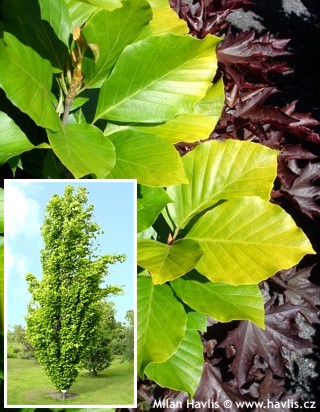
Dawyckii varieties of common beech are very popular for their habit and leaf colours. Dawyck Gold has upright, columnar habit, its initial slow growth changes after a few years to medium-fast, never really fast. Young leaves are bright yellowish green, turning to glowing grass gr ...

10 - 15m

1 - 3m

full to partial sun

4 (down to -34°C)

for zone 5+6
for zone 7
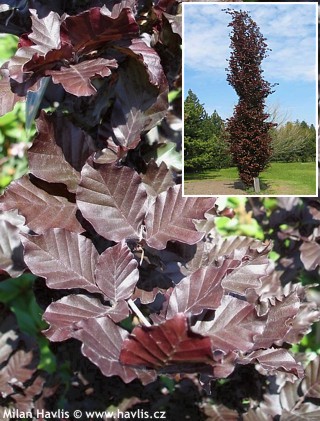
Dawyckii varieties of common beech are very popular for their habit and leaf colours. Dawyck Purple has upright, columnar habit, its initial slow growth changes after a few years to medium-fast, never really fast. Spring leaves are striking purple, colour slightly deepens through ...
10 - 15m
1 - 3m

full sun
4 (down to -34°C)
for zone 5+6
for zone 7
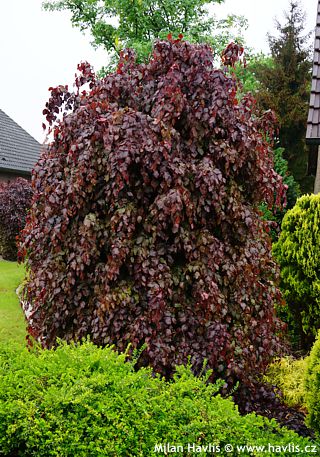
Purpurea Pendula is a perfect example of a beautiful garden-origin eech. It is a slow growing small tree with a mushroom head of pendent branches, usually grafted from 1.5 to 2m tall. The deciduous leaves are rich purple-black (if grown in full sun) that create a fascinating waterfall of s ...
1,5 - 2,5m
1,5 - 2m
full sun
4 (down to -34°C)
for zone 5+6
for zone 7
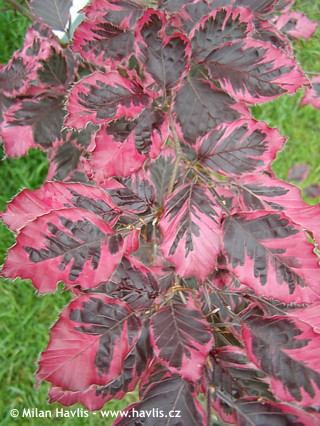
Beech is a reliable and hardy tree of our climate. Variety Purpurea Tricolor has deep burgundy red leaves with pink margins that, upon conditions, can reach the centre of the leaf.
Natural habit is quite airy and thin when young. When mature it reaches well over 10 meters but this ...
3 - 15m
3 - 10m
full sun
4 (down to -34°C)
for zone 5+6
for zone 7
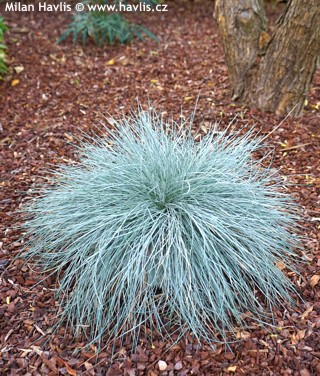
INTENSE BLUE® is a blue fescue of a striking colour. It was bred by Allure Tuinplanten and Amigra from the Netherlands. It was found in 2005 and introduced three years later. The plant makes well-behaved, symmetrical, extremely dense tufts of silvery blue foliage. Their colour literally calls f ...
0,2 - 0,4m
0,2 - 0,3m
full sun
4 (down to -34°C)
for zone 5+6
for zone 7
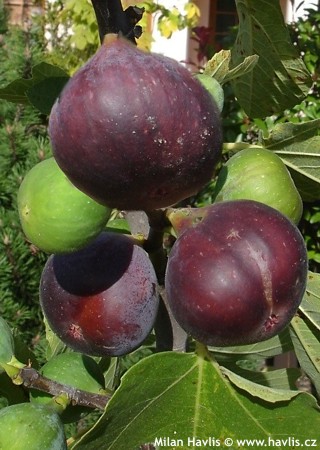
One of the hardiest figs for our climate (zone 6) is named Brown Turkey. As the name suggests the fruit is brownish-red or blackish-purple, relatively large and sweet. They do not require pollination. Immature fruit and branches contain sap which can be an eye and lip-irritant. Palmate leaves are ve ...
1 - 2m
1 - 2m
full sun
6b (down to -21°C)

for zone 5+6
for zone 7
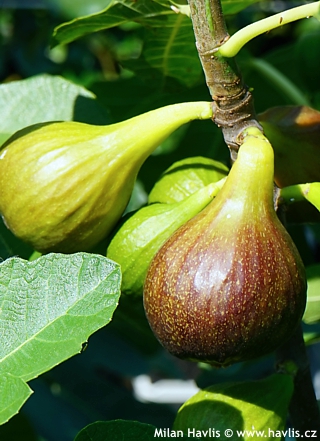
Peretta® is a Swiss addition to the group of hardy figs for zone 6. It produces greenish-brown, sweet fruit from mid August. They do not require pollination. Immature fruit and branches contain sap which can be an eye and lip-irritant. Palmate leaves are very ornamental – mid green and la ...
1 - 2m
1 - 2m
full sun
6 (down to -23°C)
for zone 5+6
for zone 7
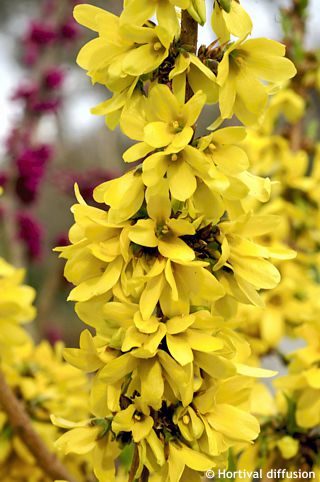
MIKADOR® is a French introduction of golden bell from 2012. It exhibits compact growth with upright, strong branches, and rich, sulphur yellow flowers. Deciduous leaves are lanceolate, mid-green, serrated. The bark is yellow-green to yellow-brown. It can be pruned almost any time from spring un ...

IV
1 - 2m
1 - 2m
full to partial sun
5 (down to -29°C)
for zone 5+6
for zone 7
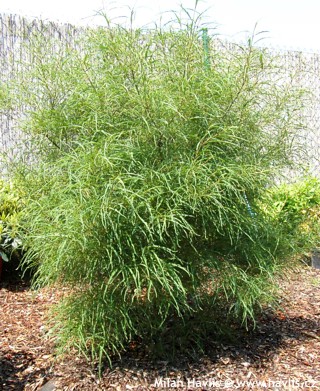
I once heard a joke: What is a yawn? A silent scream. It feels uncannily apt when encountering Aspleniifolia alnus buckthorn for the first time. Your jaw drops, you want to shout “what on earth?”, yet you remain standing there in quiet admiration, murmuring “wow”. If you know the ordinary wild form ...
1,5 - 2,5m
1 - 2m
full to partial sun
3 (down to -40°C)
for zone 5+6
for zone 7
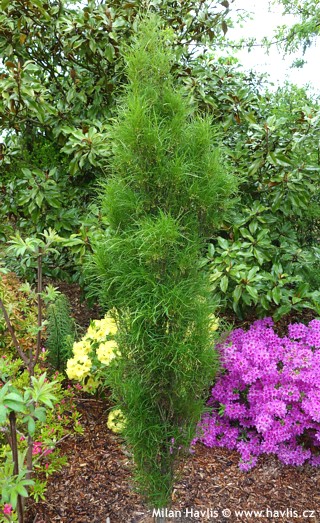
Fine Line® buckthorn is a gorgeous shrub which in its few years on the market has managed to gain attention of many gardeners as well as landscape architects. It is a result of cross-pollination carried out by Ronald Williams in 1989, but only in 1999 he selected plants showing stable characteristic ...
1 - 2m
0,5 - 1,5m
full to partial sun
3 (down to -40°C)
for zone 5+6
for zone 7
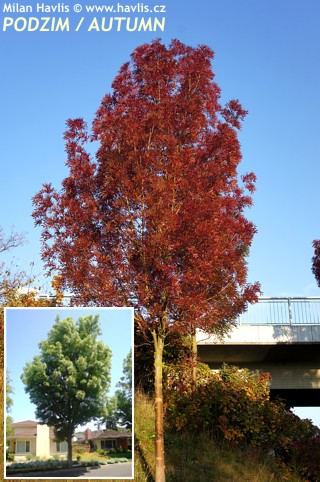
Raywood is a very elegant variety of a deciduous tree called Claret ash. Its leaves are pinnate, up to 25 cm long and are composed of narrow, elliptic and very glossy individual leaflets that are deep green in summer and turn breathtaking shades of brilliant carmine red and deep burgundy red in the ...
10 - 15m
2 - 5m
full sun
5 (down to -29°C)
for zone 5+6
for zone 7
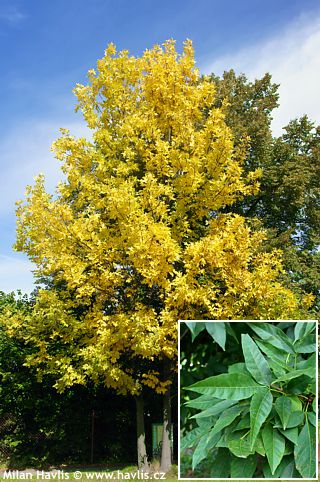
Summit is a green ash variety sought-after for mostly two features: it is a male tree – not producing seeds and unwanted seedlings, and its vibrant autumn colour. The pinnate leaves are deciduous, composed of 5-9 broadly elliptic to narrowly ovate, deep green, not very glossy leaflets which tu ...
12 - 15m
7 - 12m
full sun
4 (down to -34°C)
for zone 5+6
for zone 7
