

































CURRENTLY IN STOCK:
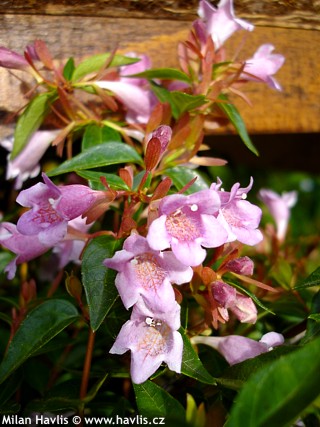
Abelias belong to the most popular flowering shrubs of dwarf to small sizes, mainly thanks to its long flowering period: June-October. Variety Edward Goucher was introduced by a botanist of the same name in the USA in 1911 as a cross between abelia x grandiflora and abelia schumannii.
This elegan ...

VI - X

0,3 - 1m

0,3 - 1m

full to partial sun

6 (down to -23°C)

for zone 5+6

for zone 7
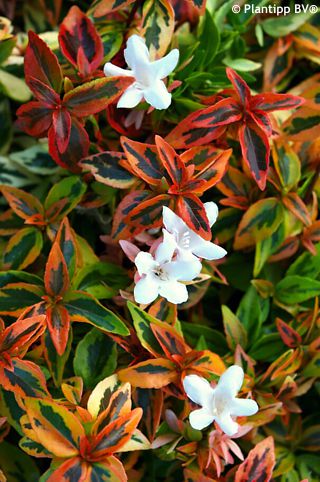
Kaleidoscope® is another novelty of the turn of the century. It drags attention thanks to its multicoloured foliage, but not only that. This abelia was found as a naturally occurring mutation of abelia x grandiflora “Little Richard” by nurseryman Randall Dale Lindsey in North Caroli ...
VII - IX
0,3 - 0,5m
0,3 - 0,8m
full to partial sun
6 (down to -23°C)
for zone 5+6
for zone 7
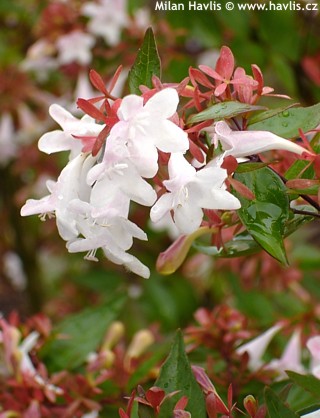
Glossy abelia is a garden hybrid between abelia chinensis and abelia uniflora, and is sometimes also called abelia rupestris. Its dominant feature is profuse flowering from late June until late autumn. Flowers are small, funnel-shaped, pure white, and decorated by pale red calyxes thanks to which th ...
VII - X
0,5 - 1,8m
0,5 - 1,5m

full sun
5b (down to -27°C)
for zone 5+6
for zone 7
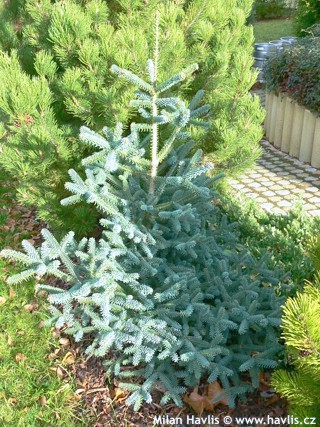
Spanish fir is one of the most popular conifers with blue needles. It is also called hedgehog fir as the needles are short and stiff, regularly composed around its branches. The shape is broadly conical, very neat and regular.
Glauca has striking silvery-blue needles which make it easy to combine w ...
3 - 5m
1,5 - 2,5m
full to partial sun
5b (down to -27°C)
for zone 5+6
for zone 7
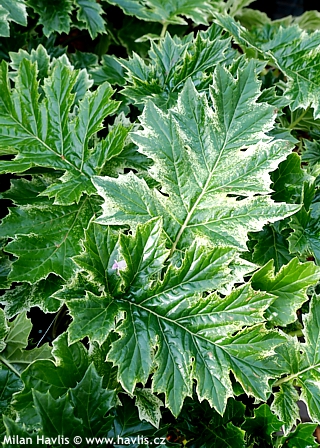
Bear’s breeches variety Whitewater is a true tour de force by Janet N. Egger of Terra Nova® Nurseries in Oregon, USA. At first glance, it captivates with its boldly variegated leaves, whose pattern resembles an irregular wash of white paint – without symmetry or repetition, and with a softly patinat ...
VII
0,3 - 0,6m
0,4 - 0,8m

semi-shade / partial sun
6b (down to -21°C)

for zone 5+6
for zone 7
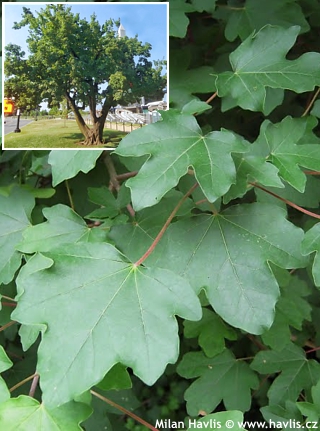
Field maple (and its varieties) is one of the most frequently planted trees in Czech urban landscapes. It is of European origin and has earned its success thanks to its high tolerance to all kinds of weather conditions as well as those brought upon by humans, and longevity. It is rated a medium-tall ...
6 - 10m
6 - 10m
full to partial sun
5 (down to -29°C)
for zone 5+6
for zone 7
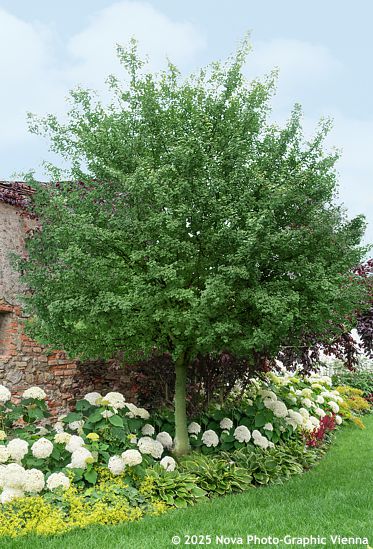
When one mentions Elsrijk, most landscape architects think of a tree that “doesn’t stand out” and that is precisely what makes it exceptional. It is a field maple variety whose canopy is regular, narrowly oval to pyramidal, and keeps its shape without pruning, giving it a tidy appearance even withou ...
6 - 10m
4 - 6m
full to partial sun
3 (down to -40°C)
for zone 5+6
for zone 7
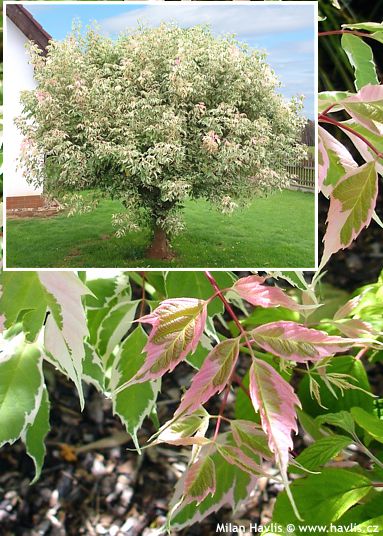
Flamingo boxelder has long been a favourite among trees with variegated foliage and is a characteristic product of the garden aesthetics of the late twentieth century, when attention shifted from flower to leaf colour and structure. Its deciduous leaves are attractively marbled with white and pink, ...
5 - 7m
5 - 7m
full sun
2 (down to -45°C)
for zone 5+6
for zone 7
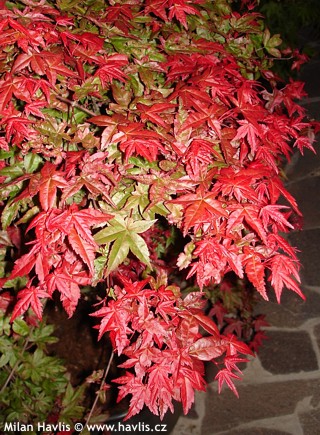
Beni Maiko is a fantastic variety of Japanese maple with brilliant red new foliage. Its Japanese name means a red-haired dancing girl. The deciduous leaves are not large, only about 5 cm across, but their emerging colour in the spring is striking and is even more enhanced when new lea ...
1 - 2,5m
1 - 2m
full to partial sun
5b (down to -27°C)
for zone 5+6
for zone 7
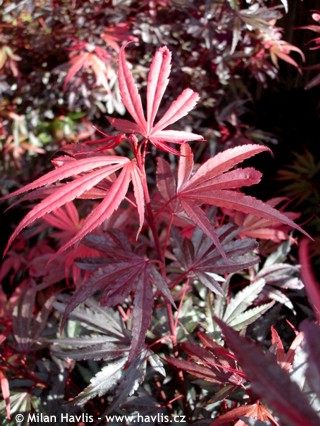
If you google red-leaved Japanese maples I am sure that, amongst the oldest varieties, you will find this nice piece: Shaina. Unlike other cultivars Shaina is everyone’s love as it offers advantages that come in handy for gardeners-beginners.
Shaina has deeply lobed palmate leaves with 5 elo ...
1 - 2m
1 - 1,5m
full to partial sun
5 (down to -29°C)
for zone 5+6
for zone 7
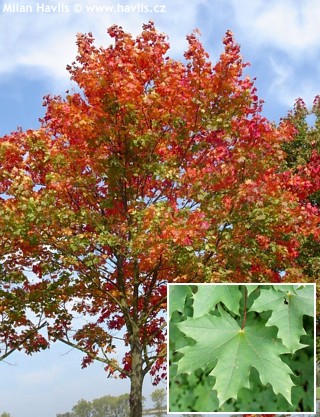
Norway maple is a native European tree commonly cultivated in countries and regions with harsh winters. It is one of the most common street and park in Czech and Slovak republics. Its tolerance against pollution, low winter temperatures, and vigorous growth made it a useful tree for almost all place ...
15 - 25m
10 - 20m
full to partial sun
3 (down to -40°C)
for zone 5+6
for zone 7
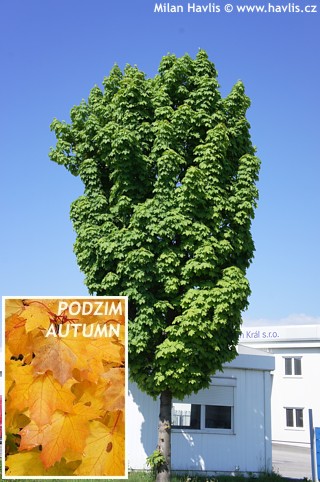
Columnare is a slender form of Norway maple with deciduous, 10-15 cm across, broadly palmate leaves that are green in summer and turn golden orange and bright yellow in autumn. The crown is very narrow – only about 3m wide in 15-20 years, and rather dense. Pruning is usually not required but c ...
15 - 18m
3 - 5m
full to partial sun
for zone 5+6
for zone 7
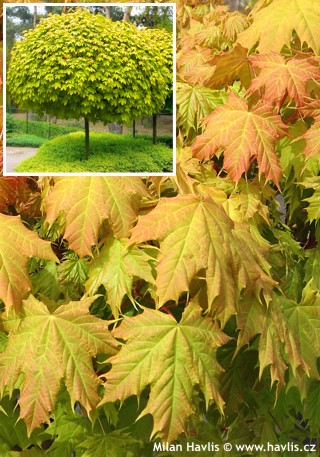
Golden Globe is a dwarf Norway maple i.e. one of those with large leaves as opposed to Japanese maples with small and dissected foliage. One of the big advantage of Norway maple is its resistance against majority of common tree diseases and pests. And it will grow almost anywhere.
Golden Globe va ...
IV - V
2 - 4m
3 - 4m
full sun
4 (down to -34°C)
for zone 5+6
for zone 7
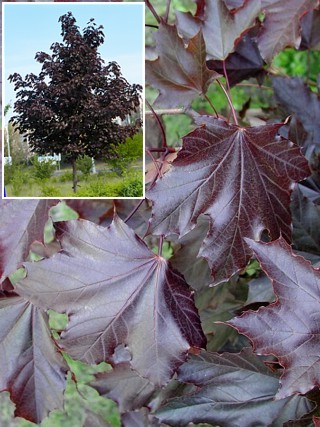
Royal Red is a Norway maple variety you cannot mistake – its leaves emerge in a rich wine-red, deepen to dark maroon in summer, and blaze amber to fiery orange in autumn. In early spring, before the canopy fully leafs out, clusters of small yellow flowers appear, creating a striking contrast against ...
10 - 15m
6 - 12m
full sun
3 (down to -40°C)
for zone 5+6
for zone 7
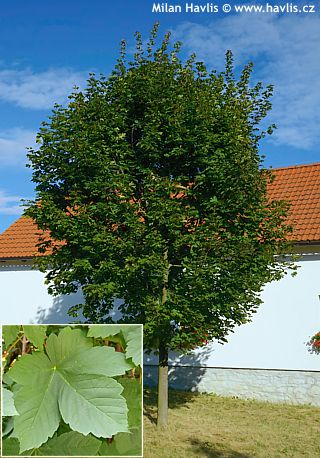
Sycamore tree is one of our native maple species and its natural habitat extends vertically from the north of Europe (with the exception of the northernmost peaty locations) to the mountainous areas of southern Europe, and horizontally from the colder parts of western Europe to the Caucasus. It is o ...
15 - 30m
10 - 20m
full to partial sun
3 (down to -40°C)
for zone 5+6
for zone 7
.jpg)
Men usually get mad when women describe colours with expressions like salmon pink, peachy red etc. Well, men, get ready for another hit below the belt: we have a tree whose leaves are SHRIMP pink. Not familiar with that colour? Go to the nearest restaurant and have a prawn-cocktail to see what the f ...
IV - V
3 - 7m
3 - 5m
full sun
4 (down to -34°C)
for zone 5+6
for zone 7
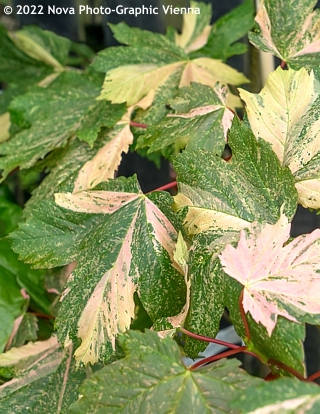
Simon-Louis Frères is a beautiful sycamore maple variety from France introduced in 1881. Its leaves emerge bright pink and as they unroll and mature, each leaf becomes uniquely marbled white and green in various portions. They are deciduous, coarsely-serrate, 5-lobed, and have red stalks. In au ...
3 - 6m
1,5 - 3m
full sun
4 (down to -34°C)
for zone 5+6
for zone 7
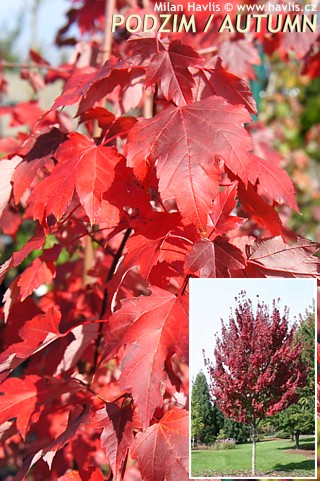
Brandy Wine is another fantastic scarlet maple variety. It forms a compact, bushy, oval-shaped crown with three-lobed, deciduous, rich green leaves on red stalks in summer, which turn deep burgundy red and later vivid carmine red in autumn. They last for a long time. If you wish to prune or shape it ...
6 - 10m
4 - 6m
full sun
3 (down to -40°C)
for zone 5+6
for zone 7
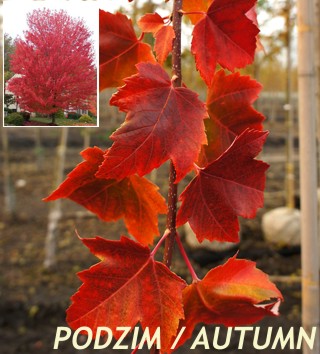
Red Sunset belongs to the top favourite scarlet maples. It makes eye-catching display of autumn colour. Its deciduous leaves are three-lobed, mid-sized, rich green in summer and bright scarlet red in autumn. It grows fast, forming a widely oval, upright canopy. The crown is dense and needs no traini ...
15 - 18m
9 - 12m
full to partial sun
3 (down to -40°C)
for zone 5+6
for zone 7
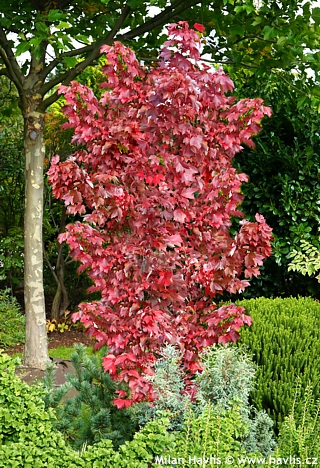
MORGAN is a beautifully coloured variety of scarlet maple, which was discovered in 2002 by Ray Tate from the Angel Creek Nursery in Bishop, Georgia, USA. It was a single mutation among a number of October Glory seedlings planted at a nearby nursery in Morgan County. Among the 58 existing varieties o ...
10 - 20m
6 - 12m
full to partial sun
3 (down to -40°C)
for zone 5+6
for zone 7
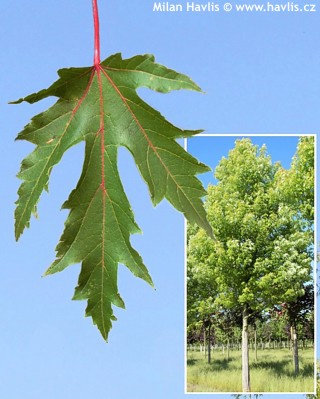
Pyramidale is a silver maple variety with attractive, deeply cut foliage with prominent red veins. The leaves are deciduous, rich green in summer, turning yellow, golden and orange-red in autumn. The tree forms a widely columnar canopy and is fast growing. Its branches may have a tendency to break, ...
12 - 18m
4 - 6m
full to partial sun
4 (down to -34°C)
for zone 5+6
for zone 7
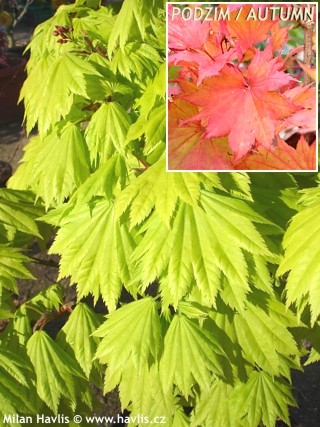
“Aureum” is variety of Shirasawa maple that differs from others by its more or less erect growth with horizontal lateral branches. The fan-shaped leaves are fresh yellow-green to golden yellow, sometimes with pinkish margins. The other difference is fruit: Acer shirasawanum holds its samaras above t ...
2 - 4m
semi-shade / partial sun
5b (down to -27°C)
for zone 5+6
for zone 7
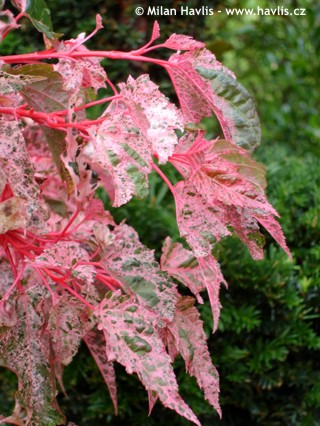
Even among a hundred trees you will notice Red Flamingo hybrid snake-bark maple first. Such a colourful small tree must have been brought directly from Mars where red is constantly in vogue. It is a stunning variety making a breathtaking display wherever you put it. Its key features are the leaves a ...
2 - 4m
1,5 - 3m
full to partial sun
6 (down to -23°C)
for zone 5+6
for zone 7
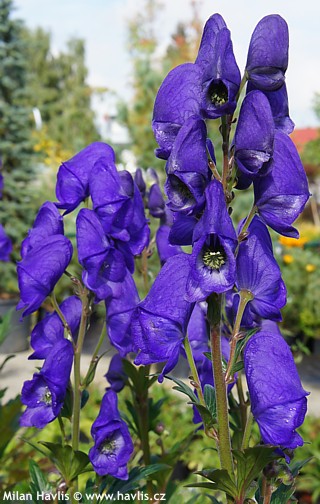
Autumn or azure monkshood is a showy perennial flowering from late summer till autumn. Arendsii is a variety producing erect racemes of large, hooded flowers that are more indigo blue rather than violet. They appear from September till October along sturdy stems that grow just over a meter tall. The ...
IX - X
1 - 1,3m
0,3 - 0,5m
full to partial sun
3 (down to -40°C)
for zone 5+6
for zone 7
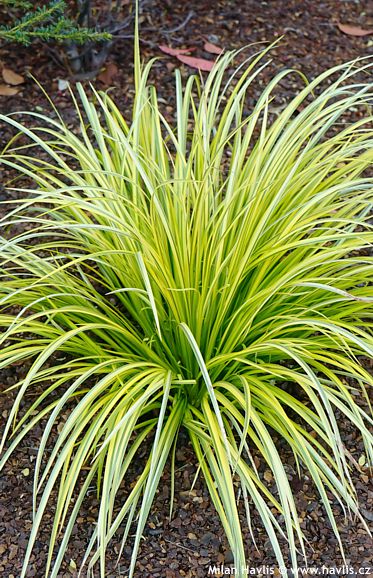
If you love the character of ornamental grasses, you’ll likely fall for this – to be botanically correct – non-grass 😊. Its name is Ogon and it is a cultivar of sweet flag that shines like a jewel thanks to its leaf colouration. It immediately draws attention with its bright yellow leaves ad ...
0,3 - 0,4m
0,4 - 0,5m
full sun
5 (down to -29°C)
for zone 5+6
for zone 7
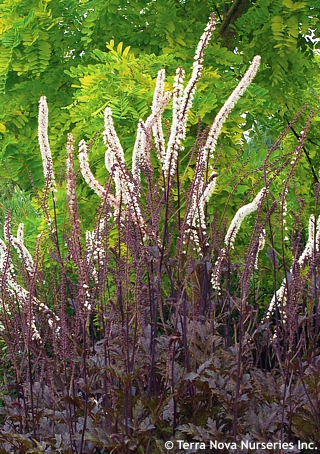
Black Negligee is another beautiful dark-leaved variety of bugbane with deep burgundy brown or almost black, 30-50 cm across leaves. They are 3-ternate-pinnate, with palmate, lobed, sharply toothed basal leaves. In late summer rise slender, dark stems bearing 30-40 cm long erect racemes composed of ...
VIII - IX
1,2 - 1,5m
0,4 - 0,8m
full to partial sun
5 (down to -29°C)
for zone 5+6
for zone 7
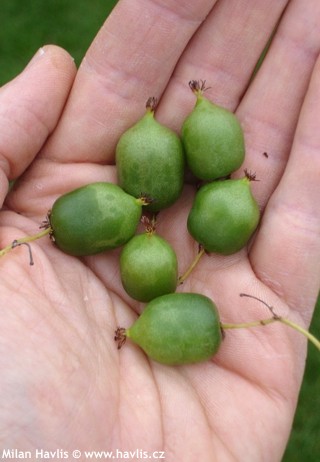
Issai is a self-fertile variety of the so-called mini-kiwi. This means that unlike the species it does not need a male and a female plant to produce fruit. Apart from tasty fruit it is a nice plant, too, with deep green leaves and scented flowers in June.
It is a vine that is less vigorous that the ...
V - VI
3 - 6m
full sun
4 (down to -34°C)
for zone 5+6
for zone 7
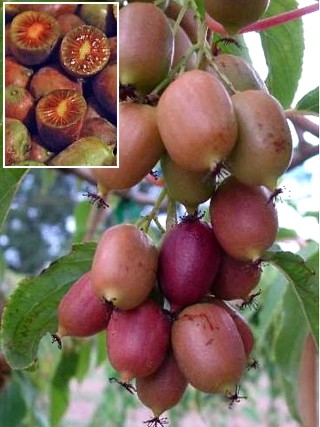
Ken’s Red is a female variety of the so-called mini-kiwi (kiwiberry). It is a vine that is less vigorous that the species. Apart from tasty fruit it is a nice plant, too, with deep green leaves and scented flowers in June.
Its fruit has smooth skin, and both skin and flesh have various shades ...
VI - VI
2 - 6m
full sun
5 (down to -29°C)
for zone 5+6
for zone 7

The active ingredient is cold‑pressed oil from Pongamia pinnata (karanja oil), which contains natural compounds with insecticidal and fungicidal properties. It acts by contact and as an antifeedant – disrupting the cuticle and respiratory system of pests, leading to their death. At the same ti ...
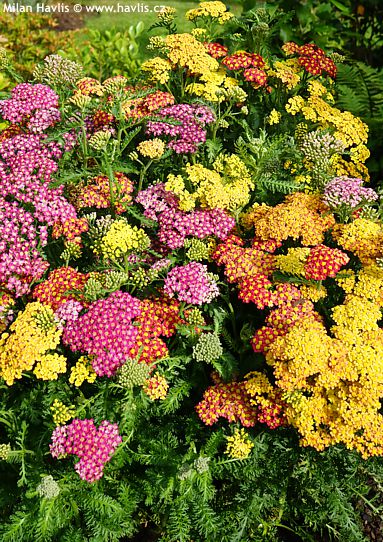
I'm not a huge fan of multi-coloured combinations — I admit that. But when I visited the Plantarium trade fair in 2023 and saw the exhibition by the Dutch company Florensis, showcasing their rising star — a modern yarrow series called Milly Rock, planted in mixed containers with three to five shade ...
VI - IX
0,3 - 0,4m
0,3 - 0,4m
full sun
3 (down to -40°C)
for zone 5+6
for zone 7
.jpg)
Apple Blossom yarrow, a literal translation of the original and preferred German name ‘Apfelblüte’, is a variety created by German breeder A. Kikillus. It features soft pink flowers in almost flat terminal corymbs made up of delicate flower heads. Flowering begins in June and continues through Septe ...
VI - IX
0,6 - 0,8m
0,3 - 0,4m
full sun
3 (down to -40°C)
for zone 5+6
for zone 7
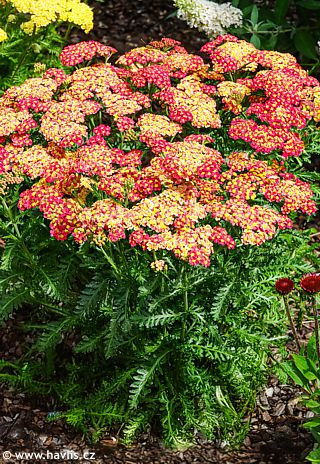
MILLY ROCK™ RED yarrow makes warm red flowers with yellow centres composed in almost flat corymbs atop about 30-40 cm tall stems. Flowering begins in June and continues until late August. Fern-like leaves are finely cut and rich grass green, basal leaves are larger than stem leaves. Removing s ...
VI - VIII
0,3 - 0,4m
0,3 - 0,4m
full sun
3 (down to -40°C)
for zone 5+6
for zone 7
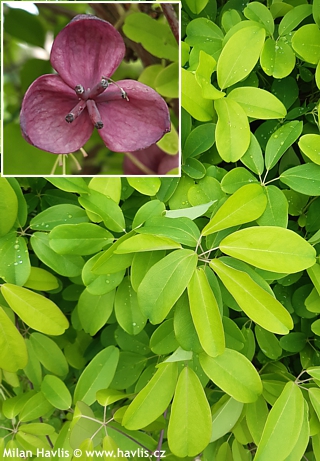
Chocolate vine is a tasty name for a beautiful climbing plant from Asia called akebia. Its home is in China, Japan, and Korea but being hardy to some -34 °C it is popular in almost all temperate parts of the world. It is cultivated for handsome foliage and profusion of attractive flowers in spring. ...
IV - V
5 - 10m

full sun to shade
4 (down to -34°C)
for zone 5+6
for zone 7
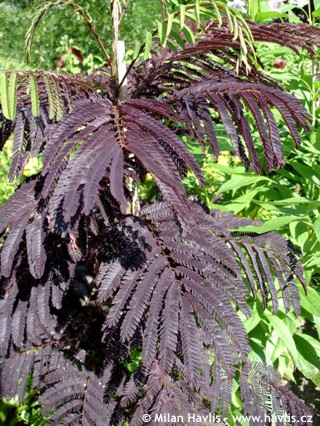
A spectacular new variety of silk tree comes from Japan and is called Summer Chocolate®. It was discovered in 1990 as a seedling in a controlled planting of Albizia julibrissin in 1990. It was patented in the USA under PP 13,822 in 2003. It is considered a rarity for lovers of exotic-looking pl ...
VII - VIII
2 - 5m
2 - 5m
full sun
6b (down to -21°C)
for zone 5+6
for zone 7
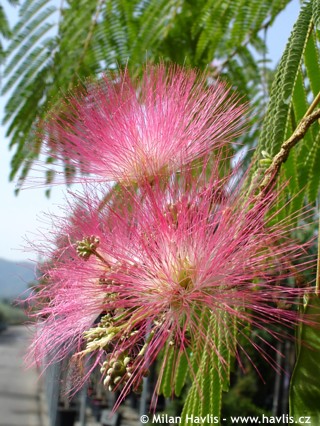
Ombrella® is one of the earliest selections of silk tree, discovered by the French grower and nurseryman André Bourquin in southern France, in the Drôme region near Valence, around 1986. He first noticed the darker, deep green leaves and in summer he was struck by the much richer, raspberry pink flo ...
VII - IX
2 - 6m
1 - 3m
full sun
6 (down to -23°C)
for zone 5+6
for zone 7
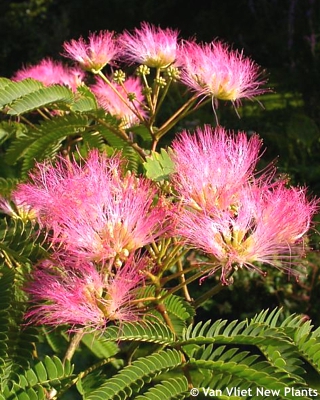
TROPICAL DREAM is a silk tree variety from Belgium where it was selected by Johan Possemiers around 1984. It was selected among many seedlings raised from seeds collected around Seoul in South Korea. Though, it took many years to reach the trade as only in 2015 it was first introduced at Plantarium ...
VII - VIII
3 - 5m
3 - 6m
full sun
6 (down to -23°C)
for zone 5+6
for zone 7
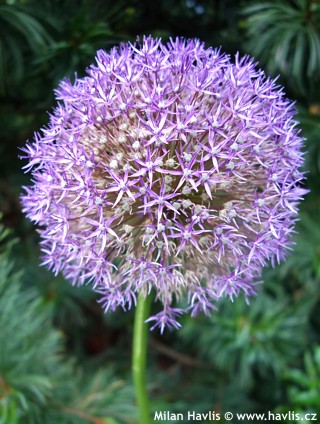
Pinball Wizard is a hybrid variety of ornamental onion, a cross between a.macleanii and a.cristophii. It produces extremely large globes of star-shaped, violet flowers from late May until late June. The inflorescence is up to 20 cm across, and strong stems reach only about 50-60 cm. Strap-shaped, ba ...
V - VI
0,5 - 0,6m
0,2 - 0,2m
full sun
5 (down to -29°C)
for zone 5+6
for zone 7
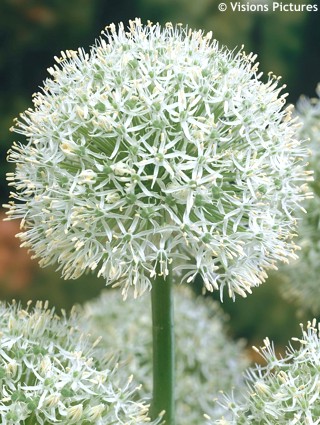
Ornamental onions, too, have their white sheep in the herd. This beauty is called Mount Everest and is a large flowered variety of Persian onion from Central Asia. It makes 12-14 cm across flower heads composed of numerous star-shaped, pure white flowers with beige stamens in June for about 3 weeks. ...
VI
0,6 - 0,8m
0,2 - 0,2m
full sun
3 (down to -40°C)
for zone 5+6
for zone 7
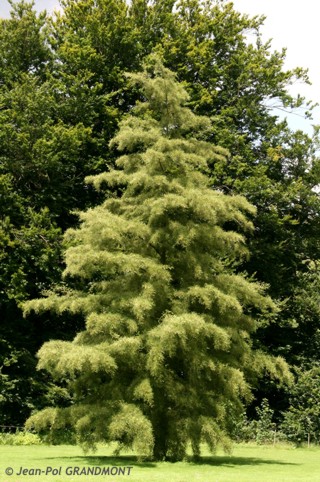
Common alder is a European native plant. There are varieties, however, that are very uncommon and I am not afraid to say exquisite. Such as this variety: Imperialis.
Imperialis alder bears mid-green, deciduous, very deeply cut, 4-8 cm long, narrow leaves that look like tiny witches’ brooms. B ...
5 - 8m
2 - 4m
full sun
3 (down to -40°C)
for zone 5+6
for zone 7
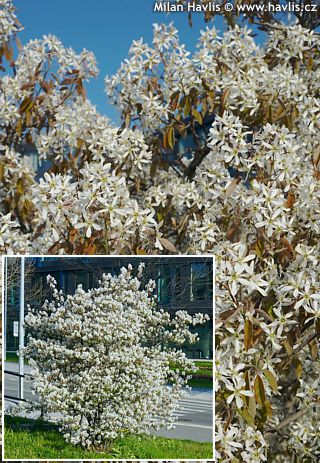
Juneberry is a large shrub cultivated mostly for its delicious and healthy fruit. It is a large deciduous shrub or a small tree.
Flowers are star-shaped, white and scented and appear in mid spring. Oval leaves are up to 8 cm long, emerge bronze and mature to green colour, turning scarlet red or dee ...
IV - V
2 - 6m
2 - 5m
full sun
4 (down to -34°C)
for zone 5+6
for zone 7
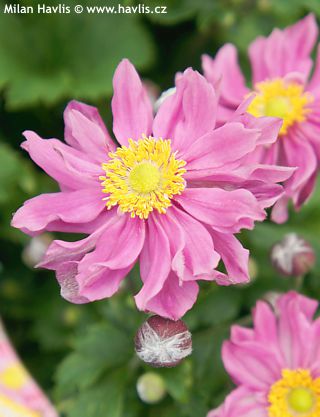
Pretty Lady Emily® is a Japanese anemone hybrid, probably the shortest of all among the Pretty Lady® series. It produces semi-double, medium to light pink flowers decorated with a small crown of showy, rich yellow anthers in the centre. Stems are only about 30-40 cm tall and even young pl ...
VIII - X
0,3 - 0,4m
0,3 - 0,4m
full to partial sun
5 (down to -29°C)
for zone 5+6
for zone 7
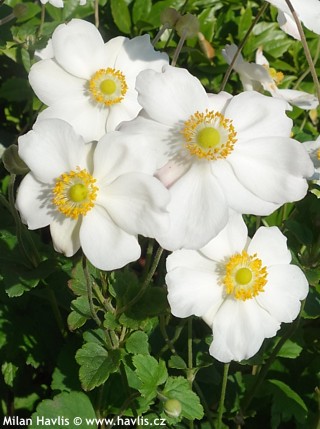
Honorine Jobert is a late variety of Japanese anemone. It produces 2-3 cm wide snow-white flowers with deep yellow centres of stamens from end August until the last warm days of autumn. The stalks are about 1 meter tall, well-branched. Basal leaves are deciduous, palmate, mid green, sharply toothed, ...
VIII - X
1 - 1,3m
0,3 - 0,6m
full to partial sun
5b (down to -27°C)
for zone 5+6
for zone 7
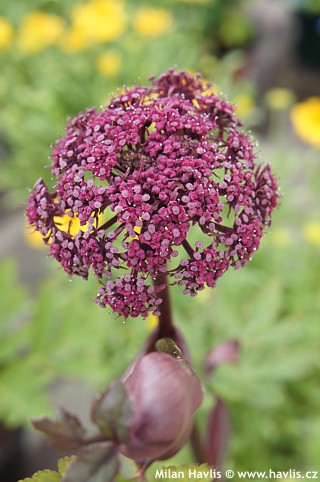
Giant angelica is a bold-leaved perennial with very unusual flowers. They are formed in deep purple-red umbels, borne on 1.5-1.8m tall, strong stems, and appear from late July until early September. Leaves are large, divided in the manner that they look like palmate, mid green, and deciduous.
Wild ...
VII - IX
1,3 - 1,8m
0,5 - 0,8m
full to partial sun
6 (down to -23°C)
for zone 5+6
for zone 7
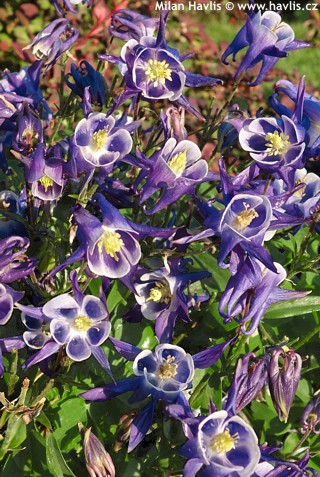
WINKY series of columbine comprises of strong varieties of several colors. They form compact and symmetrical clumps which look like precisely hand-tied bouquets. WINKY Blue White is a variety with dark violet blue flowers with a white margin on the crown. They come out on 40-50 cm tall, strong stems ...
IV - VI
0,4 - 0,5m
0,3 - 0,4m
full to partial sun
2 (down to -45°C)
for zone 5+6
for zone 7
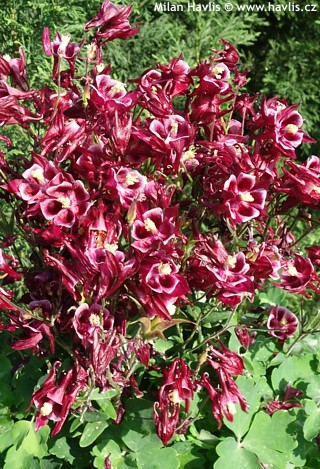
WINKY series of columbine comprises of strong varieties of several colors. They form compact and symmetrical clumps which look like precisely hand-tied bouquets. WINKY Red White produces unique, glossy flowers of rich burgundy red colour with white margins. They are borne atop about 60 cm tall stems ...
IV - VI
0,5 - 0,6m
0,3 - 0,4m
full to partial sun
2 (down to -45°C)
for zone 5+6
for zone 7
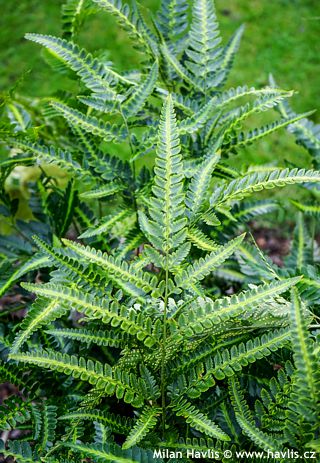
Simpler East Indian hollyfern is one of the few outdoor ferns with variegated leaves. Its name simplicior refers to the difference with a. aristata, compared to which it has shorter leaves with conspicuously separated lateral petioles with leaves of the second pinnacle - they are bi-pinnate. Moreove ...
0,3 - 0,5m
0,5 - 0,8m
semi-shade / partial sun
7 (down to -18°C)
for zone 5+6
for zone 7
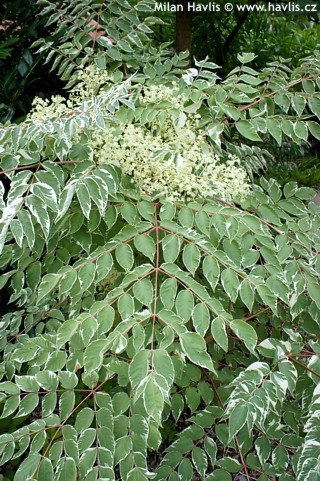
Variegata
is one of the first (or possibly the very first) variegated mutation of Japanese angelica tree which probably explains it rather botanical, charmless name. Nonetheless the plant itself is charm impersonified! It produces giant frond-like foliage, compound of 5-6 cm long, broadly obovate t ...
VIII - IX
2 - 4m
2 - 3m
full to partial sun
4 (down to -34°C)
for zone 5+6
for zone 7
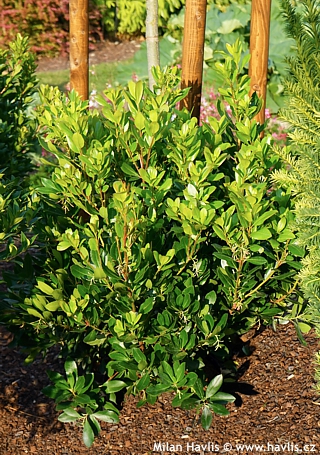
Compacta is a strawberry tree selection found many years ago as a seedling of the species. It boasts a neat and well-behaved habit, dense branching, and improved hardiness. Its evergreen leaves are narrowly obovate, 5-7 cm long, finely serrated at margins, they emerge bronze red and remain soft gree ...
IX - V
1,5 - 3m
1 - 2m
full to partial sun
6 (down to -23°C)
for zone 5+6
for zone 7
.jpg)
Quercifolia is a rare, collector’s selection of strawberry tree that differs from the species in both leaf shape and growth habit. The epithet Quercifolia is common in botanical usage and means “oak‑leaved”; also here it refers to the unusual leaf form, which bears several shallow notches towa ...
XI - XII
1,5 - 4m
1,5 - 4m
full sun
6 (down to -23°C)
for zone 5+6
for zone 7
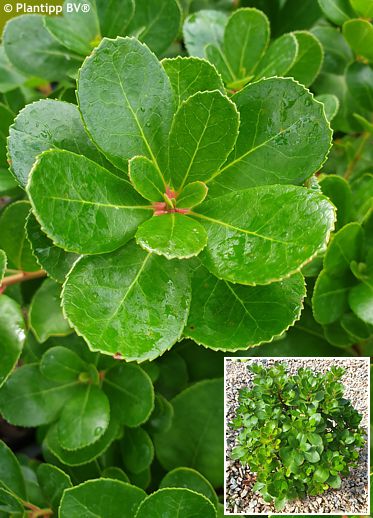
PEACE AND LOVE is a French cultivar of strawberry tree, selected by François Leverge in 2008 at his nursery Pépinière Le Verge in Brittany. The cultivar is protected under European law CPVO EU 69807 with the breeder’s name ‘Levap’ (2025). The trade name PEACE AND LOVE evokes harmony and positiv ...
X - XI
1,5 - 2m
1 - 1,5m
full to partial sun
6 (down to -23°C)
for zone 5+6
for zone 7
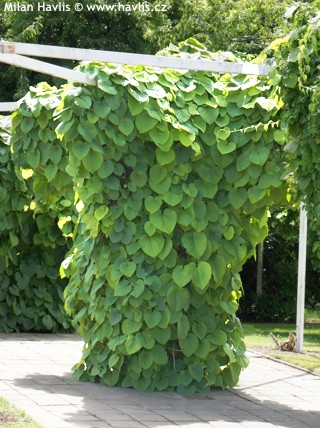
Dutchman's pipe is a vigorous climber native to America, found in moist woodlands from N.E.Canada to S.E.USA. It is cultivated for its dramatic large foliage which looks as if just escaped from a rainforest. The deciduous leaves are 10-30 cm across, fresh green, heart-shaped. In summer small pipe-li ...
VII - VIII
5 - 9m
3 - 9m
full to partial sun
4 (down to -34°C)
for zone 5+6
for zone 7
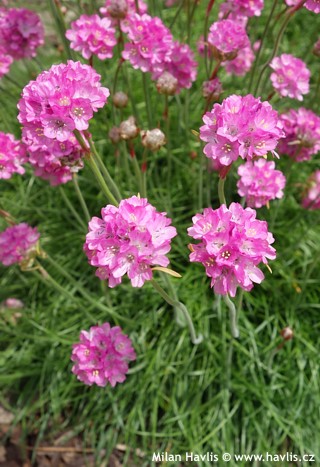
Sea thrift is a rock perennial which is at home in almost all parts of northern hemisphere. Splendens is possibly one of the most popular and cultivated variety bearing clear pink flowers on about 15 cm tall leafless stems from June until July, and a few more in late summer. Linear leaves are soft, ...
V - VII
0,1 - 0,2m
0,2 - 0,3m
full sun
4 (down to -34°C)
for zone 5+6
for zone 7
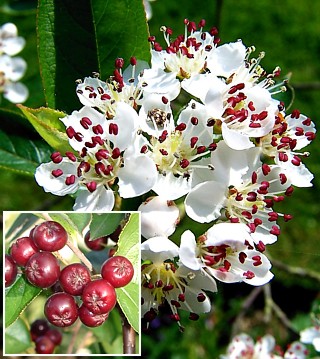
Brilliant is one of the latest varieties of purple chokeberry which is a hybrid between red and black chokeberry. So far you can find it listed under three names: a.melanocarpa, a.arbutifolia, and a. x prunifolia which is probably the most correct name. It is cultivated for several reasons, and the ...
V - V
1 - 2,5m
1 - 1,5m
full sun
4 (down to -34°C)
for zone 5+6
for zone 7
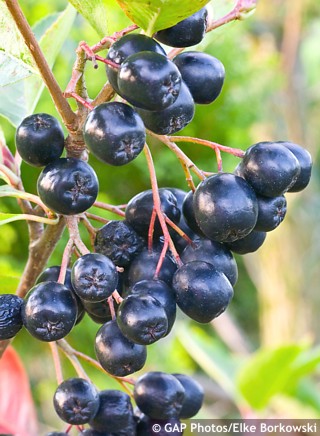
Nero is a Slovak variety of purple chokeberry with large fruit and leaves purple tinged on the reverse. The lustrous fruits are black, about twice as big as black currant berries, and are rich in vitamin C and other important microelements such as ferrum and iodine. They can be eaten fresh, in fruit ...
V - V
1,5 - 2m
1 - 2m
full to partial sun
3 (down to -40°C)
for zone 5+6
for zone 7
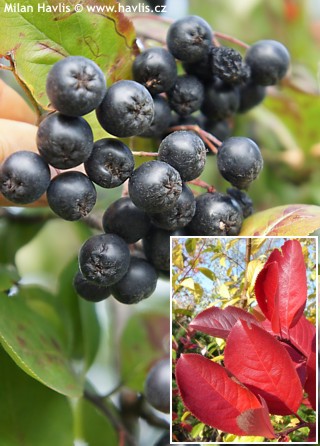
Recently, less known fruit trees and shrubs are becoming more and more popular mainly thanks to their original taste as well as positive impact on our health. Chokeberry is one of them. It is in the same rosaceae family as the service tree and its fruit is similar, too. The lustrous fruits are black ...
V - V
1,5 - 2m
1 - 2m
full sun
3 (down to -40°C)
for zone 5+6
for zone 7
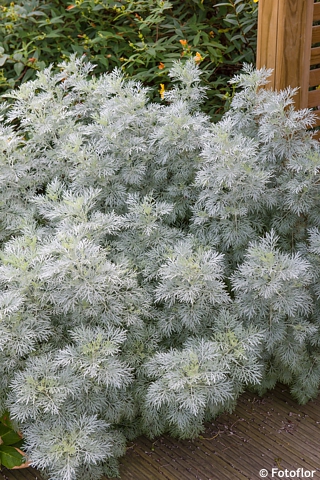
Powis Castle is an English variety of wormwood that is also called Brass Band. It is most likely a spontaneous hybrid between the species a. arborescens and a. absinthium from the Middle East where wormwoods willingly hybridize among themselves. One plant was found growing in a garden in Yorkshire b ...
0,4 - 0,8m
0,4 - 0,8m
full sun
6 (down to -23°C)
for zone 5+6
for zone 7
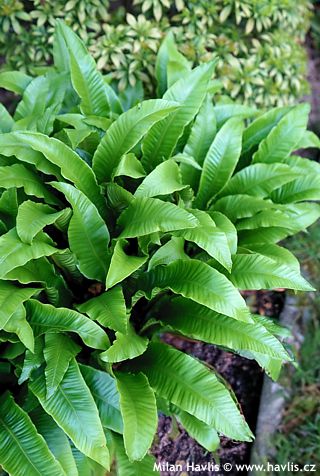
Hart’s tongue fern is an attractive species with large, evergreen leaves. It was widespread in Europe, West Asia, and North America but in some locations including Czech Republic it is already listed among endangered species.
Hart’s tongue fern is the only hardy fern with entire foliag ...
0,3 - 0,4m
0,4 - 0,5m

semi-shade to shade
5 (down to -29°C)
for zone 5+6
for zone 7
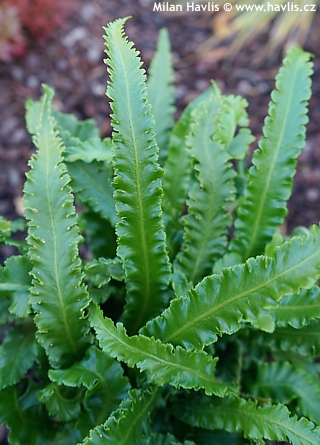
Crispum is a hart’s tongue fern variety from the undulatum group. Its narrow leaves are similar to Angustatum variety but exhibit gently crested margins. They are deep green, 30-40 cm long, dark green, highly glossy, and withstand deep frost without damage, only during very cold spells they ma ...
0,3 - 0,4m
0,4 - 0,5m
semi-shade to shade
5 (down to -29°C)
for zone 5+6
for zone 7
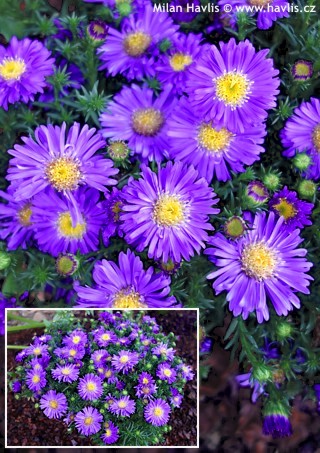
Blue Lapis is a modern variety of autumn aster. It makes a small, almost dwarf, compact and bushy plant with profusion of semi-double rich violet-blue flowers from late August until mid October. Leaves are very dark green and resistant to powdery mildew. The whole plant is very bushy evenly branched ...
VIII - X
0,3 - 0,4m
0,3 - 0,4m
full sun
3 (down to -40°C)
for zone 5+6
for zone 7
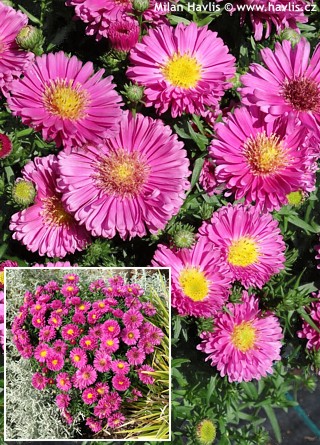
Pink Topaz is a modern variety of autumn aster. It makes a small, almost dwarf, compact and bushy plant with profusion of semi-double dark purple pink flowers from late August until mid October. Leaves are very dark green and resistant to powdery mildew. The whole plant is very bushy evenly branched ...
VIII - X
0,3 - 0,4m
0,3 - 0,4m
full sun
3 (down to -40°C)
for zone 5+6
for zone 7
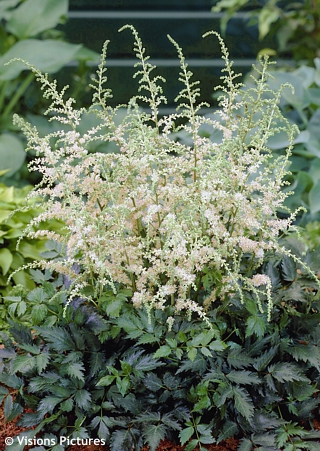
Darwin’s Snow Sprite is a dwarf astilbe from the simplicifolia group. It makes delicate, almost fern-like, elegantly incised at margins, deep green and highly glossy leaves. They are deciduous and emerge bronze tinged. Snow white flowers are formed in loose plumes atop only some 20 cm tall, sl ...
VII - VIII
0,2 - 0,3m
0,3 - 0,4m
semi-shade / partial sun
4 (down to -34°C)
for zone 5+6
for zone 7
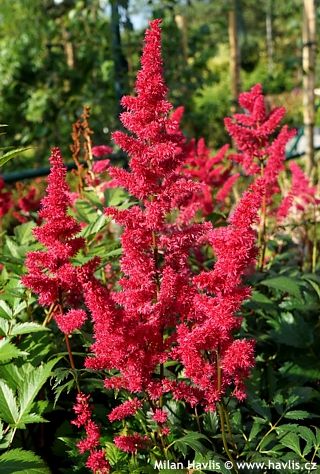
Fanal astilbe is one of the earliest varieties with red flowers. It begins to bloom in mid June and forms rich raspberry red flowers atop 30-50 cm tall stems. Leaves are divided, healthy, glossy, mahogany red as they emerge and turning dark green before flowering starts. It was awarded AGM (Award of ...
VI - VII
0,3 - 0,5m
0,3 - 0,5m
semi-shade to shade
4 (down to -34°C)
for zone 5+6
for zone 7
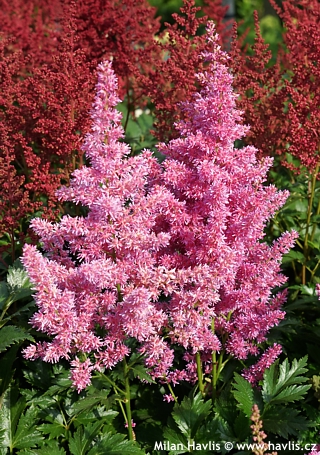
Mainz is a japonica hybrid astilbe from 1952. Its flowers are cotton-candy-like pink plumes atop almost 50 cm tall stems and bloom from late June. Leaves are dark green, divided, heavily serrated at margins, healthy, and glossy.
Grow astilbe in humus-rich soil. If planted in boggy or regularly wat ...
VI - VII
0,4 - 0,5m
0,3 - 0,5m
semi-shade to shade
4 (down to -34°C)
for zone 5+6
for zone 7
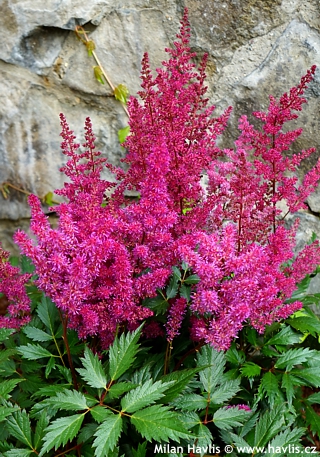
Vision Vulcano is a glowing purple pink astilbe variety with erect, dense yet fluffy inflorescence. Compared to Vision in Purple it is shorter, more compact, and the flowers have more of a dark pink tone. Blooming begins in late June atop 30-40 cm tall, strong stems, and may last until mid August. D ...
VII - VIII
0,3 - 0,4m
0,3 - 0,5m
semi-shade to shade
5 (down to -29°C)
for zone 5+6
for zone 7
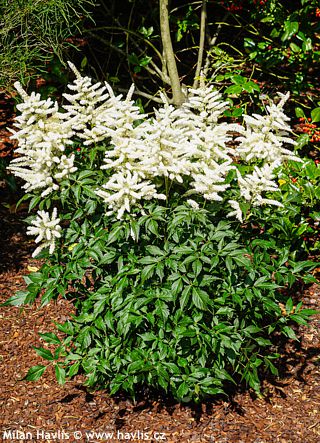
Washington astilbe is as iconic as the White House in the US capital of the same name (plus the D.C., obviously). Elegant yet ostentatious, tall enough not to be overlooked but not so much to overshadow its surroundings, and pure in colour like the endeavour of anyone who swears an oath to his count ...
VI - VII
0,4 - 0,6m
0,3 - 0,4m
semi-shade to shade
4 (down to -34°C)
for zone 5+6
for zone 7
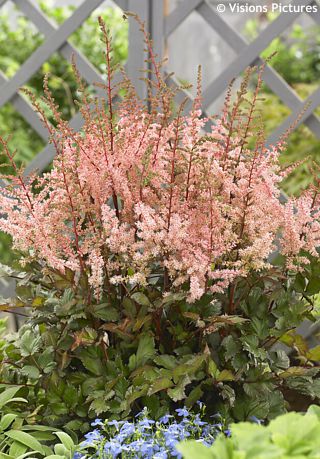
Spotlight astilbe does deserve its name. It is a spectacular variety with soft pink flowers that stand proudly above handsome, dark green, maroon-flushed leaves. They are deciduous, glossy, distinctly serrated at margins, and are usually unpalatable to any pests – especially slugs, making this astil ...
VII - VIII
0,3 - 0,5m
0,3 - 0,4m
full sun to shade
4 (down to -34°C)
for zone 5+6
for zone 7
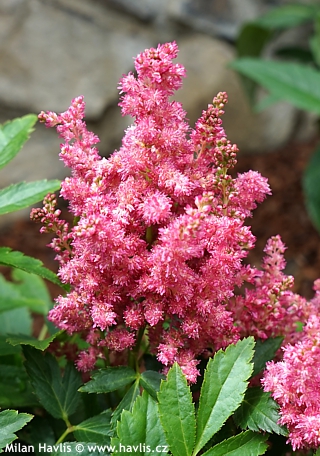
Fireberry astilbe was bred by Dutch perennial specialist Jan Verschoor as an a. arendsii x a. japonica hybrid. Patent No. PP20658 was granted in 2010. It is a compact to almost dwarf variety producing short, congested inflorescence composed of vibrant pink flowers. They open from late June atop shor ...
VI - VII
0,3 - 0,4m
0,3 - 0,4m
semi-shade to shade
4 (down to -34°C)
for zone 5+6
for zone 7
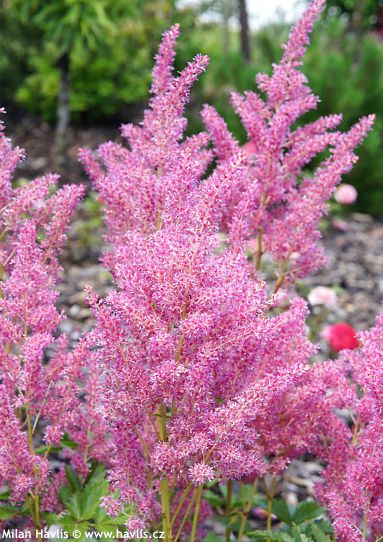
YOUNIQUE™ is a trade name of a new astilbe series from the Netherlands. Plants from this series excel in abundant flowering and healthy foliage. They are a cross between a.arendsii and a.japonica, bred by Jan Verschoor. YOUNIQUE™ Pink is variety with dense, bright bright pink plumes. They bloom on 2 ...
VI - VII
0,3 - 0,4m
0,3 - 0,5m
semi-shade to shade
4 (down to -34°C)
for zone 5+6
for zone 7
.jpg)
Red Beauty is a Japanese painted fern variety with pale green leaves with silver grey hues especially on young leaves whose midribs are distinctly dark magenta purple, just like its stems. As this colour disappears from the stems as the leaves mature, it remains on the midribs and contrasts beautifu ...
0,3 - 0,4m
0,3 - 0,5m
semi-shade to shade
4 (down to -34°C)
for zone 5+6
for zone 7
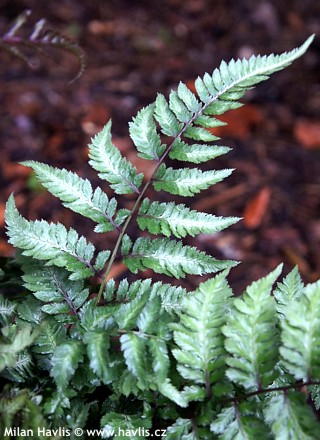
This variety of Japanese painted fern is a spectacular plant. Its leaves are silvery grey, almost metallic. The stems and midribs are dark maroon-purple. Such fantastic combination makes it a must have for every fern collector.
In spring cut off all foliage to encourage growth of new leaves. It ne ...
0,3 - 0,4m
0,4 - 0,5m
semi-shade to shade
4 (down to -34°C)
for zone 5+6
for zone 7
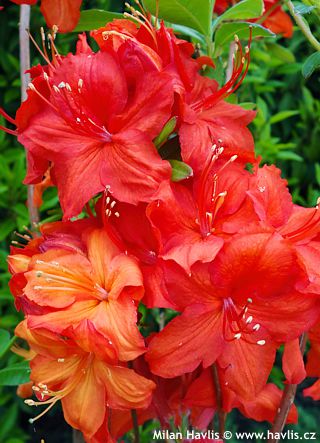
In 1977 Hans Hachmann introduced a sensational deciduous azalea with the richest merge of red and orange colour. Its name is Feuerwerk (Fireworks) and it does look as if taken from the middle of a blazing fire. The individual flowers are large – 7-8 cm across, only lightly scented, and appear ...
V - VI
1 - 2m
1 - 2m
full sun
4 (down to -34°C)
for zone 5+6
for zone 7
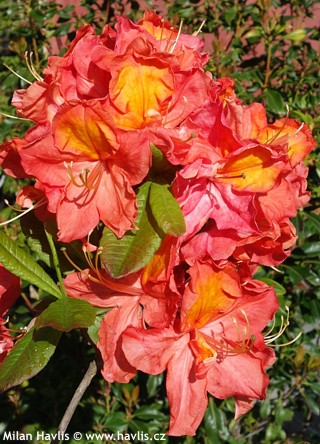
Sarina is a large-flowered variety of this deciduous azalea, bred by Hans Hachmann already in 1963. Its flowers are rich scarlet red, slightly frilled at margins, and have a large, golden orange blotch on the upper lip. Fragrance is faint. Deciduous leaves are oval to elongated, mid green in summer ...
V - VI
1,5 - 2m
1 - 1,5m
full sun
4 (down to -34°C)
for zone 5+6
for zone 7
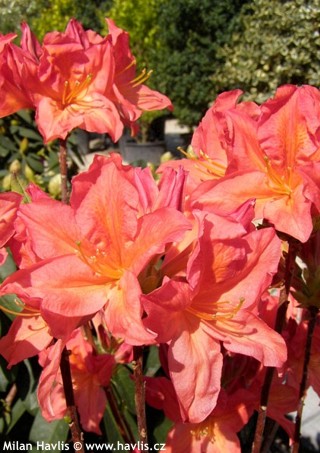
Tunis azalea could be a perfect deciduous azalea choice for those who love striking colours. This variety offers large, rich salmon-red flowers with orange throats. Petal margins are a little undulated. It grows at medium speed rate forming a rather symmetrical shrub.
Deciduous azaleas are ericaceo ...
V - VI
0,5 - 1,5m
0,5 - 1,5m
full sun
4 (down to -34°C)
for zone 5+6
for zone 7
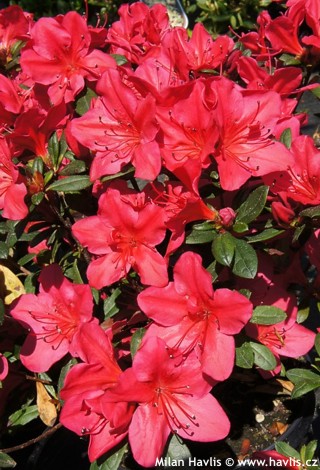
Arabesk is an attractive variety of Japanese azalea with large, deep red flowers. They come out in profusion from mid until end May. The evergreen foliage is dark green, with some burgundy red shades in autumn and winter, changing back to green before it starts flowering. This azalea grows slowly, m ...
V - V
0,4 - 0,8m
0,4 - 1m
semi-shade / partial sun
6 (down to -23°C)
for zone 5+6
for zone 7
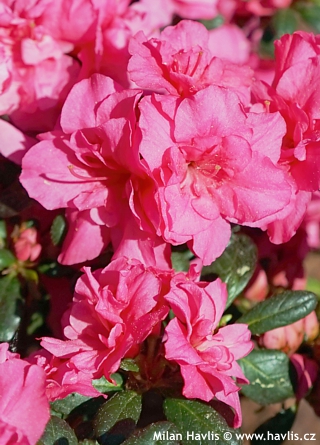
Hachmann's Rokoko is another beauty from the collection of dwarf or low growing Japanese azaleas bred by German rhodo/azalea guru Hans Hachmann. It produces medium large, about 5 cm across, semi-double flowers of rich pink colour. They open from mid May until early June on the background of small, ...
V - VI
0,3 - 0,5m
0,8 - 1,3m
semi-shade / partial sun
5b (down to -27°C)
for zone 5+6
for zone 7
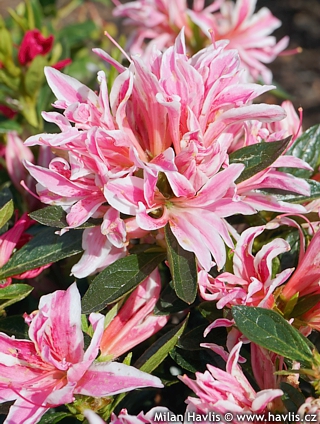
Pink Spider is a fabulous Japanese azalea for collectors who obviously do not suffer from arachnophobia. This exotic looking jewel produces semi-double flowers with narrow, acuminate flower petals. They are bright pink with purple pink dotting and white margins. They open in profusion from about mid ...
V
0,6 - 0,8m
0,6 - 1m
semi-shade / partial sun
7a (down to -18°C)
for zone 5+6
for zone 7
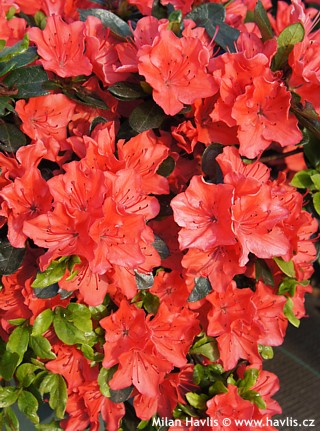
Satschiko azalea is sold under a trade name Geisha Orange and is really very close to orange. It has very soft red flowers with salmon orange tones. They open from late April and bloom for almost 3 weeks. Evergreen leaves are small, oval, dark green, and glossy. Geisha Orange azalea forms a compact ...
IV - V
0,3 - 0,5m
0,8 - 1,3m
semi-shade / partial sun
5b (down to -27°C)
for zone 5+6
for zone 7
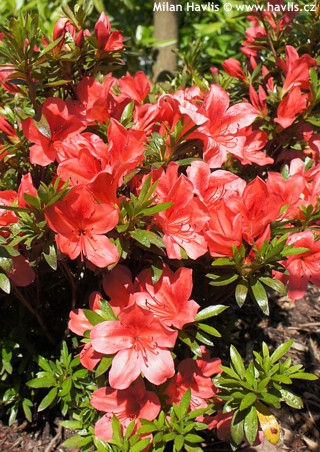
If you are fond of summer-flowering hybrid azaleas then this variety can easily become a jewel in your garden. Its name is Summer Sun and it is another Satsuki azalea. Soft red flowers look very attractive on the background of deep green foliage. They open in late June or early July and continue blo ...
VII - VII
0,4 - 0,6m
0,4 - 1,3m
full to partial sun
6b (down to -21°C)
for zone 5+6
for zone 7
