












CURRENTLY IN STOCK:
.jpg)
If the title Frozen weren’t protected by copyright, the breeder of this stunning willow might well have considered it. ICEBERG ALLEY® sageleaf willow looks as if covered in icy frost – its leaves are densely silvery‑felted with a bluish‑green undertone, so the whole plant resembles a clo ...

IV - V

1 - 1,5m

1 - 1,5m

full sun

2 (down to -45°C)

for zone 5+6
for zone 7
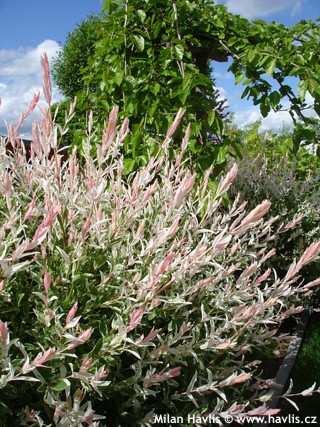
Hakuro Nishiki dappled willow is probably the most popular willow in our country. It originated in Japan and was introduced to Europe by a Dutch botanist Harry van den Laar in 1979. Its deciduous leaves are small, elliptic, 3-4 cm long, pea green with rich cream-white variegation. When new leaves em ...
1,5 - 3,5m
1 - 3m

full to partial sun
4 (down to -34°C)
for zone 5+6
for zone 7
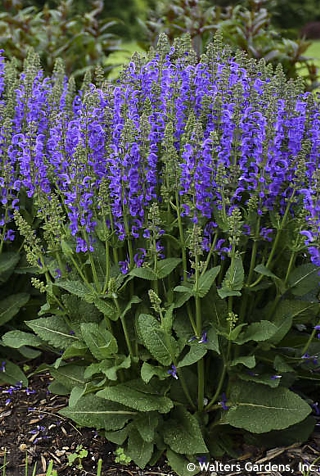
Midnight Model meadow clary is definitely the deepest coloured salvia we have seen so far. It belongs to the FASHIONISTA™ series bred by Hans. A. Hansen from Walters Gardens in Michigan, USA. From late May it produces 50-60 cm tall, strong stems holding deep violet blue, nettle-like flowers that las ...
V - VI
0,5 - 0,6m
0,3 - 0,5m
full to partial sun
4 (down to -34°C)
for zone 5+6
for zone 7
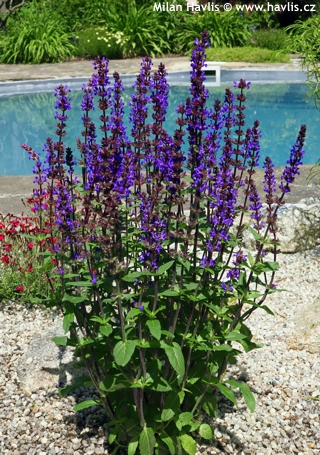
Perennial sage lovers surely know one of the most popular and sought-after variety with deep purple violet stems called Caradonna. In 2018 its improvement was introduced called Caramia. It boasts the same colours, twice or three times more flowers, and a more compact, shorter habit. Caramia makes co ...
V - IX
0,4 - 0,5m
0,4 - 0,5m
full to partial sun
4 (down to -34°C)
for zone 5+6
for zone 7
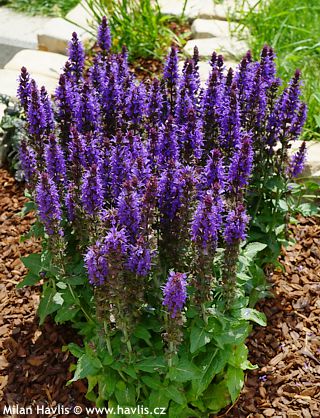
Salvia Ostfriesland forms compact, medium-height clumps with sturdy, purple-toned stems reaching 35–45 cm in height. For an extended period, it produces upright spikes of rich lavender-blue flowers that contrast beautifully with the dark calyces and stems, making the plant visually appealing eve ...
V - IX
0,3 - 0,5m
0,4 - 0,5m
full to partial sun
4 (down to -34°C)
for zone 5+6
for zone 7
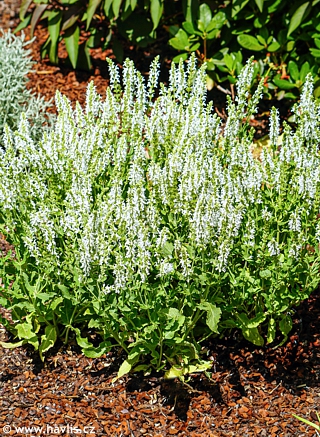
Schneehügel means 'A Heap of Snow' and this German wood sage variety is exactly what the name suggests. A small and compact variety of wood sage, whose stems usually do not exceed 40 cm in height and a single plant is about the same width. It truly looks like a small pile of snow slowly thawing in a ...
V - VII
0,2 - 0,4m
0,3 - 0,4m
full to partial sun
4 (down to -34°C)
for zone 5+6
for zone 7
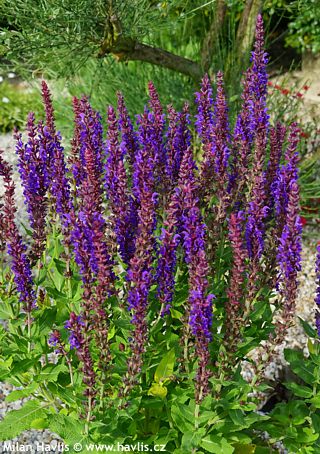
SENSATION® is a superb wood sage series developed by Tobias Braunig from Germany. All of its varieties are truly sensational offering low, very dense and usually compact habit with profuse flowering. SENSATION® COMPACT VIOLET is a perennial herbaceous sage variety producing deep violet flo ...
V - IX
0,3 - 0,4m
0,3 - 0,4m
full to partial sun
4 (down to -34°C)
for zone 5+6
for zone 7
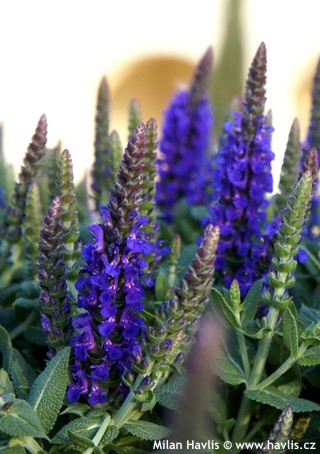
SENSATION? is a superb new perennial salvia series. All of its varieties are truly sensational offering low, very dense and compact habit with profuse flowering. Sensation? Deep Blue produces short but chubby spikes of deep violet blue flowers from mid spring until late summer if you deadhead regula ...
V - IX
0,2 - 0,3m
0,3 - 0,5m
full sun
4 (down to -34°C)
for zone 5+6
for zone 7
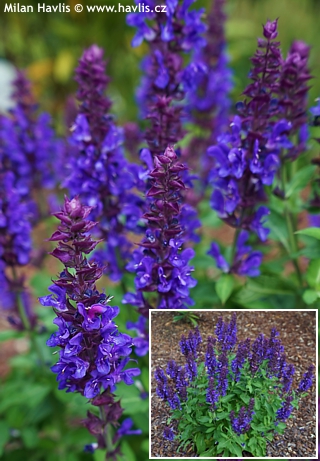
BLUE MARVEL is a unique sage variety with large, hypnotizing deep indigo blue flowers, possibly the bluest we’ve seen so far on any woodland sage. They are formed in erect, 10-15 cm tall spikes atop 25-30 cm long stems. Blooming begins in early June and continues for 3-4 weeks. Then the plant ...
VI - VIII
0,3 - 0,4m
0,3 - 0,4m
full to partial sun
4 (down to -34°C)
for zone 5+6
for zone 7
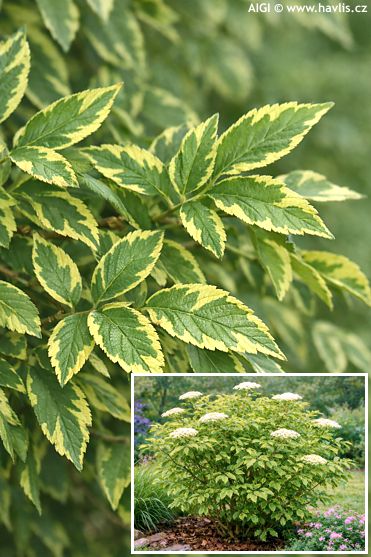
Gold Spark elderberry belongs among the variegated cultivars, although its foliage is notably elegant and its colouring held in check like pupils of an old boarding school. The leaves are deciduous, pinnate, composed of five to seven leaflets, each with an irregular yellow to cream margin or scatter ...
V - VI
1,5 - 2,5m
1,5 - 2,5m
full to partial sun
4 (down to -34°C)
for zone 5+6
for zone 7
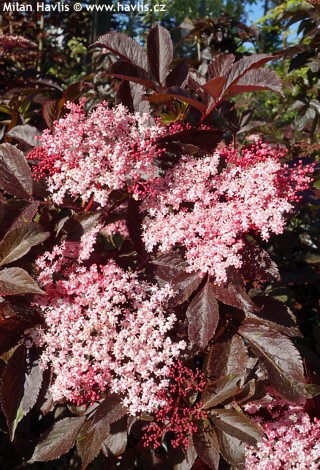
Thundercloud is another dark-leaved variety of European elder. It is a sport of Guincho Purple from 1997 producing attractive purple red, almost purple black, deciduous leaves, and numerous flowers on young plants. They are formed in flattened panicles, open from rich purple pink buds to soft cotton ...
V - VI
2 - 3m
2 - 2,5m
full to partial sun
4 (down to -34°C)
for zone 5+6
for zone 7
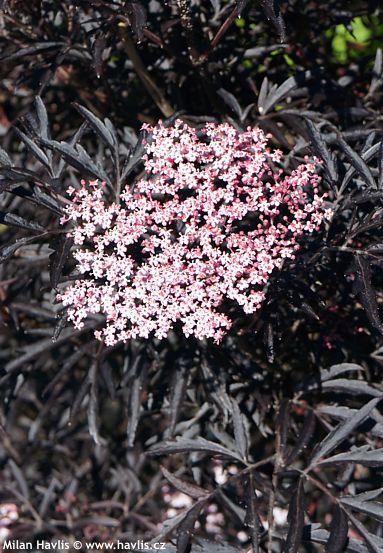
BLACK LACE elderberry blooms from May to June with abundant, almost flat panicles composed of tiny, fragrant, five-petaled flowers. They are pale pink to white and open from smoky purple buds, which intensifies the flowering colour. It blooms profusely. By the end of summer, it produces a ...
V - VI
3 - 5m
2 - 3m
full to partial sun
4 (down to -34°C)
for zone 5+6
for zone 7
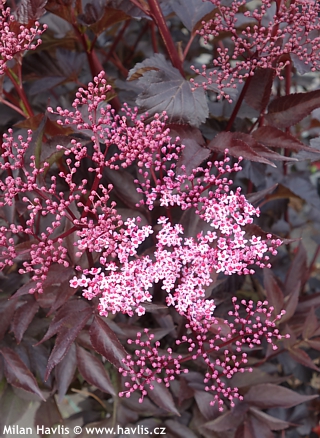
Black Beauty elder made its debut in the iconic year 2000, bringing not only a new millennium but also a long‑awaited breakthrough in foliage colour. It entered the scene like a dark film star dressed in a gown the colour of blackcurrants just before harvest, catching the light with a purplish ...
V - VI
2 - 3m
2 - 3m
full to partial sun
5 (down to -29°C)
for zone 5+6
for zone 7
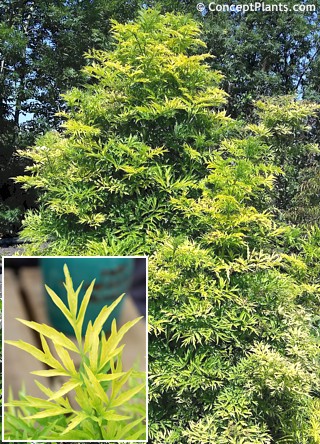
GOLDEN TOWER is a slender growing variety of European elder, a sister variety of BLACK TOWER, but this time with golden foliage. Its deciduous leaves emerge bright lime green and reach a vivid yellow green or almost golden yellow shade in full sun. They are deeply incised and perfectly soften the st ...
V - VI
1 - 3m
0,5 - 1m
full to partial sun
5 (down to -29°C)
for zone 5+6
for zone 7
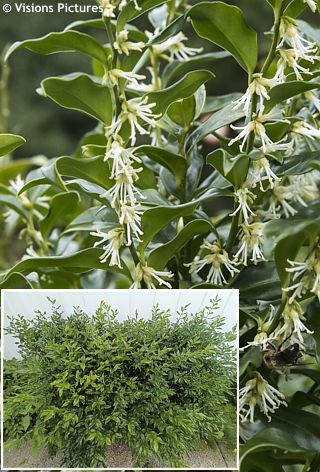
This sweet box is believed to have come from western China where it probably originated as a natural hybrid of two species. Nowadays, you will not find it in the wild either because it is extinct or perhaps it never existed as a botanical species. Very interesting is a fact that there are no varieti ...
II - IV
0,5 - 1,5m
1 - 1,5m

semi-shade to shade
6 (down to -23°C)
for zone 5+6
for zone 7
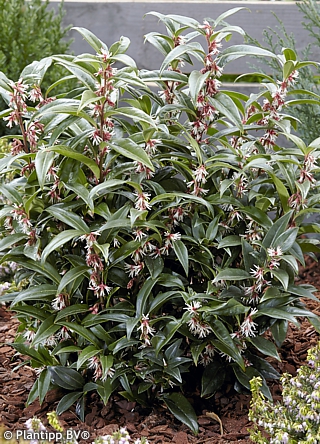
Winter Gem is a Himalayan sweet box variety bred by Peter Moore from England. He succeeded in hybridizing a sweet box that will grow well in a pot which is something that sarcococca dislikes and will tolerate chalk (lime soil). Winter Gem boasts highly glossy, evergreen, narrowly lance-shaped, dark ...
I - III
0,5 - 1m
0,5 - 1m

full sun to shade
6 (down to -23°C)

for zone 5+6
for zone 7
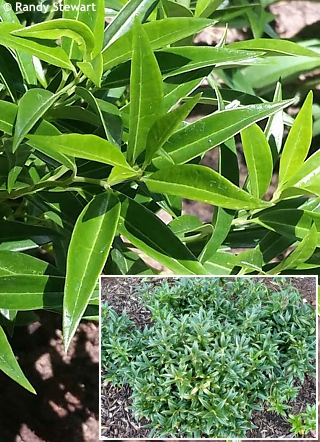
FRAGRANT VALLEY™ is a Canadian contribution to the Himalayan sweet box family. It is a chance seedling selected by Gurjit Sidhu in their Sidhu & Sons Nursery in Mission, British Columbia, Canada in 2002. It was one of only two plants out of 2,000 seedlings that showed different characteristics ...
I - III
0,3 - 0,4m
0,5 - 1m
semi-shade to shade
5b (down to -27°C)
for zone 5+6
for zone 7
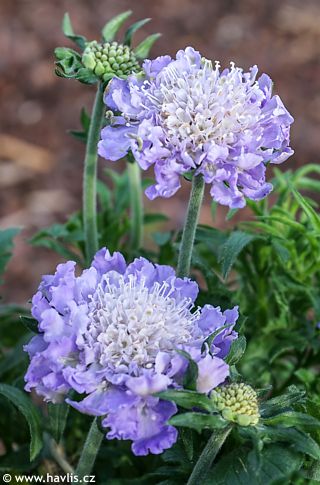
Mariposa Blue is a compact and free-flowering variety of scabious with large, pastel lavender violet flowerheads with domed, pincushion-like central florets and larger marginal florets. They appear in profusion atop about 20 cm tall stems and the plant is a true flower factory as it starts blooming ...
VI - X
0,2 - 0,3m
0,3 - 0,4m
full sun
4 (down to -34°C)
for zone 5+6
for zone 7
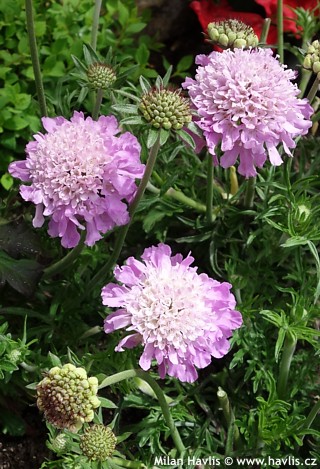
Small scabious is a smaller version of this common perennial, naturally found in our countryside. It makes small leaves of two types: the basal leaves are pinnatifid (they look like those on dandelions), and stem leaves, as if they did not belong there, are extremely narrow and deeply cut (like thos ...
VI - IX
0,2 - 0,3m
0,2 - 0,4m
full sun
4 (down to -34°C)
for zone 5+6
for zone 7
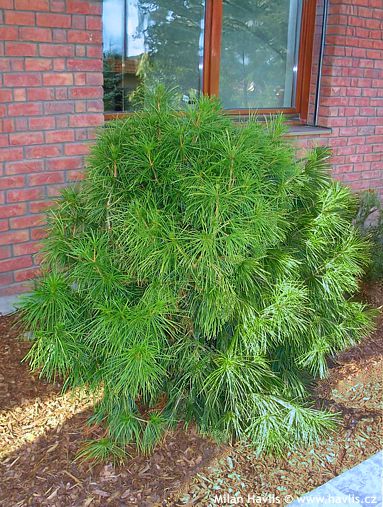
Compacta is a Japanese umbrella pine cultivar that retains the character of the botanical species, but on a markedly smaller and more readable scale. From an early age it forms a dense, regular and tightly structured habit that feels calm and well balanced. The needles are shorter than those of the ...
2 - 4m
2 - 3m
full to partial sun
5 (down to -29°C)
for zone 5+6
for zone 7
.jpg)
Sternschnuppe is a Japanese umbrella pine variety which belongs among the dwarf cultivars that grow more slowly than the species, yet in full maturity still exceed the scale of an ordinary garden gnome, hat included. It is easily recognised by its shorter, visibly flatter needles, which densely clot ...
1,5 - 4m
1 - 2m
full to partial sun
5 (down to -29°C)
for zone 5+6
for zone 7
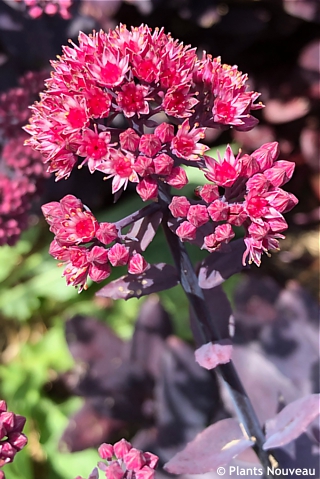
Mojave Jewels Ruby is an orpine variety from AB Cultivars in the Netherlands from 2018. It makes extremely dark foliage and stems which perfectly contrast with its flowers. Deciduous leaves are broadly elliptic, mildly serrated at margins, and matte. Stems are upright and strong enough not to f ...
VIII - IX
0,3 - 0,4m
0,4 - 0,5m
full sun
3 (down to -40°C)
for zone 5+6
for zone 7
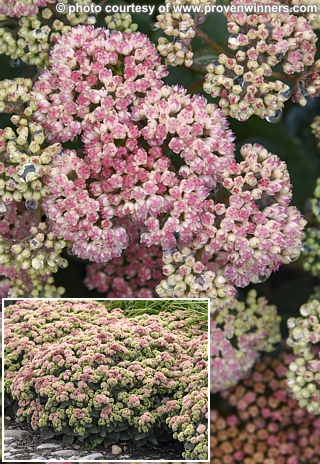
Coraljade is a deciduous variety of orpine developed by American breeder Hans Hansen from Walters Gardens nursery in Michigan who is known in our country as the creator of many beautiful sages. It is a low-growing, compact perennial forming elegantly smooth cushions with grey-green, fleshy leaves. F ...
VIII - IX
0,3 - 0,4m
0,4 - 0,6m
full sun
3 (down to -40°C)
for zone 5+6
for zone 7
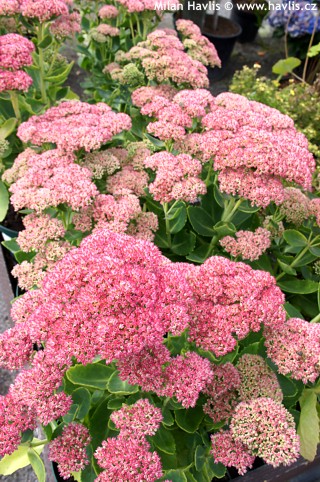
Herbstfreude is a German cultivar of orpine carrying a name that feels almost deliberately difficult to pronounce – who thought it was a good idea to invent a word with six consonants in a row. In Britain they solved it by simply translating it and calling it Autumn Joy, and the name does not lie. ‘ ...
VIII - IX
0,3 - 0,4m
0,3 - 0,4m
full to partial sun
4 (down to -34°C)
for zone 5+6
for zone 7
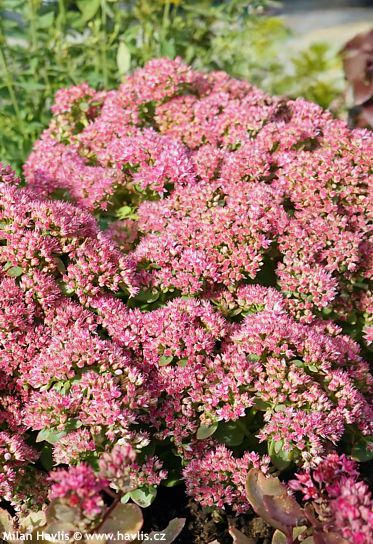
LIME ZINGER stonecrop belongs to SUNSPARKLER® series developed by Chris Hansen in the USA and is arguably one of the most striking cultivars of the whole series. Its leaves resemble miniature eucalyptus foliage – round, juicy, lime-green with a fine burgundy edge in youth, as if outlined with a past ...
VIII - IX
0,1 - 0,2m
0,3 - 0,5m
full sun
4 (down to -34°C)
for zone 5+6
for zone 7
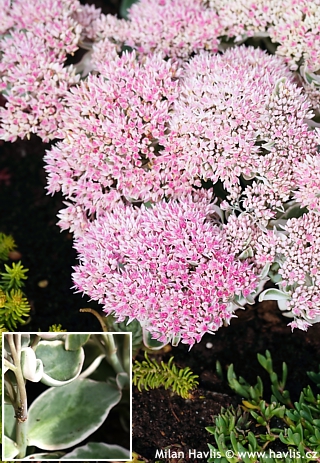
SEDUCTION® LA VIE EN ROSE is an orpine variety from the Seduction® series bred by the Dutch company Florensis. Yet before flowering, you will be impressed by its fabulous foliage. The medium green leaves are conspicuously variegated, bearing a wide white brim at margins. They are deciduous ...
IX - X
0,2 - 0,3m
0,3 - 0,4m
full sun
4 (down to -34°C)
for zone 5+6
for zone 7
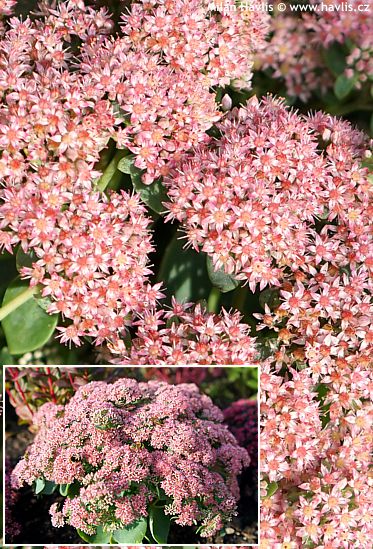
SEDUCTION® ROSE CHARM stonecrop is part of the Seduction® breeding series developed by the Dutch company Florensis. This cultivar quickly gained popularity thanks to its compact growth habit, abundant flowering, and attractive appearance. It produces small, star-shaped flowers composed of soft pink ...
VIII - IX
0,2 - 0,3m
0,3 - 0,4m
full sun
3 (down to -40°C)
for zone 5+6
for zone 7
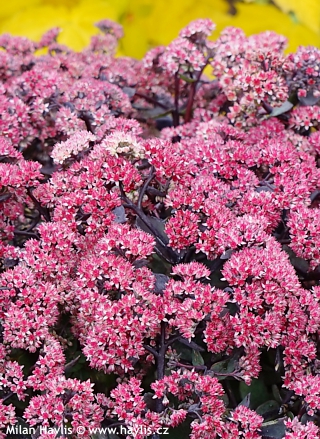
SEDUCTION® ROSÉ SOIRÉE is an orpine variety from the Seduction® series bred by the Dutch company Florensis. All plants from the series boast compact growth, dense habit and large inflorescences. ROSÉ SOIRÉE makes deep raspberry red, star-shaped flowers with pale pink sepals. They are borne ...
VIII - X
0,2 - 0,3m
0,3 - 0,4m
full sun
4 (down to -34°C)
for zone 5+6
for zone 7
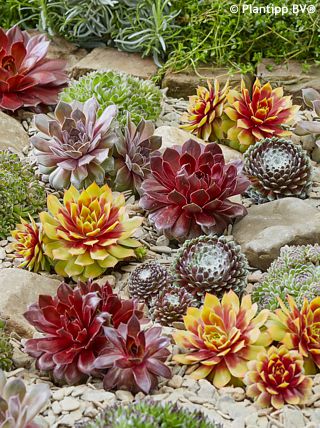
CHICK CHARMS® is a fascinating and beautiful series of hens and chickens
including the award-winning gem Gold Nugget from 2017 that was bred by Chris Hanson and which emerges golden orange and red and shines like a real star. But it would be unfair not to mention the others which are no less beau ...
0,1 - 0,1m
0,2 - 0,4m
full sun
4 (down to -34°C)
for zone 5+6
for zone 7
.jpg)
When I first saw the Toetie Froetie® houseleek series at the Plantarium horticultural fair, I believe it was in 2019, their display fascinated me just like everyone who passed by. The composition, featuring a dry tree with a charming little house nestled in its branches, looked like a miniature land ...
VII - IX
0,1 - 0,3m
0,2 - 0,3m
full sun
4 (down to -34°C)
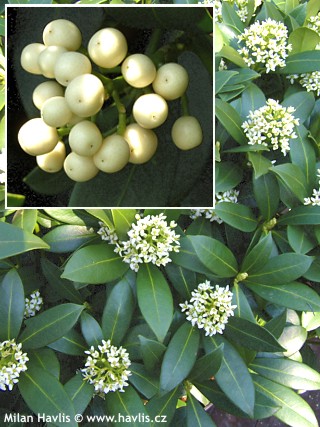
Kew White is a compact, slow growing, female skimmia variety from England. It is a very pretty small shrub with evergreen, leathery, narrowly elongated, deep green, and glossy leaves. In early spring open tiny fragrant flowers which are followed by small, spherical, white and glossy fruit if pollina ...
III - IV
0,3 - 0,4m
0,5 - 0,6m
semi-shade to shade
5b (down to -27°C)
for zone 5+6
for zone 7
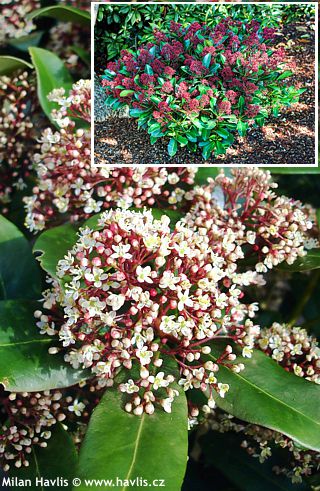
Rubella is a popular cultivar of Japanese skimmia that is now regarded as a classic and has become the benchmark against which almost all newer cultivars are measured. It originated in the Netherlands in the second half of the 20th century, although the name of the individual breeder has unfortunate ...
IV - V
0,2 - 0,6m
0,3 - 0,8m
semi-shade to shade
5b (down to -27°C)
for zone 5+6
for zone 7
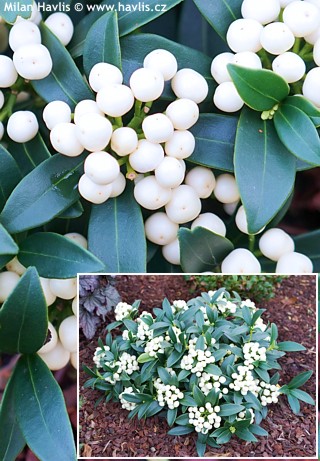
Wakehurst White is another jewel found in Kew Gardens' project at Wakehurst, about 40 km far from London. It is a slow growing, female skimmia variety with evergreen, leathery, narrowly elongated, deep green, and glossy leaves. In early spring open tiny fragrant flowers which are followed by small, ...
0,4 - 0,6m
0,5 - 1m
semi-shade to shade
5b (down to -27°C)
for zone 5+6
for zone 7
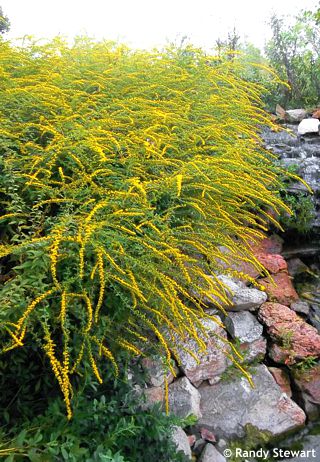
Fireworks is a unique variety of rough goldenrod that stands out from the rest with its arching habit and long flower racemes that open at the very end of the season – in early autumn. The inflorescences are slender but very long, reaching 30-40 cm, and are covered with small, bright yellow, s ...
IX - X
0,8 - 1,3m
1 - 1,5m
full sun
4 (down to -34°C)
for zone 5+6
for zone 7
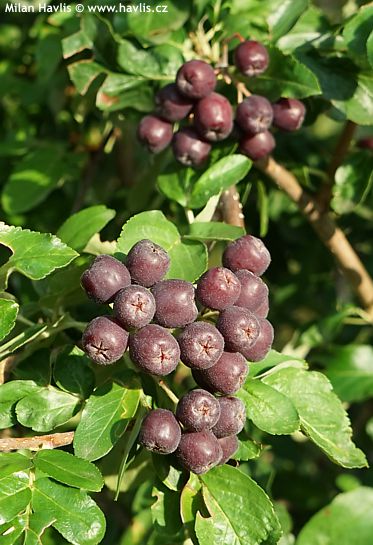
Burka is a unique hybrid rowan, growing to a height of around 3–5 meters, making it ideal for smaller gardens. Its habit is compact, with a naturally shaped, dense crown. Flowers appear from April to May, white and arranged in corymbs, attracting pollinators with their gentle fragrance. But the real ...
V - VI
3 - 5m
3 - 4m
full to partial sun
4 (down to -34°C)
for zone 5+6
for zone 7
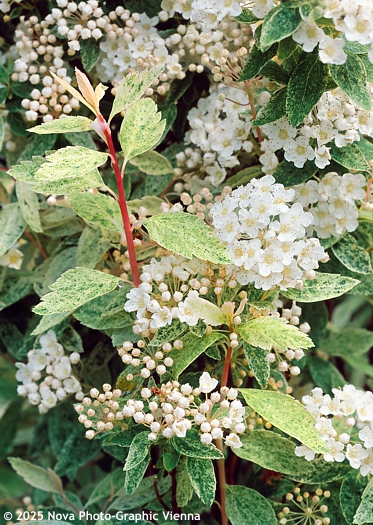
Pink Ice spirea will captivate you at first sight, as soon as the new leaves emerge in spring: the young foliage shows a bright pink tone, which within days transforms into delicately variegated leaves. The base colour is green, infused with creamy white patches, while the youngest parts blush pink, ...
V - VI
1 - 1,5m
1 - 1,5m
full to partial sun
3 (down to -40°C)
for zone 5+6
for zone 7
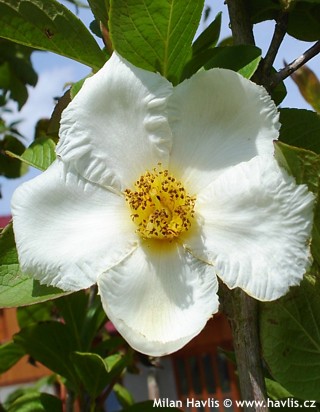
It is our utmost pleasure to offer this summer-blooming beauty: false camellia. It comes from moist woodlands of North America and eastern Asia (Japan, China, Vietnam, Nepal). It belongs to the same genus theaceae like camellia and tea.
Its main attraction are the flowers. They are 6-7 cm wide, pu ...
VI - VIII
4 - 6m
1 - 3m
full to partial sun
5 (down to -29°C)
for zone 5+6
for zone 7
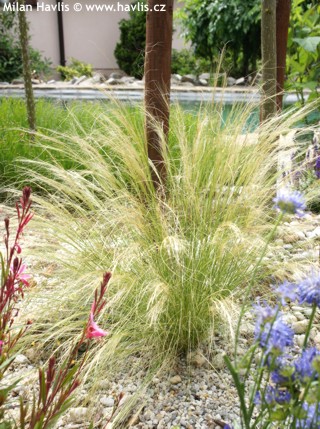
Feather grass comes from a country where it would definitely be called maravilloso as it comes from Mexico, Argentina, and can also be found in New Mexico and Texas in USA. Ponytails is a compact and a little shorter variety with thin, soft green foliage and about 30-40 tall stems with plume-like fl ...
VI - X
0,3 - 0,4m
0,3 - 0,4m
full sun
6 (down to -23°C)
for zone 5+6
for zone 7
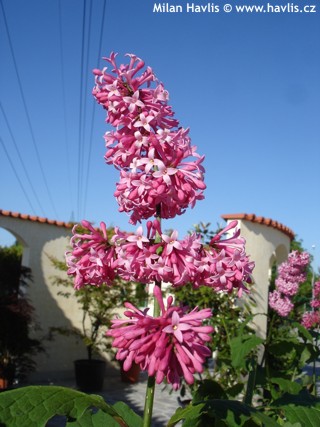
Miss Canada is a big seller among Canadian lilacs. It bears brilliant pink flowers opening from red buds. Individual flowers are tubular and sweetly scented. Thanks to very compact growth it is ideal for grafting on half-standards as a small tree for small gardens. The difference between these and c ...
V - VI
1 - 1,5m
1 - 1,5m
full to partial sun
2 (down to -45°C)
for zone 5+6
for zone 7
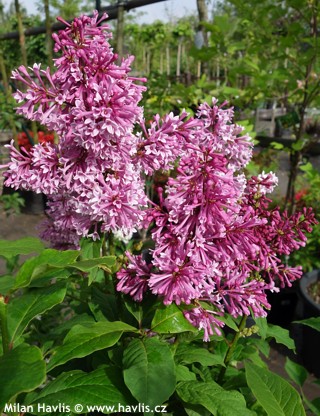
Redwine is a Canadian lilac of so far the deepest burgundy red colour. It sweetly scented flower are tubular, and formed in partially pendent panicles. The difference between these and common lilacs is that panicles of Canadian lilac are not as clustered as on common lilac, flower 2-3 weeks later an ...
V - VI
1 - 2m
1 - 2m
full to partial sun
2 (down to -45°C)
for zone 5+6
for zone 7
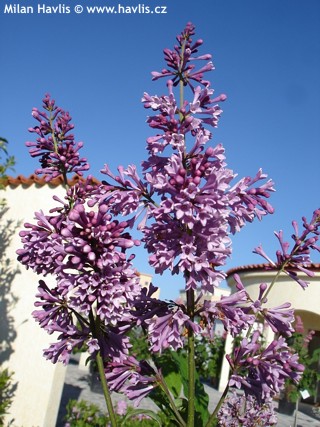
Among Canadian lilacs you can also find one whose colour resembles common lilacs – thanks to its lavender or bluish-lilac flowers. Its name is Royalty. They are tubular, sweetly scented, formed in upright panicles and appear in abundance every year. The difference between these and common lila ...
V - VI
1 - 1,5m
1 - 1,5m
full to partial sun
2 (down to -45°C)
for zone 5+6
for zone 7
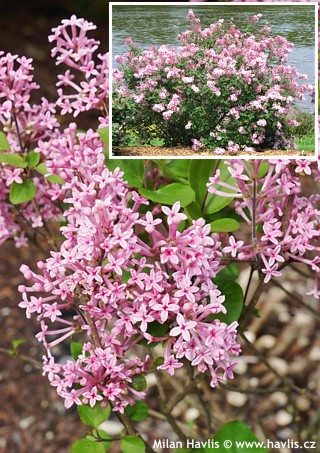
Pink Perfume is a Dutch addition to the Bloomerang® series of re-blooming lilacs marketed by Proven Winners® in USA. The plant was bred by Andre Franciscus van Nijnatten from Zundert, the Netherlands, in 2003, and patented as PP24252 in 2012. It is a cross between dwarf s.meyeri and small- ...
V - VIII
1 - 1,5m
1,3 - 1,8m
full to partial sun
3 (down to -40°C)
for zone 5+6
for zone 7
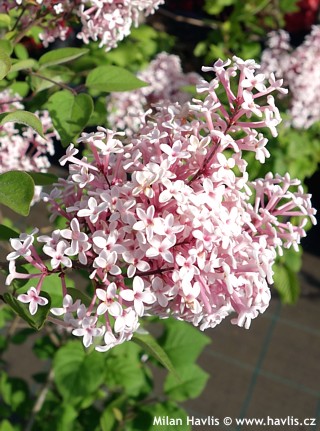
Superba is probably the only variety of littleleaf lilac used in commerce today. It boasts profuse erect racemes composed of small, tubular, soft pink, and sweetly fragrant flowers in May. They unfold into 4 tips but you can try your luck as in searching for a 4-leaf-clover because exceptionally the ...
V - V
1,5 - 2m
2 - 3,5m
full to partial sun
4 (down to -34°C)
for zone 5+6
for zone 7
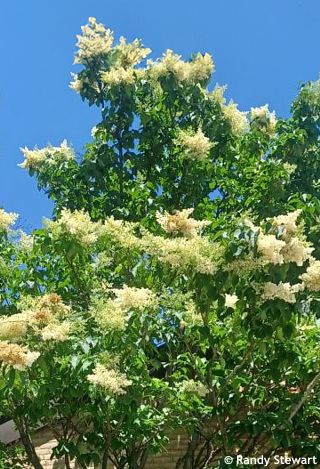
Ivory Silk is a profusely blooming variety of Japanese lilac, which, due to the shape of its inflorescence, can at first glance resemble crape myrtle – Lagerstroemia. The flowers are ivory cream to slightly yellowish at full maturity, strongly and sweetly fragrant, and arranged in slightly inc ...
VI
4 - 7m
3 - 5m
full sun
3 (down to -40°C)
for zone 5+6
for zone 7
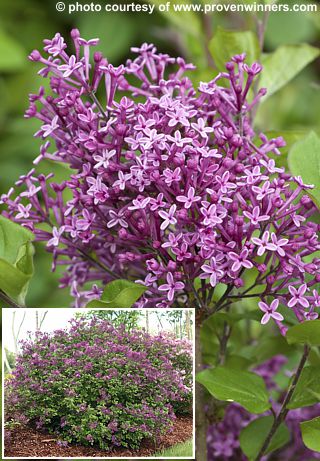
BLOOMERANG® Dark Purple is a hybrid lilac with dark lilac pink to light purple flowers and dark purple buds. They are tubular and composed in lose erect racemes, and open from mid May until early June and re-bloom from mid July until late summer. They bear a lovely fragrance which is different ...
V - VIII
1,5 - 2m
1,5 - 2,3m
full to partial sun
3 (down to -40°C)
for zone 5+6
for zone 7
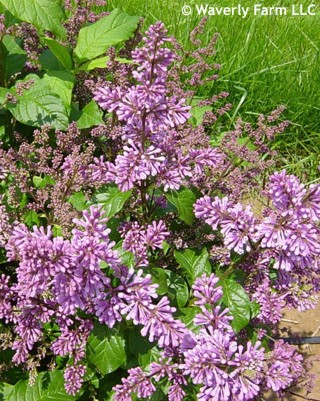
Minuet is a dwarf variety of Canadian lilac. It produces tubular, sweetly scented, light mauve flowers composed in erect panicles, coming out about 2 weeks later than flowers on common lilacs i.e. mid to end May. It grows slowly, making a dense, rounded shrub.
Lance-shaped leaves are 6-12 cm long, ...
V - VI
1 - 1,5m
1 - 1,5m
full sun
3 (down to -40°C)
for zone 5+6
for zone 7
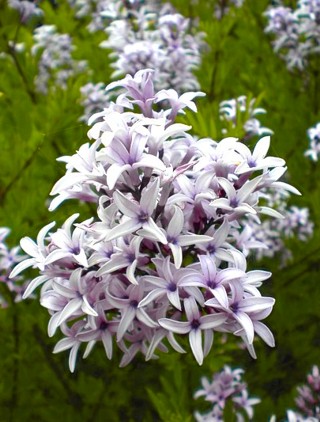
This Persian lilac is a hybrid between syringa afghanica and syringa laciniata, moreover it received a variety name identical with the second parent: Laciniata. It has finely textured foliage – the leaves are deeply cut, small, light to mid green, deciduous. The branches are densely covered wi ...
V - VI
1,5 - 2,3m
1,5 - 2,3m
full sun
for zone 5+6
for zone 7
