

































CURRENTLY IN STOCK:
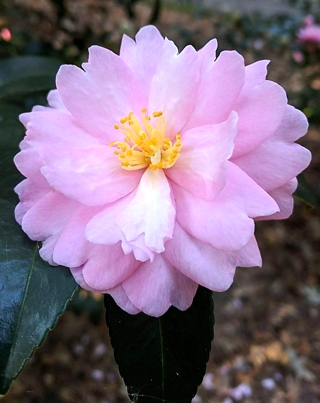
Ashton’s Ballet is an autumn flowering camellia from the Ashton series bred by dr. Ackerman and introduced in 1996. It is a cross between a very hardy species camellia oleifera and Shikishima variety (c. hiemalis). It produces utterly pretty, tutu-like, soft pink, semi-double to fully double, ...

XI - I

2 - 3m

1 - 2m

semi-shade to shade

6 (down to -23°C)

for zone 5+6

for zone 7
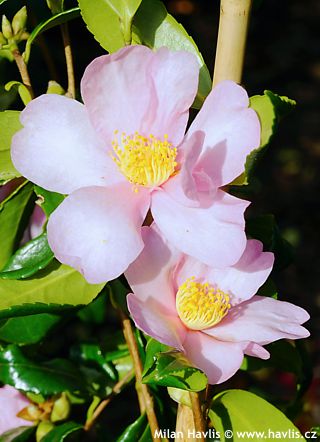
Ashton’s Pride is an autumn flowering camellia from the Ashton series bred by dr. Ackerman. It is a cross between a very hardy species camellia oleifera (cv. Plain Jane) and camellia sasanqua (cv. Santozaki). It produces medium large, 6-8 cm wide, soft pink, single flowers with yellow stamens ...
IX - XI
1,5 - 2,5m
1,5 - 2,5m
semi-shade to shade
6b (down to -21°C)
for zone 5+6
for zone 7
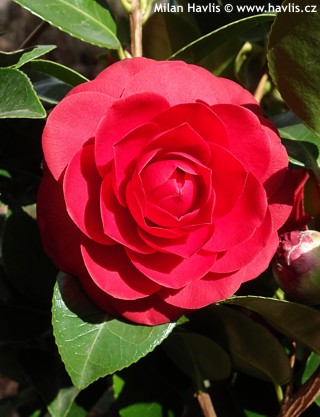
Black Lace is an older and proved variety of hardy camellia, in fact one of the best reds available. Its is a hybrid of c.reticulata and c.williamsii and has so far withstood -20°C. Its fully double, dahlia-like flowers are rich red, and bloom from early April for 6 to 8 weeks if the plant has enoug ...
IV - V
1,5 - 3m
1,5 - 2,5m
semi-shade to shade
6 (down to -23°C)
for zone 5+6
for zone 7
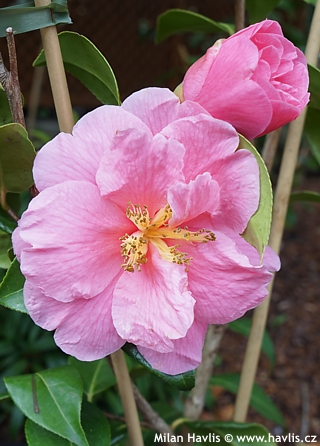
Ice Follies is a spring flowering hardy camellia from dr. Ackerman that first flowered in 1984 and was registered in 1992. It is a cross between c. x williamsii ‚November Pink‘ and c. oleifera. It produces large, 10-12 cm across, semi-double flowers. They are soft pink with a bit darker ...
IV - V
2 - 3m
1,3 - 1,5m
semi-shade to shade
6 (down to -23°C)
for zone 5+6

for zone 7
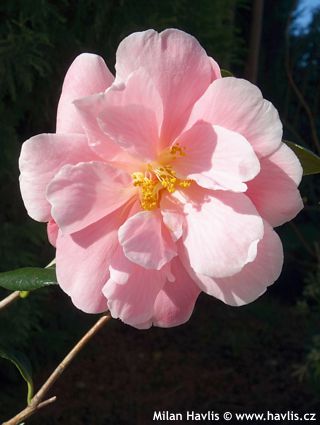
Pink Icicle is a showy, large-flowered hybrid camellia bred by dr. Ackermann from the United States National Arboretum. Its semi-double, soft pink flowers are 11 cm across, and open in April for 6-8 weeks. Leaves are evergreen, obovate, gently serrated at margins, deep green, and glossy. It grows fa ...
IV - V
1,8 - 2,5m
1,3 - 1,8m
semi-shade to shade
6b (down to -21°C)
for zone 5+6
for zone 7
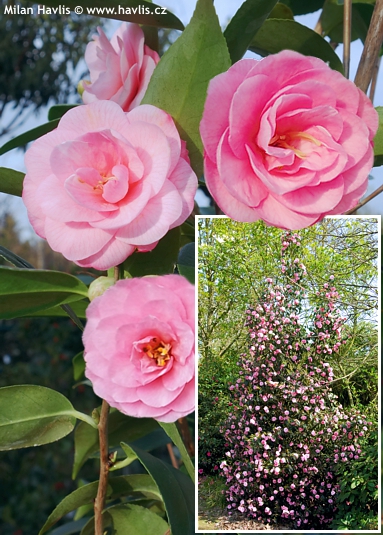
Spring Festival is a fascinating hardy camellia cultivar that we have come to appreciate above all for its reliability. It elevates any evergreen planting scheme without requiring constant concern about frost hardiness. This is a spring‑flowering variety that produces an abundance of small, se ...
IV - V
1,5 - 3m
1 - 1,5m
semi-shade to shade
6 (down to -23°C)
for zone 5+6
for zone 7
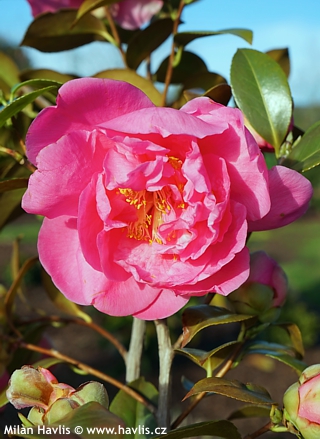
Spring Frill is a spring flowering hardy camellia from dr. Ackerman that first flowered in 1985 and was registered in 1992. It is a cross between c. oleifera ‚Plain Jane‘ and c. vernalis ‚Egao‘. It produces large, 10-12 cm across, rose-like, double flowers with 34 frilled, ro ...
IV - V
2 - 3m
1,3 - 1,5m
semi-shade to shade
6 (down to -23°C)
for zone 5+6
for zone 7
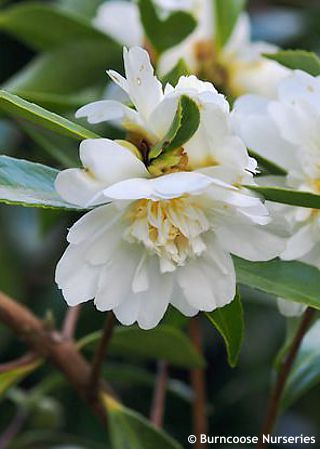
Winter’s Snowman is an aptly chosen name for this profusely flowering autumn camellia from the Winter series bred by dr. Ackerman. It produces semi-double, white flowers with yellow stamens in the centre from late October for 4-6 weeks.
Leaves are evergreen, elongated to broadly elliptic, gen ...
X - XII
1,5 - 2,5m
1 - 1,5m
semi-shade to shade
6b (down to -21°C)
for zone 5+6
for zone 7
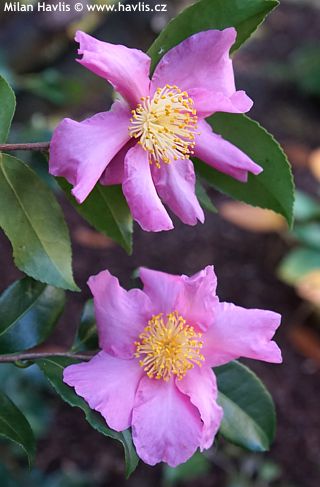
Winter’s Star is an autumn flowering camellia from the Winter series bred by dr.Ackerman in 1988. It produces stunning, large, single flowers of pure pink colour. The colour is darker as the flowers emerge, and gets paler as they mature. They have a pale, spicy fragrance, and can reach up to 1 ...
IX - XI
1,5 - 1,8m
1,5 - 2m
semi-shade to shade
6 (down to -23°C)
for zone 5+6
for zone 7
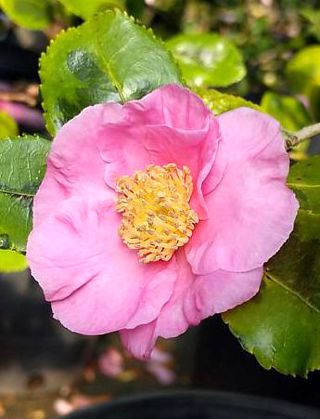
Winter’s Sunset is an autumn flowering camellia from the Winter series bred by dr. Ackerman. It is one of the very rare varieties with variegated foliage. It produces small, bright pink, single, non-fragrant flowers with numerous yellow stamens in the centre from late October for 4-6 weeks.
L ...
X - XI
1,5 - 2,5m
1,5 - 2m
semi-shade to shade
6b (down to -21°C)
for zone 5+6
for zone 7
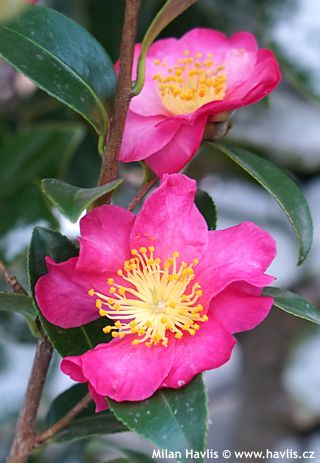
The origin of Camellia hiemalis is unknown, however, rather than a separate species it is believed to be a natural hybrid between spring flowering c.japonica and autumn flowering c.sasanqua. It has been crossed, selected, and propagated for such a long time that no one bothers to insist of the ̶ ...
XI - V
2 - 3m
1,5 - 2m
semi-shade to shade
6b (down to -21°C)
for zone 5+6
for zone 7
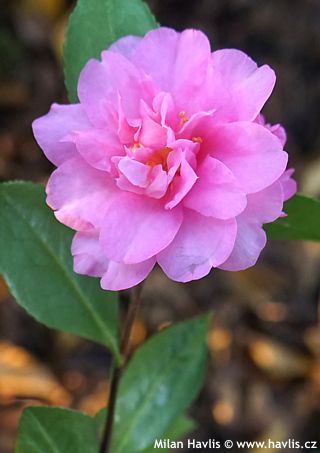
Showa-no-sakae is a winter camellia variety which is often classified as Camellia sasanqua. Its pretty flowers are small to mid-sized (6-8 cm), peony-like, semi-double to fully double, medium to deep pink. It begins to bloom according to the maturity of the buds and the weather conditions, usually f ...
I - XII
2 - 3m
1,5 - 2m
semi-shade to shade
6b (down to -21°C)
for zone 5+6
for zone 7
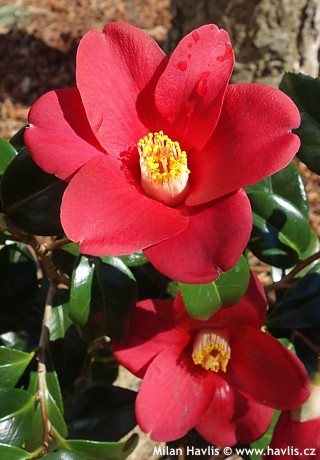
Adeyaka means Fascinating in Japanese, and the name was aptly chosen for this special Japanese camellia. It produces uniquely bell-shaped (but not nodding) flowers, 6-8 cm across when fully open, revealing multiple yellow stamens in the centre. The colour is rich velvet red, and flowers appear from ...
III - V
1,5 - 3m
1,5 - 2m
semi-shade to shade
6 (down to -23°C)
for zone 5+6
for zone 7
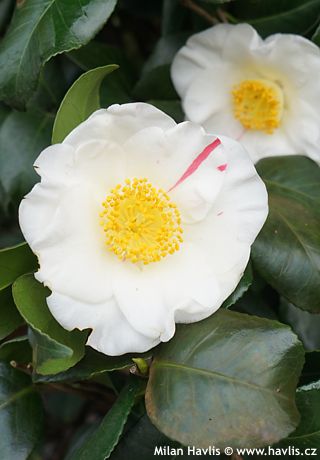
Alba Simplex is a spring flowering hardy camellia whose origin, despite the availability of multiple historical sources, is rather uncertain. One source claims that it comes from China but does not support it with any further details. Another source says it comes from Germany, registered in 1816, an ...
III - IV
2 - 3m
1,5 - 2m
semi-shade to shade
6 (down to -23°C)
for zone 5+6
for zone 7
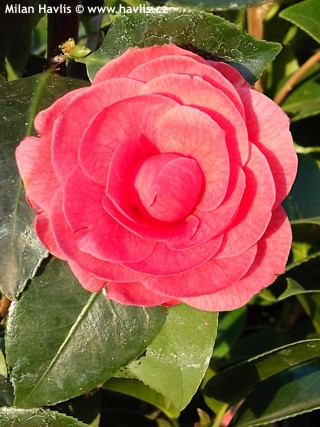
April Kiss is a spring flowering, one of the top demanded camellias from the April series bred by dr. Clifford Parks. It is a cross between Berenice Boddy and Reg Ragland from 1995. It produces 6-7 cm large, fully double flowers of exquisite salmon pink colour. They come out from early April for 6-8 ...
IV - V
1,5 - 2m
1,3 - 1,5m

full sun
for zone 5+6
for zone 7
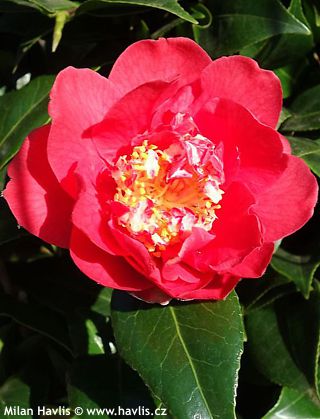
Fire and Ice, or Fire’n’Ice is a rock’n’roll among hardy Japanese camellias, and possibly the largest flowering double, red, hardy camellia so far. Its flowers are 9-10 cm across, semi-double or fully double with shorter sepals, rich red with yellow stamens in the centre. Flo ...
III - IV
1,5 - 3m
1,5 - 2m
semi-shade to shade
6 (down to -23°C)
for zone 5+6
for zone 7
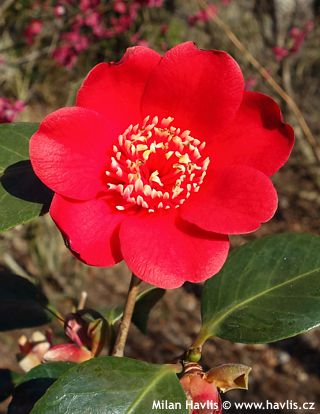
Kimberley is another old Japanese camellia variety from early 20th century, and awarded AGM by RHS in 1934. It produces beautiful, cup-shaped, rich scarlet red blossoms with a crown of yellow stamens. Flowering begins in April and continues for 6-8 weeks. Leaves are evergreen, narrowly obovate, gent ...
IV - V
2,5 - 3,5m
1,3 - 1,5m
semi-shade to shade
6b (down to -21°C)
for zone 5+6
for zone 7
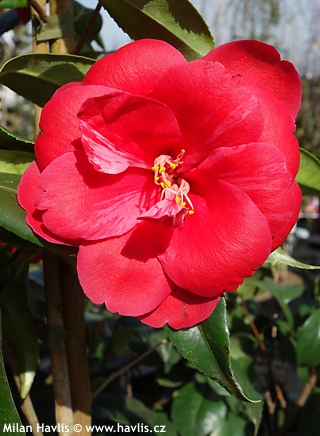
Kuro Delight is a spring flowering hardy camellia from dr. Ackerman, perhaps the darkest red among the hardy varieties. It is a seedling of c. japonica ‚Kuro-tsubaki‘ x ‚Variety Z‘ that first flowered in 1987 and was registered in 1999. It makes medium-sized, 8-10 cm wide, se ...
IV - V
2 - 3m
1,3 - 1,5m
semi-shade to shade
6 (down to -23°C)
for zone 5+6
for zone 7
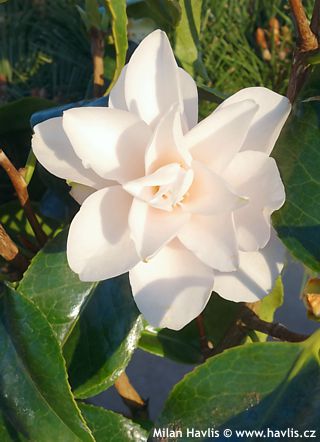
Hagoromo is a very old Japanese camellia variety from Japan from 17th century. After its introduction to Italy in 1886 it was renamed to Magnoliaeflora because of the similarity to star- or lotus-shaped magnolia flowers. They are semi-double, hose-in-house type, creamy white to very pale pink, 8-10 ...
III - V
1,3 - 1,5m
0,8 - 1,3m
semi-shade to shade
6b (down to -21°C)
for zone 5+6
for zone 7
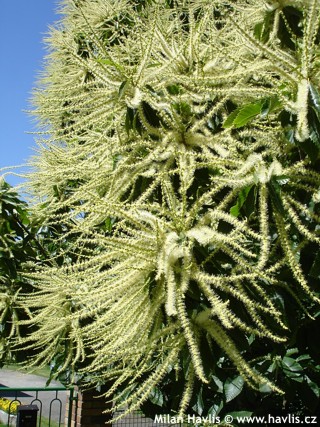
Sweet chestnut is cultivated for several beautiful features. The deciduous leaves are deep green, elliptic to oblong, up to 20 cm long, distinctly serrated and glossy, turning deep golden yellow in autumn. Flowers are creamy beige catkins that appear in July. They release a rather strong fragrance ( ...
VII - VII
5 - 20m
5 - 10m

full to partial sun
5 (down to -29°C)
for zone 5+6
for zone 7
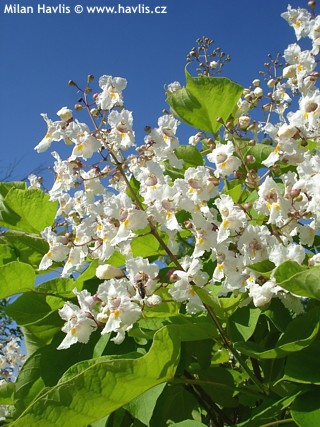
Aurea variey bears huge, tropical looking, heart shaped leaves (20-25 cm large), of bright yellow-green colour. They are slightly hairy like suede, pleasant to touch. They have interesting scent similar to tobacco leaves that allegedly repels insects.
Beginning of summer 20-30 cm tall upright pani ...
VI - VII
2 - 8m
2 - 6m
full sun
5 (down to -29°C)
for zone 5+6
for zone 7
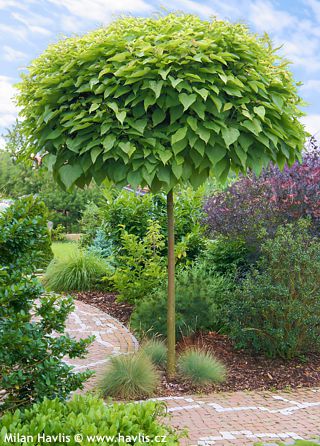
Nana variety is a lot different to the species. It can be found under its second Latin name catalpa bungei. It is a small tree that can be considered dwarf as opposed to its parent. It was bred to achieve an attractive tree with exceptional foliage but of reduced size to fit even a small garden or a ...
2 - 3,5m
2 - 4m
full sun
5 (down to -29°C)
for zone 5+6
for zone 7
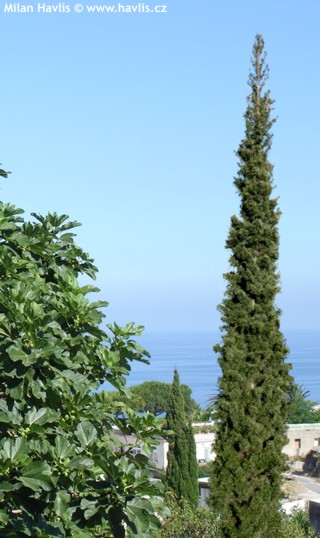
If you like cedars or perhaps if you are a collector or just an enthusiast don’t miss this one. It is a beautiful example of a form that is rarely seen in private gardens or arboretums.
Fastigiata is an attractive form of Atlas cedar with strictly narrow, columnar habit. Its evergreen, short need ...
4 - 8m
1 - 2m
full sun
6 (down to -23°C)
for zone 5+6
for zone 7
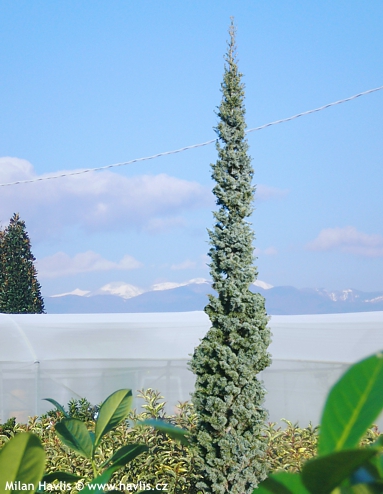
Fastigiata Glauca is a blue green or silvery blue version of an attractive form of Atlas cedar Fastigiata with strictly narrow, columnar habit. Its lateral branches are short and densely cover the leader. If a branch goes mad and grows too long in the unwanted direction just clip it, any time of yea ...
4 - 8m
1 - 2m
full sun
6 (down to -23°C)
for zone 5+6
for zone 7
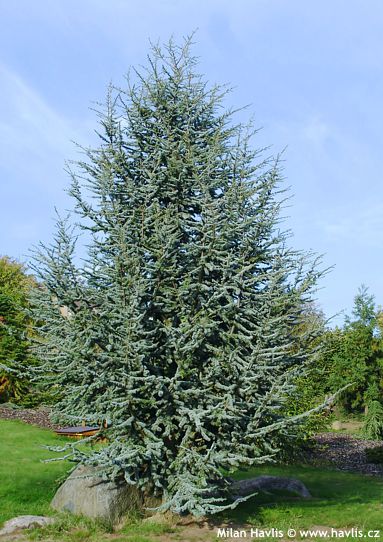
Glauca is a very popular blue‑tinged form of the Atlas cedar. It is not a single cultivar with completely uniform characteristics, but botanically a form – a group of individuals selected from the species, which, thanks to its chameleon‑like variability in needle colour, can display a wh ...
10 - 20m
10 - 15m
full sun
5 (down to -29°C)
for zone 5+6
for zone 7
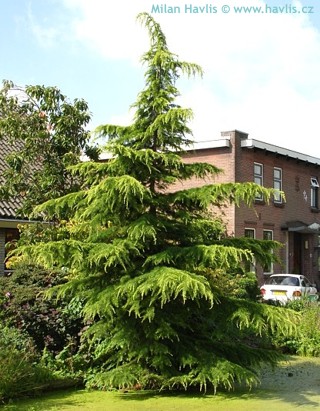
Deodar – Himalayan cedar is the most graceful of all cedars. It has strictly pyramidal habit when young, spreading branching and weeping ends. Aurea is an extremely attractive variety with golden-yellow to yellow-green needles. They are evergreen, borne in whorls of 20-30. Female cones appear ...
3 - 5m
2 - 4m
full sun
5b (down to -27°C)
for zone 5+6
for zone 7
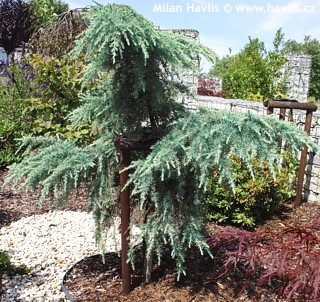
Feelin‘ Blue is a striking Dutch introduction of Himalayan cedar, which in fact turned out to be one of the most reliable cedars we ever had. Formerly a ground-covering plant is often staked up to a bamboo stick in order to form an appearance of a classic but much smaller cedar tree with pictu ...
0,2 - 3m
0,5 - 3m
full sun
5b (down to -27°C)
for zone 5+6
for zone 7
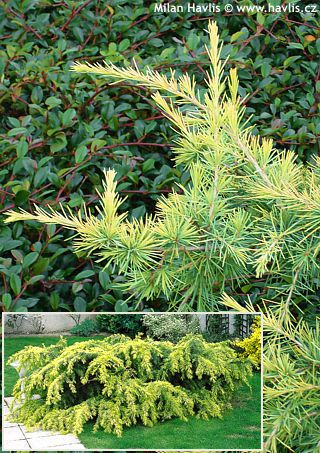
Golden Horizon is an interesting variety of Himalayan cedar with weeping branches. The needles are evergreen, yellow-green when young and in summer, turning blue-green as they mature and in the shade. The shape of the shrub is irregular, making horizontal branches with weeping ends.
It grows slowl ...
1 - 1,5m
1 - 3m
full sun
6b (down to -21°C)
for zone 5+6
for zone 7
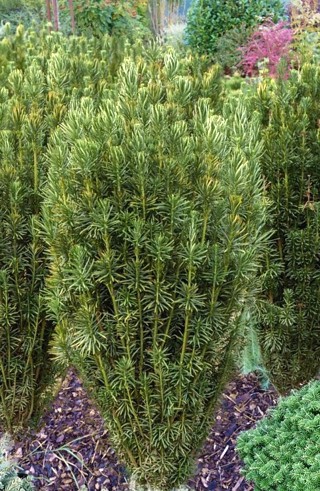
Japanese plum yew is still an uncommon evergreen conifer which was first popularized by Earl of Harrington in early 19th century. It is hardy for almost the whole area of Central Europe except for the coldest mountainous regions, and can take diversity of soil types. It comes from Japan and Fastigia ...
1,5 - 3m
1 - 1,5m

full sun to shade
5b (down to -27°C)
for zone 5+6
for zone 7
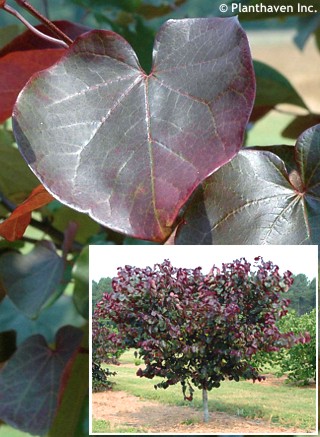
Merlot redbud, just the French grapevine variety of the same name, has leaves of the deepest wine red colour. They are deciduous, heart-shaped, and glossy. Compared to Forest Pansy they are a little smaller (abt. 10x13 cm), the plant is not as vigorous, and exhibits a more compact and denser habit. ...
IV - V
2 - 3m
2 - 2,3m
full sun
for zone 5+6
for zone 7
.jpg)
Alley Cat, a variety of Eastern redbud, is a gem, or perhaps even a work of art. Imagine a vibrant green coat worn by an eccentric painter who paints exclusively in white, while listening to the Toreador Song and Habanera from Carmen, splashing white paint all around in ecstasy, including on his own ...
IV - V
3 - 5m
3 - 5m
full to partial sun
5 (down to -29°C)
for zone 5+6
for zone 7
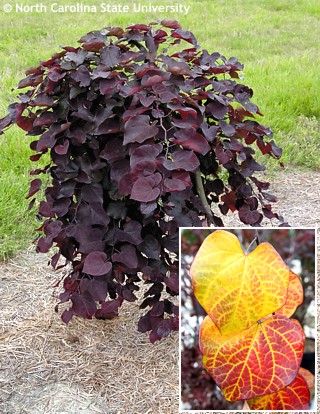
Ruby Falls is undoubtedly one of the darkest coloured little trees that will grab your attention thanks to its dark burgundy red, typically heart-shaped, approximately 8x10 cm large leaves and a weeping habit. Its crown is quite compact and the branches may soon touch the ground unless pruned on reg ...
IV - V
1 - 2m
1 - 2m
full sun
6 (down to -23°C)
for zone 5+6
for zone 7
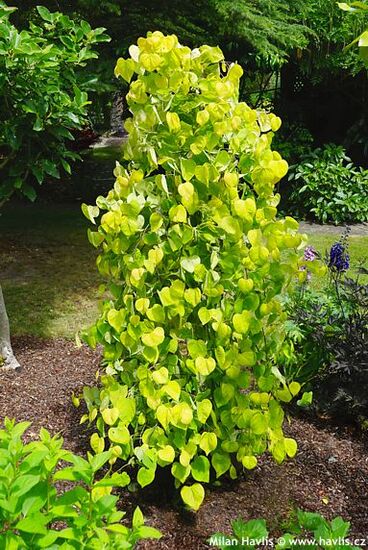
Golden Falls® eastern redbud from 2020 simply continues a successful line of these trees with attractive foliage.
It was developed by Werner by crossing the weeping ‘Lavender Twist’® with the golden-leaved ‘Hearts of Gold’. The result is an elegant tree with a narrow, cascading habit and radiant ...
IV - V
1,5 - 2,5m
1 - 1,5m
full sun
5 (down to -29°C)
for zone 5+6
for zone 7
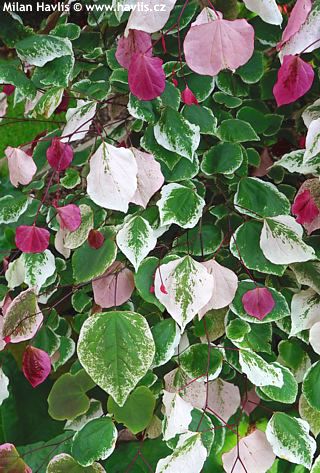
CAROLINA SWEETHEART™ redbud is like fireworks glowing with several colours at once. This darling was developed in cooperation with the Star Roses and Plants Nursery by Thomas G. Ranney from North Carolina State University in the USA, who is also known in our country thanks to his of wonderful ...
IV - V
2 - 4m
2 - 4m
full to partial sun
5 (down to -29°C)
for zone 5+6
for zone 7
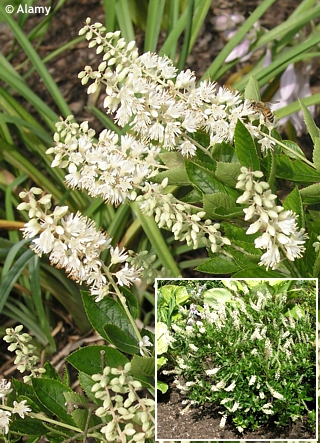
Hummingbird is a cute name for a cute and truly dwarf sweet pepper bush variety. From late July it produces a profusion of rather short, spike-like, erect racemes composed of creamy white, sweetly scented flowers. They last for 2-3 weeks but a well-established shrub may produce 2 or 3 flushes of flo ...
VIII - IX
0,5 - 1,2m
0,5 - 1,3m
full to partial sun
4 (down to -34°C)
for zone 5+6
for zone 7
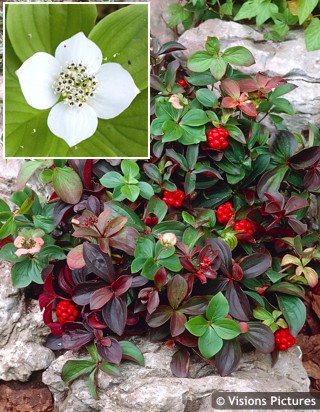
Creeping dogwood originates in North America (N. USA and Canada), Greenland, and N. Asia. It is a tough, rhizomatous perennial which forms a beautiful carpet of attractive foliage and flowers.
Being a dogwood, its true flowers are inconspicuous, tiny and composed in small, spherical heads. But the ...
V - VI
0,2 - 0,2m
semi-shade to shade
2 (down to -45°C)
for zone 5+6
for zone 7
.jpg)
The cultivar Variegata elevates the natural beauty of giant dogwood not by one, but quite possibly by three levels at once. It bears striking green‑and‑white variegated leaves, whose broad creamy margins resemble sugar icing on the tiers of a wedding cake – hence the common name Wedding ...
IV - V
4 - 8m
3 - 6m
full sun
5 (down to -29°C)
for zone 5+6
for zone 7
.jpg)
Empress of China Chinese dogwood stands out above all for its abundant and reliable flowering on a fully leaved, evergreen plant. It produces striking, snow‑white bracts approximately 6–8 cm across, appearing in great numbers and creating an exceptionally clean, almost porcelain‑like eff ...
VI - VII
3 - 5m
3 - 4m
full sun
6b (down to -21°C)
for zone 5+6
for zone 7
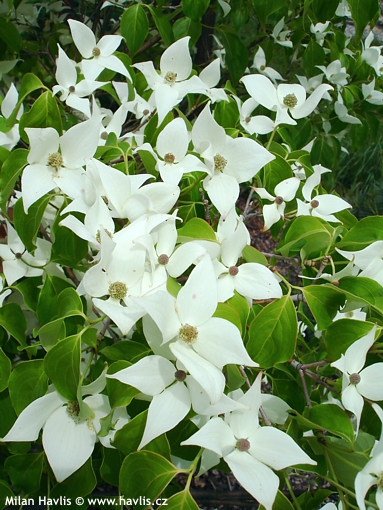
China Girl is a freely flowering Japanese dogwood with numerous creamy white flowers in June when the shrub is fully in leaf. Technically, they are not flowers but 4 flower bracts composed around small flower heads. They are followed by edible, bright pink fruit that looks like litchi.
Pointed le ...
VI - VI
2 - 3m
2 - 4m
full sun
5 (down to -29°C)
for zone 5+6
for zone 7
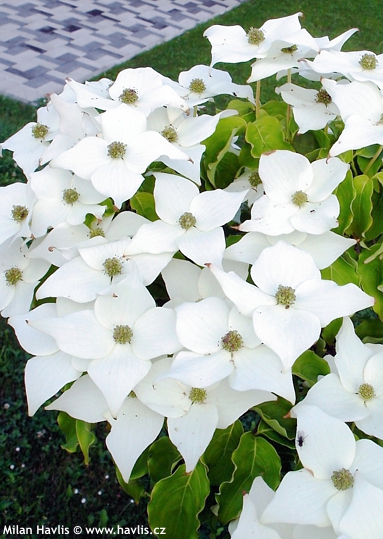
Milky Way is an old time favourite. It has snow white to creamy white flowers. Technically, they are not flowers but 4 flower bracts composed around small flower heads. They are 6-10 cm wide and conspicuous as they come out in June when the shrub is in leaf, and the foliage makes a dense, green back ...
V - VI
2 - 4m
2 - 4m
full sun
5 (down to -29°C)
for zone 5+6
for zone 7
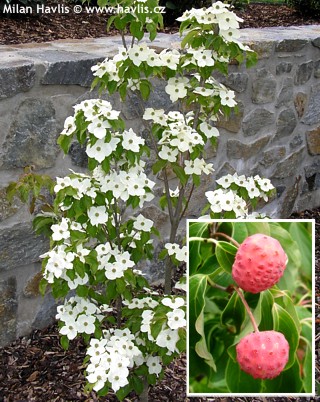
Teutonia is another extraordinary Japanese dogwood which, apart from its ornamental features, is valued mostly for its exquisite fruit. It is produced from small spheres, composed of tiny flowers that open from late May or early June. The showy parts are four surrounding bracts. They are broadly lan ...
V - VI
1,5 - 3m
1,5 - 3m
full to partial sun
5 (down to -29°C)
for zone 5+6
for zone 7
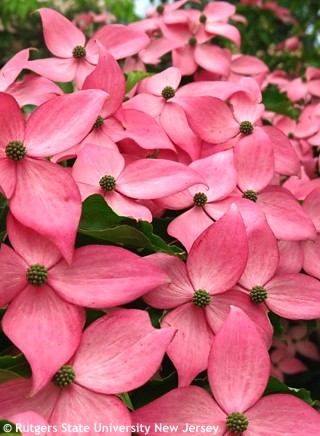
SCARLET FIRE® is a proper Japanese dogwood, not a hybrid, so a plant which flowers later than American dogwoods, on already leafed-out trees (shrubs). The flowers are in fact bracts. There are 4, rich magenta pink, oval, sharply pointed bracts, composed around a small flower head, about 13 cm across ...
V - VI
3 - 4m
2 - 3m
full sun
5 (down to -29°C)
for zone 5+6
for zone 7
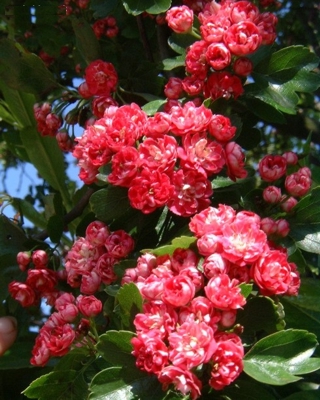
This very attractive hawthorn can be either a great specimen in your garden or used as a hedge. In late May the branches will be covered with bright pink to crimson red clusters of double flowers.
The leaves have 3-5 rounded lobes and are deep green and shiny. It grows as a large shrub or a small ...
V - VI
4 - 5m
2 - 4m
full sun
4 (down to -34°C)
for zone 5+6
for zone 7
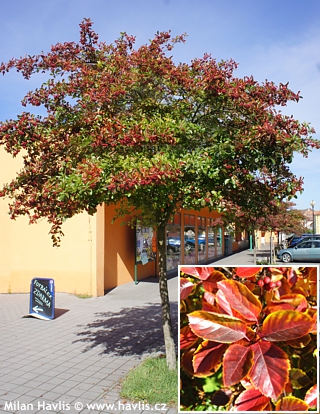
Splendens hawthorn is undoubtedly one of the most beautiful trees of northern hemisphere not only among hawthorns. It is valued for its lush, glossy foliage and a profusion of red berries. Leaves are deciduous, broadly elliptic, serrated at margins, dark green in spring and summer, and take on vibra ...
V - VI
4 - 7m
3 - 4m
full to partial sun
4 (down to -34°C)
for zone 5+6
for zone 7
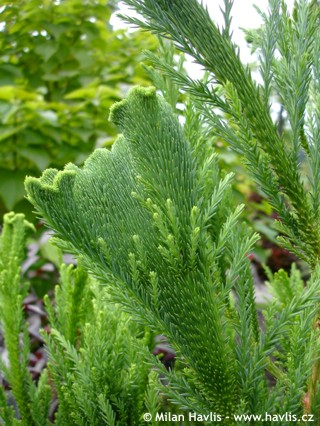
Japanese cedars proved to grow happily in our garden where winter temperatures sometimes drop to -27°C. They showed no damage whatsoever and thrive.
Cristata is a weird looking variety with congested new growths that are flattened into “cockscombs” and divide into individual branches in summer. T ...
3 - 6m
1 - 2,5m
full to partial sun
5b (down to -27°C)
for zone 5+6
for zone 7
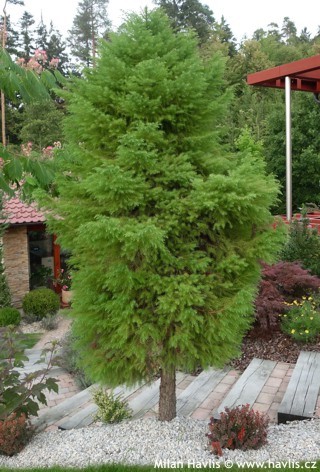
Elegans Viridis is one of those Japanese cedar cultivars that one remembers at first sight. Even as a young plant it looks as if it were wrapped in soft, delicate feathers that ripple lightly with every breath of wind. The needles are soft and threadlike yet structured, held on the branches in dense ...
2 - 6m
2 - 3m
full to partial sun
5b (down to -27°C)
for zone 5+6
for zone 7
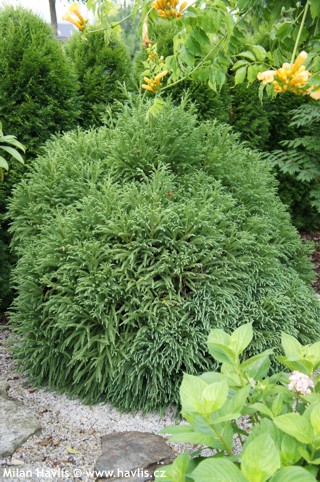
One of the most beautiful conifers of our climate is Japanese cedar. There are many species and varieties. Globosa Nana was first discovered in 1923 in Japan, where it is called Mitama-sugi.
It is a dense, compact conifer with rounded branches. The needles are curved, inward-pointing, bright gree ...
1 - 2m
1 - 2m
full to partial sun
5b (down to -27°C)
for zone 5+6
for zone 7
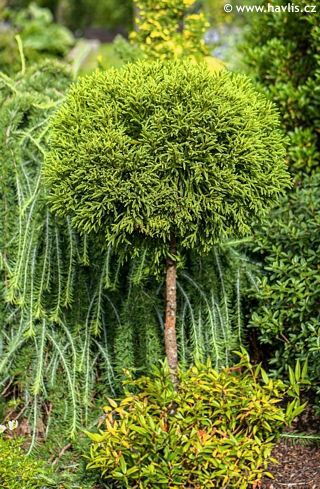
Following the success Little Champion variety, Little Diamond is another dwarf Japanese cedar variety with a spherical habit. It originated in the Netherlands in 1990, and its beauty inspired the growers to train it into a gorgeous little tree with a single trunk. Since Little Diamond grows slowly, ...
1 - 2m
0,5 - 1m
full to partial sun
5 (down to -29°C)
for zone 5+6
for zone 7
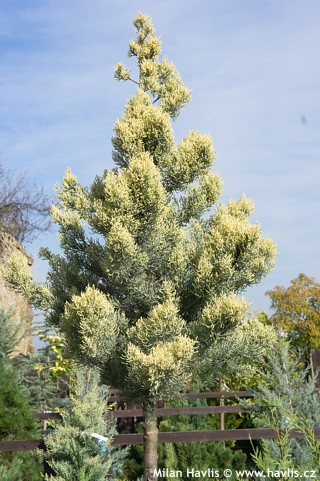
The cultivar Fastigiata Aurea of the Arizona cypress is a true delicacy among conifers. It likely originated as a horticultural selection in France during the second half of the 20th century, although precise details about its development are not documented in the literature. Unlike ‘Fastigiata’, it ...
3 - 6m
1 - 2m
full sun
6 (down to -23°C)
for zone 5+6
for zone 7
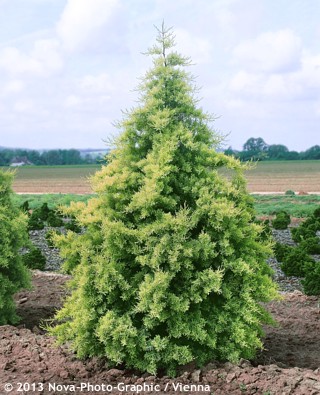
The cultivar Sulphurea of the Arizona cypress was bred in France in 1963 and stands out like a sunbeam among conifers – its young shoots shine with a bright yellow hue that gradually matures into a warm chartreuse tone but never fades completely. It grows upright, with looser branching than ‘Fastigi ...
3 - 6m
2 - 3m
full sun
5 (down to -29°C)
for zone 5+6
for zone 7
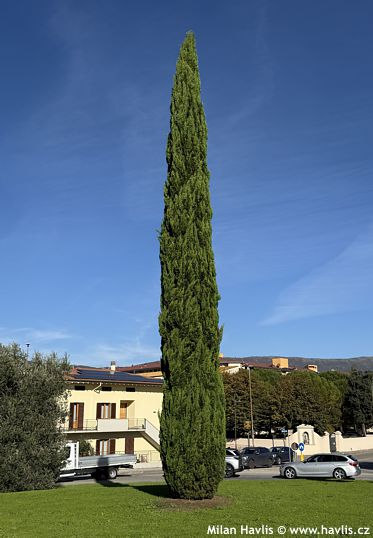
Now for the cultivar Totem. The name itself suggests a plant with the character of a sculpture – and that is exactly what it is. Totem is an extremely narrow, columnar cultivar of Tuscan cypress, like a green sword thrust into the ground. It grows slowly yet steadily, holding its shape like a soldie ...
4 - 8m
0,5 - 1m
full sun
7 (down to -18°C)

for zone 5+6
for zone 7
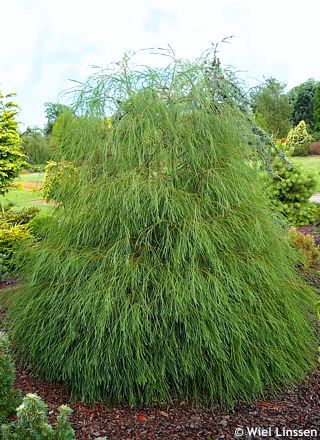
Drooping Solo is a Lawson cypress variety discovered by a Dutch conifer lover and horticulturist Wiel Linssen from Baexem. It was a seedling mutation of Imbricata Pendula, a similar variety of much taller but narrower habit. Drooping Solo forms dense shrubs of a broadly pyramidal shape with drooping ...
2 - 3m
1,5 - 2m
full to partial sun
5 (down to -29°C)
for zone 5+6
for zone 7
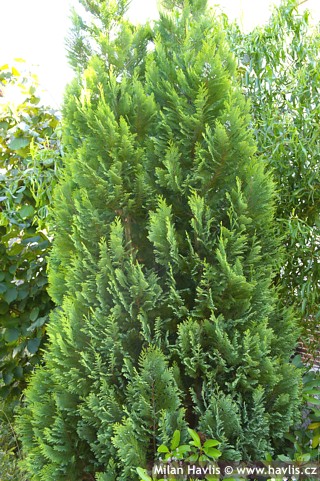
Ellwood's Empire is a natural mutation of an old and proved Ellwoodii Lawson cypress. Its scale-like needles are medium green with blue-green hues, and in spring its tips emerge bright lime-green or almost yellow-green which makes the whole shrub look very fresh and bright. It grows rather slowly in ...
1,5 - 2,5m
0,5 - 1m
full to partial sun
5 (down to -29°C)
for zone 5+6
for zone 7
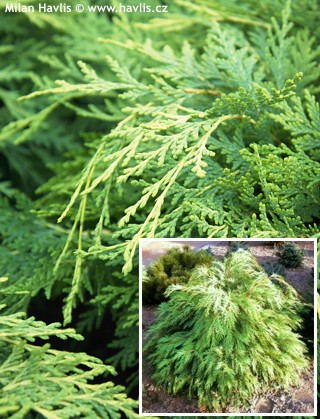
Sunkist is a dwarf, compact Lawson cypress, similar to Mini Globus. It is a slow growing conifer with attractive flat sprays of mid green foliage that is not prickly. Ends of new branches emerge bright yellow or yellow-green and the plant keeps its fresh appeal until autumn when the yellow shades be ...
0,5 - 1m
0,5 - 1m
full to partial sun
5 (down to -29°C)
for zone 5+6
for zone 7
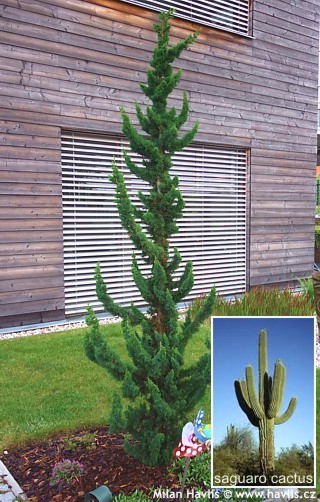
Do you know saguaro cactus? The typical succulent that gets most photographed when one wants to show a parched dessert with just one living plant. This cactus influenced the name of this Lawson cypress. It is a sport/selection of Wisselii variety. It is an evergreen conifer of strictly upright, narr ...
1,5 - 2,5m
0,5 - 0,8m
full to partial sun
5 (down to -29°C)
for zone 5+6
for zone 7
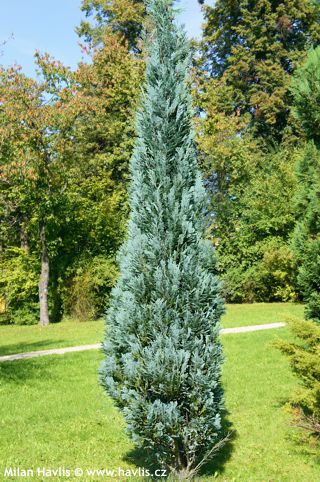
Cypress trees and shrubs are very popular for their variable shapes, leaf types and colours. Variety Columnaris has blue needles and compact shape. It does not grow wider than 1m which makes it ideal for hedges that are only trimmed at the top. Mature plants can reach 6-8m in many decades, they are ...
3 - 6m
1 - 1m
full to partial sun
5 (down to -29°C)
for zone 5+6
for zone 7
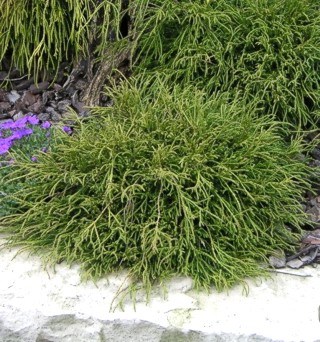
Filifera Nana is a dwarf cultivar of Sawara cypress with fine, cord‑like foliage of a rich green colour. The branchlets are slender, pendulous and densely arranged, forming a compact, cushion‑shaped to low‑mounded habit. Growth is very slow and regular; at maturity the plant typica ...
0,3 - 1m
0,5 - 1,5m
full sun
4 (down to -34°C)
for zone 5+6
for zone 7
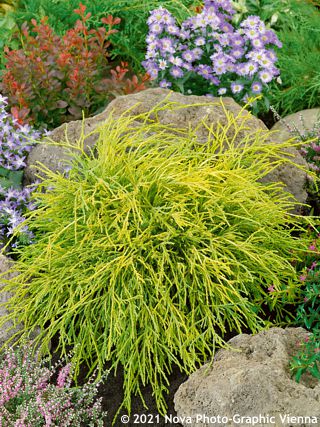
Sungold is a low, broadly spreading cultivar of Sawara cypress with fine, thread‑like foliage of a vivid golden‑yellow colour. The foliage is soft and pendulous, forming an irregular, cushion‑shaped to cascading habit that appears light and relaxed. Colouration is most intense in f ...
0,3 - 0,6m
0,5 - 1m
full to partial sun
4 (down to -34°C)
for zone 5+6
for zone 7
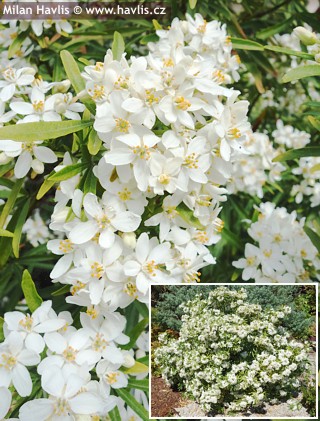
This variety called Aztec Pearl was bred by Peter Moore and introduced in 1989, when Hiller Nurseries celebrated their 125th anniversary. Its name perfectly describes this evergreen plant from the moment it begins to show flower buds. They are pearl-shaped, very light pink, and open into simple, sta ...
V - VI
1 - 2m
1 - 2m
full to partial sun
6 (down to -23°C)
for zone 5+6
for zone 7
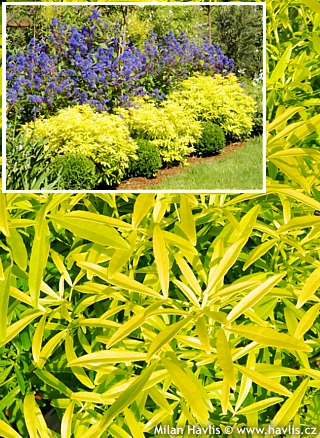
Possibly every plant is capable of creating its gold-leaved mutation. No wonder Peter Moore helped choisya with this process when crossing choisya ternata Sundance with choisya arizonica pollen. It was named GOLDFINGERS and was registered in 1998 i.e. 14 years before Hillier Nurseries introduced the ...
V
1 - 1,3m
1 - 1,5m
full sun
6 (down to -23°C)
for zone 5+6
for zone 7
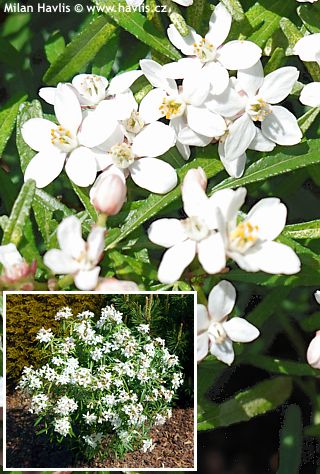
SCENTED GEM is a Mexican orange blossom variety whose name is no exaggeration: it is highly fragrant and truly a jewel. It originated as a selection of previous cultivars and was bred by Peter Catt from Liss Forest Nursery Ltd in Hampshire in England. It was first introduced at the French Salon du V ...
IV - V
1 - 1,5m
1 - 1,5m
full to partial sun
6 (down to -23°C)
for zone 5+6
for zone 7
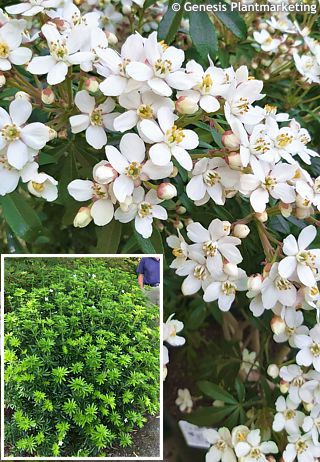
GREENFINGERS® is a large-leaved Mexican orange variety from 2019, developed by Peter Catt from Liss Forst Nursery in Liss, Hamshire, England. It bears evergreen, softly leathery, glossy, palmate leaves divided into 7 leaflets, which have a distinct, spicy aroma when crushed, but do not use them for ...
V
1 - 2m
1 - 2m
full to partial sun
6 (down to -23°C)
for zone 5+6
for zone 7
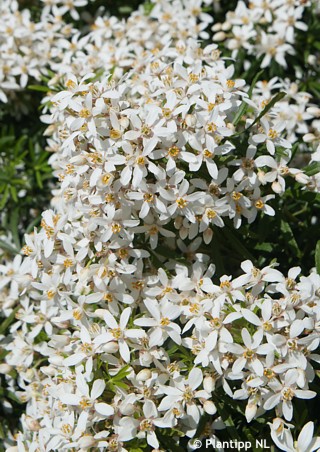
WHITE DAZZLER is a follow-up choísie to Aztec Pearl from Peter Moore, introduced in 1991. It produces masses of simple, star-shaped, pure white, and very fragrant flowers with yellow stamens in May and June. Their perfume is very similar to orange flowers hence its name Mexican orange or Mexican blo ...
V - VI
1 - 2m
1 - 1,5m
full sun
6 (down to -23°C)
for zone 5+6
for zone 7
