

































CURRENTLY IN STOCK:
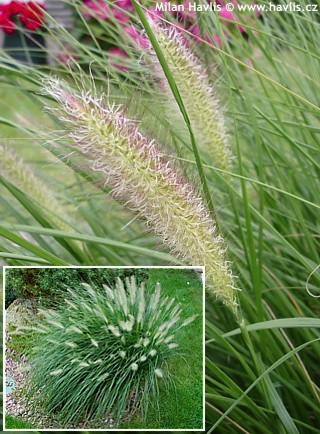
The cultivar Hameln of Chinese fountain grass has earned its place among the leading ornamental grasses through several notable qualities. One of them is undoubtedly its ability to maintain a compact, tidy form and an already well‑developed appearance at a time when most grasses are only begin ...

VIII - IX

0,5 - 0,6m

0,6 - 0,8m

full sun

5 (down to -29°C)

for zone 5+6
for zone 7
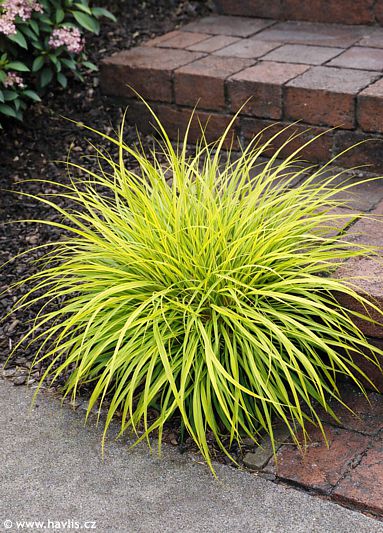
Hameln Gold is an old variety of Chinese fountain grass which draws attention in the very first weeks of spring, when its young leaves unfold in a clean yellow shade that feels like a call to celebration in an otherwise still‑sleepy garden. The clumps are compact, regular and slightly lower th ...
VII - IX
0,4 - 0,5m
0,4 - 0,6m
full sun
5 (down to -29°C)
for zone 5+6
for zone 7
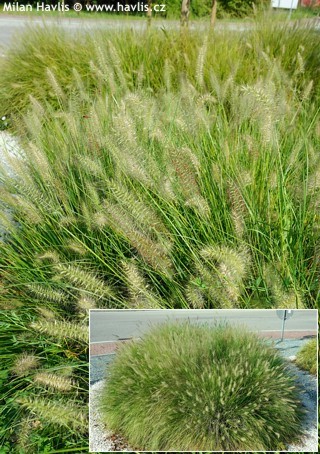
Little Bunny is the smallest and most endearing form of Chinese fountain grass, as if someone had taken the species and shrunk it into a garden bonsai. Its variety name openly admits that this will be a tiny, fluffy and irresistibly charming tuft. Its appeal lies in perfect proportions: fine, narrow ...
VIII - X
0,3 - 0,4m
0,4 - 0,5m
full sun
5b (down to -27°C)
for zone 5+6
for zone 7
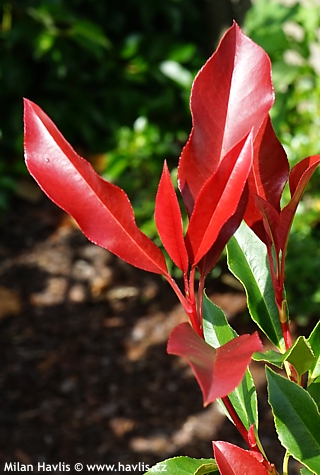
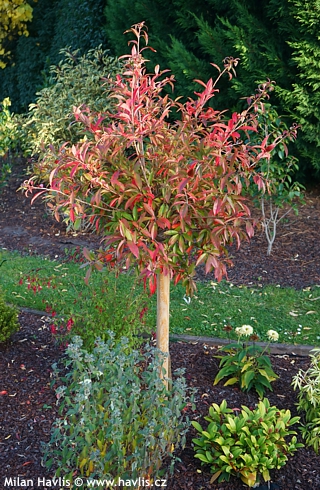
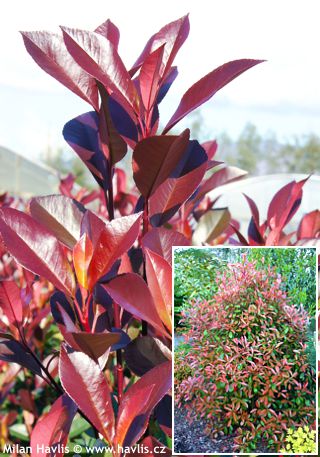
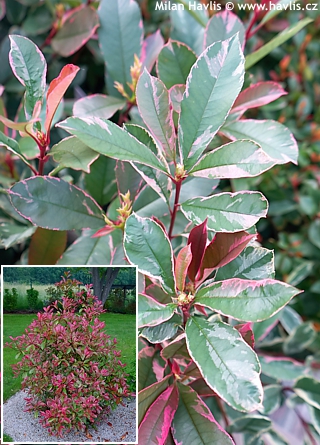
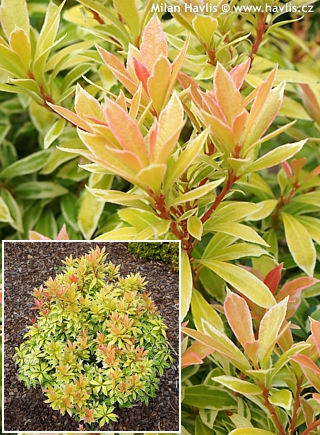
DYNAMO RED is an Australian variety of Japanese photinia from the town of Kulnurra, where it was selected by its breeder John Robb in 2001. One parent was the hardy variety Red Robin and the other was a male plant of p. glabra, so botanically the result should only be referred to as hybrid photinia ...
V - VI
2 - 4m
1,5 - 2,5m

full to partial sun
7 (down to -18°C)

for zone 5+6
for zone 7
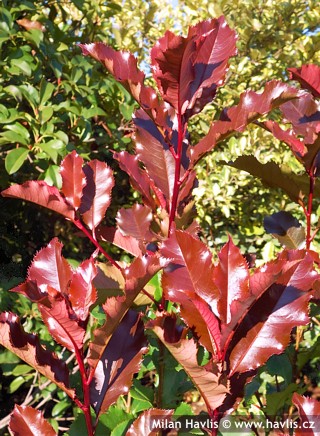
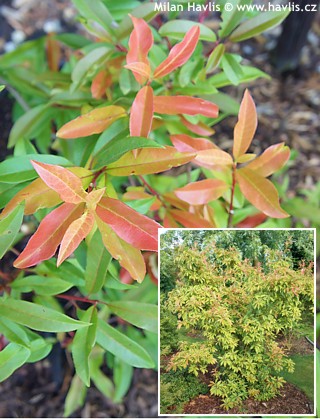
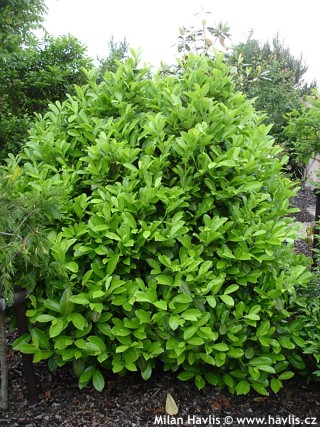
MAGICAL VOLCANO is a new photinia bred by Peter R.Kolster from the Netherlands in 2009. It is a cross between popular Fraser’s hedging photinia and Chinese photinia serratifolia. It is renowned for extremely serrated leaf margins, compact growth, and longer lasting colour of new shoots. It was ...
V - V
2 - 3m
1,5 - 2m
full to partial sun
6 (down to -23°C)
for zone 5+6
for zone 7
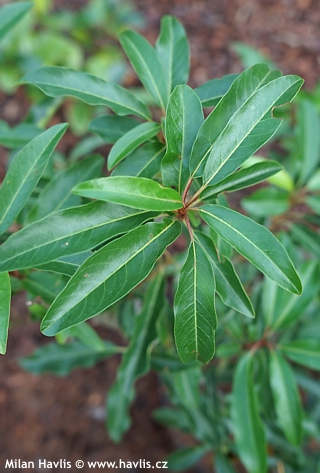
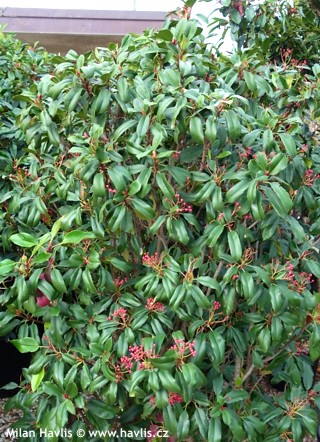
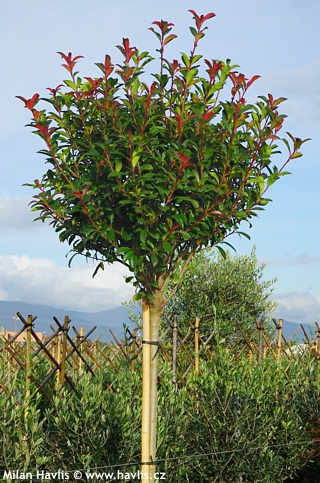
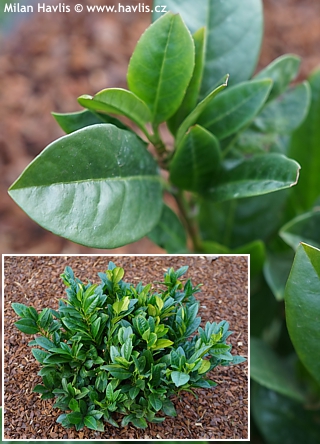
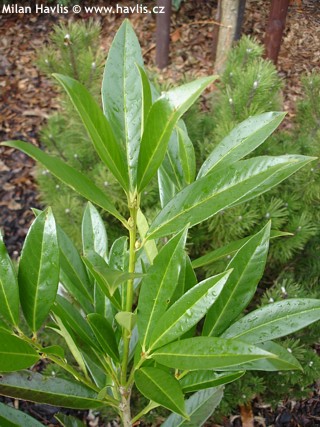
Taiwanese photinia is renowned for notably narrower leaves as opposed to Chinese photinia. Those are deep green, narrowly lance-shaped, and glossy. They emerge coppery red in spring, and in autumn many of older leaves turn scarlet red or light maroon, some plants may gain these shades all over.
It ...
VI
1,5 - 4m
1,5 - 4m
full to partial sun
6 (down to -23°C)
for zone 5+6
for zone 7
.jpg)
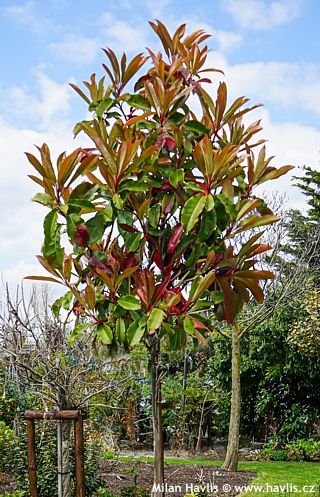
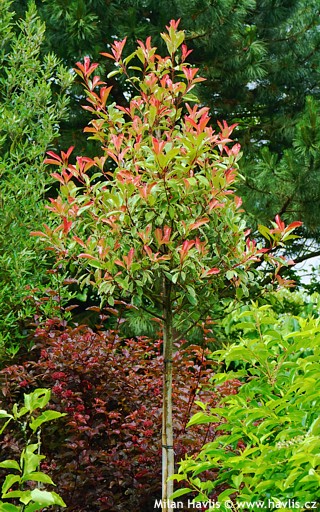
Devil’s Dream is a German cultivar of Fraser's photinia, bred by Manfred Behrens in his nursery in Bad Zwischenahn, a town at the heart of the well‑known horticultural region of Ammerland. It is an evergreen shrub that, among the many existing cultivars, sits somewhere between the large& ...
IV
2 - 3m
1 - 2m
full to partial sun
6 (down to -23°C)
for zone 5+6
for zone 7
.jpg)
Red Robin is the very first and, it must be said, still a remarkably successful cultivar of Fraser's photinia. Twenty years after its introduction it received the AGM (Award of Garden Merit) from the Royal Horticultural Society for its resilience, beauty and reliability. It is a New Zealand selecti ...
V
2 - 6m
2 - 5m
full to partial sun
6 (down to -23°C)
for zone 5+6
for zone 7
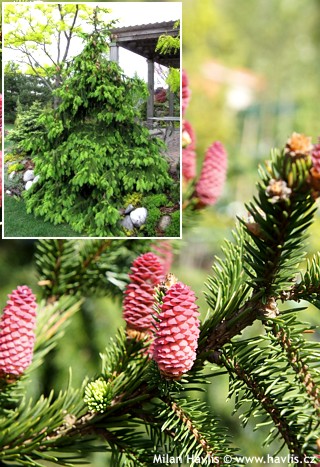
Acrocona is a beauty among Norway spruces. It is a smaller variety with picturesque cones at the tips of the branches. They are small, rich raspberry red and appear from May. Later they turn brown as they mature.
Needles are medium short, deep green, and prickly. The habit is somewhat narrowly con ...
V - VI
3 - 5m
3 - 4m
full sun
3 (down to -40°C)
for zone 5+6
for zone 7
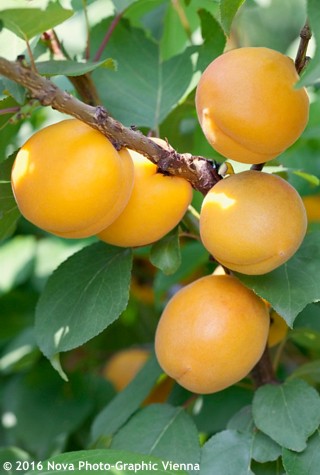
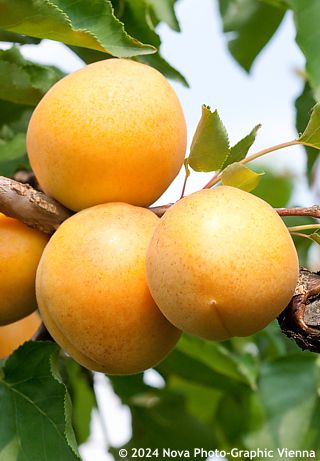
Bulida is a Spanish apricot tree variety from 1940. It is very hardy and a heavy cropper. The fruit is large, firm, yellow-orange without a red blush, very sweet, free-stone, and juicy with melting flesh. Maturing time is usually from early August, in good summers the fruit may ripen already in from ...
IV - IV
3 - 5m
2 - 4m
full sun
5 (down to -29°C)
for zone 5+6
for zone 7
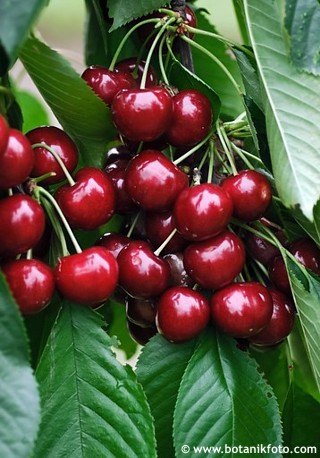
Moreau is a French cherry cultivar from the 19th century, named after the breeder Moreau of Angers (Loire, France). It first appears in the literature around 1880, making it an older, classic bigarreau type. Its fruits are medium‑large to large, round to slightly heart‑shaped, with dark ...
IV
5 - 7m
3 - 5m
full sun
5 (down to -29°C)
for zone 5+6
for zone 7
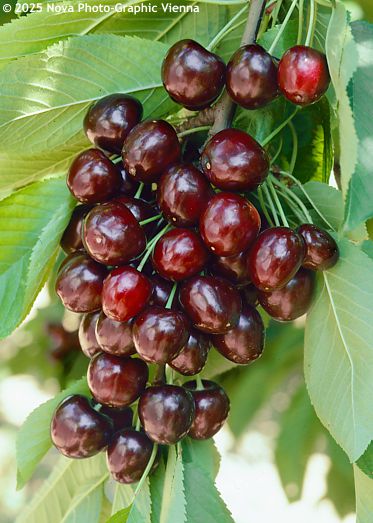
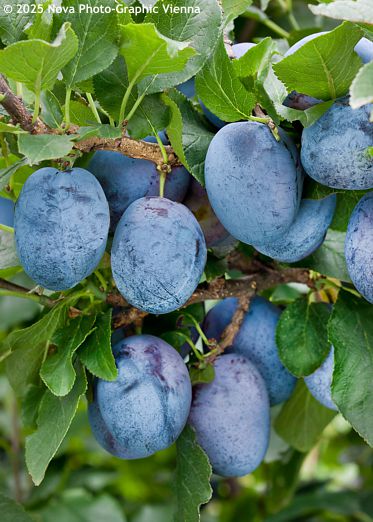
Morel belongs among old, dark-skinned, midseason sweet cherries of the bigarreau type. The fruits are medium to large, round, with a dark red to almost black skin. The flesh is firm, juicy, and sweet, with a clean, distinctive flavour suitable for fresh consumption as well as for preserving. Ripenin ...
4 - 8m
3 - 5m
full sun
5 (down to -29°C)
for zone 5+6
for zone 7
.jpg)
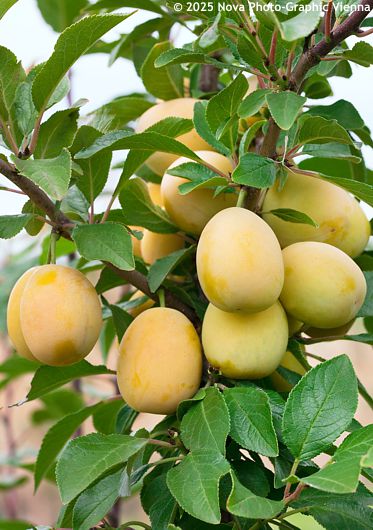
Mirabelle Ruby is a nearly columnar variety of mirabelle that grows tall and slender, as if reaching for the sky. It reaches a height of about 2.5 to 3 meters while maintaining a compact width of under one meter. The tree produces few lateral branches – its fruits grow directly from the trunk and ma ...
2,5 - 3m
1 - 1,5m
full sun
5 (down to -29°C)
for zone 5+6
for zone 7
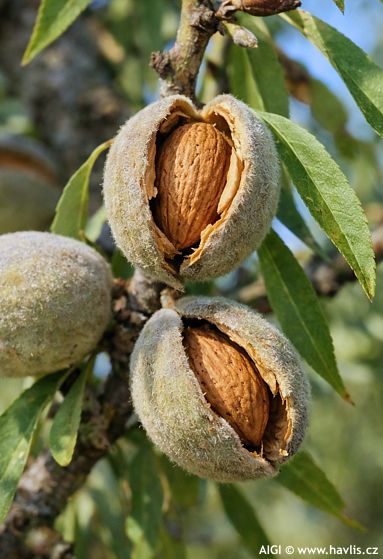
The almond cultivar Robijn originated in the Netherlands and is better adapted to the Central European climate. It is valued for its steady growth, good resilience and reliable fruiting. It grows moderately strongly, forms a spreading crown and reaches a height of about four metres, therefore less t ...
2 - 4m
2 - 4m
full sun
6 (down to -23°C)

for zone 5+6
for zone 7
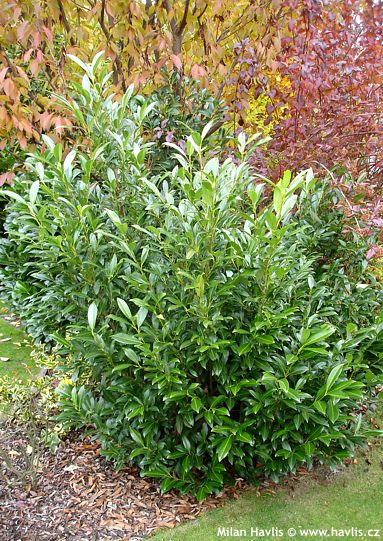
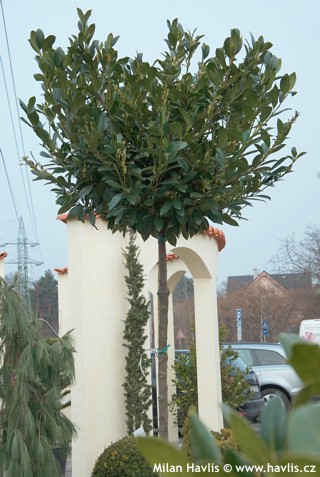
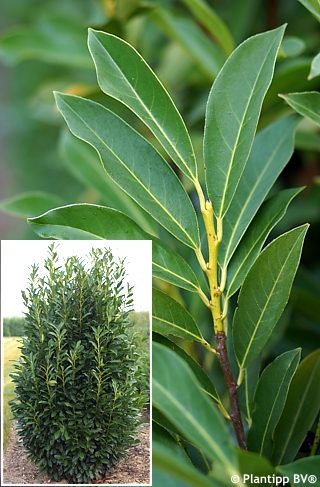
Caucasica cherry laurel belongs to a group of cultivars that seem to have been with us forever. They are pioneers from the golden rush of cherry laurels, the first to succeed and earn lasting recognition. Not only were they among the most attractive of their time, they also proved themselves where o ...
IV - V
3 - 5m
2 - 3m
full to partial sun
6 (down to -23°C)
for zone 5+6
for zone 7
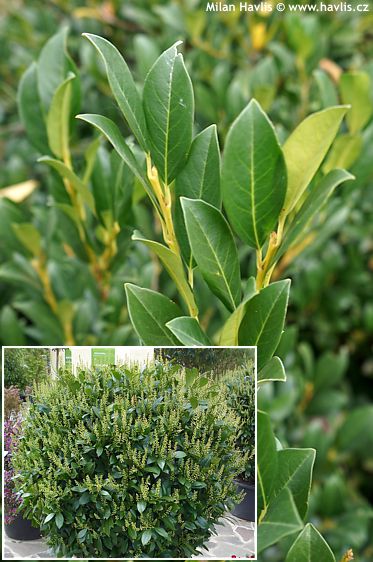
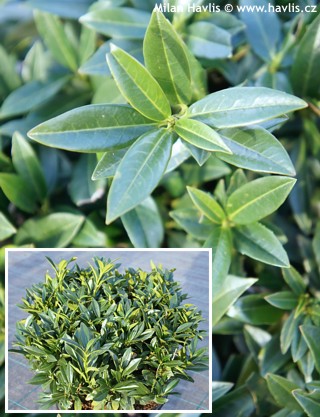
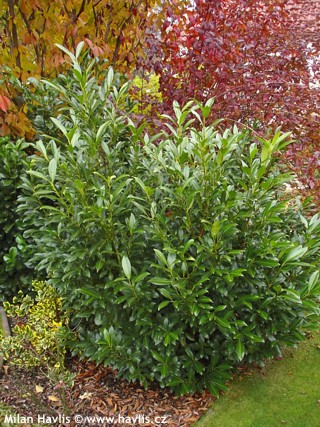
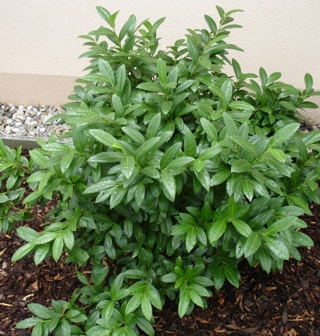
Cherry laurel Mano is a reliable, small to medium‑growing cultivar with a very clean and calm appearance. It stands out for its deep to dark green, highly glossy leaves, which are noticeably pale on the reverse and slightly thinner than those of most other, typically large‑leav ...
V - VI
1,5 - 2m
1,5 - 2m

full sun to shade
6 (down to -23°C)
for zone 5+6
for zone 7
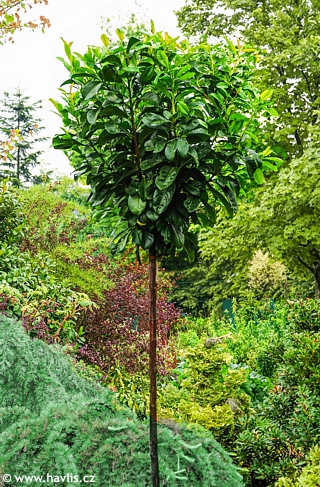
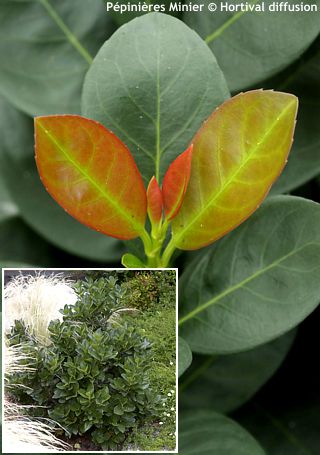
Miniredia is a slow‑growing dwarf cherry laurel variety with evergreen, glossy, dark green leaves measuring 7–8 cm in length and 4–5 cm in width, broadly elliptic in shape. In spring, the young foliage emerges in a striking amber‑orange colour, similar to cultivars such as ETNA® or ...
IV
2 - 3,5m
1 - 1,5m
full sun to shade
6 (down to -23°C)
for zone 5+6
for zone 7
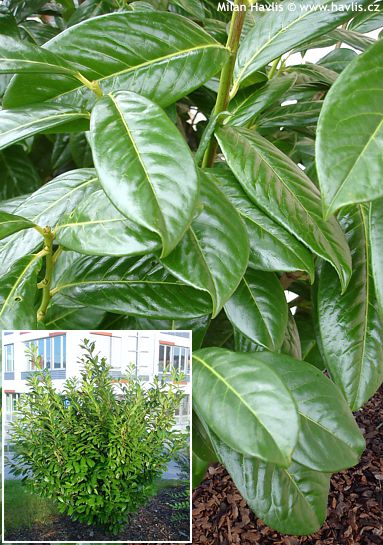
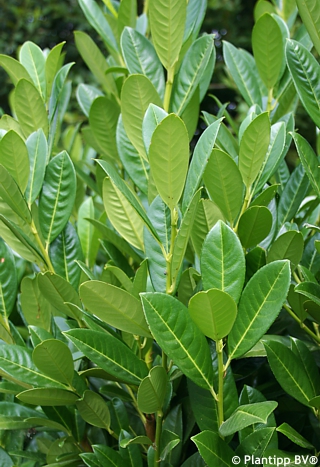
Cherry laurel Novita became a sensation the very moment it hit the market – a true horticultural blockbuster. Its dark, intensely glossy leaves looked luxurious and were impossible not to fall in love with. On top of that, it grew strongly and vigorously, quickly finding its place wherever ...
V - V
3 - 6m
2 - 5m
full sun to shade
5b (down to -27°C)
for zone 5+6
for zone 7
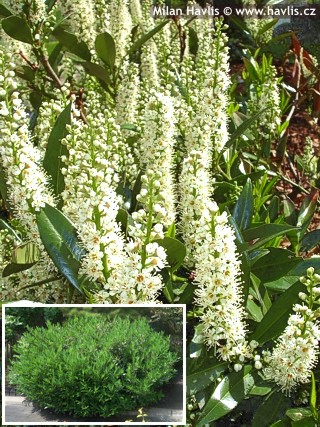
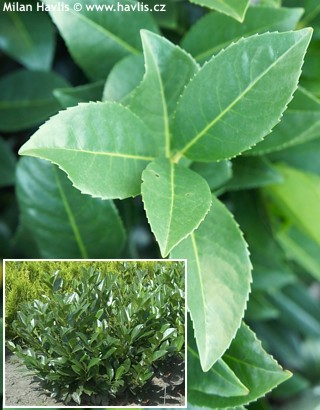
Otto Luyken is one of the hardiest and now truly classic low‑growing cultivars of cherry laurel. It is perhaps the only one to have reliably survived temperatures as low as –29 °C without a single leaf showing frost damage. Growth is slow and compact, with narrow, elongated, lance‑shaped ...
IV - V
1 - 2m
2 - 3m

semi-shade to shade
5 (down to -29°C)
for zone 5+6
for zone 7
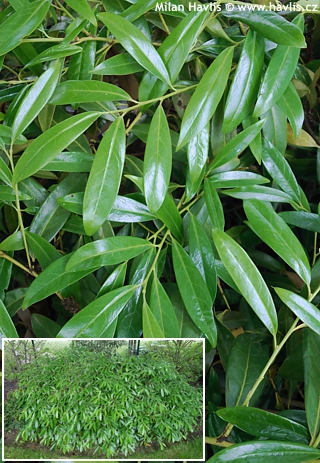
Zabeliana is an old cherry laurel variety whose birth dates back to the end of 19th century as it was introduced in Germany in 1898. There are no extent notes or articles about it, but it is believed to have been found by accident by a German botanist Hermann Zabel (1832-1912) who was already in ...
IV - V
1 - 1,3m
1 - 3m
full sun to shade
5a (down to -29°C)
for zone 5+6
for zone 7
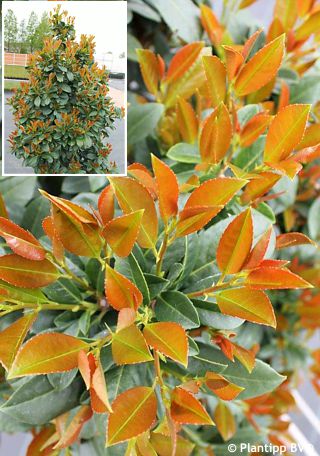
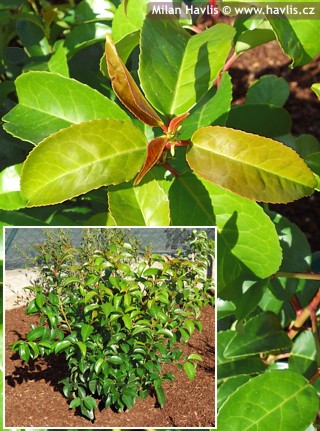
BONAPARTE® is a beautiful cherry laurel cultivar with striking copper‑coloured new growth, once again personally discovered by nurseryman Adrian Straver as a continuation of his work with cherry laurels. It thus follows the highly successful cultivar ETNA®, his first major discovery from a ...
IV
2 - 4m
1 - 2m
full to partial sun
6 (down to -23°C)
for zone 5+6
for zone 7
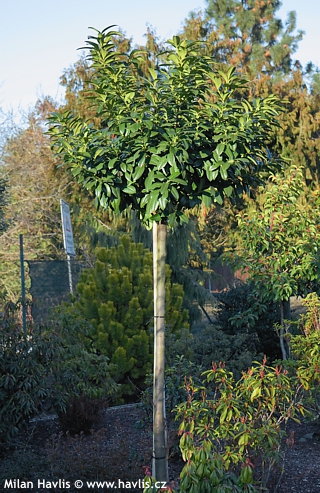
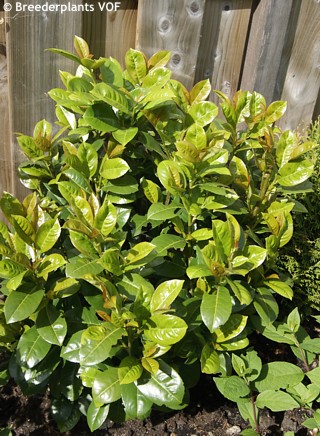
KLEOPATRA® is a Hungarian cherry laurel variety bred by Dr. Józsa Miklos and introduced in 2007. It forms a compact, graceful shrub or a small tree with spreading branches and dark green, glossy, leathery, evergreen leaves. They emerge coppery orange just like on Etna® variety and can be distinguish ...
IV - V
2,5 - 3,5m
1 - 2m
full sun to shade
5b (down to -27°C)
for zone 5+6
for zone 7
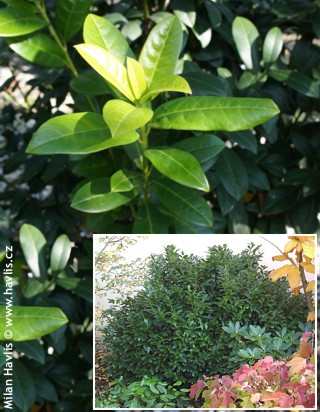
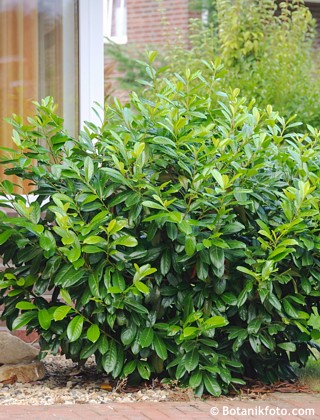
KLEOPATRA® is a Hungarian cherry laurel variety bred by Dr. Józsa Miklos and introduced in 2007. It forms a compact, graceful shrub or a small tree with spreading branches and dark green, glossy, leathery, evergreen leaves. They emerge coppery orange just like on ETNA® variety and can be distinguish ...
1 - 2m
1 - 3m
full sun to shade
6 (down to -23°C)
for zone 5+6
for zone 7
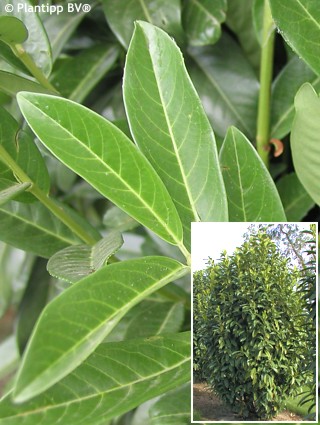
GENOLIA® cherry laurel originates from Switzerland, where it was selected in 2002 at the nursery Pépinières de Genolier. It is a selection of a chance seedling that not only offered a distinct appearance but also demonstrated high hardiness following an unusually severe winter. The cultivar ...
IV - V
2 - 3m
0,5 - 1m
full sun to shade
6 (down to -23°C)
for zone 5+6
for zone 7
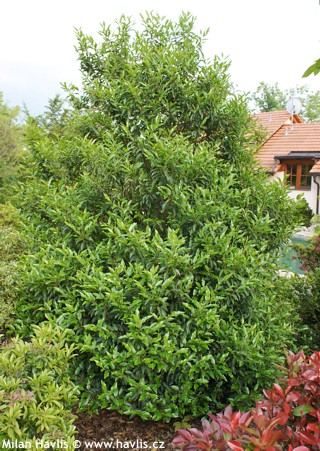
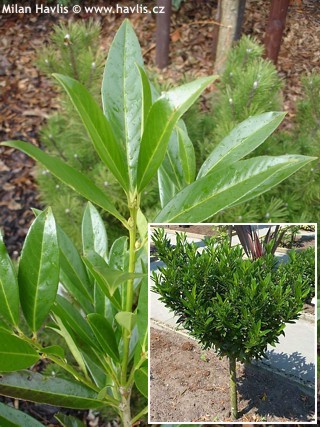
Angustifolia is a popular cultivar of Portuguese laurel, valued for its more compact growth and narrower leaves. The foliage is evergreen, leathery and firmer than that of the species, slightly incurved, narrowly elliptic, 6–10 cm long and 1.5–3 cm wide, with a striking glossy surface. The leaves de ...
V - VI
2 - 6m
2 - 4m
full to partial sun
5b (down to -27°C)
for zone 5+6
for zone 7
.jpg)
Angustifolia is a popular cultivar of Portuguese laurel, valued for its more compact growth and narrower leaves. The foliage is evergreen, leathery and firmer than that of the species, slightly incurved, narrowly elliptic, 6–10 cm long and 1.5–3 cm wide, with a striking glossy surface. The leaves de ...
V - VI
4 - 8m
2 - 4m
full to partial sun
5b (down to -27°C)
for zone 5+6
for zone 7
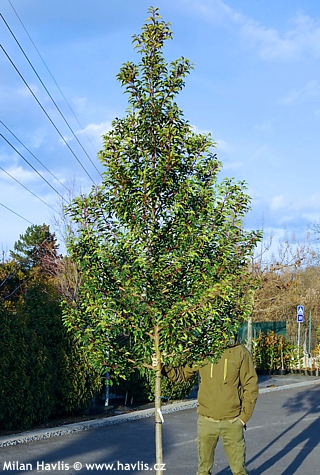
Brenelia is a modern and attractive cultivar of Portuguese laurel from France, selected by Yves Brenelière in the early 21st century. It is distinguished by its larger, distinctly undulated leaves with a higher gloss. The foliage is evergreen, narrowly elliptic, typically 8–12 cm long and 2–4 c ...
VI
4 - 8m
2 - 4m
full to partial sun
5b (down to -27°C)
for zone 5+6
for zone 7
.jpg)
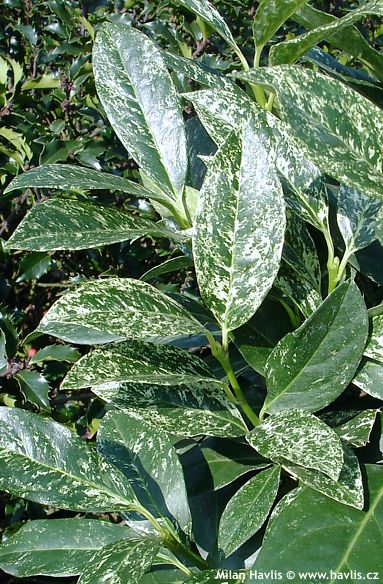
Variegata is a collective name for variegated forms of Portuguese laurel, and it must be acknowledged that, although they remain relatively scarce, they are more than precious collectibles. Their principal ornamental feature lies in the evergreen, leathery leaves with creamy to whitish variegation, ...
V - VI
2 - 4m
2 - 3m
full to partial sun
6 (down to -23°C)
for zone 5+6
for zone 7
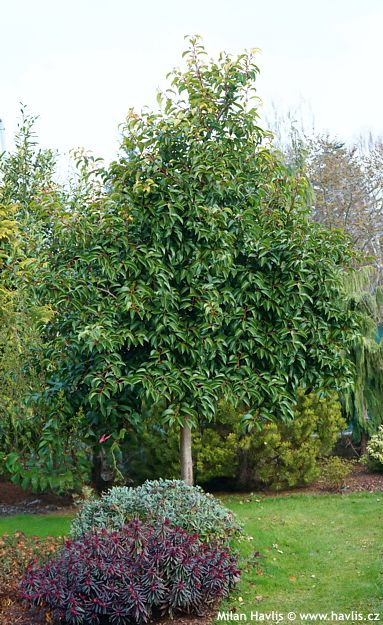
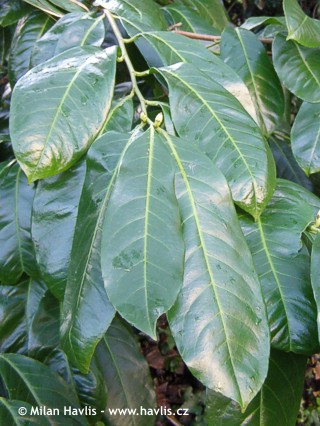
TICO® Portugal laurel is exceptional. It is a vigorously growing, large‑leaved form of this evergreen species, which I fell in love with the very first moment I encountered its luxurious foliage – one of the most distinctive features of this selection. The leaves are conspicuously large, thick ...
VI
2 - 6m
3 - 4m
full sun
5b (down to -27°C)
for zone 5+6
for zone 7
.jpg)
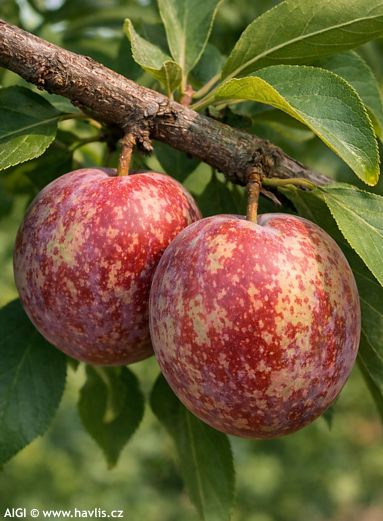
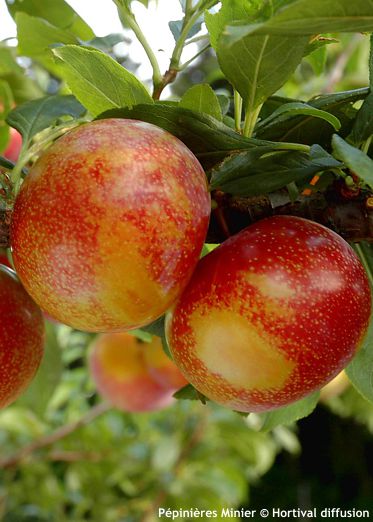
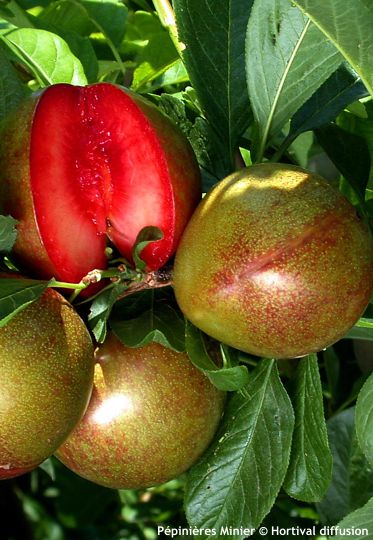
Pluot® Purple Candy® looks as if in the middle of the night it secretly escaped from a tree of purple plums and caught stardust on its skin. Its fruits have a rich purple skin with a gentle sheen, reminiscent of a candy wrapped in fruit syrup. The flesh is bright carmine red, exceptionally juicy, wi ...
2 - 3m
1 - 2m
full sun
5 (down to -29°C)
for zone 5+6
for zone 7
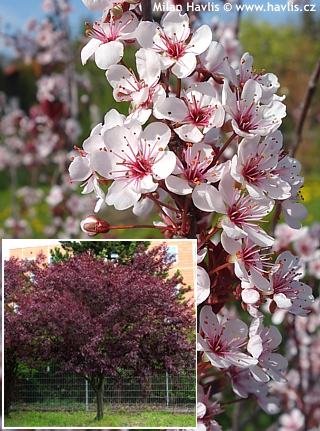
A beautiful ornamental plum tree with deep purple leaves. Flowers appear in May, after the leaves have started to wrap out, and they are pale, nearly white with light purple tint. They do not flower as richly as the flowering cherries, however, this small tree is exquisite for its foliage. The small ...
V - V
2 - 3m
1 - 1,5m
full sun
3 (down to -40°C)
for zone 5+6
for zone 7
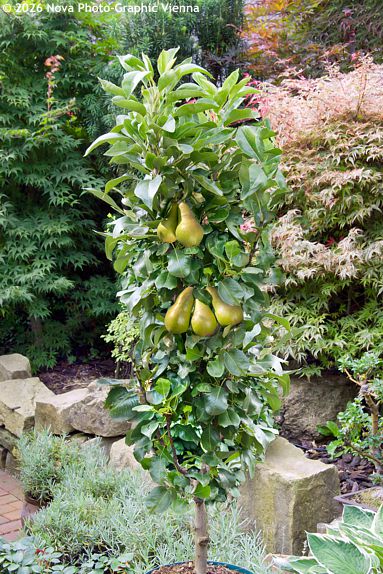
Condo
Condo is a narrowly growing, upright cultivar with a compact crown that maintains a slender shape and produces only a few side branches. The fruits are medium to large, greenish-yellow with a slight blush, juicy, sweet and aromatic, with a flavour reminiscent of Conference, from w ...
2 - 3m
0,5 - 1m
full sun
4 (down to -34°C)
for zone 5+6
for zone 7
.jpg)
.jpg)
.jpg)
.jpg)
.jpg)
.jpg)
.jpg)
