

































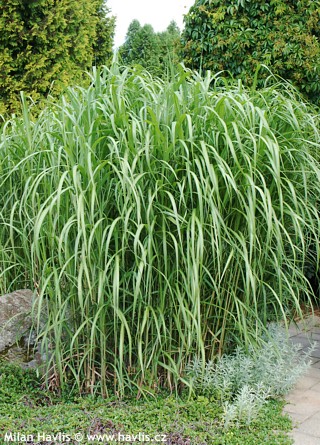
Giant miscanthus, or also called mammoth miscanthus is possibly the tallest of all eulalias. It is a natural hybrid between m.sinensis and m.sacchariflorus. It makes up to 4m tall, strong stems within one growing season (after 3 years of growing). They are strong and sturdy. Leaves are wide, rich gr ...
pot 2L
255 Kč
added:
16.10.2026
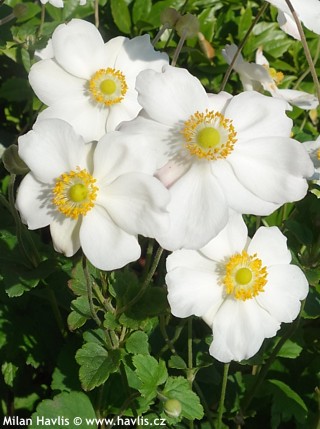
Honorine Jobert is a late variety of Japanese anemone. It produces 2-3 cm wide snow-white flowers with deep yellow centres of stamens from end August until the last warm days of autumn. The stalks are about 1 meter tall, well-branched. Basal leaves are deciduous, palmate, mid green, sharply toothed, ...
pot 2L
210 Kč
pot 3.5L
395 Kč
added:
16.10.2026
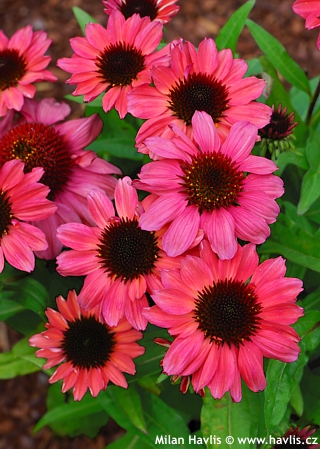
SUNMAGIC VINTAGE RED coneflower produces immensely attractive in a breathtaking mixture of several tones: pink, orange, salmon, and magenta. The result is a soft red colour you cannot pass by without a glance. The flowers are about 6-7 cm across, central discs are dark orange to mahogany brown and o ...
pot 1L
170 Kč
added:
16.10.2026
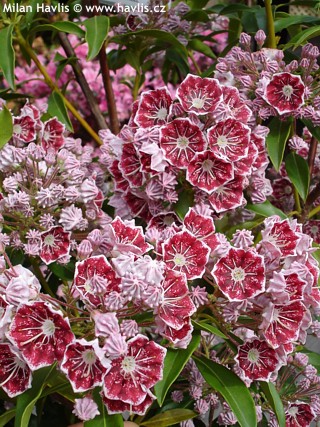
Pinwheel is a unique variety with regular, star-shaped, crimson to burgundy red marbling inside the flower. The margins are almost white same as the buds. Leathery leaves are narrow, laurel-like, pointed, mid green and partly glossy.
There are many cultivars combining all sorts of red, pink and bu ...
height 35-40 cm, width 30-40 cm
1095 Kč
added:
16.10.2026
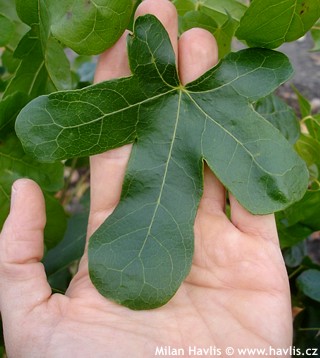
We are happy to introduce one of the most beautiful and very rare variety of sweetgum called Rotundiloba. The Latin name says it all: with rounded lobes. Its leaves show distinctly rounded lobes on 3 segments of a 5-lobed star-shaped leaves. They are deciduous, deep green, glossy, turning various sh ...
height 80-100 cm
1330 Kč
added:
16.10.2026
.jpg)
Brenelia is a modern and attractive cultivar of Portuguese laurel from France, selected by Yves Brenelière in the early 21st century. It is distinguished by its larger, distinctly undulated leaves with a higher gloss. The foliage is evergreen, narrowly elliptic, typically 8–12 cm long and 2–4 c ...
height 40-60 cm
490 Kč
height 150-175 cm
3120 Kč
height 170-180 cm
5590 Kč
added:
16.10.2026
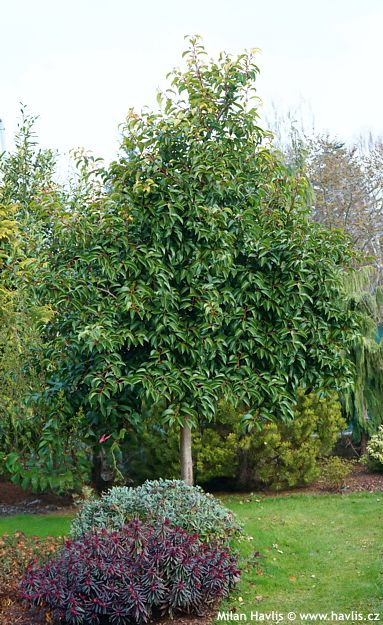
TICO® Portugal laurel is exceptional. It is a vigorously growing, large‑leaved form of this evergreen species, which I fell in love with the very first moment I encountered its luxurious foliage – one of the most distinctive features of this selection. The leaves are conspicuously large, thick ...
height of stem 140-160 cm, girth 6-8 cm
10200 Kč
added:
16.10.2026
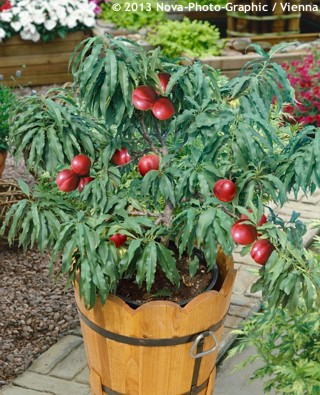
Silver Prolific is a dwarf nectarine variety with excellent fruit. It has profusion of usual peach-like, bright pink flowers that are clustered along short branches in a dense plant. The leaves are mid green, semi-glossy, narrowly lanceolate, and not much smaller than those on any other peach tree. ...
height 50-70 cm, height of stem 40-50 cm, crown width 40-50 cm
1390 Kč
added:
16.10.2026
.png)
Soběslav bark mulch belongs among the highest-quality products of its kind on the Czech market. It typically contains a mix of spruce and pine bark in a 15–60 mm fraction. The proportion of light-coloured materials (fibrous wood) is minimal, and there are no large offcuts. Before packaging, the bark ...
159 Kč
added:
15.10.2026
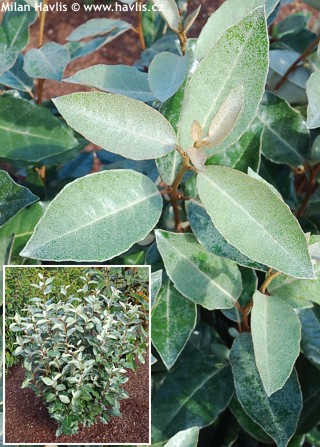
Compacta is a recent selection of Evergreen (Ebbing's) silverthorn, very probably of Italian origin (not confirmed). Unlike its mother plant - the species of Ebbing's silverthorn - it makes a compact and well-behaved shrub without overgrown twigs in one season. In fact, this sport makes ...
height 30-40 cm
430 Kč
height 60-80 cm
1360 Kč
added:
15.10.2026
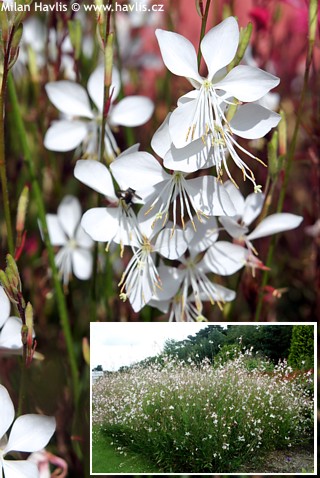
Poetry comes alive when this gaura begins to bloom. Like a flock of tiny white butterflies chasing one another among thin stems when the sun is high and hot. The breeder must have seen the resemblance, too, which is why it was named Whirling Butterflies. Its thin stems seem to be dancing in the slig ...
pot 2L
275 Kč
added:
15.10.2026
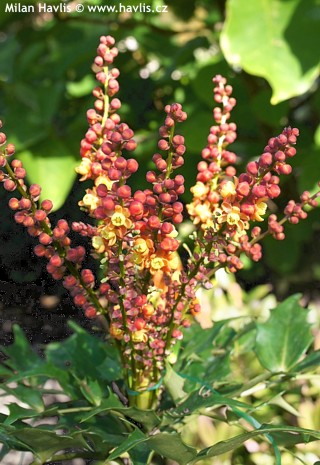
Cabaret® is a fantastic new leatherleaf mahonia from 2009. It produces 10-15 cm long, semi-erect racemes of rich orange and yellow flowers that open from deep coral red buds. Unlike other similar mahonias this one has no fragrance. They are followed by blue berries in autumn and winter. The eve ...
height 25-30 cm
595 Kč
added:
15.10.2026
.jpg)
SEDUCTION® PINK PASSION orpine is perhaps the most endearing jewel of the Seduction® series created by the Dutch company Florensis. From September it opens bright pink flowers in a shade that is neither muted nor purplish; it is simply beautifully pink, set against light green foliage. The flower he ...
pot 1.5L
295 Kč
pot 2L
320 Kč
added:
15.10.2026
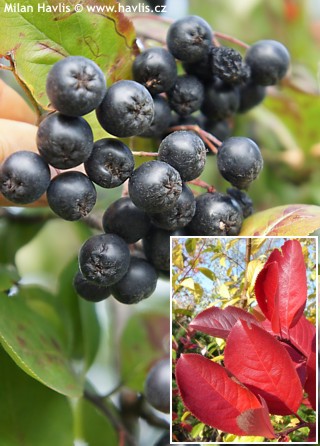
Recently, less known fruit trees and shrubs are becoming more and more popular mainly thanks to their original taste as well as positive impact on our health. Chokeberry is one of them. It is in the same rosaceae family as the service tree and its fruit is similar, too. The lustrous fruits are black ...
height 60-80 cm
560 Kč
height of stem 160 cm
2320 Kč
added:
14.10.2026
.jpg)
This little apple, more precisely the panicle hydrangea cultivar LIVING LITTLE APPLE, is one of the results of modern breeding aimed at achieving colours beyond the usual pink and white. It forms a compact shrub whose flowers genuinely resemble the skin of certain apple varieties – the young ones ar ...
pot 5L
690 Kč
pot 4.6L
1050 Kč
added:
14.10.2026
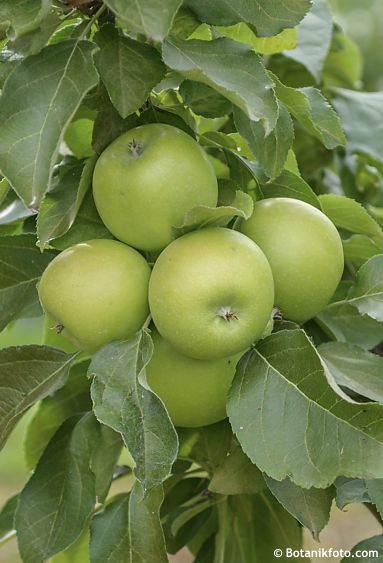
Greencats is another columnar apple variety. It bears medium-sized or large apples with rich green, glossy skin similar to Granny Smith variety. The flesh is firm and crisp, juicy, sweet and sour. The fruit is resistant to scab, canker, and powdery mildew. Greencats is a late variety can be picked f ...
height 100-125 cm
1430 Kč
added:
14.10.2026
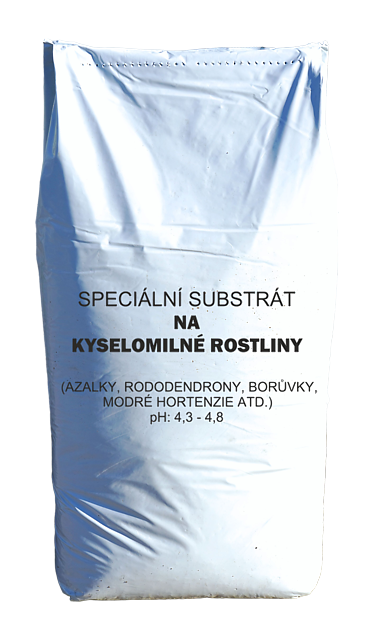
Professional substrate for ericaceous plants is an excellent mixture designed for plants that love or need acidic soil reaction. This substrate consists of exact ratio of peat, finely crushed bark, and fine-grained sand which imitates natural habitat of these plants in the wild. It is enriched with ...
70 litrů
245 Kč
added:
12.10.2026
.jpg)
Granatnaja is a Russian cultivar of crataegosorbus - a medium-sized tree with edible fruit. Its leaves are odd-pinnate, with lanceolate to elliptical, finely serrated leaflets that resemble hawthorn more than rowan, reflecting its hybrid origin. In autumn, the foliage turns vibrant shades of red-ora ...
height 175-200 cm
1075 Kč
added:
12.10.2026
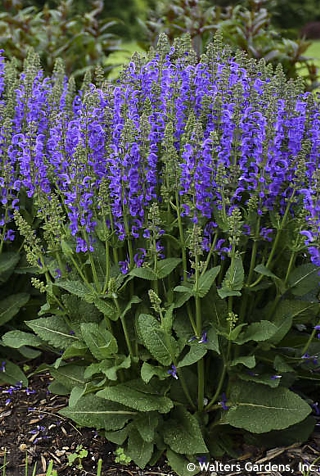
Midnight Model meadow clary is definitely the deepest coloured salvia we have seen so far. It belongs to the FASHIONISTA™ series bred by Hans. A. Hansen from Walters Gardens in Michigan, USA. From late May it produces 50-60 cm tall, strong stems holding deep violet blue, nettle-like flowers that las ...
pot 3L
450 Kč
pot 3L
495 Kč
added:
10.10.2026
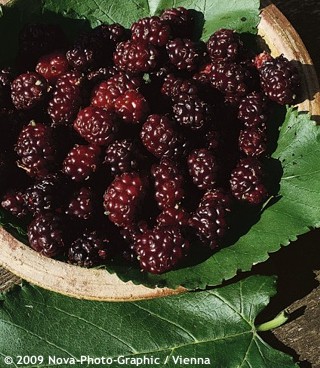
Mulberry is a versatile tree used in ornamental landscaping as well as pomiculture. You can find it in standard forms with a long trunk, or as a half-standard which is suitable for easy fruit picking. It can also be seen grown as a shrub densely branched from the ground. Here we will describe edible ...
height of stem 190-200 cm, girth 8-10 cm, Wellington
4430 Kč
added:
10.10.2026

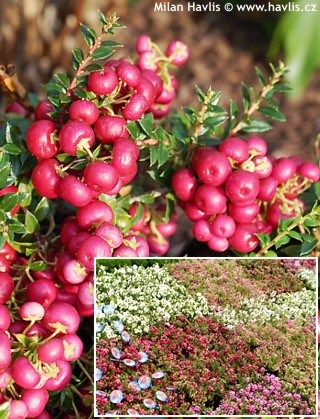
The prickly heath is a low, evergreen shrub with a spreading, irregular habit that opens with age and looks slightly untidy, which is typical for the species. The leaves, though, are very nice – they are quite small, leathery, glossy, dark green and sharply pointed, giving rise to the name mucronate ...
růžová
195 Kč
červená
195 Kč
bílá
195 Kč
added:
9.10.2026
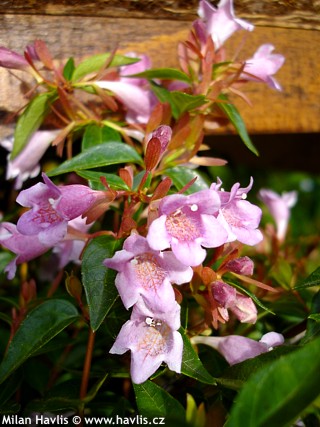
Abelias belong to the most popular flowering shrubs of dwarf to small sizes, mainly thanks to its long flowering period: June-October. Variety Edward Goucher was introduced by a botanist of the same name in the USA in 1911 as a cross between abelia x grandiflora and abelia schumannii.
This elegan ...
height 20-30 cm, width 25-35 cm
450 Kč
height 80-100 cm
2520 Kč
added:
8.10.2026
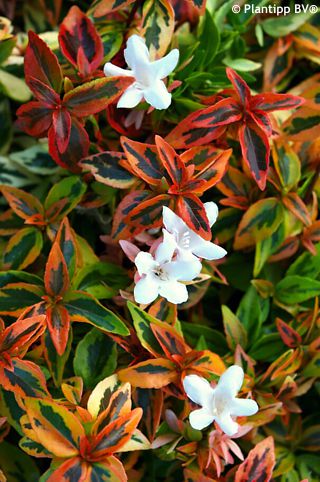
Kaleidoscope® is another novelty of the turn of the century. It drags attention thanks to its multicoloured foliage, but not only that. This abelia was found as a naturally occurring mutation of abelia x grandiflora “Little Richard” by nurseryman Randall Dale Lindsey in North Caroli ...
height 20-30 cm, width 20-30 cm
450 Kč
height 20-30 cm, width 30-40 cm
455 Kč
height 80-100 cm
2520 Kč
added:
8.10.2026
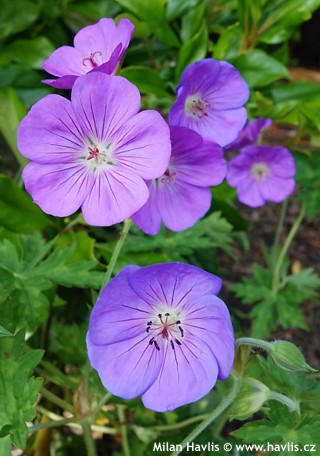
Rozanne® cranesbill was first introduced to horticultural public in 2000 and 8 years later it won a prestigious award Plant Of The Year. It boasts with large, 5-petalled, rich lilac-violet flowers from June until the last warm days of autumn. Very attractive basal leaves are mid green, widely p ...
pot 2L
390 Kč
added:
8.10.2026
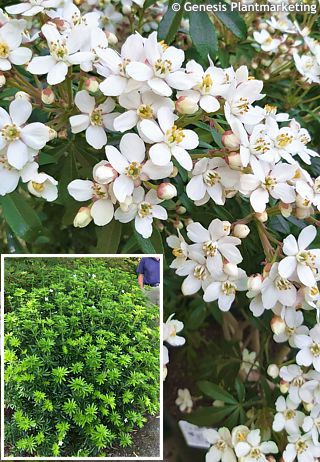
GREENFINGERS® is a large-leaved Mexican orange variety from 2019, developed by Peter Catt from Liss Forst Nursery in Liss, Hamshire, England. It bears evergreen, softly leathery, glossy, palmate leaves divided into 7 leaflets, which have a distinct, spicy aroma when crushed, but do not use them for ...
pot 2L
449 Kč
height 20-30 cm, width 20-30 cm
490 Kč
height 30-50 cm, width 30-40 cm
990 Kč
added:
8.10.2026
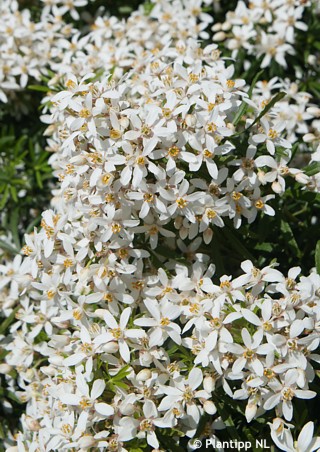
WHITE DAZZLER is a follow-up choísie to Aztec Pearl from Peter Moore, introduced in 1991. It produces masses of simple, star-shaped, pure white, and very fragrant flowers with yellow stamens in May and June. Their perfume is very similar to orange flowers hence its name Mexican orange or Mexican blo ...
pot 2L
429 Kč
height 20-30 cm
480 Kč
height 30-40 cm, width 30 cm
780 Kč
added:
8.10.2026
.jpg)
Golden Gem variety is a low, dense shrub with bright golden-yellow top leaves, leaving the bottom ones dark green. This bicolour effect is very elegant. Leaves are gently serrated at margins. Fruits, if any, are small, glossy black berries in autumn.
Pruning is possible in April: this will enc ...
width 25-30 cm
385 Kč
added:
8.10.2026
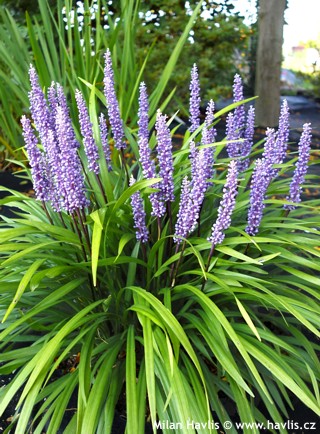
Liriope has dark green, ribbon-like, semi-glossy foliage. The leaves are narrow and evergreen in mild winters of zone 6 and reliably evergreen in warmer areas. In early August are borne spikes of rich lavender violet flowers on strong, dark stems. They usually overgrow the leaves by not more than 10 ...
pot 3L
495 Kč
added:
8.10.2026
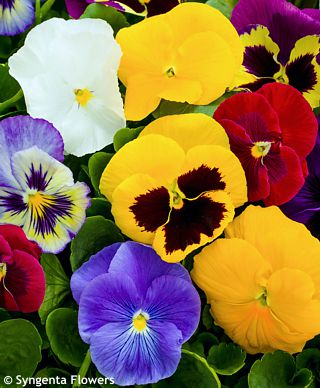
Large-flowered pansies offer lots of colours and flower types. You can choose just single-colour plants from the Pure category making a sophisticated one-tone bed/container, or choose two contrasting varieties using Speedy category with rays, or simply get all of them and mix them wildly i ...
tmavomodrá s flekem
36 Kč
fialová s flekem
36 Kč
žlutá s flekem
36 Kč
added:
8.10.2026
.jpg)
Anyone who loves flowers, especially those modest at first glance, will be disarmed by the abundance of blooms of Blütenmeer Karvinsky’s fleabane. No wonder its German name means “Sea of Flowers”. The blooms behave like a living watercolour – they begin pure white, shift into soft pink within hours ...
pot 2L
255 Kč
added:
8.10.2026
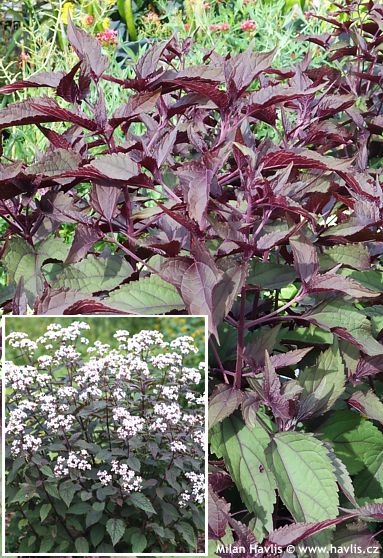
The variety Chocolate of white snakeroot is not a common perennial, yet among perennial specialists it ranks among the most admired. Above all for its foliage colour: a deep chocolate brown with a burgundy tone that in partial shade hangs over the border like a soft haze. It is tall and beautifully ...
pot 2L
175 Kč
pot 2L
310 Kč
added:
8.10.2026
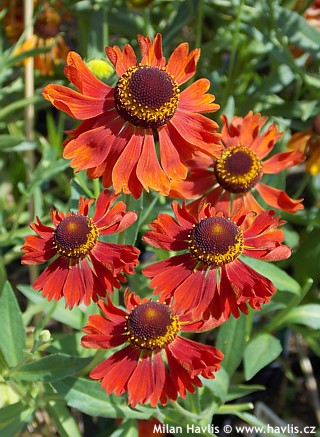
Moerheim Beauty is an eye-catching variety of sneezeweed (helenium). It produces large, daisy-like flowers with chocolate brown discs. The ray florets are longer than on other heleniums, and their predominant colour is fiery red, changing to crimson red and coppery orange during their life span. Moe ...
pot 2L
155 Kč
pot 3L
165 Kč
pot 2L
235 Kč
added:
8.10.2026
.jpg)
Lilac Squirrel Korean Burnet carries not only its own beauty but also a playful, charming name. And how else could one describe a plant whose inflorescences are as fluffy as the tail of a squirrel or a fox, coloured in soft lilac‑pink shades reminiscent of spring lilacs? The flower spikes reac ...
pot 2L
330 Kč
added:
8.10.2026
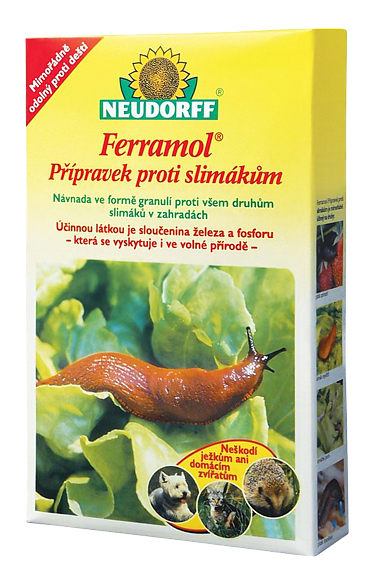
Ferramol® contains ferric phosphate (FePO₄, 9.9 g/kg) as the active ingredient. Once ingested, slugs stop feeding and die in their shelters underground. Unlike metaldehyde products, Ferramol® does not cause excessive mucus secretion, so garden beds remain clean. The active ingredient breaks do ...
200g
130 Kč
added:
8.10.2026
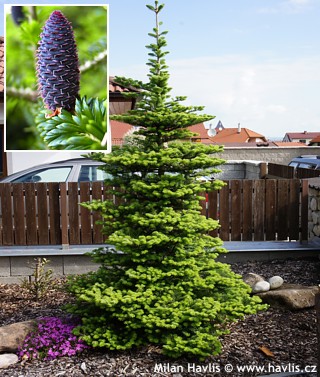
One of the most popular conifers for small and mid-sized gardens is this Korean fir. It has short, glossy, dark green needles that are silver on the reverse. Already as a young plant it produces very attractive bluish-purple cones.
It is slow growing, the tree shape is very regular, pyramidal, no ...
height 125-150 cm, width 60-80 cm
11690 Kč
added:
8.10.2026
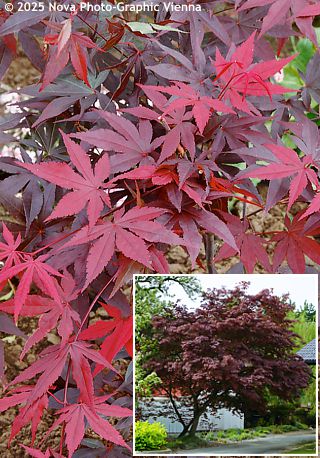
Red Emperor is another red-leaved Japanese maple, this time from the USA, where it was introduced in 1976 by Dick Wolff from Red Maple Nursery in Pennsylvania. He was an enthusiastic lover of the vibrant shades of red and maroon leaves on Japanese maples, and he was especially proud of his ...
height 120-140 cm, width 50-70 cm
8180 Kč
added:
8.10.2026
.jpg)
Shiloh Splash birch looks like almost anything but a birch. It bears noticeably smaller leaves, richly variegated with creamy white along the margins. It was discovered in 1999 by brothers John and Danny Allen at their Shiloh Nursery in North Carolina, USA, as a spontaneous mutation of the species, ...
height 175-200 cm, width 40-60 cm
4550 Kč
added:
8.10.2026
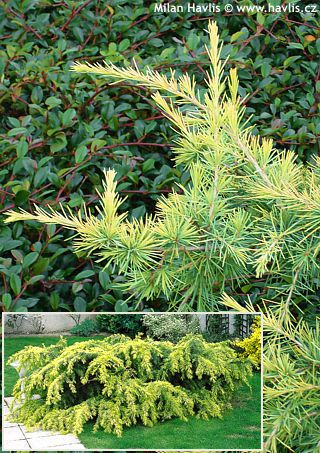
Golden Horizon is an interesting variety of Himalayan cedar with weeping branches. The needles are evergreen, yellow-green when young and in summer, turning blue-green as they mature and in the shade. The shape of the shrub is irregular, making horizontal branches with weeping ends.
It grows slowl ...
height 120-140 cm, width 30-40 cm
2430 Kč
height of stem 70-80 cm, crown width 60-80 cm
6795 Kč
height of stem 80 cm, crown width 90-120 cm
8830 Kč
added:
8.10.2026
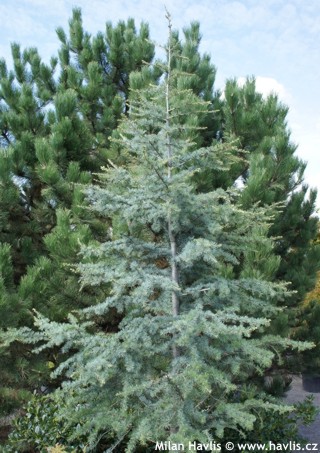
Himalájský cedr is the most graceful of all cedars. Robusta Glauca is an Italian selection with long, evergreen needles. Their colour is from blue-green to almost silvery blue while new shoots are soft green. Robusta Glauca cedar is unique for its robust structure with strong stem and habit which is ...
height 150-175 cm, width 40-60 cm
3830 Kč
added:
8.10.2026
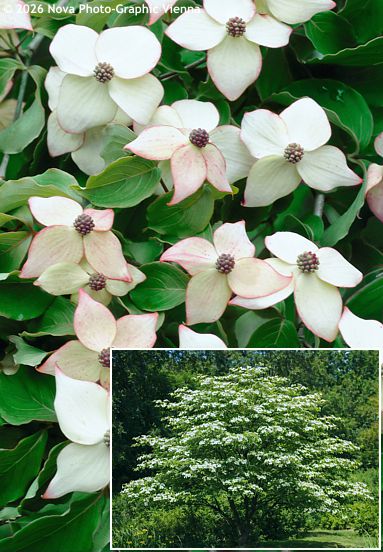
Norman Hadden is a Japanese dogwood that looks a little like a fashion trend from the 2020s – oversized. When it comes into bloom, it feels as if the tree has slipped into a set of ceremonial robes one size too large. Its bracts are unusually big, reaching 10 to 15 centimetres, placing it among the ...
height 125-150 cm, width 60-70 cm
2200 Kč
added:
8.10.2026
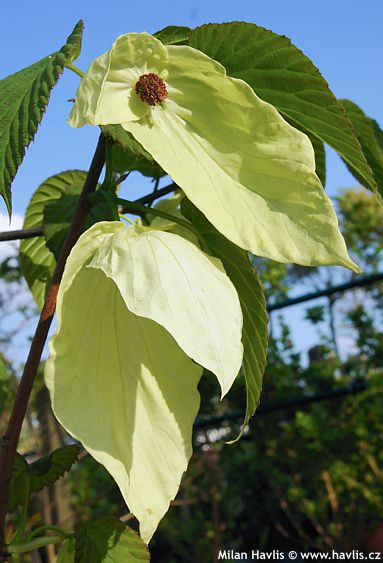
Sonoma is a smaller, garden‑friendly form of Davidia that will not overwhelm a garden with its size yet offers flowers much earlier and often in greater abundance. The true flowers are arranged in a small, rounded inflorescence of inconspicuous green florets with wine‑red stamens, surrou ...
height 60-80 cm
2640 Kč
added:
8.10.2026
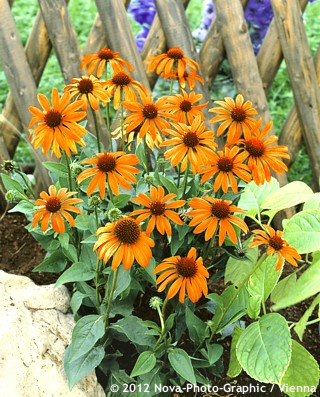
Tiki Torch coneflower is a sensational success by a young Indian breeder Harini Korlipara from Terra Nova Nurseries in Oregon, USA. This new cultivar originated as a third generation seedling from a planned breeding program using the parents echinacea paradoxa as the seed parent and echinacea purpur ...
pot 2L
170 Kč
added:
8.10.2026
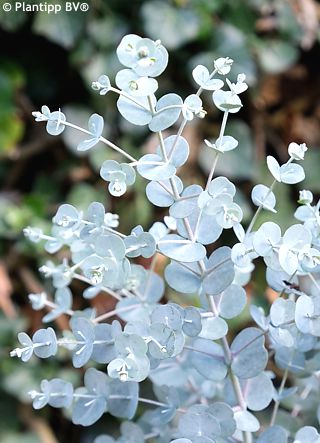
In 2006, a miracle occurred that at first looked rather ominous – in a French nursery, all seedlings of this botanical species froze except for a single plant, even though everyone was convinced of its suitability for the French climate. One eucalyptus, one pot, survived an unusually severe winter t ...
height 40-60 cm
760 Kč
height 30-50 cm, width 30-40 cm
990 Kč
height 60-80 cm
1480 Kč
added:
8.10.2026
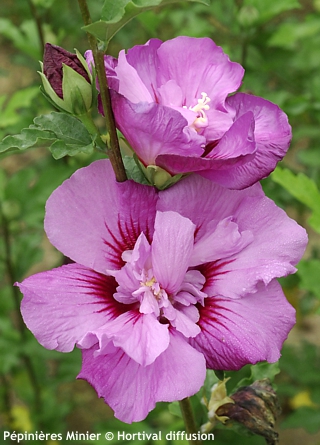
ERUPTION® is a Rose-of-Sharon variety with large, up to 10 cm wide flowers. They are semi-double i.e. producing 5 large petals and several dwarf sepals in the centre whose size and quantity increases with age. They are glowing purple pink in colour and decorated with a conspicuous maroon eye and sho ...
height 50-70 cm
775 Kč
added:
8.10.2026
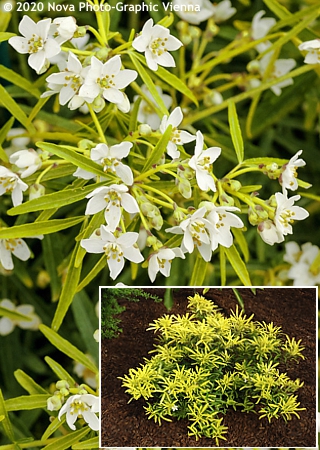
AZTEC GOLD is a Hillier Nurseries introduction from 2012, bred by Alan Postill. It is a bright golden-yellow-leaved choisya shrub. It produces profusion of simple, star-shaped, pure white, and very fragrant flowers with yellow stamens from late April until early June. Their perfume is very similar t ...
pot 2L
449 Kč
added:
8.10.2026
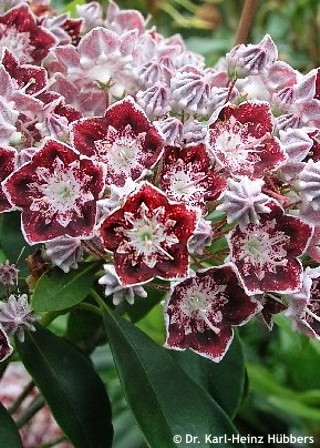
Sterntaler mountain laurel is a successful result of a controlled breeding programme hybridizing two older varieties: Ginkona and Mitternacht. By the way a year later the same programme brought another nice variety Bandeau. The star-shaped flowers are the same large size as on Ginkona, decorated wit ...
height 25-30 cm
840 Kč
added:
8.10.2026
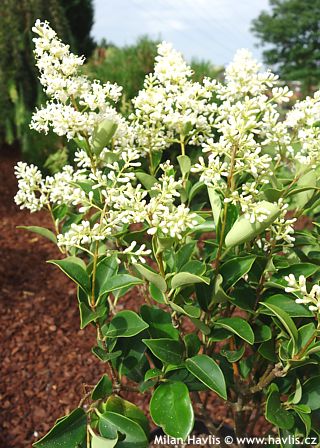
Korea Dwarf is a neat and compact version of Japanese privet forming congested shrubs with evergreen foliage. The leaves are 2.5-3.5 cm long, ovate to oval, dark green, and glossy. In June appear numerous lilac-like panicles composed of small, creamy white, narrowly funnel-shaped, sweetly fragrant f ...
height 40-60 cm, width 50-60 cm
1790 Kč
added:
8.10.2026
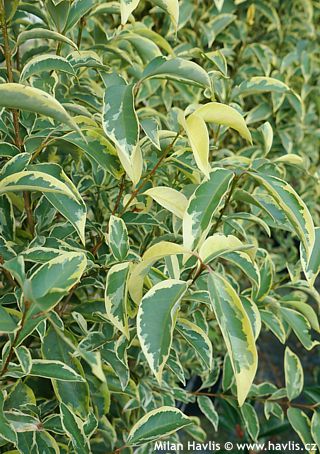
Excelsum Superbum is a highly attractive, variegated form of glossy privet. It makes large, up to 15 cm long and 6 cm wide, ovate to oval, pale dark green leaves abundantly variegated butter yellow, often extended to the midribs. Directly contradicting its botanical name they are NOT glossy, they ar ...
height 60-80 cm
550 Kč
height 80-100 cm
680 Kč
height 100-125 cm, width 30-40 cm
995 Kč
added:
8.10.2026
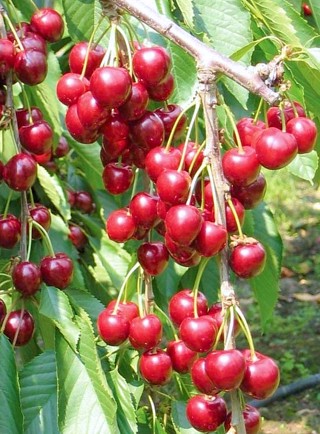
Burlat is an early variety of sweet cherries. The fruit is vivid to dark red, mid-sized or large, very sweet and juicy, with medium firm flesh. As it is very precocious it is not vermicular.
It is partly self-fertile but benefits from being pollinated by another early cherry. It likes slightly acid ...
height of stem 100-120 cm, odnož ptáčnice
1550 Kč
added:
8.10.2026
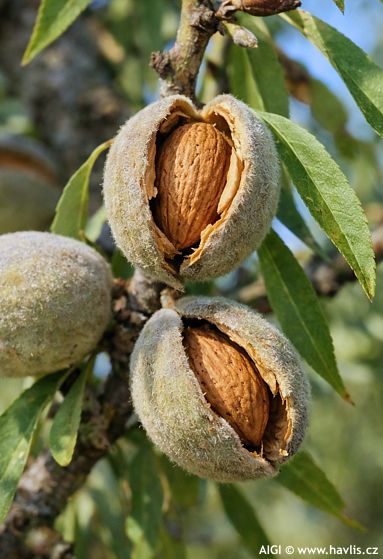
The almond cultivar Robijn originated in the Netherlands and is better adapted to the Central European climate. It is valued for its steady growth, good resilience and reliable fruiting. It grows moderately strongly, forms a spreading crown and reaches a height of about four metres, therefore less t ...
height 125-150 cm
1320 Kč
added:
8.10.2026
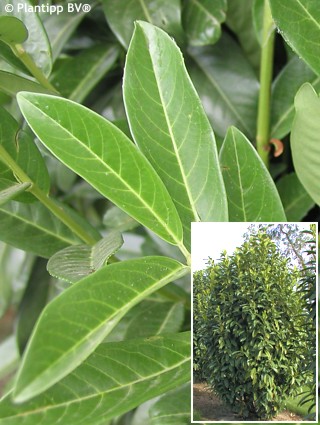
GENOLIA® cherry laurel originates from Switzerland, where it was selected in 2002 at the nursery Pépinières de Genolier. It is a selection of a chance seedling that not only offered a distinct appearance but also demonstrated high hardiness following an unusually severe winter. The cultivar ...
height 80-100 cm, width 20-30 cm
880 Kč
height 100-125 cm, width 20-30 cm
1190 Kč
height 175-200 cm, width 30-40 cm
1890 Kč
added:
8.10.2026
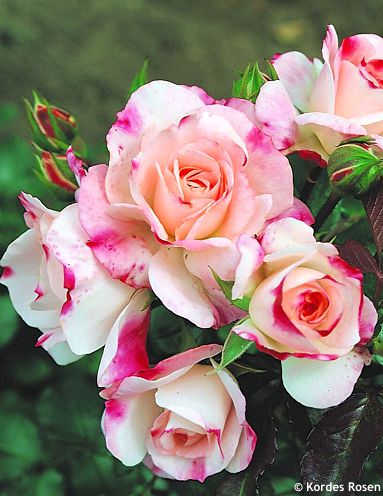
ROSENSTADT FREISING is a robust and striking shrub rose from the Heckenzauber® collection, introduced by W. Kordes’ Söhne in 2003. It is valued for its distinctive three‑coloured blooms combining a pure white base with a carmine red edge and fine pink speckling. The flowers measure 6–7 cm acro ...
pot 4L
445 Kč
added:
8.10.2026
.jpg)
FIRECRACKER is another remarkable low‑growing stonecrop from the SUNSPARKLER® series bred by Chris Hansen in Michigan, USA. In late summer it produces dense clusters of small pink flowers that create a soft yet striking contrast to the dark foliage. The flower heads are firm and abun ...
pot 3L
395 Kč
added:
8.10.2026
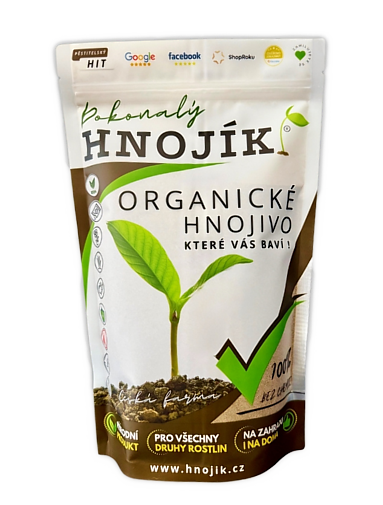
Special attention is given to its content of chitin and silicates, which, according to scientific studies, may help strengthen plant cell walls and activate their natural defense mechanisms. These properties are currently being explored further, with ongoing research focused on how they may contribu ...
300 ml
119 Kč
1300 ml
189 Kč
2.5 litru
289 Kč
added:
7.10.2026
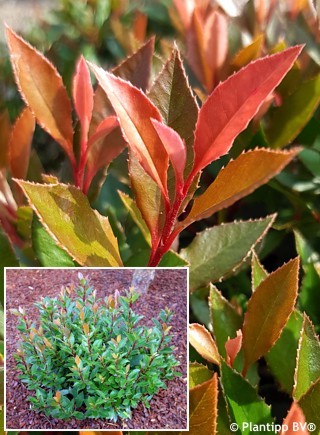
CHICO is the smallest photina known to trade so far. It is an evergreen shrub with small, glossy, broadly elliptic leaves with conspicuously serrated margins which bear strong resemblance to arbutus unedo foliage. They emerge bronze orange-red and mature to deep green. New leaves emerge at least twi ...
height 20-30 cm, width 30-40 cm
1070 Kč
added:
7.10.2026
.jpg)
Gum Ball is a dwarf cultivar of sweetgum that has gained popularity for its compact size and attractive appearance without the need for pruning. Its leaves are deeply lobed, with five to seven lobes and prominent veining, turning into a spectacular mix of fiery red, orange, purple, and deep burgundy ...
height 40-60 cm, width 40-50 cm
1520 Kč
added:
6.10.2026
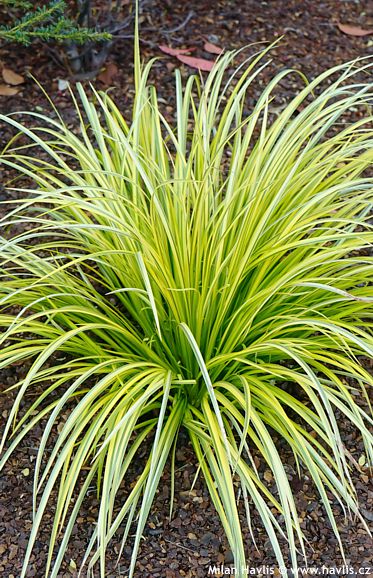
If you love the character of ornamental grasses, you’ll likely fall for this – to be botanically correct – non-grass 😊. Its name is Ogon and it is a cultivar of sweet flag that shines like a jewel thanks to its leaf colouration. It immediately draws attention with its bright yellow leaves ad ...
pot 3L
490 Kč
added:
5.10.2026
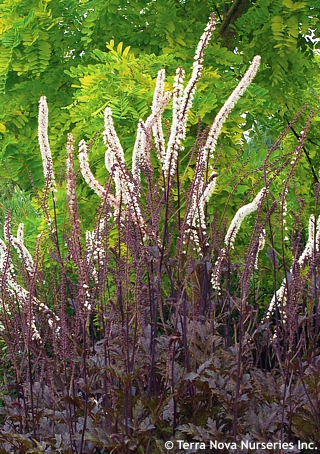
Black Negligee is another beautiful dark-leaved variety of bugbane with deep burgundy brown or almost black, 30-50 cm across leaves. They are 3-ternate-pinnate, with palmate, lobed, sharply toothed basal leaves. In late summer rise slender, dark stems bearing 30-40 cm long erect racemes composed of ...
pot 2.5L
275 Kč
added:
5.10.2026
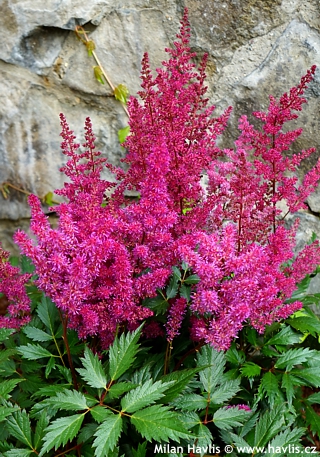
Vision Vulcano is a glowing purple pink astilbe variety with erect, dense yet fluffy inflorescence. Compared to Vision in Purple it is shorter, more compact, and the flowers have more of a dark pink tone. Blooming begins in late June atop 30-40 cm tall, strong stems, and may last until mid August. D ...
pot 5L
550 Kč
added:
5.10.2026
